Back to Network



















4
Shared Docs
4
Same-Page
4 / 7
Mentions
Document Mentions (4 shared documents)
3 mentions1 same-page
Page ?Same page
f quantum electrodynamics: Richard Feynman's diagrams. and the operator method developed by Julian Schwinger and Sin-16r° Tomonaga. He wrote that Feynman's diagrams were not just a computational tool but a physical theory, and he developed rules for the diagrams that solved the problem of renormaliz
rams were not just a computational tool but a physical theory, and he developed rules for the diagrams that solved the problem of renormalization. Dyson presented Feynman's theories in a form that other physicists could understand enabling them to finally accept Feynman's work. Robert Oppenheimer.
n 1947, he moved to the USA where he went to work at Cornell University and, later, at the Institute for Advanced Study in Princeton. New Jersey. Dyson is recognised for demonstrating the equivalence of two formulations of quantum electrodynamics: Richard Feynman's diagrams. and the operator metho
3 mentions1 same-page
Page ?Same page
to spend time with physicists, the reason being that they think about the universe, 1.e. everything. And no physicist was reputed to be articulate as Feynman. I couldn’t wait to meet him. I accepted. That said, I am not a scientist, and I had never entertained the idea of getting on a stage and delivering
s on the steering committee for the Berkeley AI Research (BAIR) Lab and is a co-principal investigator in Berkeley’s Center for Human-Compatible AI. George Dyson is a historian of science and technology and the author of Baidarka: the Kayak, Darwin Among the Machines, Project Orion, and Turing ’s Cathedral. P
ul in all walks of life, and the dangers they incur of the carnal sins of pride and of lust for power.” This jeremiad did not go well for Wiener. As Dyson puts it: These alarms were discounted at the time, not because Wiener was wrong about digital computing but because larger threats were looming as h
3 mentions1 same-page
Page ?Same page
to spend time with physicists, the reason being that they think about the universe, 1.e. everything. And no physicist was reputed to be articulate as Feynman. I couldn’t wait to meet him. I accepted. That said, I am not a scientist, and I had never entertained the idea of getting on a stage and delivering
s on the steering committee for the Berkeley AI Research (BAIR) Lab and is a co-principal investigator in Berkeley’s Center for Human-Compatible AI. George Dyson is a historian of science and technology and the author of Baidarka: the Kayak, Darwin Among the Machines, Project Orion, and Turing ’s Cathedral. P
ul in all walks of life, and the dangers they incur of the carnal sins of pride and of lust for power.” This jeremiad did not go well for Wiener. As Dyson puts it: These alarms were discounted at the time, not because Wiener was wrong about digital computing but because larger threats were looming as h
Sponsored
2 mentions1 same-page
Page ?Same page
seems to offer hope of a world where any dream, no matter how outlandish, is realizable. Other familiar names, Bohr, Schrodinger, Dirac, and later Feynman and Dyson, each made great leaps into the unknown. But they weren't alone. Physics is a collaborative discipline. Too often science stories are wr
er hope of a world where any dream, no matter how outlandish, is realizable. Other familiar names, Bohr, Schrodinger, Dirac, and later Feynman and Dyson, each made great leaps into the unknown. But they weren't alone. Physics is a collaborative discipline. Too often science stories are written as if
Sponsored
Mutual Connections (452)
Entities connected to both Feynman and George Dyson
Jeffrey Epstein
PERSON32 w/ Feynman·52 w/ George
John Brockman
PERSON4 w/ Feynman·43 w/ George
Stewart Brand
PERSON4 w/ Feynman·34 w/ George
Martha Stewart
PERSON6 w/ Feynman·32 w/ George
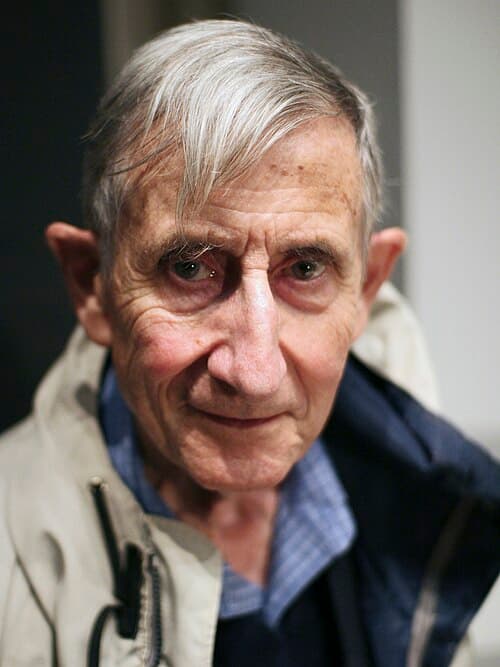
Freeman Dyson
PERSON5 w/ Feynman·27 w/ George
Elon Musk
PERSON4 w/ Feynman·26 w/ George
George W. Bush
PERSON9 w/ Feynman·20 w/ George
Daniel Kahneman
PERSON4 w/ Feynman·25 w/ George
Sergey Brin
PERSON2 w/ Feynman·27 w/ George
Steven Pinker
PERSON3 w/ Feynman·25 w/ George
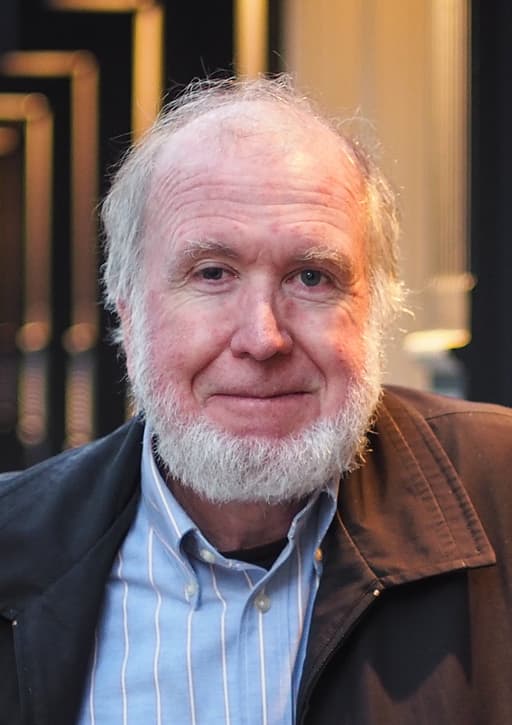
Kevin Kelly
PERSON2 w/ Feynman·25 w/ George
Earth
LOCATION14 w/ Feynman·13 w/ George
Prince Andrew
PERSON10 w/ Feynman·16 w/ George
Alan Dershowitz
PERSON15 w/ Feynman·11 w/ George
Stephen Hawking
PERSON13 w/ Feynman·13 w/ George
Lawrence Krauss
PERSON14 w/ Feynman·10 w/ George
Bill Gates
PERSON5 w/ Feynman·18 w/ George
Prince Charles
PERSON8 w/ Feynman·15 w/ George
Eric Trump
PERSON11 w/ Feynman·12 w/ George
Robert Gates
PERSON6 w/ Feynman·17 w/ George