Back to Network








4
Shared Docs
4
Same-Page
4 / 4
Mentions
Document Mentions (4 shared documents)
2 mentions1 same-page
Page ?Same page
ns had perfected their calculations to predict the motion of Venus and it proved reliable over a whole century? Would this constitute understanding? Feynman would say no: the Mayan understanding was not complete. It was only black box equivalent to our modern understanding over a limited period. We known
ion does not conflict with the First or Second Law. The Zeroth Law: A robot may not harm humanity, or, by inaction, allow humanity to come to harm.” Isaac Asimov, I, Robot HOUSE_OVERSIGHT_015694 Deep Blue York, watching a chess match. It’s no ordinary match. Two men sit opposite each other. One, a neatly s
2 mentions1 same-page
Page ?Same page
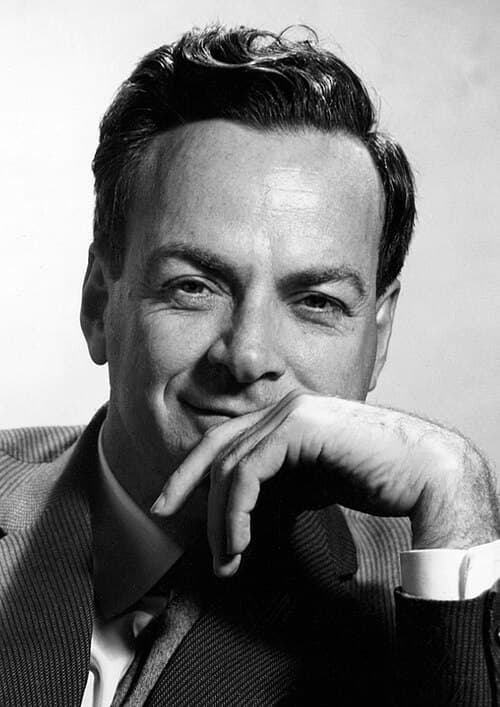
was the time that Hillis asked Nobel-prize winning physicist Richard Feynman to tip him off about any smart scientists Thinking Machines might hire. Feynman, pushing 60, volunteered himself and spent his summer vacations for the next ten years with Hillis and his team.1?! When it came time to test the fir
tered. This challenge, which sounds like something out of science fiction, is known by technologists by a name that does sound like a short story by Isaac Asimov: “The Confinement Problem”. The computer scientist Butler Lampson named this in 1973 as a sort of task for computer security experts - possibly their
2 mentions1 same-page
Page ?Same page
ard Feynman, at which the celebrated physicist remarked, “That is positively the dopiest idea I ever heard.” Maybe “despite” is the wrong word, since Feynman had a well-known predilection for playing with dopey ideas. In the event, he showed up on the day the company was incorporated and stayed on, for sum
nal aptitude is suppressed in deference to the mediocre lowest common denominator of society. Thought experiments like John Searle’s Chinese Room and Isaac Asimov’s Three Laws of Robotics all appeal to the sorts of intuitions plaguing human brains that Daniel Kahneman, Amos Tversky, and others have demonstrated.
Sponsored
2 mentions1 same-page
Page ?Same page
ard Feynman, at which the celebrated physicist remarked, “That is positively the dopiest idea I ever heard.” Maybe “despite” is the wrong word, since Feynman had a well-known predilection for playing with dopey ideas. In the event, he showed up on the day the company was incorporated and stayed on, for sum
nal aptitude is suppressed in deference to the mediocre lowest common denominator of society. Thought experiments like John Searle’s Chinese Room and Isaac Asimov’s Three Laws of Robotics all appeal to the sorts of intuitions plaguing human brains that Daniel Kahneman, Amos Tversky, and others have demonstrated.
Sponsored
Mutual Connections (424)
Entities connected to both Feynman and Isaac Asimov
Jeffrey Epstein
PERSON32 w/ Feynman·4 w/ Isaac
Harvey Weinstein
PERSON14 w/ Feynman·9 w/ Isaac
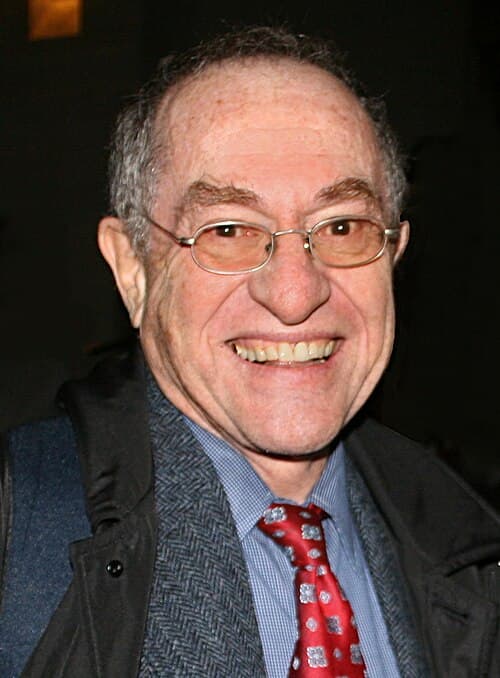
Alan Dershowitz
PERSON15 w/ Feynman·4 w/ Isaac
Earth
LOCATION14 w/ Feynman·4 w/ Isaac
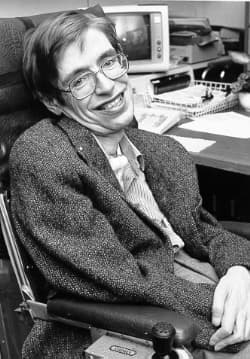
Stephen Hawking
PERSON13 w/ Feynman·5 w/ Isaac
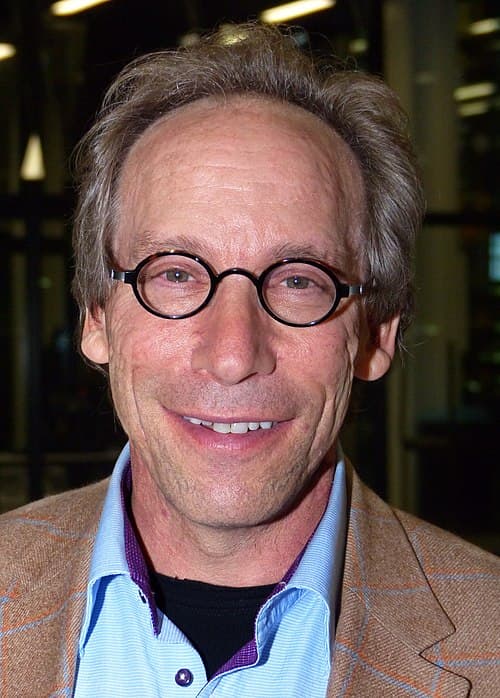
Lawrence Krauss
PERSON14 w/ Feynman·3 w/ Isaac
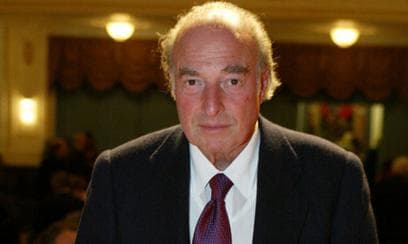
Marc Rich
PERSON11 w/ Feynman·6 w/ Isaac
Quantum
ORGANIZATION13 w/ Feynman·3 w/ Isaac
Richard Feynman
PERSON12 w/ Feynman·4 w/ Isaac
Julie K. Brown
PERSON10 w/ Feynman·5 w/ Isaac
Prince Andrew
PERSON10 w/ Feynman·5 w/ Isaac
Samantha Power
PERSON10 w/ Feynman·5 w/ Isaac
LB
Leon Black
PERSON9 w/ Feynman·5 w/ Isaac
George W. Bush
PERSON9 w/ Feynman·5 w/ Isaac
Turing
PERSON10 w/ Feynman·4 w/ Isaac
DB
Doug Band
PERSON9 w/ Feynman·4 w/ Isaac
Berkeley
LOCATION6 w/ Feynman·7 w/ Isaac
Eric Trump
PERSON11 w/ Feynman·2 w/ Isaac
Michael Douglas
PERSON10 w/ Feynman·2 w/ Isaac
Ghislaine Maxwell
PERSON10 w/ Feynman·2 w/ Isaac