Back to Network






6
Shared Docs
6
Same-Page
10 / 8
Mentions
Document Mentions (6 shared documents)
4 mentions1 same-page
Page ?Same page
Intelligence & the Game of the Century EFTA00669449 how to: Artificial Intelligence and the Game of the Century — Kasparov vs. Deep Blue with Garry Kasparov, Michael Hawley 30th May 2017 6:45pm - 8:00pm Emmanuel Centre 9-23 Marsham Street London SW1P 3DW TICKETS EARLYBIRD: £25.00 Standard £35.00
From: How To Academy To:j <[email protected]> Subject: Artificial Intelligence and the Game of the Century — Kasparov vs. Deep Blue: with Gany Kasparov & Michael Hawley Date: Thu, 02 Mar 2017 10:06:00 +0000 Artificial Intelligence & the Game of the Century EFTA00
From: How To Academy To:j <[email protected]> Subject: Artificial Intelligence and the Game of the Century — Kasparov vs. Deep Blue: with Gany Kasparov & Michael Hawley Date: Thu, 02 Mar 2017 10:06:00 +0000 Artificial Intelligence & the Game of the Century EFTA00669449 how to: Artificial Intelli
L. Michael Hawley Michael Hawley has enjoyed a storied career in industry and academia, with degrees from Yale and MIT, where he did his PHD with Marvin Minsky, and a life spent at the vanguard of new technologies. He cut his teeth at Bell Labs in Murray Hill, explored computer music inventions under Pier
3 mentions1 same-page
Page ?Same page
a vast selection of possible future moves. But the majority of predictions of AI, e.g., robotic maids, turned out to be illusory. When Deep Blue beat Garry Kasparov at chess in 1997, the most 20 HOUSE_OVERSIGHT_016823 powerful room-cleaning robot was a Roomba, which moved around vacuuming at random and squeake
ct with any precision when such a development might occur.” e You're just a Luddite. It’s an odd definition of Luddite that includes Turing, Wiener, Minsky, Musk, and Gates, who rank among the most prominent contributors to technological progress in the 20th and 21st centuries.* Furthermore, the epithet
g organized by Heinz Pagels, the president of the New York Academy of Sciences. I had a seat at the table alongside the leaders of the 1“ generation, Marvin Minsky and John McCarthy, the 2"! generation, Edward Feigenbaum 13 HOUSE_OVERSIGHT_016816 and Roger Schank, and Joseph Traub, head of the National Superc
3 mentions1 same-page
Page ?Same page
a vast selection of possible future moves. But the majority of predictions of AI, e.g., robotic maids, turned out to be illusory. When Deep Blue beat Garry Kasparov at chess in 1997, the most 20 HOUSE_OVERSIGHT_016240 powerful room-cleaning robot was a Roomba, which moved around vacuuming at random and squeake
ct with any precision when such a development might occur.” e You're just a Luddite. It’s an odd definition of Luddite that includes Turing, Wiener, Minsky, Musk, and Gates, who rank among the most prominent contributors to technological progress in the 20th and 21st centuries.* Furthermore, the epithet
g organized by Heinz Pagels, the president of the New York Academy of Sciences. I had a seat at the table alongside the leaders of the 1“ generation, Marvin Minsky and John McCarthy, the 2"! generation, Edward Feigenbaum 13 HOUSE_OVERSIGHT_016233 and Roger Schank, and Joseph Traub, head of the National Superc
Sponsored
3 mentions1 same-page
Page ?Same page
ne article described Deep Blue’s victory not as that of a computer, which was just a dumb machine, but as the victory of hundreds of programmers over Kasparov, a single individual. That way of programming is changing dramatically. After a long hiatus, the power of machine learning has taken off. Much of th
, we programmed computers using algorithms we understood at least in principle. So when machines did amazing things like beating world chess champion Garry Kasparov, we could say that the victorious programs were designed with algorithms based on our own understanding—using, in this instance, the experience and a
the 1955 proposal thought to be the first printed usage of the phrase “artificial intelligence,” computer scientist John McCarthy and his colleagues Marvin Minsky, Nathaniel Rochester, and Claude Shannon conjectured that “every aspect of learning or any other feature of intelligence can in principle be so preci
3 mentions1 same-page
Page ?Same page
ne article described Deep Blue’s victory not as that of a computer, which was just a dumb machine, but as the victory of hundreds of programmers over Kasparov, a single individual. That way of programming is changing dramatically. After a long hiatus, the power of machine learning has taken off. Much of th
, we programmed computers using algorithms we understood at least in principle. So when machines did amazing things like beating world chess champion Garry Kasparov, we could say that the victorious programs were designed with algorithms based on our own understanding—using, in this instance, the experience and a
the 1955 proposal thought to be the first printed usage of the phrase “artificial intelligence,” computer scientist John McCarthy and his colleagues Marvin Minsky, Nathaniel Rochester, and Claude Shannon conjectured that “every aspect of learning or any other feature of intelligence can in principle be so preci
2 mentions1 same-page
Page ?Same page
, Steve 47, 68, 296-297, 297, 306 joke 93 world’s funniest 94 Joke Analysis and Production Engine 310 Jones, JP 251 K Kahn, Philip 237 Kamailio 265 Kasparov, Garry 5, 34 and Deep Blue 4-6 Kelvin, Lord 180 Kerr Metric 280 Khayyam, Omar 371 King’s College 17, 211 Kish, Daniel 13 knitting 117 knowledge 8 a
H PROBLEM: What Can We Do with Diophantine Equations?. Accessed April 13, 2014. http://logic.pdmi-ras. ru/~yumat/Journal/H10history/H10histe.pdf.gz. Minsky, Marvin Lee. Computation. Prentice-Hall Englewood Cliffs, 1967. http:// cba.mit.edu/events/03.11.ASE/docs/Minsky.pdf. Nagel, Ernest, and James R. Ne
Sponsored
Mutual Connections (807)
Entities connected to both Garry Kasparov and Marvin Minsky
Jeffrey Epstein
PERSON12 w/ Garry·441 w/ Marvin
MA
Marvin
PERSON3 w/ Garry·127 w/ Marvin
Lesley Groff
PERSON2 w/ Garry·104 w/ Marvin
Martin Nowak
PERSON5 w/ Garry·99 w/ Marvin
Stephen Hawking
PERSON17 w/ Garry·85 w/ Marvin
Lawrence Krauss
PERSON4 w/ Garry·78 w/ Marvin
Prince Andrew
PERSON15 w/ Garry·62 w/ Marvin
Marc Rich
PERSON12 w/ Garry·60 w/ Marvin
Alan Dershowitz
PERSON9 w/ Garry·61 w/ Marvin
Ghislaine Maxwell
PERSON16 w/ Garry·54 w/ Marvin
LB
Leon Black
PERSON12 w/ Garry·49 w/ Marvin
Prince Charles
PERSON8 w/ Garry·46 w/ Marvin
Donald Trump
PERSON9 w/ Garry·44 w/ Marvin
George W. Bush
PERSON12 w/ Garry·39 w/ Marvin
Eric Trump
PERSON11 w/ Garry·40 w/ Marvin
Bill Clinton
PERSON12 w/ Garry·36 w/ Marvin
George Mitchell
PERSON10 w/ Garry·35 w/ Marvin
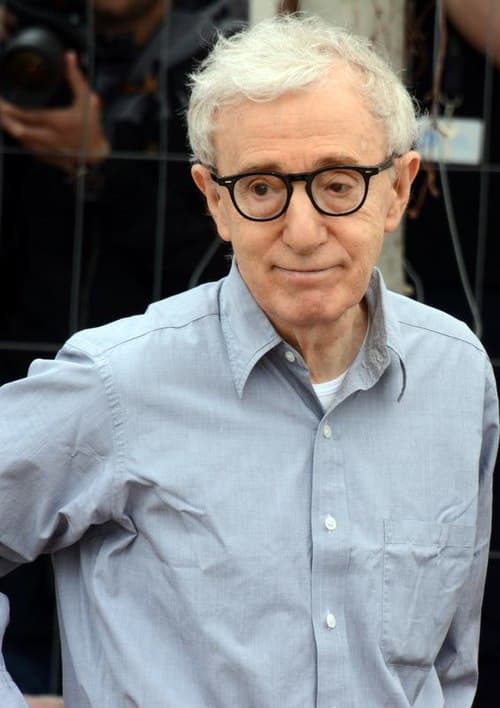
Woody Allen
PERSON7 w/ Garry·36 w/ Marvin
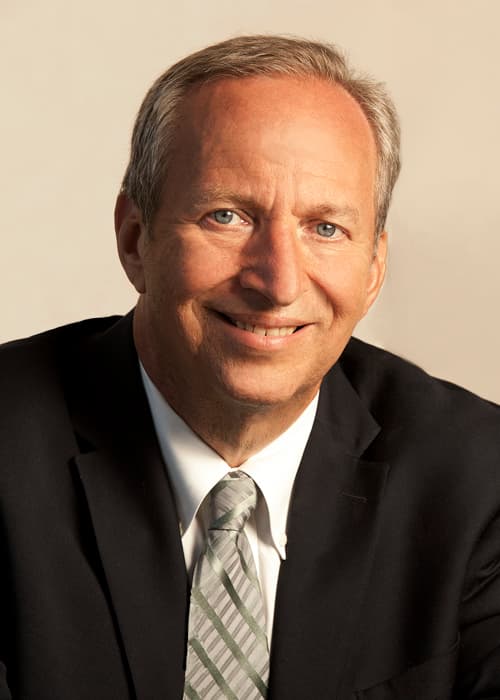
Larry Summers
PERSON2 w/ Garry·40 w/ Marvin
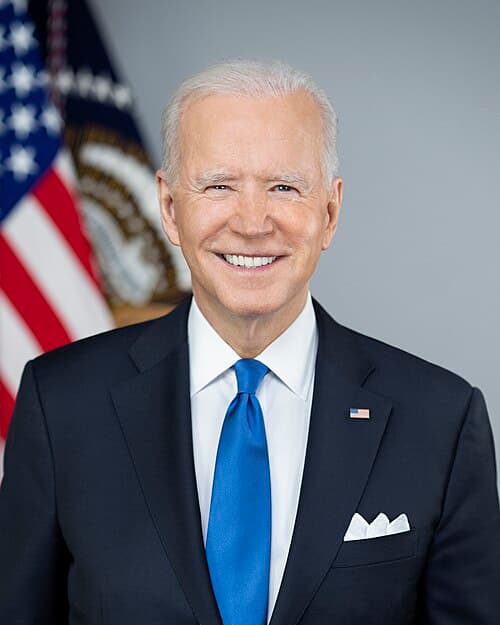
Joe Biden
PERSON8 w/ Garry·33 w/ Marvin