Back to Network




4
Shared Docs
4
Same-Page
6 / 4
Mentions
Document Mentions (4 shared documents)
3 mentions1 same-page
Page ?Same page
ne article described Deep Blue’s victory not as that of a computer, which was just a dumb machine, but as the victory of hundreds of programmers over Kasparov, a single individual. That way of programming is changing dramatically. After a long hiatus, the power of machine learning has taken off. Much of th
, we programmed computers using algorithms we understood at least in principle. So when machines did amazing things like beating world chess champion Garry Kasparov, we could say that the victorious programs were designed with algorithms based on our own understanding—using, in this instance, the experience and a
ge making, creativity, and the use of programming as artistic tools. The deep connections between science and art had already been noted by the late Heinz von Foerster, one of the architects of cybernetics, who worked with Norbert Wiener from the mid-1940s and in the 1960s founded the field of second-order cyberneti
3 mentions1 same-page
Page ?Same page
ne article described Deep Blue’s victory not as that of a computer, which was just a dumb machine, but as the victory of hundreds of programmers over Kasparov, a single individual. That way of programming is changing dramatically. After a long hiatus, the power of machine learning has taken off. Much of th
, we programmed computers using algorithms we understood at least in principle. So when machines did amazing things like beating world chess champion Garry Kasparov, we could say that the victorious programs were designed with algorithms based on our own understanding—using, in this instance, the experience and a
ge making, creativity, and the use of programming as artistic tools. The deep connections between science and art had already been noted by the late Heinz von Foerster, one of the architects of cybernetics, who worked with Norbert Wiener from the mid-1940s and in the 1960s founded the field of second-order cyberneti
2 mentions1 same-page
Page ?Same page
a vast selection of possible future moves. But the majority of predictions of AI, e.g., robotic maids, turned out to be illusory. When Deep Blue beat Garry Kasparov at chess in 1997, the most 20 HOUSE_OVERSIGHT_016823 powerful room-cleaning robot was a Roomba, which moved around vacuuming at random and squeake
d systems—1* order Cybernetics— moved to the Cybernetics of observing systems—2"™ order Cybernetics—or “the Cybernetics of Cybernetics”, as coined by Heinz von Foerster, who joined the Macy conferences in the mid 1950s, and spearheaded the new movement. Cybernetics, rather than disappearing, was becoming metabolized
Sponsored
2 mentions1 same-page
Page ?Same page
a vast selection of possible future moves. But the majority of predictions of AI, e.g., robotic maids, turned out to be illusory. When Deep Blue beat Garry Kasparov at chess in 1997, the most 20 HOUSE_OVERSIGHT_016240 powerful room-cleaning robot was a Roomba, which moved around vacuuming at random and squeake
d systems—1* order Cybernetics— moved to the Cybernetics of observing systems—2"™ order Cybernetics—or “the Cybernetics of Cybernetics”, as coined by Heinz von Foerster, who joined the Macy conferences in the mid 1950s, and spearheaded the new movement. Cybernetics, rather than disappearing, was becoming metabolized
Sponsored
Mutual Connections (688)
Entities connected to both Garry Kasparov and Heinz von Foerster
Stephen Hawking
PERSON17 w/ Garry·4 w/ Heinz
Ghislaine Maxwell
PERSON16 w/ Garry·4 w/ Heinz
Prince Andrew
PERSON15 w/ Garry·4 w/ Heinz
George W. Bush
PERSON12 w/ Garry·6 w/ Heinz
Marc Rich
PERSON12 w/ Garry·5 w/ Heinz
LB
Leon Black
PERSON12 w/ Garry·4 w/ Heinz
DB
Doug Band
PERSON12 w/ Garry·4 w/ Heinz
Julie K. Brown
PERSON9 w/ Garry·7 w/ Heinz
Samantha Power
PERSON11 w/ Garry·4 w/ Heinz
Barack Obama
PERSON11 w/ Garry·4 w/ Heinz
Eric Trump
PERSON11 w/ Garry·4 w/ Heinz
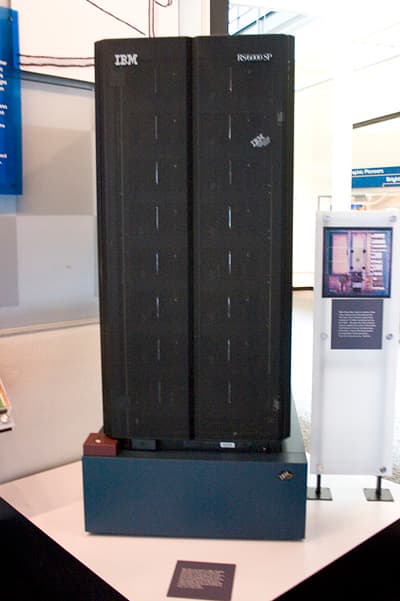
Deep Blue
PERSON10 w/ Garry·4 w/ Heinz
Alan Dershowitz
PERSON9 w/ Garry·5 w/ Heinz
Danny Hillis
PERSON10 w/ Garry·4 w/ Heinz
AG
Ace Greenberg
PERSON9 w/ Garry·4 w/ Heinz
William Shakespeare
PERSON6 w/ Garry·6 w/ Heinz
Earth
LOCATION8 w/ Garry·4 w/ Heinz
Oliver Stone
PERSON8 w/ Garry·4 w/ Heinz
Harvey Weinstein
PERSON7 w/ Garry·4 w/ Heinz
John F. Kennedy
PERSON9 w/ Garry·2 w/ Heinz