Back to Network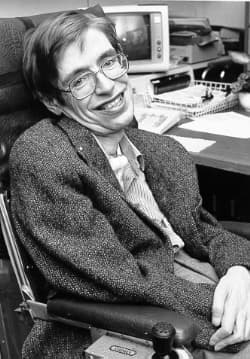












5
Shared Docs
5
Same-Page
8 / 5
Mentions
Document Mentions (5 shared documents)
3 mentions1 same-page
Page ?Same page
calm and, before each turn, looks to a screen at the side of the board, reads the instruction, and makes his move. This is the famous match between Garry Kasparov and IBM’s Deep Blue. Kasparov, a child prodigy, became world chess champion at the age of fifteen and, to this day, holds the record for the highest
o a screen at the side of the board, reads the instruction, and makes his move. This is the famous match between Garry Kasparov and IBM’s Deep Blue. Kasparov, a child prodigy, became world chess champion at the age of fifteen and, to this day, holds the record for the highest chess ranking ever achieved. S
d on interview, rather than practical tests. Could a computer hold a conversation with me and persuade me it is intelligent? Meet Eliza. Invented by Joseph Weizenbaum of the Massachusetts Institute of Technology, and named after George Bernard Shaw’s character in Pygmalion, Eliza runs an algorithm pretending to be
3 mentions1 same-page
Page ?Same page
ne article described Deep Blue’s victory not as that of a computer, which was just a dumb machine, but as the victory of hundreds of programmers over Kasparov, a single individual. That way of programming is changing dramatically. After a long hiatus, the power of machine learning has taken off. Much of th
, we programmed computers using algorithms we understood at least in principle. So when machines did amazing things like beating world chess champion Garry Kasparov, we could say that the victorious programs were designed with algorithms based on our own understanding—using, in this instance, the experience and a
e; the Fair Access to Science and Technology Research Act (FASTR); and the Open Humans Foundation. In his 1976 book Computer Power and Human Reason, Joseph Weizenbaum argued that machines should not replace Homo in situations requiring respect, dignity, or care, while others (author Pamela McCorduck and computer sc
3 mentions1 same-page
Page ?Same page
ne article described Deep Blue’s victory not as that of a computer, which was just a dumb machine, but as the victory of hundreds of programmers over Kasparov, a single individual. That way of programming is changing dramatically. After a long hiatus, the power of machine learning has taken off. Much of th
, we programmed computers using algorithms we understood at least in principle. So when machines did amazing things like beating world chess champion Garry Kasparov, we could say that the victorious programs were designed with algorithms based on our own understanding—using, in this instance, the experience and a
e; the Fair Access to Science and Technology Research Act (FASTR); and the Open Humans Foundation. In his 1976 book Computer Power and Human Reason, Joseph Weizenbaum argued that machines should not replace Homo in situations requiring respect, dignity, or care, while others (author Pamela McCorduck and computer sc
Sponsored
2 mentions1 same-page
Page ?Same page
a vast selection of possible future moves. But the majority of predictions of AI, e.g., robotic maids, turned out to be illusory. When Deep Blue beat Garry Kasparov at chess in 1997, the most 20 HOUSE_OVERSIGHT_016823 powerful room-cleaning robot was a Roomba, which moved around vacuuming at random and squeake
owing it to detect dissent and subversion as it arises and make resistance to state power futile. Orwell’s telescreens are the prototype, and in 1976 Joseph Weizenbaum, one of the gloomiest tech prophets of all time, warned my class of graduate students not to pursue automatic speech recognition because government s
2 mentions1 same-page
Page ?Same page
a vast selection of possible future moves. But the majority of predictions of AI, e.g., robotic maids, turned out to be illusory. When Deep Blue beat Garry Kasparov at chess in 1997, the most 20 HOUSE_OVERSIGHT_016240 powerful room-cleaning robot was a Roomba, which moved around vacuuming at random and squeake
owing it to detect dissent and subversion as it arises and make resistance to state power futile. Orwell’s telescreens are the prototype, and in 1976 Joseph Weizenbaum, one of the gloomiest tech prophets of all time, warned my class of graduate students not to pursue automatic speech recognition because government s
Sponsored
Mutual Connections (703)
Entities connected to both Garry Kasparov and Joseph Weizenbaum
Stephen Hawking
PERSON17 w/ Garry·10 w/ Joseph
Prince Andrew
PERSON15 w/ Garry·7 w/ Joseph
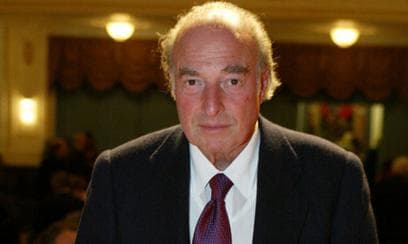
Marc Rich
PERSON12 w/ Garry·10 w/ Joseph
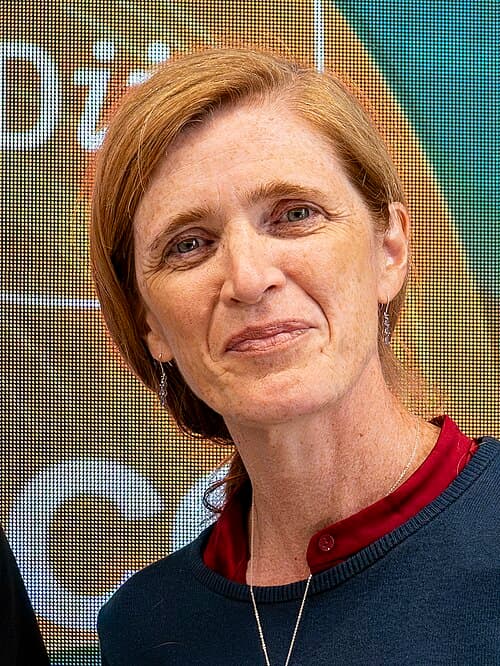
Samantha Power
PERSON11 w/ Garry·10 w/ Joseph
Ghislaine Maxwell
PERSON16 w/ Garry·4 w/ Joseph
DB
Doug Band
PERSON12 w/ Garry·7 w/ Joseph
LB
Leon Black
PERSON12 w/ Garry·7 w/ Joseph
George W. Bush
PERSON12 w/ Garry·6 w/ Joseph
Eric Trump
PERSON11 w/ Garry·5 w/ Joseph
Barack Obama
PERSON11 w/ Garry·5 w/ Joseph
Alan Dershowitz
PERSON9 w/ Garry·7 w/ Joseph
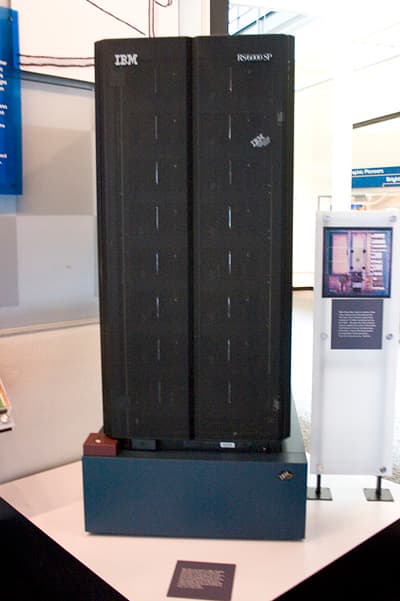
Deep Blue
PERSON10 w/ Garry·6 w/ Joseph
Robert Gates
PERSON7 w/ Garry·8 w/ Joseph
Julie K. Brown
PERSON9 w/ Garry·5 w/ Joseph
Danny Hillis
PERSON10 w/ Garry·4 w/ Joseph
Earth
LOCATION8 w/ Garry·6 w/ Joseph
Harvey Weinstein
PERSON7 w/ Garry·7 w/ Joseph
Cambridge University
ORGANIZATION6 w/ Garry·8 w/ Joseph
Jeffrey Epstein
PERSON12 w/ Garry·2 w/ Joseph
Prince Charles
PERSON8 w/ Garry·6 w/ Joseph