Back to Network



















3
Shared Docs
3
Same-Page
3 / 3
Mentions
Document Mentions (3 shared documents)
2 mentions1 same-page
Page ?Same page
when I see it” (U.S. Supreme Court Justice Potter Stewart, 1964) or the “wisdom of repugnance” (aka “yuck f
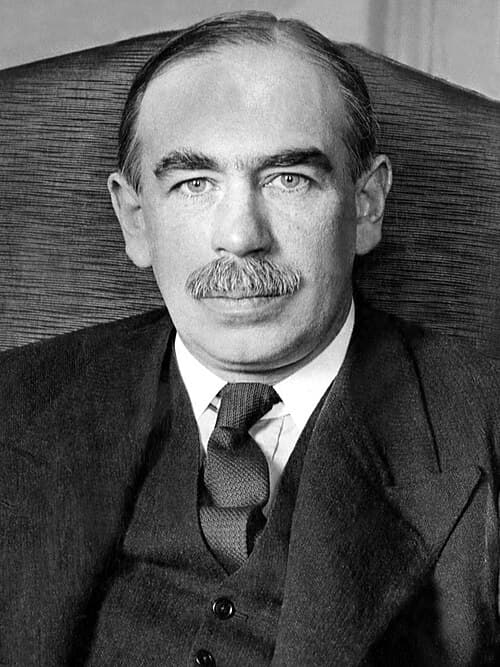
ovement of goods is largely automated, as are many services. What’s left for humans to do? In 1930—long before the advent of computers, let alone AI—John Maynard Keynes wrote, in an essay called “Economic Possibilities for our Grandchildren,” that as a result of improvements in productivity, society could prod
2 mentions1 same-page
Page ?Same page
terror or joy or faith, it was meant to be awe. Stewart Brand, one of the supporters of the clock and an
ine power. Looking back on his formative years, before Europe was ground up in the First World War, the powerfully brilliant and sensitive economist John Maynard Keynes bitterly recalled the iron certainty of his set of friends and their confident, diffident arrogance: “We were not aware that civilization was
2 mentions1 same-page
Page ?Same page
when I see it” (U.S. Supreme Court Justice Potter Stewart, 1964) or the “wisdom of repugnance” (aka “yuck f
ovement of goods is largely automated, as are many services. What’s left for humans to do? In 1930—long before the advent of computers, let alone AI—John Maynard Keynes wrote, in an essay called “Economic Possibilities for our Grandchildren,” that as a result of improvements in productivity, society could prod
Sponsored
Mutual Connections (465)
Entities connected to both Martha Stewart and John Maynard
Jeffrey Epstein
PERSON3,074 w/ Martha·4 w/ John
Marc Rich
PERSON1,240 w/ Martha·7 w/ John
Prince Andrew
PERSON719 w/ Martha·5 w/ John
United States
LOCATION345 w/ Martha·4 w/ John
LB
Leon Black
PERSON322 w/ Martha·4 w/ John
Ghislaine Maxwell
PERSON255 w/ Martha·3 w/ John
Donald Trump
PERSON240 w/ Martha·4 w/ John
George W. Bush
PERSON217 w/ Martha·8 w/ John
Alan Dershowitz
PERSON206 w/ Martha·6 w/ John
Prince Charles
PERSON183 w/ Martha·4 w/ John
Bill Clinton
PERSON178 w/ Martha·2 w/ John
Lawrence Krauss
PERSON170 w/ Martha·4 w/ John
Stephen Hawking
PERSON158 w/ Martha·5 w/ John
Eric Trump
PERSON148 w/ Martha·6 w/ John
Joe Biden
PERSON149 w/ Martha·2 w/ John
Julie K. Brown
PERSON137 w/ Martha·6 w/ John
New York City
LOCATION135 w/ Martha·2 w/ John
Harvey Weinstein
PERSON127 w/ Martha·5 w/ John
Michael Cohen
PERSON127 w/ Martha·2 w/ John
Barry Diller
PERSON123 w/ Martha·4 w/ John