Back to Network















5
Shared Docs
5
Same-Page
5 / 5
Mentions
Document Mentions (5 shared documents)
2 mentions1 same-page
Page ?Same page
(defining "case" as "a question contested before a court of justice"). This general understanding is equally applicable to criminal proceedings. In Chavez v. Martinez, 538 U.S. 760 (2005), the Supreme Court held that a criminal "case" — as distinct from an investigation — "at the very least requires th
574 (6th Cir. 1980). Further, "intervention by the court in the internal affairs of the Justice Department would clearly constitute a violation of the Separation of Powers doctrine." Id. In Dresser Industries, Inc. v. United States, 596 F.2d 1231, 1237 (51h Cir. 1979), the court of appeals observed that "[t]he decisio
2 mentions1 same-page
Page ?Same page
(defining "case" as "a question contested before a court of justice"). This general understanding is equally applicable to criminal proceedings. In Chavez v. Martinez , 538 U.S. 760 (2005), the Supreme Court held that a criminal "case" — as distinct from an investigation — "at the very least requires
itioners maintain that this provision establishes that the CVRA contemplated a case such as this where no charges were ever filed. To the contrary, the Separation of Powers doctrine and the full context of the CVRA counsel otherwise. F9 Here, Petitioners have not articulated what they are seeking. As set forth above in
2 mentions1 same-page
Page ?Same page
(defining "case" as "a question contested before a court of justice"). This general understanding is equally applicable to criminal proceedings. In Chavez v. Martinez, 538 U.S. 760 (2005), the Supreme Court held that a criminal "case" — as distinct from an investigation — "at the very least requires th
574 (6th Cir. 1980). Further, "intervention by the court in the internal affairs of the Justice Department would clearly constitute a violation of the Separation of Powers doctrine." Id. In Dresser Industries, Inc. v. United States, 596 F.2d 1231, 1237 (511' Cir. 1979), the court of appeals observed that "[t]he decis
Sponsored
2 mentions1 same-page
Page ?Same page
(defining "case" as "a question contested before a court of justice"). This general understanding is equally applicable to criminal proceedings. In Chavez' Martinez, 538 U.S. 760 (2005), the Supreme Court held that a criminal "ease" — as distinct from an investigation — "at the very least requires the
574 (6th Cir. 1980). Further, "intervention by the court in the internal affairs of the Justice Department would clearly constitute a violation of the Separation of Powers doctrine." Id. In Dresser Industries, Inc." United States, 596 F.2d 1231, 1237 (5' Cir. 1979), the court of appeals observed that "[t]he decision
2 mentions1 same-page
Page ?Same page
(defining "case" as "a question contested before a court of justice"). This general understanding is equally applicable to criminal proceedings. In Chavez v. Martine:, 538 U.S. 760 (2005), the Supreme Court held that a criminal "case" — as distinct from an investigation — "at the very least requires th
574 (6th Cir. 1980). Further, "intervention by the court in the internal affairs of the Justice Department would clearly constitute a violation of the Separation of Powers doctrine." Id. In Dresser Industries, Inc. v. United States, 596 F.2d 1231, 1237 (5th Cir. 1979), the court of appeals observed that tilt decision
Sponsored
Mutual Connections (156)
Entities connected to both Chavez and the Separation of Powers
Jeffrey Epstein
PERSON34 w/ Chavez·7 w/ the
Prince Andrew
PERSON22 w/ Chavez·7 w/ the
LB
Leon Black
PERSON22 w/ Chavez·7 w/ the
Department of Justice
ORGANIZATION22 w/ Chavez·7 w/ the
United States
LOCATION21 w/ Chavez·7 w/ the
Scarlett Johansson
PERSON21 w/ Chavez·5 w/ the
Michael Jackson
PERSON18 w/ Chavez·7 w/ the
Michigan
LOCATION19 w/ Chavez·6 w/ the
Marc Rich
PERSON21 w/ Chavez·2 w/ the
Supreme Court
ORGANIZATION17 w/ Chavez·6 w/ the
Detroit
LOCATION16 w/ Chavez·6 w/ the
India
LOCATION16 w/ Chavez·6 w/ the
Virginia Giuffre
PERSON19 w/ Chavez·2 w/ the
Eric Trump
PERSON15 w/ Chavez·6 w/ the
Bradley Edwards
PERSON12 w/ Chavez·6 w/ the
Bailey
PERSON12 w/ Chavez·6 w/ the
FBI
ORGANIZATION11 w/ Chavez·6 w/ the
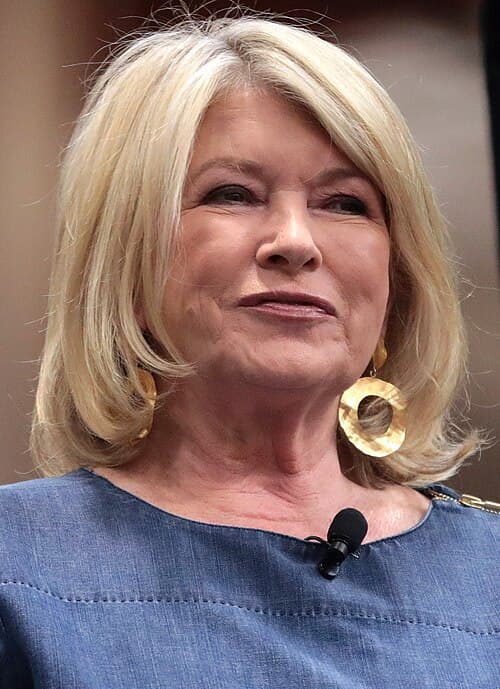
Martha Stewart
PERSON11 w/ Chavez·6 w/ the
MF
Maria Farmer
PERSON14 w/ Chavez·3 w/ the
Cynthia Nixon
PERSON10 w/ Chavez·6 w/ the