Back to Network









4
Shared Docs
4
Same-Page
6 / 4
Mentions
Document Mentions (4 shared documents)
3 mentions1 same-page
Page ?Same page
0,000 neurons each. Once one has committed oneself to looking at such groups, the next step is to ask how these groups are organized, which leads to Edelman's concept of "maps." A "map," in Edelman's terminology, is a connected set of groups with the property that when one of the inter-group connection
to Hebbian learning between assemblies has been pursued by Nobelist Gerald Edelman in his theory of neuronal group selection, or "Neural Darwinism." Edelman won a Nobel Prize for his work in immunology, which, like most modern immunology, was based on C. MacFarlane Burnet's theory of "clonal selection"
to asking how human ethical systems habitually perform these balancing acts. Which is what CEV, CAV, CBV try to measure. 12.5.1 The Golden Rule and the Stages of Ethical Development Next we explore more explicitly how these Golden Rule based imperatives align with the eth- ical developmental stages we have outlined here. With th
3 mentions1 same-page
Page ?Same page
50,000 neurons each. Once one has committed oneself to looking at such groups, the next step is to ask how these groups are organized, which leads to Edelman’s concept of “maps.” A “map,” in Edelman’s terminology, is a connected set of groups with the property that when one of the inter-group connections
similar transient assemblies when highly activated. The importance of repeated, slightly varied copies of the same subnetwork has been emphasized by Edelman [Ede93] among other neural theorists. 1 The larger an ensemble is, she suggests, the more vivid it is as a conscious experience; an hypothesis that
nto asking how human ethical systems habitually perform these balancing acts. Which is what CHV, CAV, CBV try to measure. 12.5.1 The Golden Rule and the Stages of Ethical Development Next we explore more explicitly how these Golden Rule based imperatives align with the eth- ical developmental stages we have outlined here. With th
2 mentions1 same-page
Page ?Same page
r-level behaviors like reasoning or subgoaling. • NOMAD (Neurally Organized Mobile Adaptive Device) automata and its successors [K EMI are based on Edelman's "Neural Darwinism" model of the brain, and feature large numbers of simulated neurons evolving by natural selection into configurations that carry
ive AGI 216 12.5 Clarifying the Ethics of Justice: Extending the Golden Rule in to a Multifactorial Ethical Model 219 12.5.1 The Golden Rule and the Stages of Ethical Development 222 12.5.2 The Need for Context-Sensitivity and Adaptiveness in Deploying Ethical Principles 223 12.6 The Ethical Treatment of AGIs 226 1
Sponsored
2 mentions1 same-page
Page ?Same page
er-level behaviors like reasoning or subgoaling. e NOMAD (Neurally Organized Mobile Adaptive Device) automata and its successors [KE06] are based on Edelman’s “Neural Darwinism” model of the brain, and feature large numbers of simulated neurons evolving by natural selection into configurations that carry
the Ethics of Justice: Extending the Golden Rule in to a Multifactorial Ethical Model ..........0..000 000 cc eee eee 219 12.5.1 The Golden Rule and the Stages of Ethical Development ............. 222 12.5.2 The Need for Context-Sensitivity and Adaptiveness in Deploying Ethical Principles .......0.0.000 0000 ec eee eee 223 12.6 Th
Sponsored
Mutual Connections (365)
Entities connected to both Edelman and the Stages of Ethical Development
Jeffrey Epstein
PERSON41 w/ Edelman·2 w/ the
Marc Rich
PERSON19 w/ Edelman·4 w/ the
Donald Trump
PERSON18 w/ Edelman·2 w/ the
Bill Clinton
PERSON16 w/ Edelman·2 w/ the
Stephen Hawking
PERSON14 w/ Edelman·4 w/ the
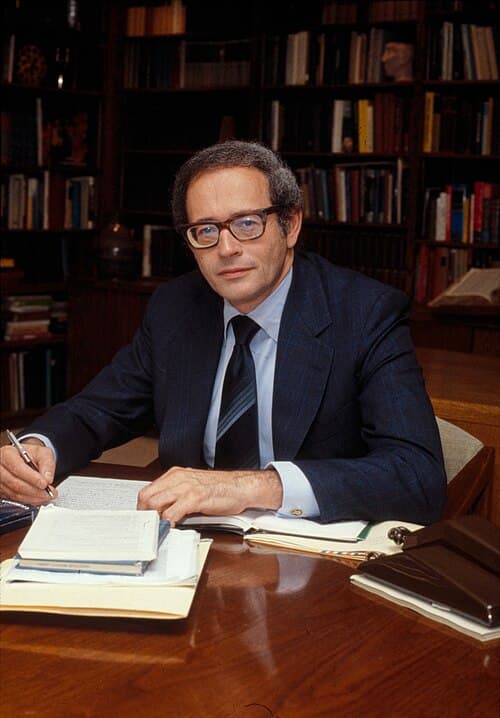
Gerald Edelman
PERSON16 w/ Edelman·2 w/ the
Prince Andrew
PERSON15 w/ Edelman·2 w/ the
George W. Bush
PERSON10 w/ Edelman·4 w/ the
Vladimir Putin
PERSON7 w/ Edelman·4 w/ the
Alan Dershowitz
PERSON8 w/ Edelman·2 w/ the
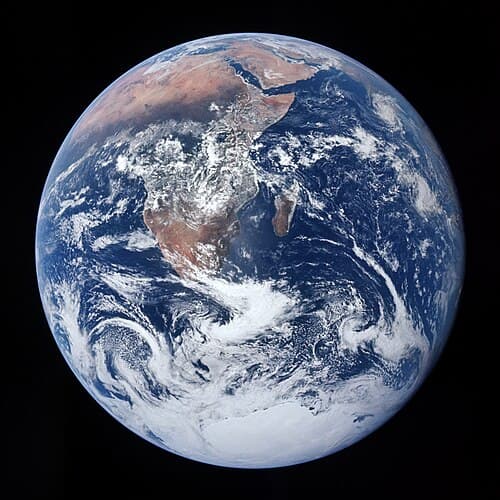
Earth
LOCATION6 w/ Edelman·4 w/ the
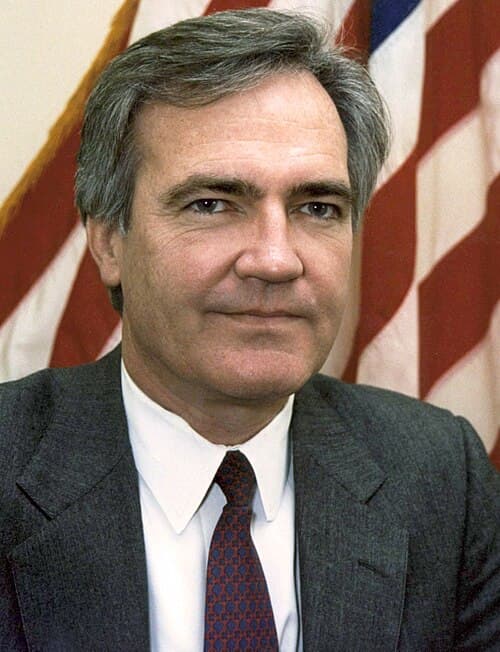
Vince Foster
PERSON5 w/ Edelman·4 w/ the
CogPrime
ORGANIZATION5 w/ Edelman·4 w/ the
OpenCog
ORGANIZATION5 w/ Edelman·4 w/ the
Glocal Memory
ORGANIZATION4 w/ Edelman·4 w/ the
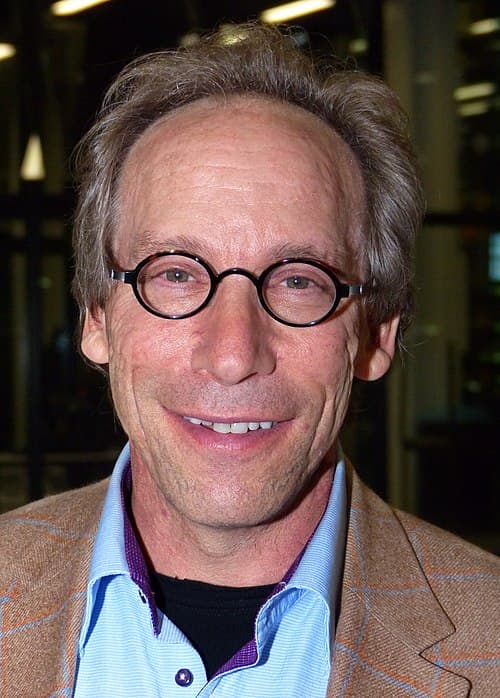
Lawrence Krauss
PERSON6 w/ Edelman·2 w/ the
Hebbian Learning
ORGANIZATION4 w/ Edelman·4 w/ the
Hypergraphs
PERSON4 w/ Edelman·4 w/ the
AGI Ethics
ORGANIZATION4 w/ Edelman·4 w/ the
Key Vertex
LOCATION4 w/ Edelman·4 w/ the