Back to Network

3
Shared Docs
3
Same-Page
8 / 3
Mentions
Document Mentions (3 shared documents)
4 mentions1 same-page
Page ?Same page
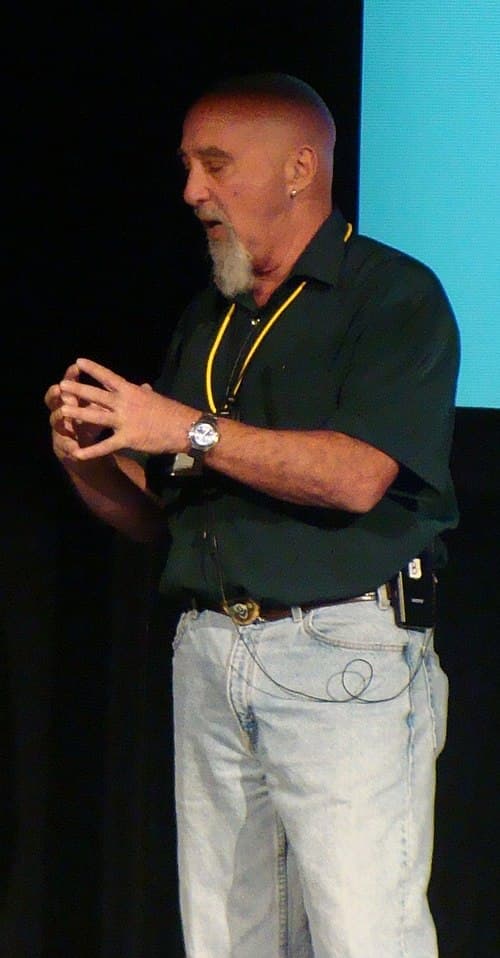
sdom says each brain cell is a single processing unit making an on-off decision — fire, or don't fire - depending on the state of its neighbors. But, Stuart Hameroff, Professor of Anesthesiology at the University of Arizona, thinks neurons are not the fundamental information-processing unit in the brain. He sugges
e neurons. Penrose had been looking for a mechanism in the brain that would explain how brains solve non-computational problems. Together Penrose and Hameroff propose tubulin micro tubes are quantum gravity computers that allow us to think non-computationally and are the seat of consciousness. The ideas are
. After all, nerves have wiring within them to carry information to the synapses and it’s likely this wiring is involved in the thinking process. But Hameroff is not finished. He has teamed up with Roger Penrose to bring quantum mechanics into the picture. HOUSE_OVERSIGHT_015813 124 Are the Androids Dream
an be created without understanding. Can a monkey, or perhaps some form of computerized random number generator, accidentally type out the script for Shakespeare's Hamlet or write Tolstoy’s War and Peace? Is knowledge generation simply a numbers game? Leo Tolstoy’s War and Peace is generally assumed to be the
4 mentions1 same-page
Page ?Same page
tubulin molecules can flip between two states, propagating a ripple along the tube wall. The scale is small enough for quantum effects to matter, and Hameroff suggests quantum error correction keeps the ripples from decohering too fast. Because the processing is happening at a molecular level rather than at
is also, interestingly, the protein that unzips the double helix when a cell divides, and so plays a fundamental role in our evolution. Penrose and Hameroff suggest these tubes form the true processing element in our brains. The walls of the tubes are formed of successive alpha and beta tubulin molecules.
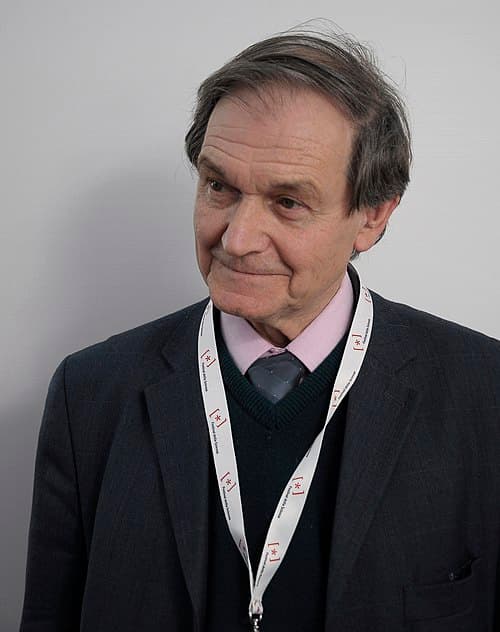
in non-computable thought. It is his ‘machines’ we will look at next. Penrose-Hameroff Machines, aka Brains Roger Penrose of Oxford University and Stuart Hameroff of the University of Arizona have proposed a very different way to understand the workings of the brain. They focus on the much smaller scale structu
‘monkeys and typewriters’ idea where we use random chance to generate information. Many people have suggested it is possible to write a play such as Shakespeare's Hamlet by simply typing random characters until we happened upon the play. The argument is flawed. The first flaw is the process would take a supe
3 mentions1 same-page
Page ?Same page
n. Bantam, 2008. Chapter 4 Derren Brown. Tricks of the Mind. Channel 4, 2006. Gurney, Kevin. An Introduction to Neural Networks. CRC Press, 1997. Hameroff, S. R. “Quantum Coherence in Microtubules: A Neural Basis for Emergent Consciousness?” Journal of Consciousness Studies 1, no. 1 (1994): 91-118. Hig
eryday Life. Reprint. The Free Press, 1993. Gregory, Robert J. Psychological Testing: History, Principles, and Applications. 6th ed. Pearson, 2010. Hameroff, $. R. “Quantum Coherence in Microtubules: A Neural Basis for Emergent Consciousness?” Journal of Consciousness Studies 1, no. 1 (1994): 91-118. Ham
’s Chinese Room 66, 222 secret message 214 Seeger, Pete 162 Sego, Daniel 335 self-halting problem 250 SendMail 265 Shadows of the Mind 50, 282 Shakespeare, William 39, 129, 131, 138, 140, 254 Shamir, Adi 165 Shannon, Claude xiii, 3, 216, 337 Sharman, Mike ix Shaw, George Bernard 25, 78, 286 Shockle
Sponsored
Mutual Connections (208)
Entities connected to both Stuart Hameroff and William Shakespeare
Jeffrey Epstein
PERSON101 w/ Stuart·87 w/ William
Deepak Chopra
PERSON45 w/ Stuart·16 w/ William
Samantha Power
PERSON23 w/ Stuart·33 w/ William
George W. Bush
PERSON7 w/ Stuart·47 w/ William
Stephen Hawking
PERSON15 w/ Stuart·38 w/ William
Marc Rich
PERSON7 w/ Stuart·42 w/ William
Prince Charles
PERSON13 w/ Stuart·32 w/ William
LB
Leon Black
PERSON12 w/ Stuart·32 w/ William
Woody Allen
PERSON23 w/ Stuart·20 w/ William
Prince Andrew
PERSON8 w/ Stuart·34 w/ William
Alan Dershowitz
PERSON13 w/ Stuart·21 w/ William
Harvey Weinstein
PERSON2 w/ Stuart·31 w/ William
CW
Courtney Wild
PERSON2 w/ Stuart·30 w/ William
United States
LOCATION2 w/ Stuart·29 w/ William
Michael Douglas
PERSON7 w/ Stuart·23 w/ William
Julie K. Brown
PERSON11 w/ Stuart·18 w/ William
JT
James Tagg
PERSON27 w/ Stuart·2 w/ William
John F. Kennedy
PERSON8 w/ Stuart·20 w/ William
Roger Penrose
PERSON24 w/ Stuart·4 w/ William
Sergey Brin
PERSON15 w/ Stuart·13 w/ William