Back to Network


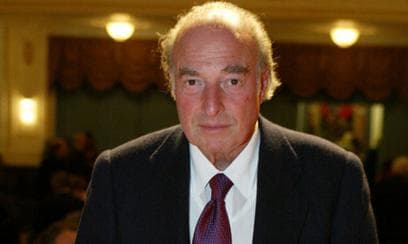
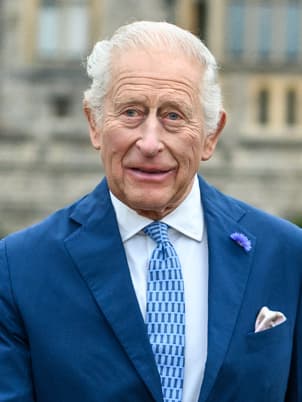
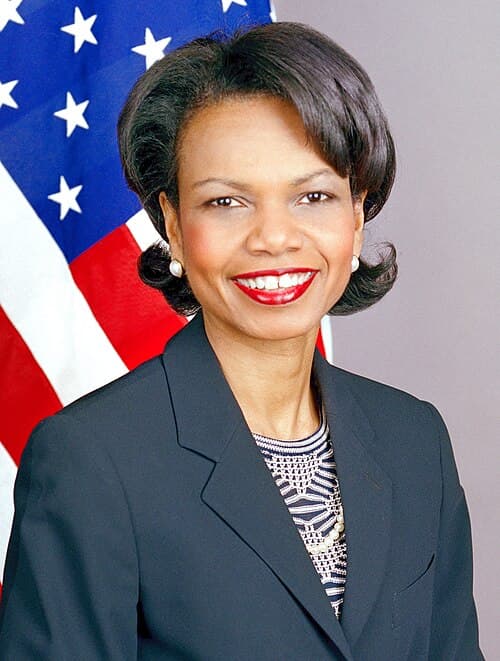
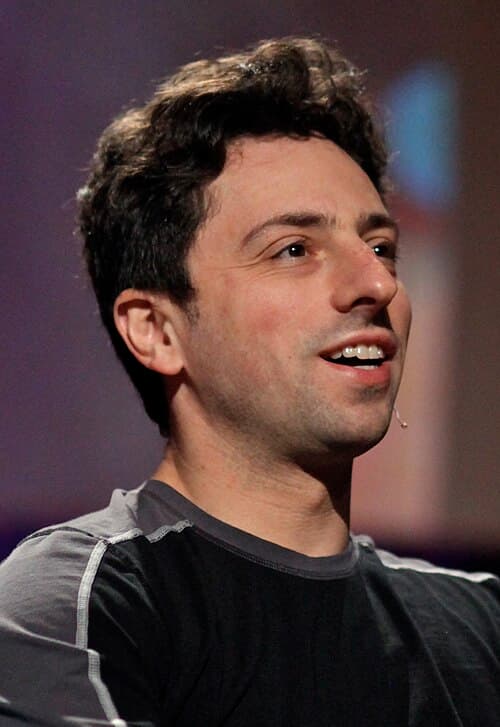

8
Shared Docs
8
Same-Page
11 / 8
Mentions
Document Mentions (8 shared documents)
3 mentions1 same-page
Page ?Same page
n. Bantam, 2008. Chapter 4 Derren Brown. Tricks of the Mind. Channel 4, 2006. Gurney, Kevin. An Introduction to Neural Networks. CRC Press, 1997. Hameroff, S. R. “Quantum Coherence in Microtubules: A Neural Basis for Emergent Consciousness?” Journal of Consciousness Studies 1, no. 1 (1994): 91-118. Hig
eryday Life. Reprint. The Free Press, 1993. Gregory, Robert J. Psychological Testing: History, Principles, and Applications. 6th ed. Pearson, 2010. Hameroff, $. R. “Quantum Coherence in Microtubules: A Neural Basis for Emergent Consciousness?” Journal of Consciousness Studies 1, no. 1 (1994): 91-118. Ham
5 Ig Nobel Prize 365 imaging 99 IMAX theatre 287, 290, 293 Inception 50 inconsistency in mathematics 204 inconsistency defense 207 incubation 1, 301 Indiana University 49 indirect proof 153, 158, 244 Index 411 infinity , 179, 280 history of 179 how to count 180 larger than infinity 185 Infinity Hotel 182 infrared
3 mentions1 same-page
Page ?Same page
From: "Hameroff, Stuart R - (hameroff)" < To: "jeevacation®gmail.com" <[email protected]> Subject: Thanks Date: Fri, 28 Oct 2016 13:14:33 +0000 Attachments: b
. Below is the draft of the first announcement for our 24th annual TSC conference to be held in Shanghai next June. You're invited. best, Stuart Stuart Hameroff MD Professor, Anesthesiology and Psychology Director, Center for Consciousness Studies Banner-University Medical Center The University of Arizona
University, London Evalina Fedorenko, Harvard Medical School George Northoff, University of Ottawa Jaipai Dai, Wuhan University Jerome Busemeyer, Indiana University Leon Chua, UCSF Li Hengwei, Zhejiang University Meijuan Lu, Indiana University EFTA00813395 Nai Ding, Zhejiang University Nicholas Humphrey, C
3 mentions1 same-page
Page ?Same page
ssible to make AGI on digital computers. While we suspect this is correct, we must note that it isn’t proven. It might be that — as Penrose [Pen96], Hameroff [Mam87] and others have argued — we need quantum computers or quantum gravity computers to make AGI. However, there is no evidence of this at this st
sists of the wealthiest nodes and links. Figures 3.3 and 3.4 illustrate the existence and flow of attentional focus in OpenCog. On the other hand, in Hameroff’s recent model of the brain [Ham10], the brain’s moving bubble of attention is achieved through dendro-dendritic connections and the emergent dendrit
of Cogni- tive Science, University of Osnabruck, Germany; Robert Coop, University of Tennessee; Rod Furlan, Singularity Institute; Matthias Scheutz, Indiana University; J. Storrs Hall, Foresight Institute; Alexei Samsonovich, George Mason University; Matt Schlesinger, Southern Illinois University; John Sowa, Vivomin
Sponsored
2 mentions1 same-page
Page ?Same page
uchs (University of Massachusetts at Boston) • Monica Gagliano (University of Western Australia at Perth) • Kathryn Hall (Harvard University) • Stuart Hameroff (University of Arizona at Tucson) • Nicholas Humphrey (Cambridge University) • Eva Jablonka (Tel Aviv University) • Jeffrey Kripal (Rice Univer
ich) • Felix Scholkmann (University of Zurich) • William Seager (University of Toronto) • Marc Solms (University of Cape Town) • Olaf Sporns (Indiana University Bloomington) • Eors Szathmary (Ecological Research Ctr. Tihany, Parmenides Ctr. Pullach) Confirmed In-Depth Workshops include: https://www.tsc201
2 mentions1 same-page
Page ?Same page
, Zhejiang University Evalina Fedorenko, Harvard Medical School Ted Gibson, Massachusetts Institute of Technology Ben Goetzel, OpenCog, Hong Kong Stuart Hameroff, University of Arizona Li Hengwei, Zhejiang University Allan Houng, IPMC, National Yang Ming, Taipei City Nicholas Humphrey, London School of Econ
akers for TSC Shanghai 2017 John J.B. Allen, University of Arizona Marom Bikson, City College of the City University of New York Jerome Busemeyer, Indiana University David Chalmers, New York University Jean-Pierre Changan, College de France Institut Pasteur Elaine Chew, Queen Mary University of London Noam Cho
2 mentions1 same-page
Page ?Same page
sts of the wealthiest nodes and links. Figures 3.3 and 3.4 illustrate the existence and flow of attentional focus in OpenCog. On the other hand, in Hameroff's recent model of the brain 'Hamill], the brain's moving bubble of attention is achieved through dendro-dendritic connections and the emergent dendr
f Cogni- tive Science, University of Osnabruck, Germany; Robert Coop, University of Tennessee; Rod FUrlan, Singularity Institute; Matthias Sellouts, Indiana University; J. Storrs Hall, Foresight Institute; Alexei Samsonovich, George Mason University; Matt Schlesinger, Southern Illinois University; John Sowa, Vivomi
Sponsored
2 mentions1 same-page
Page ?Same page
ulation of the human mind. Development and Learning, International Conf. on, 0, 2002. AGBD+08. Derek Abbott, Julio Gea-Banacloche, Paul C W Davies, Stuart Hameroff, Anton Zeilinger, lens Eisert, Howard M. Wiseman, Sergey M. Bezrukov, and Hans Frauenfelder. Plenary debate: quan- tum effects in biologetrivial or
WAIO. Wendell Wallach and Cohn Atkins. Moral Machines. Oxford University Press, 2010. Wan95. P. Wang. Non-Axiomatic Reasoning System. PhD Thesis, Indiana University. Bloomington, 1995. Wan06. Pei Wang. Rigid Flexibility: The Logic of Intelligence. Springer. 2006. Was09. Mark Weser. Ethics for self-improving m
2 mentions1 same-page
Page ?Same page
mulation of the human mind. Development and Learning, International Conf. on, 0, 2002. AGBDt08. Derek Abbott, Julio Gea-Banacloche, Paul C W Davies, Stuart Hameroff, Anton Zeilinger, Jens Eisert, Howard M. Wiseman, Sergey M. Bezrukov, and Hans Frauenfelder. Plenary debate: quan- tum effects in biology?trivial or
WA1O. Wendell Wallach and Colin Atkins. Moral Machines. Oxford University Press, 2010. Wan95. P. Wang. Non-Aziomatic Reasoning System. PhD Thesis, Indiana University. Bloomington, 1995. Wan06. Pei Wang. Rigid Flexibility: The Logic of Intelligence. Springer, 2006. Was09. Mark Waser. Ethics for self-improving mac
Sponsored
Mutual Connections (887)
Entities connected to both Stuart Hameroff and Indiana University
Jeffrey Epstein
PERSON101 w/ Stuart·23 w/ Indiana
Deepak Chopra
PERSON45 w/ Stuart·2 w/ Indiana
Gino Yu
PERSON31 w/ Stuart·4 w/ Indiana
Tucson
LOCATION24 w/ Stuart·8 w/ Indiana
Woody Allen
PERSON23 w/ Stuart·8 w/ Indiana
Julie K. Brown
PERSON11 w/ Stuart·19 w/ Indiana
Samantha Power
PERSON23 w/ Stuart·6 w/ Indiana
Stephen Hawking
PERSON15 w/ Stuart·14 w/ Indiana
Roger Penrose
PERSON24 w/ Stuart·4 w/ Indiana
Alan Dershowitz
PERSON13 w/ Stuart·15 w/ Indiana
Lawrence Krauss
PERSON11 w/ Stuart·14 w/ Indiana
LB
Leon Black
PERSON12 w/ Stuart·13 w/ Indiana
Marc Rich
PERSON7 w/ Stuart·18 w/ Indiana
Prince Charles
PERSON13 w/ Stuart·11 w/ Indiana
ST
Stuart
PERSON22 w/ Stuart·2 w/ Indiana
Condoleezza Rice
PERSON7 w/ Stuart·16 w/ Indiana
Sergey Brin
PERSON15 w/ Stuart·8 w/ Indiana
Michael Douglas
PERSON7 w/ Stuart·15 w/ Indiana
George W. Bush
PERSON7 w/ Stuart·15 w/ Indiana
Prince Andrew
PERSON8 w/ Stuart·14 w/ Indiana