Back to Network












5
Shared Docs
5
Same-Page
5 / 5
Mentions
Document Mentions (5 shared documents)
2 mentions1 same-page
Page ?Same page
itecture by starting with a useful application like a search engine or conversational agent, and extending its common sense abilities over time. But Ben Kuipers worried that choosing too specific an application would lead to what happened to most previous projects-- someone discovers some set of ad hoc trick
win Ram (Georgia Institute of Technology), Doug Riecken (IBM T. J. Watson Research Center), Roger Schank (Carnegie Mellon University), Mary Shepard (Cycorp), Push Singh (Massachusetts Institute of Technology), Jelivlark Siskind (Purdue University), Aaron Sloman (University of Birmingham), Oliver Steele
2 mentions1 same-page
Page ?Same page
urations that carry out sensorimotor and categorization tasks. The emergence of higher-level cognition from this approach seems rather unlikely. • Ben Kuipers and his colleagues INIK07, MKOS, NIKOalhave pursued an extremely innovative research program which combines qualitative reasoning and reinforcement
signs have been created for the connection of Cyc with Albus's 4D-RCS Cyc's most unique aspect is the large datah•so of commonsense knowledge that Cycorp has accumulated (millions of pieces of knowledge, entered by specially trained humans in predicate logic format); part of the philosophy underlying
2 mentions1 same-page
Page ?Same page
igurations that carry out sensorimotor and categorization tasks. The emergence of higher-level cognition from this approach seems rather unlikely. e Ben Kuipers and his colleagues [MK07, MIX08, MIXO09]have pursued an extremely innovative research program which combines qualitative reasoning and reinforcement
have been created for the connection of Cye with Albus’s 4D-RCS [AMOI]. Cyc’s most unique aspect is the large database of commonsense knowledge that Cycorp has accumulated (millions of pieces of knowledge, entered by specially trained humans in predicate logic format); part of the philosophy underlying C
Sponsored
2 mentions1 same-page
Page ?Same page
itecture by starting with a useful application like a search engine or conversational agent, and extending its common sense abilities over time. But Ben Kuipers worried that choosing too specific an application would lead to what happened to most previous projects— someone discovers some set of ad hoc tricks
icipants: Larry Birnbaum (Northwestern University), Ken Forbus (Northwestern University), Ben Kuipen (University of Texas at Austin), Douglas Lenat (Cycorp), Henry Lieberman (Massachusetts Institute of Technology), Henry Minsky (Laszlo Systems), Marvin Minsky (Massachusetts Institute of Technology), Er
2 mentions1 same-page
Page ?Same page
itecture by starting with a useful application like a search engine or conversational agent, and extending its common sense abilities over time. But Ben Kuipers worried that choosing too specific an application would lead to what happened to most previous projects-- someone discovers some set of ad hoc trick
win Ram (Georgia Institute of Technology), Doug Riecken (IBM T. J. Watson Research Center), Roger Schank (Carnegie Mellon University), Mary Shepard (Cycorp), Push Singh (Massachusetts Institute of Technology), le ark Purdue Aaron Sloman (University of Birmingham), Oliver Steele (1111Systems), (inde
Sponsored
Mutual Connections (794)
Entities connected to both Ben Kuipers and Cycorp
Michael Douglas
PERSON7 w/ Ben·9 w/ Cycorp
Jeffrey Epstein
PERSON5 w/ Ben·9 w/ Cycorp
Marvin Minsky
PERSON7 w/ Ben·7 w/ Cycorp
Alan Dershowitz
PERSON5 w/ Ben·9 w/ Cycorp
Marc Rich
PERSON8 w/ Ben·5 w/ Cycorp
George W. Bush
PERSON7 w/ Ben·5 w/ Cycorp
Earth
LOCATION6 w/ Ben·5 w/ Cycorp
Stephen Hawking
PERSON5 w/ Ben·5 w/ Cycorp
GA
Gardner
PERSON5 w/ Ben·5 w/ Cycorp
The Society of Mind
ORGANIZATION5 w/ Ben·5 w/ Cycorp
EM
Erik Mueller
PERSON3 w/ Ben·7 w/ Cycorp
Singh
PERSON5 w/ Ben·5 w/ Cycorp
Prince Charles
PERSON5 w/ Ben·5 w/ Cycorp
DARPA
ORGANIZATION5 w/ Ben·5 w/ Cycorp
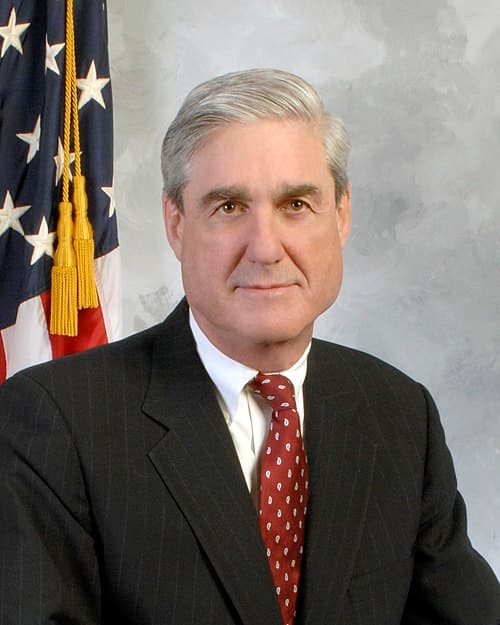
Robert Mueller
PERSON3 w/ Ben·7 w/ Cycorp
RS
Roger Schank
PERSON3 w/ Ben·7 w/ Cycorp
Xerox
ORGANIZATION3 w/ Ben·7 w/ Cycorp
Prince Andrew
PERSON5 w/ Ben·5 w/ Cycorp
Newell
ORGANIZATION5 w/ Ben·5 w/ Cycorp
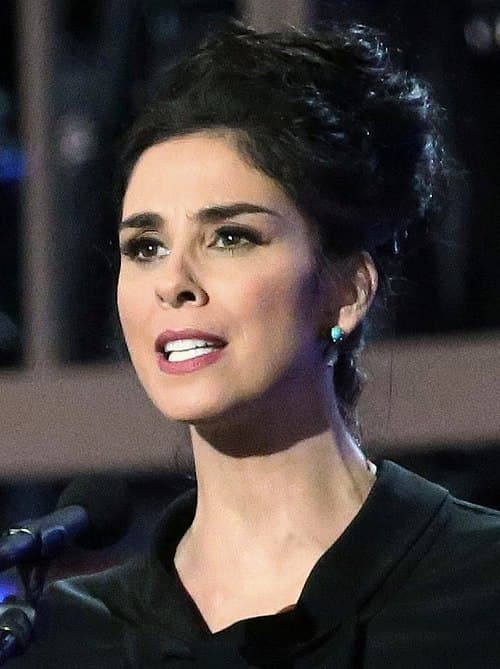
Sarah Silverman
PERSON4 w/ Ben·4 w/ Cycorp