Back to Network

















6
Shared Docs
6
Same-Page
12 / 10
Mentions
Document Mentions (6 shared documents)
4 mentions1 same-page
Page ?Same page
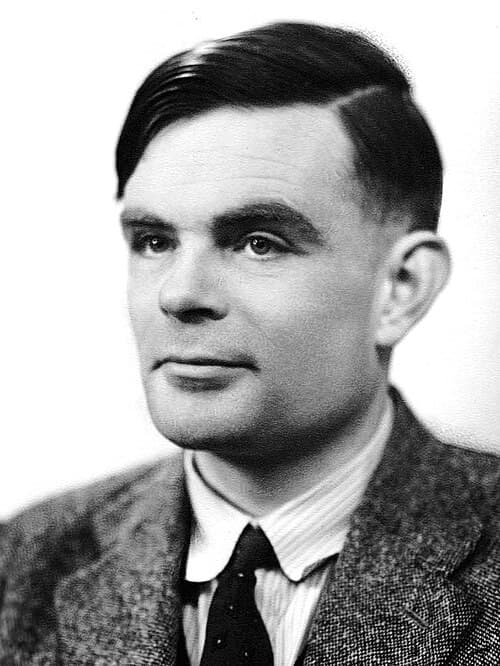
ring Test. In October 1950, the British journal Mind published an essay by Alan M. Turing titled, "Computing Machinery and Intelligence," in which Turing proposed an operational definition for "intelligence" [2]. This definition would come to be called "the Turing Test." Turing himself called it "the
t different one in which the interrogator was to attempt to determine the gender of two contestants, one male the other female. Interesting because Turing was homosexual and perhaps accustomed to such an imitation game. But in the matter of intelligence, such an operational definition made some sense
ley. withdrew from the competition because of pancreatic cancer.) Chinook had no machine learned aspects. EFTA_R1_02074941 EFTA02702510 In 1997, Garry Kasparov lost to Deep Blue at chess—Kasp- arov was the reigning world chess champion. In one pivotal game Kasparov remarked on the "superior intelligence" of
R1_02074941 EFTA02702510 In 1997, Garry Kasparov lost to Deep Blue at chess—Kasp- arov was the reigning world chess champion. In one pivotal game Kasparov remarked on the "superior intelligence" of the machine during the first game (won by Kasparov) by avoiding a dangerous position that had short-term
4 mentions1 same-page
Page ?Same page
abbage — but he was the first to fully understand its power. When we talk about computers today we mean machines, but it is worth noting computers in Turing’s time were more often humans using pencil and paper. The mechanical computers before Turing were elementary at best. Rudimentary calculating machi
not Turing complete and his Analytical Engine has never been built. 19" Century Calculators HOUSE_OVERSIGHT_015706 Mind over Computer 17 In 1935, Turing was made a Fellow of King’s College, Cambridge, and became interested in whether mathematical proofs could be found automatically. He wanted to know
calm and, before each turn, looks to a screen at the side of the board, reads the instruction, and makes his move. This is the famous match between Garry Kasparov and IBM’s Deep Blue. Kasparov, a child prodigy, became world chess champion at the age of fifteen and, to this day, holds the record for the highest
o a screen at the side of the board, reads the instruction, and makes his move. This is the famous match between Garry Kasparov and IBM’s Deep Blue. Kasparov, a child prodigy, became world chess champion at the age of fifteen and, to this day, holds the record for the highest chess ranking ever achieved. S
4 mentions1 same-page
Page ?Same page
a topic absent from a typical computer-science education: the physical configuration of a 118 HOUSE_OVERSIGHT_016921 computation. Von Neumann and Turing posed their questions as theoretical studies, because it was beyond the technology of their day to realize them. But with the convergence of communic
ce in terms of feedback, exploring the cultural rather than engineering uptake of this idea. She begins with primary readings by Wiener, Shannon, and Turing and then pivots from the scientists and engineers to the work and ideas of artists, feminists, postmodern theorists. Her goal: to come up with a new
ne article described Deep Blue’s victory not as that of a computer, which was just a dumb machine, but as the victory of hundreds of programmers over Kasparov, a single individual. That way of programming is changing dramatically. After a long hiatus, the power of machine learning has taken off. Much of th
, we programmed computers using algorithms we understood at least in principle. So when machines did amazing things like beating world chess champion Garry Kasparov, we could say that the victorious programs were designed with algorithms based on our own understanding—using, in this instance, the experience and a
Sponsored
4 mentions1 same-page
Page ?Same page
a topic absent from a typical computer-science education: the physical configuration of a 118 HOUSE_OVERSIGHT_016338 computation. Von Neumann and Turing posed their questions as theoretical studies, because it was beyond the technology of their day to realize them. But with the convergence of communic
ce in terms of feedback, exploring the cultural rather than engineering uptake of this idea. She begins with primary readings by Wiener, Shannon, and Turing and then pivots from the scientists and engineers to the work and ideas of artists, feminists, postmodern theorists. Her goal: to come up with a new
ne article described Deep Blue’s victory not as that of a computer, which was just a dumb machine, but as the victory of hundreds of programmers over Kasparov, a single individual. That way of programming is changing dramatically. After a long hiatus, the power of machine learning has taken off. Much of th
, we programmed computers using algorithms we understood at least in principle. So when machines did amazing things like beating world chess champion Garry Kasparov, we could say that the victorious programs were designed with algorithms based on our own understanding—using, in this instance, the experience and a
3 mentions1 same-page
Page ?Same page
at they tend to favor or ignore. Surely (ding!)?, any man who could beat a woman at being perceived to be a woman would be an intelligent agent. What Turing did not foresee is the power of deep-learning AI to acquire this wealth of information in an exploitable form without having to understand it. Turing
the CIRL framework, one can formulate and solve the off-switch problem—that is, the problem of how to prevent a robot from disabling its off-switch. (Turing may rest easier.) A robot that’s uncertain about human preferences actually benefits from being switched off, because it understands that the human w
a vast selection of possible future moves. But the majority of predictions of AI, e.g., robotic maids, turned out to be illusory. When Deep Blue beat Garry Kasparov at chess in 1997, the most 20 HOUSE_OVERSIGHT_016823 powerful room-cleaning robot was a Roomba, which moved around vacuuming at random and squeake
3 mentions1 same-page
Page ?Same page
at they tend to favor or ignore. Surely (ding!)?, any man who could beat a woman at being perceived to be a woman would be an intelligent agent. What Turing did not foresee is the power of deep-learning AI to acquire this wealth of information in an exploitable form without having to understand it. Turing
the CIRL framework, one can formulate and solve the off-switch problem—that is, the problem of how to prevent a robot from disabling its off-switch. (Turing may rest easier.) A robot that’s uncertain about human preferences actually benefits from being switched off, because it understands that the human w
a vast selection of possible future moves. But the majority of predictions of AI, e.g., robotic maids, turned out to be illusory. When Deep Blue beat Garry Kasparov at chess in 1997, the most 20 HOUSE_OVERSIGHT_016240 powerful room-cleaning robot was a Roomba, which moved around vacuuming at random and squeake
Sponsored
Mutual Connections (762)
Entities connected to both Turing and Garry Kasparov
Jeffrey Epstein
PERSON44 w/ Turing·12 w/ Garry
Stephen Hawking
PERSON29 w/ Turing·17 w/ Garry
Alan Dershowitz
PERSON27 w/ Turing·9 w/ Garry
George W. Bush
PERSON18 w/ Turing·12 w/ Garry
Samantha Power
PERSON19 w/ Turing·11 w/ Garry
Marc Rich
PERSON16 w/ Turing·12 w/ Garry
Prince Andrew
PERSON13 w/ Turing·15 w/ Garry
Earth
LOCATION18 w/ Turing·8 w/ Garry
Harvey Weinstein
PERSON17 w/ Turing·7 w/ Garry
Marvin Minsky
PERSON18 w/ Turing·6 w/ Garry
DB
Doug Band
PERSON11 w/ Turing·12 w/ Garry
Prince Charles
PERSON15 w/ Turing·8 w/ Garry
LB
Leon Black
PERSON10 w/ Turing·12 w/ Garry
Eric Trump
PERSON11 w/ Turing·11 w/ Garry
Danny Hillis
PERSON12 w/ Turing·10 w/ Garry
Robert Gates
PERSON14 w/ Turing·7 w/ Garry
Ghislaine Maxwell
PERSON5 w/ Turing·16 w/ Garry
Barack Obama
PERSON10 w/ Turing·11 w/ Garry
Elon Musk
PERSON13 w/ Turing·7 w/ Garry
Wilbur Ross
PERSON16 w/ Turing·4 w/ Garry