Back to Network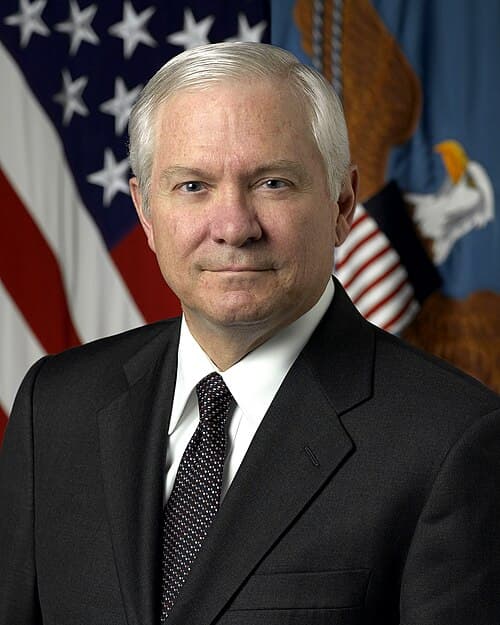
















8
Shared Docs
8
Same-Page
8 / 8
Mentions
Document Mentions (8 shared documents)
2 mentions1 same-page
Page ?Same page
3 :,„ 10:56:01 -0700 Message-Id: <9310081756.AA27745@ netmail.microsoft.com> X- Msmail-Message-Id: 15305A55 X-Msmail-Conversation-Id: 15305A55 From: Bill Gates To: [email protected] For years after the telephone was invented, in 1876, people thought it was a device that would transmit news, drama,
i" " is a picture of Gates in the computer room with a stocking cap pulled over his head and lying on a table, over the caption "Who is this man?" Joseph Wcizenbaum, a computer scientist at M.I.T., perhaps overstating the case a little for effect, wrote, in "Computer Power and Human Reason," this early portrait
2 mentions1 same-page
Page ?Same page
or face to face, as I discovered while I was =working on this story. Sitting at my computer one day, I realized that I could try to communicate with Bill Gates, the chairman and co- founder =of the software giant Microsoft, on the information highway. At least, I could send E-mail to his electronic address,
ere is a picture =of Gates in the computer room with a stocking cap pulled over his head =and lying on a table, over the caption "Who is this man?" Joseph Weizenbaum, a computer scientist at M.I.T., perhaps overstating the case a little for effect, wrote, in "Computer Power and Human Reason," this early portrait
Sponsored
2 mentions1 same-page
Page ?Same page
o the extent there were membership cards in the New Caste, Danny’s would have had a very low number. It was an easy decision for our prize committee. No Bill Gates. No Steve Jobs. So, here’s how | met Danny Hillis: I called to tell him he had won a million dollars. (I recommend this as a way to start a friendshi
government (or our enemies) behave. We are, ina sense, being engineered by the damn opaque systems we are using. In 1965 the MIT computer scientist Joseph Weizenbaum found himself, somewhat unexpectedly, considering this same problem. 175 Weizenbaum had written a primitive computer program to perform what is now k
2 mentions1 same-page
Page ?Same page
desire. . . . In my view, this is the source of the existential risk from superintelligent AI cited in recent years by such observers as Elon Musk, Bill Gates, Stephen Hawking, and Nick Bostrom. Putting Purposes Into Machines The goal of AI research has been to understand the principles underlying intelli
owing it to detect dissent and subversion as it arises and make resistance to state power futile. Orwell’s telescreens are the prototype, and in 1976 Joseph Weizenbaum, one of the gloomiest tech prophets of all time, warned my class of graduate students not to pursue automatic speech recognition because government s
2 mentions1 same-page
Page ?Same page
away more than 50 percent of their wealth either during their lifetimes or in their wills, creating a plurality of voices in the foundation space.*° Bill Gates is probably the most familiar example. He’s decided that if the government won’t do it, he’ll do it. You want mosquito nets? He’ll do it. You want an
e; the Fair Access to Science and Technology Research Act (FASTR); and the Open Humans Foundation. In his 1976 book Computer Power and Human Reason, Joseph Weizenbaum argued that machines should not replace Homo in situations requiring respect, dignity, or care, while others (author Pamela McCorduck and computer sc
Sponsored
2 mentions1 same-page
Page ?Same page
desire. . . . In my view, this is the source of the existential risk from superintelligent AI cited in recent years by such observers as Elon Musk, Bill Gates, Stephen Hawking, and Nick Bostrom. Putting Purposes Into Machines The goal of AI research has been to understand the principles underlying intelli
owing it to detect dissent and subversion as it arises and make resistance to state power futile. Orwell’s telescreens are the prototype, and in 1976 Joseph Weizenbaum, one of the gloomiest tech prophets of all time, warned my class of graduate students not to pursue automatic speech recognition because government s
2 mentions1 same-page
Page ?Same page
away more than 50 percent of their wealth either during their lifetimes or in their wills, creating a plurality of voices in the foundation space.*° Bill Gates is probably the most familiar example. He’s decided that if the government won’t do it, he’ll do it. You want mosquito nets? He’ll do it. You want an
e; the Fair Access to Science and Technology Research Act (FASTR); and the Open Humans Foundation. In his 1976 book Computer Power and Human Reason, Joseph Weizenbaum argued that machines should not replace Homo in situations requiring respect, dignity, or care, while others (author Pamela McCorduck and computer sc
Sponsored
Mutual Connections (820)
Entities connected to both Bill Gates and Joseph Weizenbaum
Robert Gates
PERSON1,023 w/ Bill·8 w/ Joseph
Jeffrey Epstein
PERSON978 w/ Bill·2 w/ Joseph
Prince Andrew
PERSON227 w/ Bill·7 w/ Joseph
LB
Leon Black
PERSON223 w/ Bill·7 w/ Joseph
Marc Rich
PERSON199 w/ Bill·10 w/ Joseph
Woody Allen
PERSON177 w/ Bill·5 w/ Joseph
Alan Dershowitz
PERSON164 w/ Bill·7 w/ Joseph
John F. Kennedy
PERSON146 w/ Bill·3 w/ Joseph
Donald Trump
PERSON131 w/ Bill·2 w/ Joseph
George W. Bush
PERSON118 w/ Bill·6 w/ Joseph
Ghislaine Maxwell
PERSON117 w/ Bill·4 w/ Joseph
Joe Biden
PERSON116 w/ Bill·4 w/ Joseph
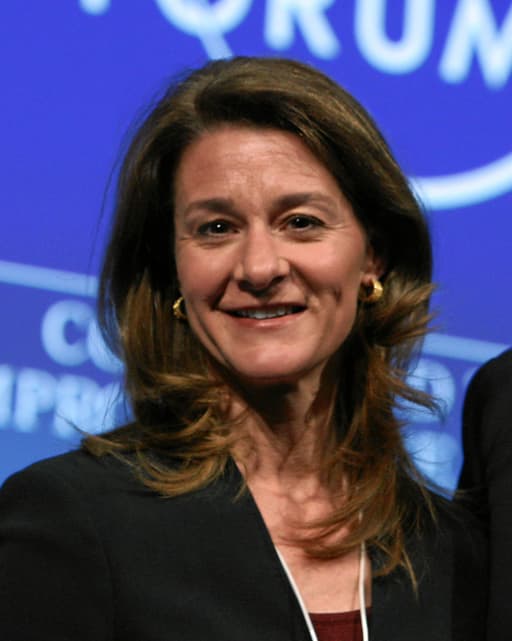
Melinda Gates
PERSON110 w/ Bill·3 w/ Joseph
Prince Charles
PERSON96 w/ Bill·6 w/ Joseph
Julie K. Brown
PERSON94 w/ Bill·5 w/ Joseph
Elon Musk
PERSON93 w/ Bill·4 w/ Joseph
Samantha Power
PERSON82 w/ Bill·10 w/ Joseph
Stephen Hawking
PERSON80 w/ Bill·10 w/ Joseph
Barack Obama
PERSON80 w/ Bill·5 w/ Joseph
John Brockman
PERSON75 w/ Bill·4 w/ Joseph