Back to Network


















10
Shared Docs
10
Same-Page
10 / 10
Mentions
Document Mentions (10 shared documents)
2 mentions1 same-page
Page ?Same page
esident Dwight D. Eisenhower into his publicity schemes, which frustrated Ike, who complained to aides about being used. After Johnson left office, Richard Nixon cultivated him carefully, even sending weekly EFTA00712757 national-security briefings to his ranch, in Stonewall, Texas, by government aircraft.
esitated to publicly criticize spy agencies at home or abroad, admonishing Pakistan's Inter-Services Intelligence for apparently failing to detect bin Laden's compound or calling U.S. intelligence on the Arab Spring "way behind our times." 30. James Miller At the beginning of this year, Jim Miller was n
2 mentions1 same-page
Page ?Same page
ndicate The Paranoid Style in Chinese Politics Minxin Pei 17 April 2012 — Henry Kissinger, who learned a thing or two about political paranoia as Richard Nixon's national security adviser and Secretary of State, famously said that even a paranoid has real enemies. This insight — by the man who will be known
bout drone strikes that have successfully taken out enemy combatants in the War on Terror. The RQ- 170 Sentinel was deployed in the raid that killed bin Laden, and U.S. officials boast of eliminating two more of Al Qaeda's top operatives in Pakistan in recent months. Defense Secretary Leon Panetta has cal
2 mentions1 same-page
Page ?Same page
very long, and would have left behind a deep, almost ineradicable anti-Americanism. This kind of so-called "realpolitik" is the path U.S. President Richard Nixon's administration took after the Greek military coup in 1967, and nearly a half-century later the Greeks have still not forgiven the United States.
ous successes, most notably the killing of Osama Bin Laden. Relations with Russia, which had become quite t
Sponsored
2 mentions1 same-page
Page ?Same page
e 4. The National Interest Foreign-Policy Failure Dimitri K. Simes August 24, 2011 -- PRESIDENT BARACK Obama is in many respects the opposite of Richard Nixon and George H. W. Bush, both foreign-policy presidents who subordinated their domestic ambitions to America's national-security requirements. Moreov
. troops had finally killed Osama bin Laden. Nevertheless, these triumphs have come at demonstrable cost. There was perhaps no reliable way to kill bin Laden without grievously offending Pakistan's government and people, though a senior administration official has admitted that the United States "underes
2 mentions1 same-page
Page ?Same page
e 4. The National Interest Foreign-Policy Failure Dimitri K. Simes August 24, 2011 -- PRESIDENT BARACK Obama is in many respects the opposite of Richard Nixon and George H. W. Bush, both foreign-policy presidents who subordinated their domestic ambitions to America's national-security requirements. Moreov
. troops had finally killed Osama bin Laden. Nevertheless, these triumphs have come at demonstrable cost. There was perhaps no reliable way to kill bin Laden without grievously offending Pakistan's government and people, though a senior administration official has admitted that the United States "underes
2 mentions1 same-page
Page ?Same page
loved America as much as Americans like to think. In the Eisenhower era, to take one period now seen in rosy hues, Latin mobs pelted Vice President Richard Nixon's motorcade with stones, shouting, "Out, dog! We won't forget Guatemala!" Angry Japanese students protested American "imperialism," forcing Presid
ord at all, he did so around the killing of Osama bin Laden, which today looks like an increasingly symbolic
Sponsored
2 mentions1 same-page
Page ?Same page
t what "he achieved." Truman's reputed devotion to Israel has become the standard by which subsequent president's commitment is measured. In 1982, Richard Nixon described Ronald Reagan as the "most pro-Israel president since Truman." A Boston Globe editorial in 1998 described Bill Clinton as "the most pro-I
he rise of international terrorist groups. Osama bin Laden's 1996 Fatwa was directed at the "Zionist-Crusad
2 mentions1 same-page
Page ?Same page
et al.)? They rank almost four times as high on the trustworthy scale. To be fair, it's not as if politicians haven't earned the reputation -- from Richard Nixon ("I'm not a crook") to George H.W. Bush EFTA_R1_00298272 EFTA01883853 ("Read my lips") to Bill Clinton ("I did not have sexual relations with th
n. Ahmed Bakr, the head of North Sinai security, announced that the military apprehended six terrorists including Selmi Salama Sweilam, nicknamed "Bin Laden" by Egyptian authorities for EFTA_R1_00298252 EFTA01883833 his alleged role in numerous terrorist operations. Three of the suspects were release
2 mentions1 same-page
Page ?Same page
An old friend approached us with a thick sheaf of what was purported to be a photocopy of the autobiographical manuscript on which former President Richard M. Nixon was still at work. Our first reaction was skepticism. While most of the contents dealt predictably with contemporary history as it has already been r
n the eve of the sixth anniversary of 9/11, Osama bin Laden warned the American people that they should rejec
Sponsored
2 mentions1 same-page
Page ?Same page
th me could turn out to have been “complicated,” it was no slip of the tongue. He was fully aware that his observation would appear in print. Unlike Richard Nixon, who never dreamed that Avs words would be published in a book, Abuse of Power: The New Nixon Oval Office Tapes, edited by Stanley Kutner: “Bob [Hald
ctober surprise. | thought we might capture Osama bin Laden. Or that there could be impeachment and convictio
Sponsored
Mutual Connections (1,479)
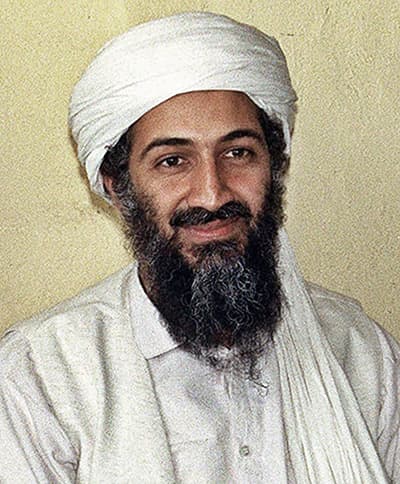
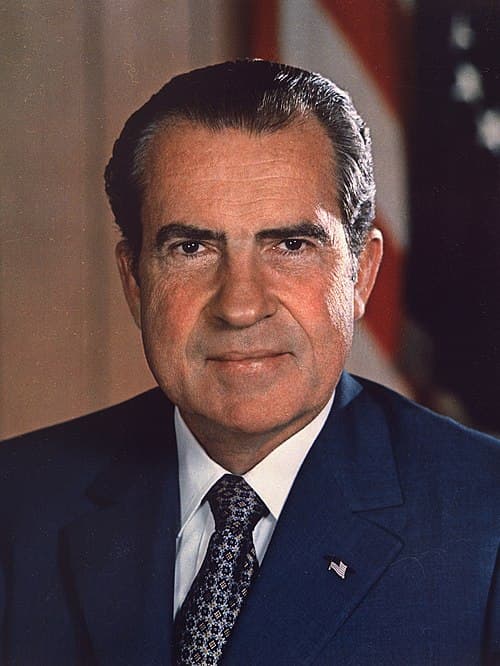
Entities connected to both Richard Nixon and Bin Laden
Barack Obama
PERSON89 w/ Richard·81 w/ Bin
George W. Bush
PERSON92 w/ Richard·77 w/ Bin
Bill Clinton
PERSON95 w/ Richard·67 w/ Bin
Cynthia Nixon
PERSON136 w/ Richard·20 w/ Bin
Jeffrey Epstein
PERSON78 w/ Richard·73 w/ Bin
United States
LOCATION61 w/ Richard·77 w/ Bin
Osama bin Laden
PERSON12 w/ Richard·104 w/ Bin
Donald Trump
PERSON67 w/ Richard·46 w/ Bin
Joe Biden
PERSON59 w/ Richard·47 w/ Bin
Department of Justice
ORGANIZATION52 w/ Richard·53 w/ Bin
Julie K. Brown
PERSON43 w/ Richard·56 w/ Bin
Marc Rich
PERSON48 w/ Richard·49 w/ Bin
Prince Andrew
PERSON48 w/ Richard·49 w/ Bin
John F. Kennedy
PERSON45 w/ Richard·45 w/ Bin
Hillary Clinton
PERSON53 w/ Richard·35 w/ Bin
Virginia Giuffre
PERSON40 w/ Richard·48 w/ Bin
Benjamin Netanyahu
PERSON33 w/ Richard·47 w/ Bin
Stephen Hawking
PERSON38 w/ Richard·41 w/ Bin
Ronald Reagan
PERSON50 w/ Richard·29 w/ Bin
Bashar al-Assad
PERSON32 w/ Richard·46 w/ Bin