Back to Network

















4
Shared Docs
4
Same-Page
5 / 4
Mentions
Document Mentions (4 shared documents)
3 mentions1 same-page
Page ?Same page
tomobile, even though the police conducted their search three days after the police stopped the vehicle and at the police station. United States v. Johns, 469 U.S. 478, 485-88, 105 S.Ct. 881, 83 L.Ed.2d 890 (1985). The Court rejected the argument that "searches of containers discovered in the course
nment's search here was "particularly offensive" due to the location and duration of the search runs counter to the Supreme Court's admonitions in Johns and Montoya de Hernandez. It also effectively requires the government to supply every port of entry with the equipment and staff needed to conduct
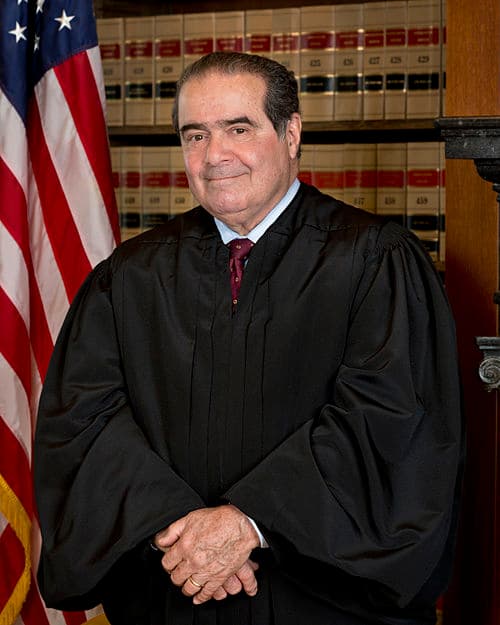
endment Principles to Evolving Privacy Expectations in Cloud Computing, 93 Minn. L.Rev. 2205. 2216 (2009) (internal citations omitted). As Justice Scalia wrote. "It would be foolish to contend that the degree of privacy secured to citizens by the Fourth Amendment has been entirely unaffected by the
2 mentions1 same-page
Page ?Same page
stein is prepared to plead guilty and accept a sentence for that offense—a sentence that, notably, is far more severe than that meted out to other "Johns" convicted of violating Florida's solicitation laws for cases in which sexual activity was alleged. Though CEOS points out its admirable goal of "p
olations of 18 U.S.C. §§ 1591, 2422(b) and 2423(b). Since the limited review conducted by CEOS, two Supreme Court decisions—one authored by Justice Scalia and the other by Justice Thomas—have revitalized the bedrock principles that federal criminal statutes must be narrowly construed, that they may not
2 mentions1 same-page
Page ?Same page
stein is prepared to plead guilty and accept a sentence for that offense—a sentence that, notably, is far more severe than that meted out to other "Johns" convicted of violating Florida's solicitation laws for cases in which sexual activity was alleged. Though CEOS points out its admirable goal of "p
olations of 18 U.S.C. §§ 1591, 2422(b) and 2423(b). Since the limited review conducted by CEOS, two Supreme Court decisions—one authored by Justice Scalia and the other by Justice Thomas—have revitalized the bedrock principles that federal criminal statutes must be narrowly construed, that they may not
Sponsored
2 mentions1 same-page
Page ?Same page
gress, and administration policy statements intended in 18 U.S.C. § 1591 prosecutions. Evans, and his co-conspirators (Madison and Yeasty) were not "Johns." They operated a for profit prostitution ring marked by control of, and extreme violence toward, the victims, who they knew were underage. Indeed,
olations of 18 U.S.C. §§ 1591, 2422(b) and 2423(b). Since the limited review conducted by CEOS, two Supreme Court decisions—one authored by Justice Scalia and the other by Justice Thomas--have revitalized the bedrock principles that federal criminal statutes must be narrowly construed, that they may no
Sponsored
Mutual Connections (246)
Entities connected to both Johns and Scalia
Jeffrey Epstein
PERSON52 w/ Johns·32 w/ Scalia
George W. Bush
PERSON26 w/ Johns·28 w/ Scalia
United States
LOCATION23 w/ Johns·30 w/ Scalia
JD
Jane Doe
PERSON24 w/ Johns·14 w/ Scalia
Julie K. Brown
PERSON18 w/ Johns·19 w/ Scalia
Prince Andrew
PERSON18 w/ Johns·17 w/ Scalia
LB
Leon Black
PERSON13 w/ Johns·21 w/ Scalia
Department of Justice
ORGANIZATION17 w/ Johns·16 w/ Scalia
Scarlett Johansson
PERSON14 w/ Johns·18 w/ Scalia
Supreme Court
ORGANIZATION11 w/ Johns·21 w/ Scalia
Bill Clinton
PERSON13 w/ Johns·17 w/ Scalia
the Southern District
LOCATION20 w/ Johns·9 w/ Scalia
Alexander Acosta
PERSON13 w/ Johns·15 w/ Scalia
Marc Rich
PERSON16 w/ Johns·12 w/ Scalia
Virginia Giuffre
PERSON11 w/ Johns·15 w/ Scalia
Bradley Edwards
PERSON20 w/ Johns·5 w/ Scalia
Ghislaine Maxwell
PERSON14 w/ Johns·10 w/ Scalia
Alan Dershowitz
PERSON10 w/ Johns·13 w/ Scalia
Lesley Groff
PERSON18 w/ Johns·4 w/ Scalia
Donald Trump
PERSON10 w/ Johns·12 w/ Scalia