Back to Network



















3
Shared Docs
2
Same-Page
5 / 3
Mentions
Document Mentions (3 shared documents)
3 mentions1 same-page
Page ?Same page
tions > Prerequisites > Commonality Labor & Employment Law > Discrimination > Disparate Treatment > Proof > General Overview [HN18] Nothing in the Supreme Courts opinion suggests that single, localized operations must be analytically dissected into component departments for purposes of commonality for class
in--depth assessment of the merits of appellants' claim at this stage would be improper." Id. at 156. Such a statement, however, is consistent with the Supreme Court's dictate in Amgen that a court should engage the merits of a claim only to the extent necessary to verify that Rule 23 has been satisfied. Amgen, 133
a variety of regional policies [* 91 0] that all differed." Id. at 2557 (quoting Dukes v. Wal-Mart Stores, Inc., 603 F.3d 571, 652 (9th Cir. 2010) (Kozinski, J., dissenting)). The scale and scope of the putative class, combined with the nature of the evidence offered, was thus essential to Wal-Mart's ho
2 mentions1 same-page
Page ?Same page
" Id. Any suggestion that the government's search here was "particularly offensive" due to the location and duration of the search runs counter to the Supreme Court's admonitions in Johns and Montoya de Hernandez. It also effectively requires the government to supply every port of entry with the equipment and st
afeguarding the privacy of thoughts and ideas —what we might call freedom of conscience—from invasion by the government." Seljan, 547 F.3d at 1014 (Kozinski, C.J., dissenting); see also New York v. Video, Inc., 475 U.S. 868, 873, 106 S.Ct. 1610, 89 L.Ed.2d 871 (1986). These records are expected to be
HOUSE_OVERSIGHT_017635 - HOUSE_OVERSIGHT_017713
ARTICLE: Treating Crime Victims Fairly: Integrating Victims into the Federal Rules of Criminal Procedure
3 mentions
Page HOUSE_OVERSIGHT_017656
in opposition to a plea. The prosecutor refused to convey that information to the court and the trial judge accepted the plea. When the issue reached the Utah Supreme Court, the court concluded that the prosecutor had an ethical obligation as an officer of the court to convey that information to the judge: Prosecutors m
Page: HOUSE_OVERSIGHT_017656 →Page HOUSE_OVERSIGHT_017661
n handedly to both prosecution and the defense. Neither side is required to disclose the address or telephone number of a victim, thus complying with the Supreme Court's instruction that "in the absence of a strong showing of state interests to the contrary, discovery must be a two- 204 See infra notes 528-539 and ac
Page: HOUSE_OVERSIGHT_017661 →Page HOUSE_OVERSIGHT_017689
Under the CVRA, courts may not limit victims to a written statement. See Kenna v. United States District Court, 435 F.3d 1011, 1017 (9th Cir. 2006) (Kozinski, J.) ("Limiting victims to written impact statements, while allowing the prosecutor and the defendant the opportunity to address the court, would tre
Page: HOUSE_OVERSIGHT_017689 →Sponsored
Mutual Connections (51)
Entities connected to both Supreme Court and Kozinski
Jeffrey Epstein
PERSON487 w/ Supreme·3 w/ Kozinski
Donald Trump
PERSON356 w/ Supreme·3 w/ Kozinski
United States
LOCATION304 w/ Supreme·4 w/ Kozinski
George W. Bush
PERSON238 w/ Supreme·4 w/ Kozinski
Julie K. Brown
PERSON235 w/ Supreme·2 w/ Kozinski
Department of Justice
ORGANIZATION225 w/ Supreme·3 w/ Kozinski
Scarlett Johansson
PERSON211 w/ Supreme·2 w/ Kozinski
Wilbur Ross
PERSON205 w/ Supreme·4 w/ Kozinski
Prince Andrew
PERSON199 w/ Supreme·2 w/ Kozinski
Virginia Giuffre
PERSON180 w/ Supreme·2 w/ Kozinski
Bill Clinton
PERSON174 w/ Supreme·3 w/ Kozinski
Michael Cohen
PERSON170 w/ Supreme·2 w/ Kozinski
Prince Charles
PERSON143 w/ Supreme·2 w/ Kozinski
New York
LOCATION123 w/ Supreme·2 w/ Kozinski
Marc Rich
PERSON114 w/ Supreme·2 w/ Kozinski
Philadelphia
LOCATION101 w/ Supreme·2 w/ Kozinski
James Baker
PERSON96 w/ Supreme·3 w/ Kozinski
USA Today
ORGANIZATION96 w/ Supreme·2 w/ Kozinski
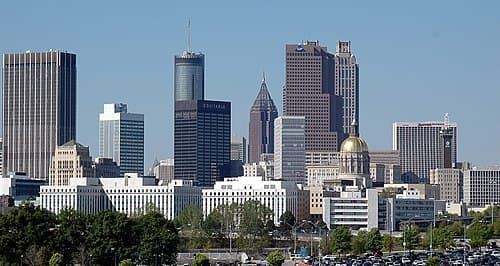
Atlanta
LOCATION88 w/ Supreme·2 w/ Kozinski
Alexander Acosta
PERSON86 w/ Supreme·2 w/ Kozinski