Back to Network

















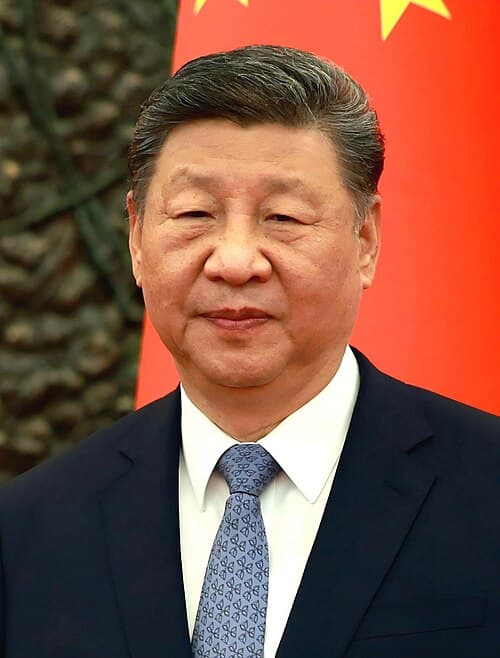
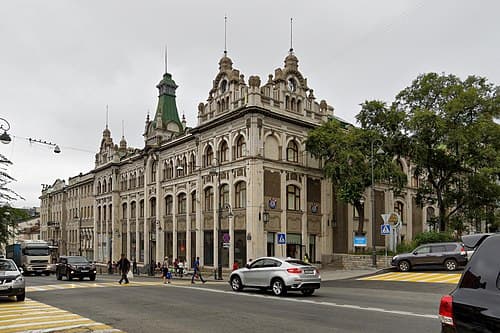
3
Shared Docs
3
Same-Page
7 / 4
Mentions
Document Mentions (3 shared documents)
4 mentions1 same-page
Page ?Same page
hinese collusion, nor does it obviate the need for Washington to pursue pragmatic policies designed to avert such a partnership. Vladimir Putin and Xi Jinping will continue to seek common ground, if only as a result of their shared discomfort in an international system built and maintained by the United
inese population amidst Russian decline may place the other in a bind, with nationalist pressure setting constraints on compromise. While Putin and Xi grip and grin, the demographic EFTA_R1_00441208 EFTA01964460 time-bomb between them is ticking—and if it goes off, a shared suspicion of the Uni
egion then called Outer Manchuria. The southern part of this concession would become Russia's maritime province, Primorsky Krai, where the city of Vladivostok ("Ruler of the East") was chartered in 1880. The century that followed Moscow's "Amur annexation" introduced dramatic changes to Northeast Asia's p
terness did not—as Henry Kissinger would learn during his first meeting with Deng Xiaoping in 1974, when the topic of a U.S.-Soviet arms summit in Vladivostok prompted the future Chinese leader to lecture him on Russian rapacity. Considering this background, as well as China's unresolved boundary dispute
4 mentions1 same-page
Page ?Same page
at Putin terms, “a unipolar world order.” China’s President Xi Jinping expressed a very similar view, saying in
egic objective: countering the United States’ domination of international relations, or what Putin terms, “a unipolar world order.” China’s President Xi Jinping expressed a very similar view, saying in 2014 in a thinly-veiled reference to the United States, stating that any American attempt to “monopolize” in
9", would have certainly been keenly interested in the unfolding Snowden affair. After all, Obama had publically put on his agenda that week calling Xi to task for Chinese cyber espionage. Such a charge was undermined by Snowden’s globally-publicized accusation that the United States was engaged in m
Okhotsk in Asia to tap through Arctic ice. The target was a Russian cable 400 feet below the surface that connected the Russian naval headquarters in Vladivostok with a missile testing range. In 1980, President Ronald Reagan, gave the NSA a clear mandate to expand its interception of foreign communications. I
3 mentions1 same-page
Page ?Same page
egic objective: countering the United States’ domination of international relations, or what Putin terms “a unipolar world order.” China’s president, Xi Jinping, expressed a very similar view, saying in 2014 in a thinly veiled reference to the United States that any attempt to “monopolize” international affai
the first time in Rancho Mirage, California, on June 8, would have been keenly interested in the unfolding Snowden affair. Obama had publicly called Xi to task for Chinese cyber espionage, and now that charge was undermined by Snowden’s accusation that the United States was engaged in massive cyber e
ia to tap through Arctic ice. The target was a Russian cable four hundred feet below the surface that connected the Rus- @ sian naval headquarters in Vladivostok with a missile testing range. @ In 1980, President Ronald Reagan gave the NSA a clear mandate to expand its interception of foreign communications.
Sponsored
Mutual Connections (292)
Entities connected to both Xi Jinping and Vladivostok
Jeffrey Epstein
PERSON318 w/ Xi·23 w/ Vladivostok
George W. Bush
PERSON289 w/ Xi·5 w/ Vladivostok
Donald Trump
PERSON165 w/ Xi·2 w/ Vladivostok
United States
LOCATION137 w/ Xi·4 w/ Vladivostok
Mao Zedong
PERSON123 w/ Xi·2 w/ Vladivostok
Bill Clinton
PERSON104 w/ Xi·2 w/ Vladivostok
Marc Rich
PERSON96 w/ Xi·3 w/ Vladivostok
Department of Justice
ORGANIZATION94 w/ Xi·4 w/ Vladivostok
Barack Obama
PERSON94 w/ Xi·4 w/ Vladivostok
LB
Leon Black
PERSON93 w/ Xi·3 w/ Vladivostok
Alan Dershowitz
PERSON90 w/ Xi·3 w/ Vladivostok
Prince Charles
PERSON89 w/ Xi·2 w/ Vladivostok
Virginia Giuffre
PERSON87 w/ Xi·3 w/ Vladivostok
Vladimir Putin
PERSON73 w/ Xi·13 w/ Vladivostok
George Mitchell
PERSON68 w/ Xi·3 w/ Vladivostok
John F. Kennedy
PERSON49 w/ Xi·20 w/ Vladivostok
Julie K. Brown
PERSON63 w/ Xi·3 w/ Vladivostok
Woody Allen
PERSON63 w/ Xi·3 w/ Vladivostok
ET
Emmy Taylor
PERSON61 w/ Xi·2 w/ Vladivostok
Mitch McConnell
PERSON58 w/ Xi·3 w/ Vladivostok