Back to Network

















3
Shared Docs
3
Same-Page
6 / 3
Mentions
Document Mentions (3 shared documents)
3 mentions1 same-page
Page ?Same page
.” Not all the stories were flattering. Mike Royko complained in a syndicated article how depressing it was that after two hundred years of men like Jefferson, Paine, Debs, and Darrow, “we are now asked to fight for the right of Harry Reems to be a public creep... Anybody who contributes to his defense fund
reased their negative connotations over the years. In addition to being damaging, a defamation must also be untrue. This wasn’t always the case, and Thomas Jefferson successfully fought to limit defamations to untruthful statements about an individual.** If the individual defamed is a public figure, such as a pol
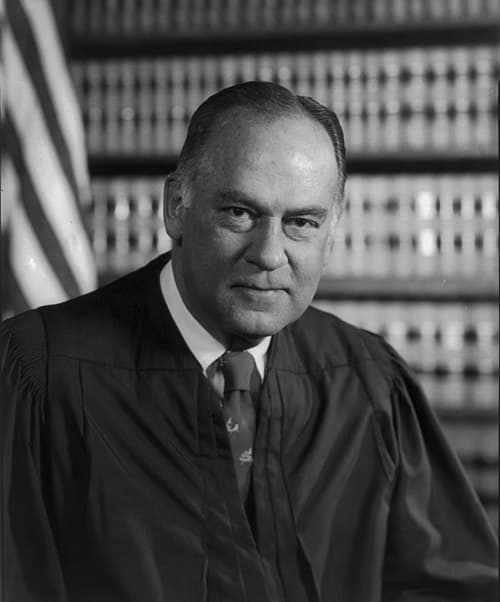
l approach and so we exchanged ideas and drafts. The difficulty of defending an absolutist view was well illustrated by an exchange between Justice Potter Stewart and Professor Bickel. Stewart asked Bickel about “a hypothetical case:” “Let us assume that when the members of the Court go back and open up this s
3 mentions1 same-page
Page ?Same page
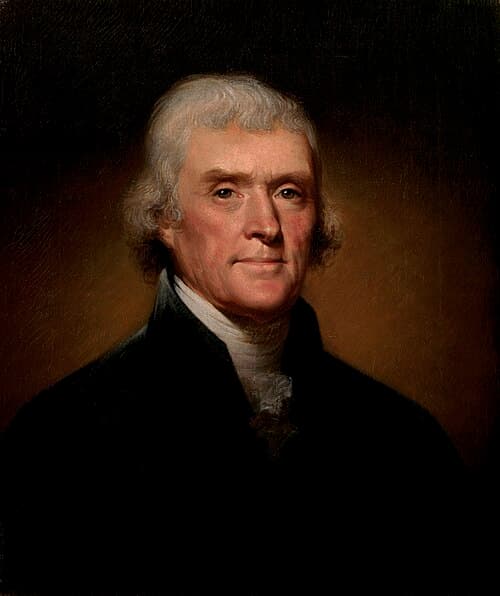
quality What did the thirty-three-year-old Thomas Jefferson mean in 1776 when he wrote, “We hold these Truths
n be more impartial, calm, and consistent and less abusive or mischievous than people in such positions. Equality What did the thirty-three-year-old Thomas Jefferson mean in 1776 when he wrote, “We hold these Truths to be self-evident, that all Men are created equal, that they are endowed 169 HOUSE_OVERSIGHT_016
minimum, it is becoming rapidly difficult to hide behind vague intuition for ethical decisions—“I know it when I see it” (U.S. Supreme Court Justice Potter Stewart, 1964) or the “wisdom of repugnance” (aka “yuck factor,” Leon Kass, 1997), or vague appeals to “common sense.” As we have to deal with minds alien to
3 mentions1 same-page
Page ?Same page
quality What did the thirty-three-year-old Thomas Jefferson mean in 1776 when he wrote, “We hold these Truths
n be more impartial, calm, and consistent and less abusive or mischievous than people in such positions. Equality What did the thirty-three-year-old Thomas Jefferson mean in 1776 when he wrote, “We hold these Truths to be self-evident, that all Men are created equal, that they are endowed 169 HOUSE_OVERSIGHT_016
minimum, it is becoming rapidly difficult to hide behind vague intuition for ethical decisions—“I know it when I see it” (U.S. Supreme Court Justice Potter Stewart, 1964) or the “wisdom of repugnance” (aka “yuck factor,” Leon Kass, 1997), or vague appeals to “common sense.” As we have to deal with minds alien to
Sponsored
Mutual Connections (380)
Entities connected to both Thomas Jefferson and Potter Stewart
George W. Bush
PERSON158 w/ Thomas·2 w/ Potter
Julie K. Brown
PERSON139 w/ Thomas·3 w/ Potter
Prince Andrew
PERSON137 w/ Thomas·2 w/ Potter
Marc Rich
PERSON127 w/ Thomas·3 w/ Potter
LB
Leon Black
PERSON107 w/ Thomas·2 w/ Potter
Ghislaine Maxwell
PERSON98 w/ Thomas·3 w/ Potter
Stephen Hawking
PERSON95 w/ Thomas·3 w/ Potter
Samantha Power
PERSON92 w/ Thomas·2 w/ Potter
John F. Kennedy
PERSON87 w/ Thomas·3 w/ Potter
Barack Obama
PERSON87 w/ Thomas·3 w/ Potter
Eric Trump
PERSON70 w/ Thomas·2 w/ Potter
Alan Dershowitz
PERSON68 w/ Thomas·3 w/ Potter
Oliver Stone
PERSON68 w/ Thomas·2 w/ Potter
Barry Diller
PERSON49 w/ Thomas·3 w/ Potter
Harvey Weinstein
PERSON48 w/ Thomas·3 w/ Potter
Philadelphia
LOCATION48 w/ Thomas·2 w/ Potter
Robert Gates
PERSON48 w/ Thomas·2 w/ Potter
Wilbur Ross
PERSON46 w/ Thomas·2 w/ Potter
DB
Doug Band
PERSON40 w/ Thomas·3 w/ Potter
Lawrence Krauss
PERSON41 w/ Thomas·2 w/ Potter