Back to Network












4
Shared Docs
4
Same-Page
6 / 5
Mentions
Document Mentions (4 shared documents)
4 mentions1 same-page
Page ?Same page
children about the CSA than supportive mothers do or fail to legitimate their children's al- legations, long-term memory may be adversely affected (Goodman, Quas, Battentran-Faunce, Riddlesberger, & Kuhn, 1994; Haden, Mayne, & Fivush, 1997). Furthermore, individ- uals abused by an emotionally close care
l touching, rape, oral sex, or intercourse (completed or attempted acts) that occurred before age 18 and with a person more than 4 years older (see Goodman et al.. 2003). Of the 103 individuals (2.3 males, 80 females) who completed all portions of Phase 3, 7 said they were never abused (although 3 of
e, compared with females, males may be less likely to dis- close CSA (e.g., Finkelhor, Hotaling, Lewis, & Smith, 1990; Widom & Morris, 1997; but see Goodman et al., 2003) and may have less detailed autobiographical memories about emotional events (Davis, 1999). If males are hesitant to talk about CSA, their m
03) for details about the measures in the original study and identification of target eases. enpectively. sfin predictors of Mime I disclosure. see Goodman et al. j2003). An identical analysis predicting disc home in the smaller Mime 3 sample revealed similar findings. ahlsough age no longer significantly pre
3 mentions1 same-page
Page ?Same page
e included in child maltreatment samples (but see Eisen, Goodman. Qin. Davis, & Crayton, 2007: Masten et al., 2008; Mefinder, Barr- gemd. (menstad, & Goodman, 2013), likely limiting the upper range of psychopathology symptoms studied. Finally, especially for longitudinal research, attrition can affect re
suffered the most severe maltreatment. resulting in permanent removal from home, may not be included in child maltreatment samples (but see Eisen, Goodman. Qin. Davis, & Crayton, 2007: Masten et al., 2008; Mefinder, Barr- gemd. (menstad, & Goodman, 2013), likely limiting the upper range of psychopatho
ated to that maltreatment. Study I started as research on 4- to 17-year-ohls involved (as alleged victims) in prosecutions for child sexual abuse (Goodman et al., 1992). Documentation gathered at the start of the study included information from police and prosecu- tors' records, interviews with nonoffending p
2 mentions1 same-page
Page ?Same page
l adjustment following CSA disclosure (Everson. Hunter. Runyan, Edelson's. & Coulter, 1989; Sas, 1993), to their memory for stressful experiences (Goodman. Quas, Batterman-Faunce, Riddlesberger. & Kuhn. 1994), and to their maintenance of allegations across interviews (Bradley & Wood. 1996; Rieser, 199
ng adults who, more than a decade earlier, were involved in criminal prosecutions as victims of CSA and participated in a study of court testimony (Goodman et al., 1992). De- tailed documentation of the abuse was available for all cases. The re- search goals were to (a) compare disclosure rates of documented CS
Sponsored
2 mentions1 same-page
Page ?Same page
y, including of child sexual abuse (Goodman et al., 2003), and predict adults' sus- ceptibility to false suggestion (Howe & Knott, 2015; Qin, Ogle, & Goodman, 2008). There are factors, however, that guard against false childhood recollections (e.g., Pezdek, Finger, & Hodge, 1997). Relatively strong memo
n, 2015; Van Abbema & Bauer, 2005). For example, adolescents and adults accurately remember injuries and assaults experienced 6 to 13 years prior (Goodman et al., 2003; Greenhoot, McClo- skey, & Glisky, 2005). Young children's ability to remember details of a medical event decreases over an initial 3-month p
Sponsored
Mutual Connections (72)
Entities connected to both Goldman Sachs and Goodman et al.
George W. Bush
PERSON97 w/ Goldman·4 w/ Goodman
Prince Andrew
PERSON76 w/ Goldman·2 w/ Goodman
New York City
LOCATION56 w/ Goldman·2 w/ Goodman
Vicky Ward
PERSON43 w/ Goldman·2 w/ Goodman
James Baker
PERSON37 w/ Goldman·2 w/ Goodman
University of Oxford
ORGANIZATION29 w/ Goldman·2 w/ Goodman
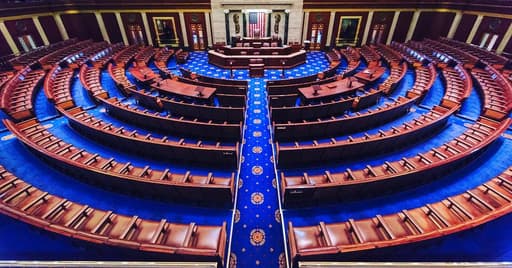
House of Representatives
ORGANIZATION29 w/ Goldman·2 w/ Goodman
Hunter Biden
PERSON28 w/ Goldman·2 w/ Goodman
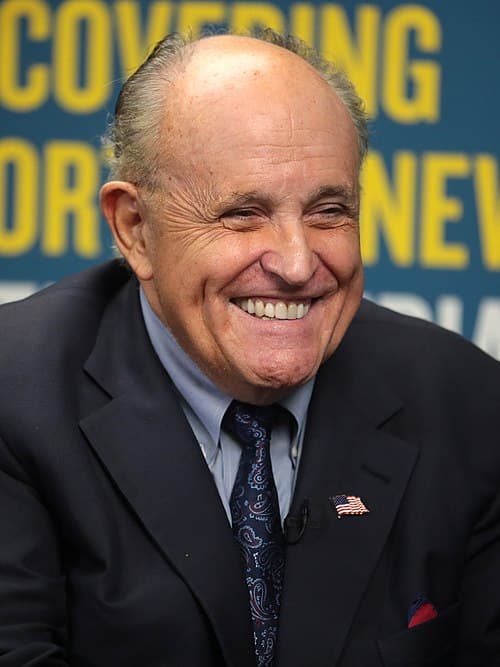
Rudy Giuliani
PERSON26 w/ Goldman·4 w/ Goodman
Sergey Brin
PERSON19 w/ Goldman·2 w/ Goodman
Sacramento
LOCATION15 w/ Goldman·2 w/ Goodman
LO
Loftus
PERSON15 w/ Goldman·2 w/ Goodman
Adams
PERSON13 w/ Goldman·2 w/ Goodman
PE
Peterson
PERSON13 w/ Goldman·2 w/ Goodman
GG
Gail S. Goodman
PERSON9 w/ Goldman·4 w/ Goodman
Harvard University
ORGANIZATION10 w/ Goldman·2 w/ Goodman
University of California
ORGANIZATION8 w/ Goldman·4 w/ Goodman
Edelstein
PERSON8 w/ Goldman·3 w/ Goodman
FI
Finkelhor
PERSON7 w/ Goldman·3 w/ Goodman
J. A.
PERSON8 w/ Goldman·2 w/ Goodman