Back to People & Entities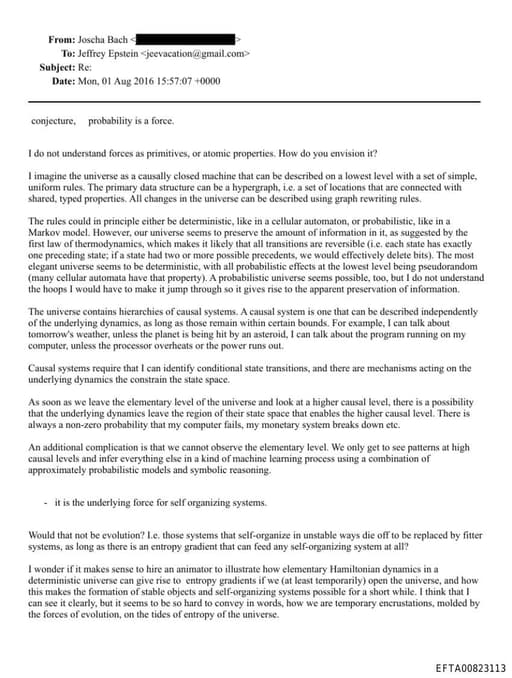



GI
Gigerenzer
Person
9
Total Mentions
9
Documents
7
Connected Entities
Surname reference in documents
Document Mentions (9)
EFTA00823113.pdf
1 mentionEFTA00823113
el machinery of the world, so when we try to understand money, power, etc., we switch from probabilistic models to causal narratives. For instance, Gigerenzer has shown that people tend to have difficulty at intuitively combining probabilities of the influences differ by an order of magnitude or more, so p
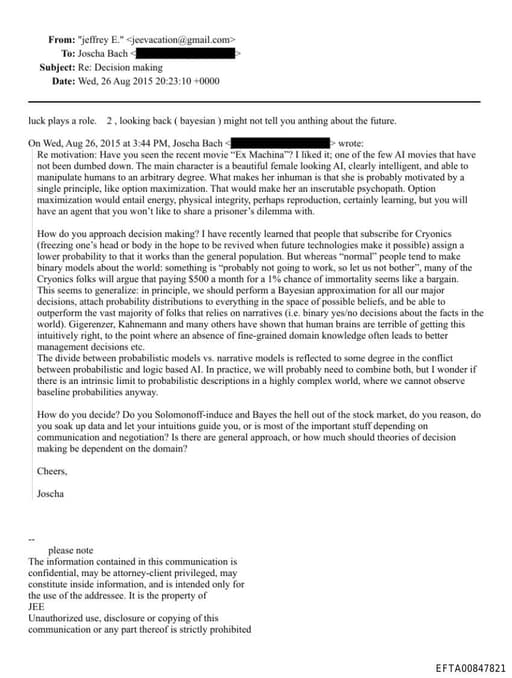
EFTA00847821.pdf
1 mentionEFTA00847821
eliefs, and be able to outperform the vast majority of folks that relies on narratives (i.e. binary yes/no decisions about the facts in the world). Gigerenzer, ICahnemann and many others have shown that human brains are terrible of getting this intuitively right, to the point where an absence of fine-grain
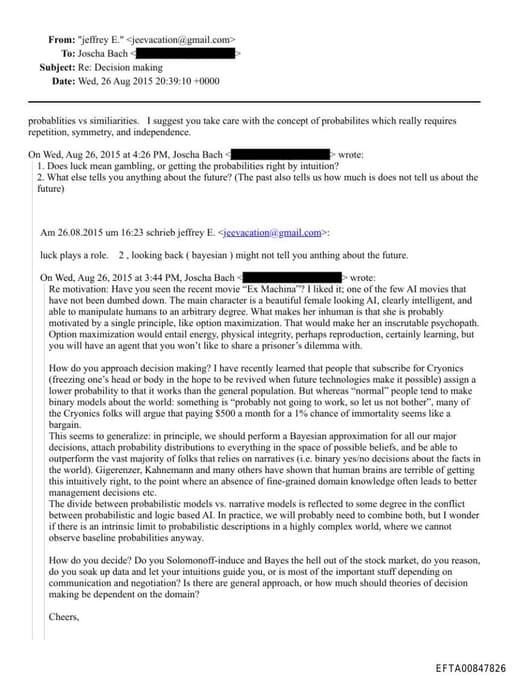
EFTA00847826.pdf
1 mentionEFTA00847826
eliefs, and be able to outperform the vast majority of folks that relies on narratives (i.e. binary yes/no decisions about the facts in the world). Gigerenzer, Kahnemann and many others have shown that human brains are terrible of getting this intuitively right, to the point where an absence of fine-graine
Sponsored
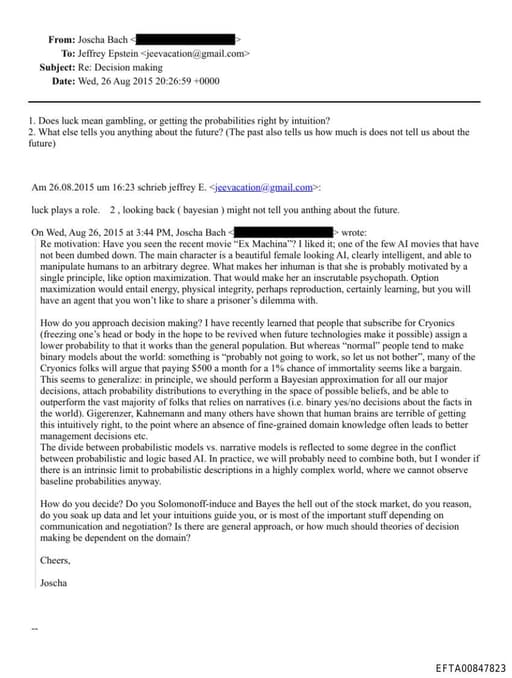
EFTA00847823.pdf
1 mentionEFTA00847823
eliefs, and be able to outperform the vast majority of folks that relies on narratives (i.e. binary yes/no decisions about the facts in the world). Gigerenzer, Kahnemann and many others have shown that human brains are terrible of getting this intuitively right, to the point where an absence of fine-graine
EFTA00506602.pdf
1 mentionEFTA00506602
urce Device NYCO24328.aff4/Macintosh HD Path /Users/jee/Library/Application Support/Skype/jeevacation/main.db SourceType Skype First Gerd Last Gigerenzer ID 86708 EFTA00506622 Contact Source Device NYCO24328.aff4/Macintosh HD Path /Users/jee/Library/Application Support/AddressBook/Sources/0163
EFTA02439745.pdf
1 mentionEFTA02439745
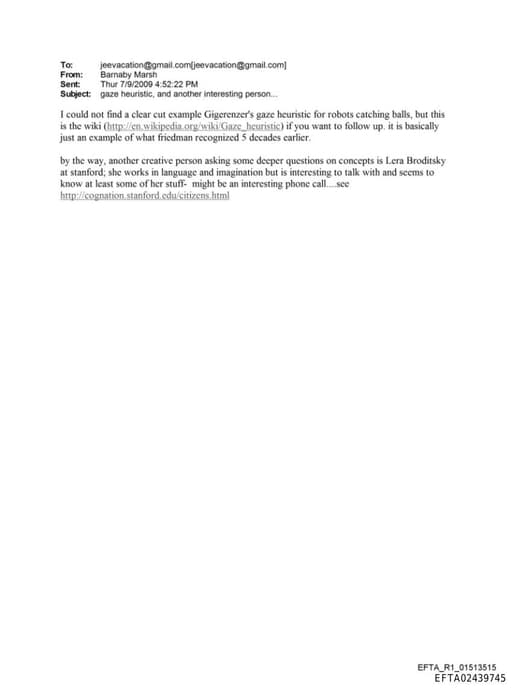
From: Bamaby Marsh Sent Thur 7/9/2009 4:52:22 PM Subject gaze heuristic, and another interesting person... I could not find a clear cut example Gigerenzer's gaze heuristic for robots catching balls, but this is the wiki (http://en.wikiperlia,orgAviki/Gaze heuristic) if you want to follow up. it is basi
Sponsored
EFTA02444385.pdf
1 mentionEFTA02444385
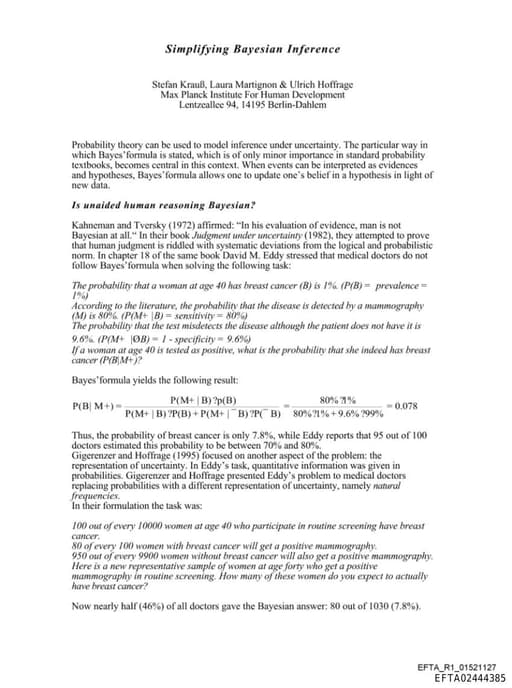
the probability of breast cancer is only 7.8%, while Eddy reports that 95 out of 100 doctors estimated this probability to be between 70% and 80%. Gigerenzer and Hoffrage (1995) focused on another aspect of the problem: the representation of uncertainty. In Eddy's task, quantitative information was given
EFTA02456651.pdf
1 mentionEFTA02456651
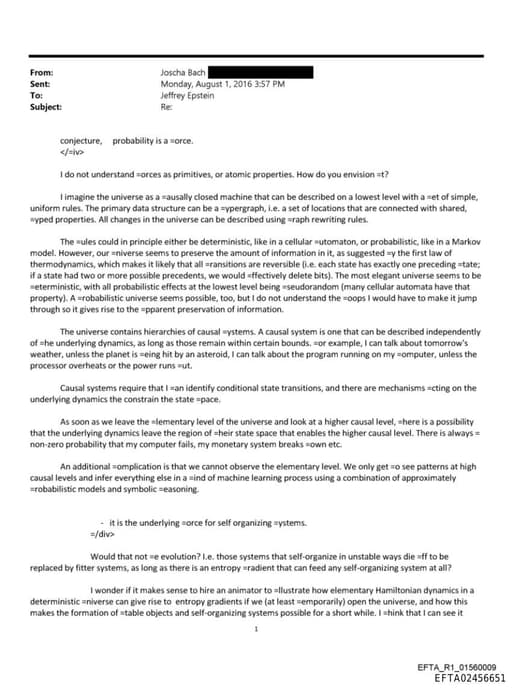
el machinery of the world, so when we try to understand money, =ower, etc., we switch from probabilistic models to causal narratives. =or instance, Gigerenzer has shown that people tend to have difficulty =t intuitively combining probabilities of the influences differ by an =rder of magnitude or more, so p
EFTA02488879.pdf
1 mentionEFTA02488879
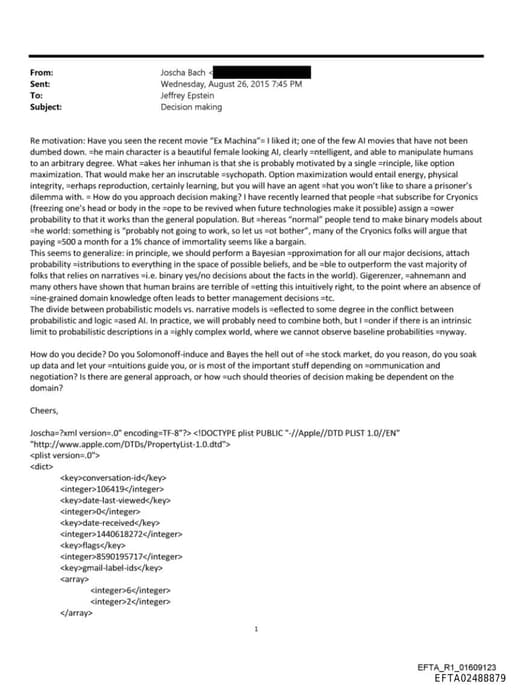
beliefs, and be =ble to outperform the vast majority of folks that relies on narratives =i.e. binary yes/no decisions about the facts in the world). Gigerenzer, =ahnemann and many others have shown that human brains are terrible of =etting this intuitively right, to the point where an absence of =ine-grain
Sponsored
Connected Entities(7)
Joscha Bach
PersonCognitive scientist
6 docs6 co-mentions
Jeffrey Epstein
PersonAmerican sex offender and financier (1953–2019)
6 docs6 co-mentions
Bayes
OrganizationOrganization referenced in documents
4 docs4 co-mentions
SO
Solomonoff
PersonAmerican artificial intelligence researcher (1926-2009)
4 docs4 co-mentions
MA
Markov
PersonSurname reference in documents
2 docs2 co-mentions
Genghis Khan
PersonFounder and first khan of the Mongol Empire (1162–1227)
2 docs2 co-mentions
KA
Kahnemann
PersonName reference in documents
2 docs2 co-mentions