Back to People & Entities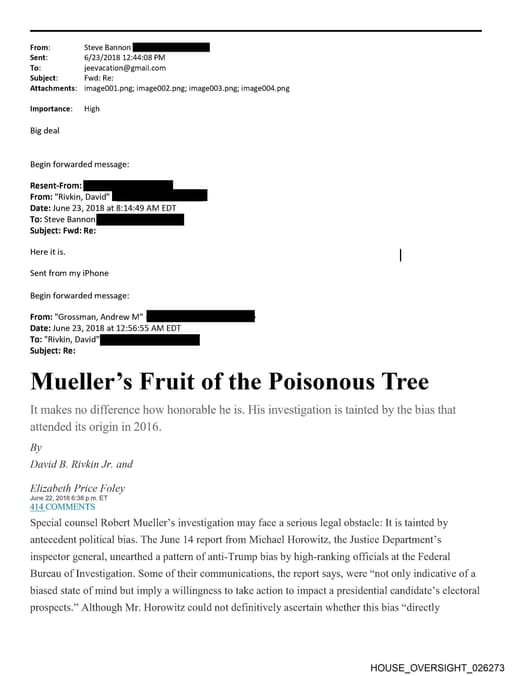










BL
Blackledge
Person
14
Total Mentions
14
Documents
134
Connected Entities
Surname reference in documents
The name 'Blackledge' appears 8 times across the Epstein documents, but all mentions refer to the Supreme Court case 'Blackledge v. Perry' (1974) cited in legal filings, not to an individual person connected to Epstein.
This is not actually a person in the Epstein case. 'Blackledge' appears exclusively as part of legal case citations in court documents related to prosecutorial vindictiveness and plea bargaining. The mentions include 'Blackledge v. Perry' (a landmark due process case) and 'Blackledge v. Allison' (regarding plea negotiations), both cited in DOJ court filings and House Oversight documents. One mention also appears in what seems to be a financial document discussing eCommerce, likely referring to a different person entirely (possibly an analyst named Blackledge). The legal case citations have no direct connection to Jeffrey Epstein beyond being cited in legal arguments within case documents.
Key Highlights
- •All primary mentions cite 'Blackledge v. Perry (1974)', a Supreme Court case about prosecutorial vindictiveness
- •Appears in DOJ court filings discussing plea bargaining rules and due process protections
- •One outlier mention references 'Blackledge' in what appears to be a financial analysis document about eCommerce and CBD distribution
- •The case is quoted as establishing that due process prevents prosecutors from showing 'vindictiveness' against defendants
Frequently Asked Questions
Related Links
Document Mentions (14)
HOUSE_OVERSIGHT_026273 - HOUSE_OVERSIGHT_026279
1 mentionSource: House Oversight Committee
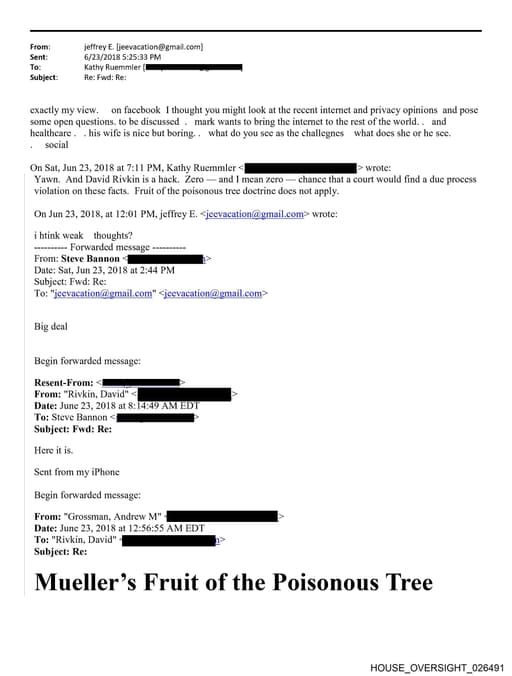
ous that due process principles would absolutely bar the government from invoking judicial processes to obtain a conviction.” It didn’t take long. In Blackledge v. Perry (1974), the court concluded that due process was offended by a prosecutor’s “realistic likelihood of ‘vindictiveness’ ” that tainted the “ve
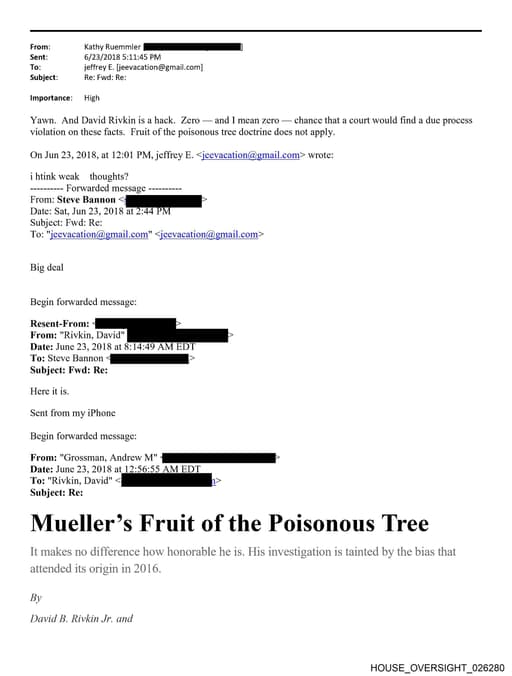
Page: HOUSE_OVERSIGHT_026275 →HOUSE_OVERSIGHT_026280 - HOUSE_OVERSIGHT_026286
1 mentionSource: House Oversight Committee
ous that due process principles would absolutely bar the government from invoking judicial processes to obtain a conviction.” It didn’t take long. In Blackledge v. Perry (1974), the court concluded that due process was offended by a prosecutor’s “realistic likelihood of ‘vindictiveness’ ” that tainted the “ve
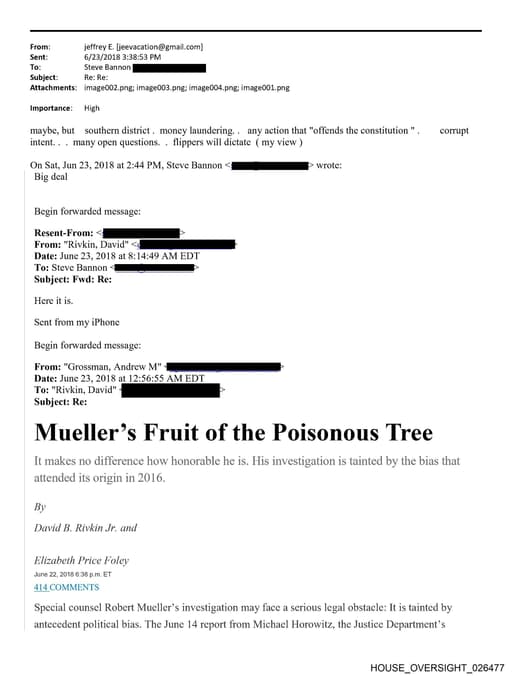
Page: HOUSE_OVERSIGHT_026282 →HOUSE_OVERSIGHT_026477 - HOUSE_OVERSIGHT_026483
1 mentionSource: House Oversight Committee
ous that due process principles would absolutely bar the government from invoking judicial processes to obtain a conviction.” It didn’t take long. In Blackledge v. Perry (1974), the court concluded that due process was offended by a prosecutor’s “realistic likelihood of ‘vindictiveness’ ” that tainted the “ve
Page: HOUSE_OVERSIGHT_026479 →Sponsored
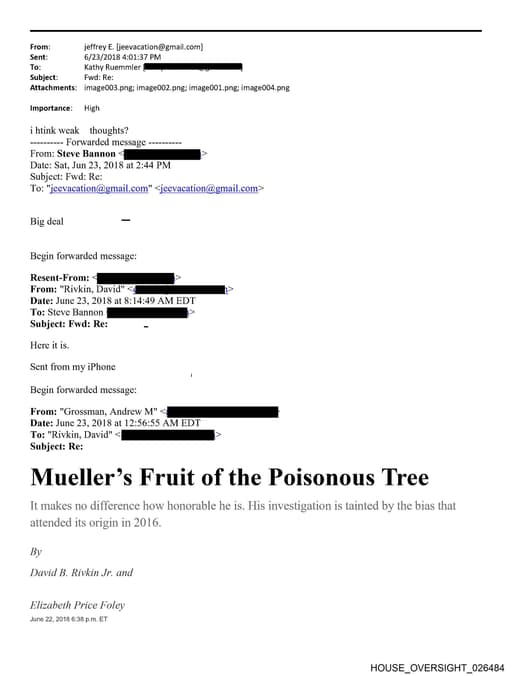
HOUSE_OVERSIGHT_026484 - HOUSE_OVERSIGHT_026490
1 mentionSource: House Oversight Committee
ous that due process principles would absolutely bar the government from invoking judicial processes to obtain a conviction.” It didn’t take long. In Blackledge v. Perry (1974), the court concluded that due process was offended by a prosecutor’s “realistic likelihood of ‘vindictiveness’ ” that tainted the “ve
Page: HOUSE_OVERSIGHT_026486 →HOUSE_OVERSIGHT_026491 - HOUSE_OVERSIGHT_026498
1 mentionSource: House Oversight Committee
ous that due process principles would absolutely bar the government from invoking judicial processes to obtain a conviction.” It didn’t take long. In Blackledge v. Perry (1974), the court concluded that due process was offended by a prosecutor’s “realistic likelihood of ‘vindictiveness’ ” that tainted the “ve
Page: HOUSE_OVERSIGHT_026493 →1 mention
ntry's criminal justice system. Properly administered, they can benefit all concerned." Bordenkircher v. Hayes, 434 U.S. 357, 361-62 (1978), quoting Blackledge v. Allison, 431 U.S. 63, 71 (1977). To encourage defendants to participate in the plea negotiation process, rules have developed to prohibit admiss
Sponsored
1 mention
ntry's criminal justice system. Properly administered, they can benefit all concerned." Bordenkircher v. Hayes, 434 U.S. 357, 361-62 (1978), quoting Blackledge v. Allison, 431 U.S. 63, 71 (1977). To encourage defendants to participate in the plea negotiation process, rules have developed to prohibit admiss
EFTA00301909.pdf
1 mentionEFTA00301909
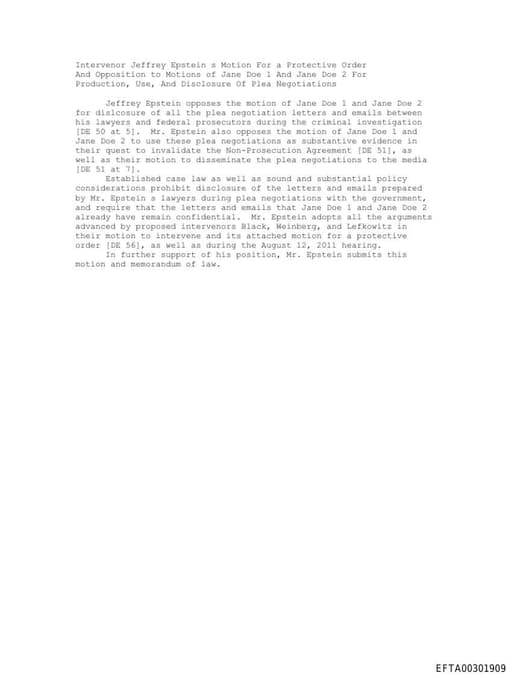
oncomitant plea bargain are important components of this country s criminal justice system. Properly administered, they can benefit all concerned. Blackledge v. Allison, 431 U.S. 63, 71 (1977). Those sentiments are just as true today. The Bureau of Justice Statistics of the Department of Justice reports
EFTA02549323.pdf
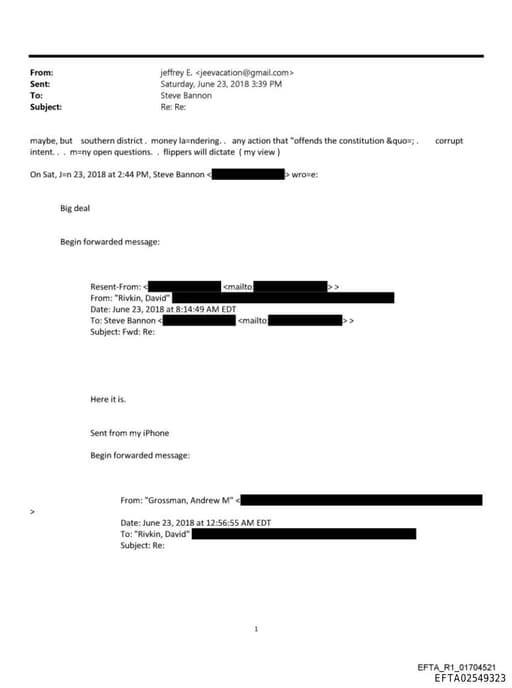
1 mentionEFTA02549323
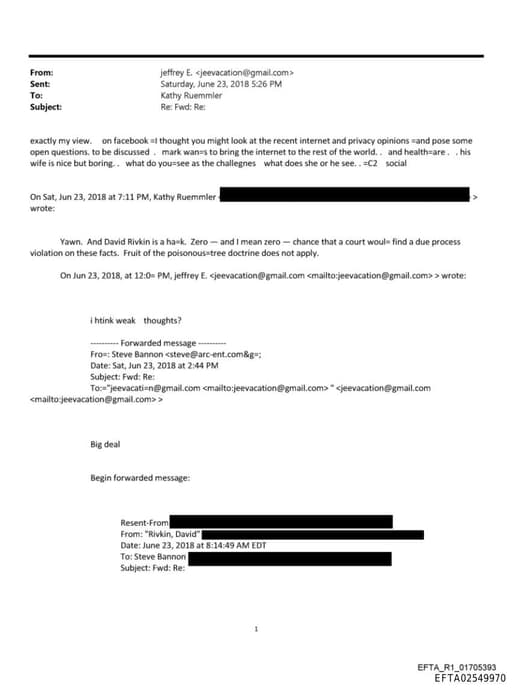
u= that due process principles would absolutely bar the government from invo=ing judicial processes to obtain a conviction." It didn't =ake long. In Blackledge v. Perry (1974), the court concluded that due process was=offended by a prosecutor's "realistic likelihood of 4>=98vindictiveness' " that tainted t
Sponsored
EFTA02549479.pdf
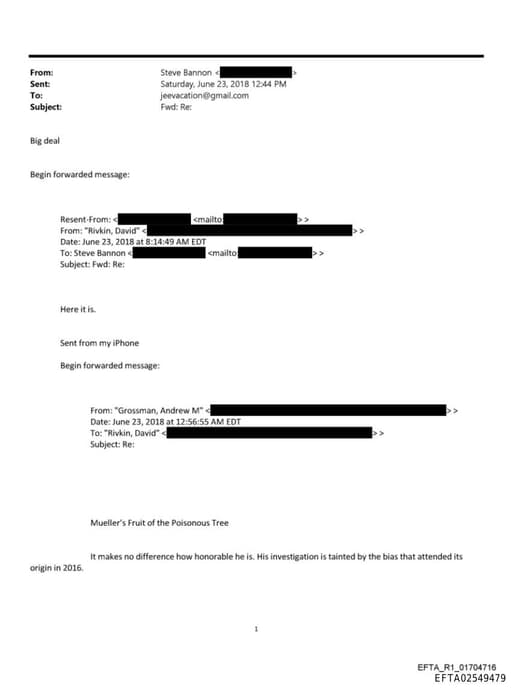
1 mentionEFTA02549479
us that due process principles would absolutely bar the government from invoking judicial processes to obtain a conviction." It didn't take long. In Blackledge v. Perry (1974), the court concluded that due process was offended by a prosecutor's "realistic likelihood of 'vindictiveness' " that tainted the "
EFTA02549692.pdf
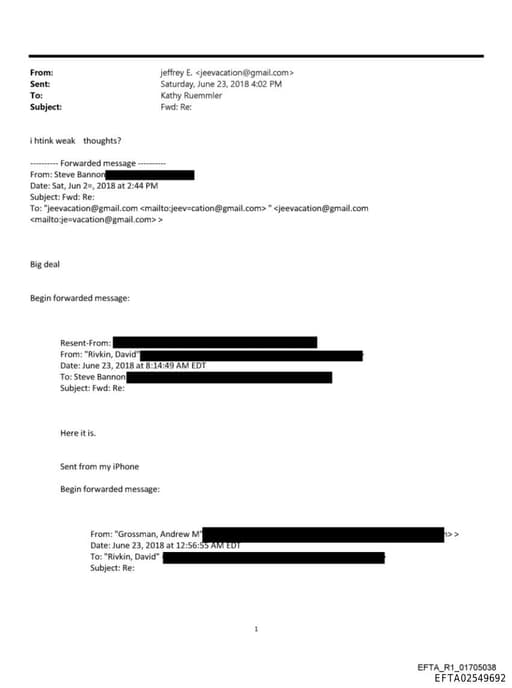
1 mentionEFTA02549692
u= that due process principles would absolutely bar the government from invo=ing judicial processes to obtain a conviction." It didn't =ake long. In Blackledge v. Perry (1974), the court concluded that due process was =ffended by a prosecutor's "realistic likelihood of 4P=98vindictiveness' " that tainted t
EFTA02549762.pdf
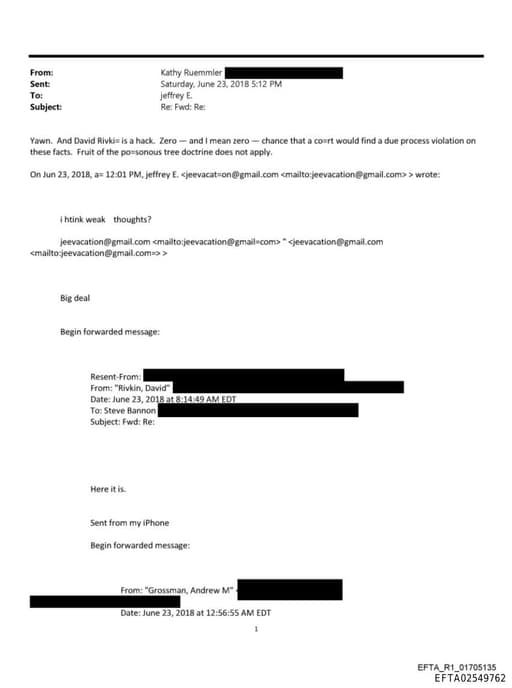
1 mentionEFTA02549762
us=that due process principles would absolutely bar the government from invoki=g judicial processes to obtain a conviction." It didn't tak= long. In Blackledge v. Perry (1974), the court concluded that due process was o=fended by a prosecutor's "realistic likelihood of '=indictiveness " that tainted the "v
Sponsored
EFTA02549970.pdf
1 mentionEFTA02549970
u= that due process principles would absolutely bar the government from invo=ing judicial processes to obtain a conviction." It didn't =ake long. In Blackledge v. Perry (1974), the court concluded that due process was =ffended by a prosecutor's "realistic likelihood of =98vindictiveness' " that tainted the
Untitled attachment 378163.pdf
1 mentionHOUSE_OVERSIGHT_024817_sub_001 - HOUSE_OVERSIGHT_024916
Source: House Oversight Committee
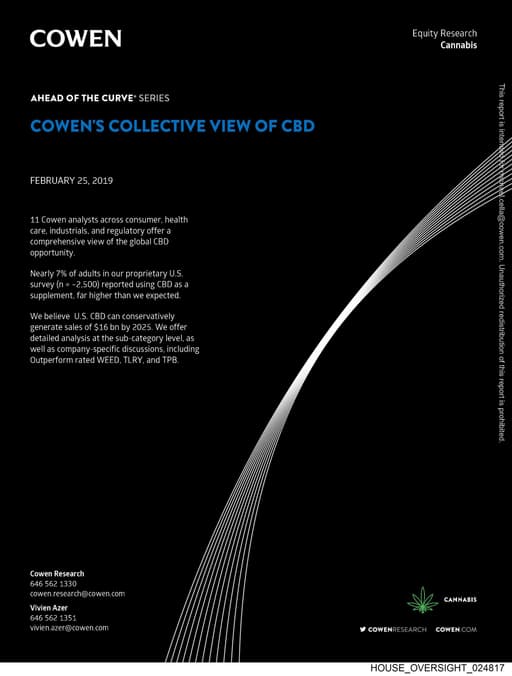
asis on the U.S. For consumer goods, we believe the U.S. CBD market could represent a $16 bn opportunity by 2025. $16 bn Consumer Opportunity (Azer, Blackledge, Charles, Chen & Kernan) In our monthly proprietary consumer survey (n = ~2,500) we were surprised to see that nearly 7% of respondents in January 2
Sponsored
Connected Entities(20 of 134)
Jeffrey Epstein
PersonAmerican sex offender and financier (1953–2019)
13 docs13 co-mentions
Harry Reid
PersonAmerican politician (1939–2021)
12 docs12 co-mentions
Donald Trump
PersonPresident of the United States (2017–2021, 2025–present)
11 docs11 co-mentions
MW
Martin Weinberg
PersonAmerican attorney (born 1946)
11 docs11 co-mentions
Prince Andrew
PersonThird child of Queen Elizabeth II and Prince Philip, Duke of Edinburgh (born 1960)
11 docs11 co-mentions
MH
Michael Horowitz
PersonBritish QC and judge
10 docs10 co-mentions
CS
Christopher Steele
PersonFormer British intelligence officer
10 docs10 co-mentions
Eric Holder
PersonUnited States Attorney General from 2009 to 2015
10 docs10 co-mentions
Yahoo
OrganizationWeb portal and search engine
10 docs10 co-mentions
Crossfire
Organization2007 online game
10 docs10 co-mentions
RI
Rivkin
PersonSurname reference in Epstein-related documents
10 docs10 co-mentions
Steve Bannon
PersonAmerican media executive & political strategist (born 1953)
10 docs10 co-mentions
John Brennan
PersonDirector of the Central Intelligence Agency from 2013 to 2017
10 docs10 co-mentions
George W. Bush
PersonPresident of the United States from 2001 to 2009
10 docs10 co-mentions
Rod Rosenstein
PersonAmerican lawyer
10 docs10 co-mentions
FBI
OrganizationFederal Bureau of Investigation, domestic intelligence and security service of the United States
10 docs10 co-mentions
Hillary Clinton
PersonAmerican politician and diplomat (born 1947)
10 docs10 co-mentions
Kremlin
OrganizationFortified complex in Moscow, Russia
10 docs10 co-mentions
Ronald Reagan
PersonPresident of the United States from 1981 to 1989 and actor (1911–2004)
10 docs10 co-mentions
James Comey
PersonAmerican lawyer and 7th director of the Federal Bureau of Investigation (born 1960)
10 docs10 co-mentions