HOUSE_OVERSIGHT_026877 - HOUSE_OVERSIGHT_026886
Document Information
Bates Range
HOUSE_OVERSIGHT_026877 - HOUSE_OVERSIGHT_026886
Pages
10
Source
House Oversight Committee
Date
September 24, 2018
Original Filename
CNN - CNN Today - New Tariffs, Trade War - Kuhn - 9.18.18.pdf
File Size
1.32 MB
Document Content
Page 1 - HOUSE_OVERSIGHT_026877
New Tariffs — Trade War Robert Lawrence Kuhn, September 18, 2018 Via Skype Getty images | 7:10 AM HOUSE_OVERSIGHT_026877
Page 2 - HOUSE_OVERSIGHT_026878
HOST: Robert Lawrence Kuhn joining us via skype from Beijing. He's the author of How China's Leaders Think and a longtime advisor to Chinese leaders and corporations. Robert, we appreciate you joining us. First off, you know it seems like Trump's strategy here is to force China into concessions with these tariffs. What's China's view on that? RLK: China's view is that the economic ties between China and the rest of the world, the United States in particular, is very important for the peace and prosperity of the world. i: Via Skype 7:09 AM Robert Lav vrence Kuhn viser t »>_Cnmese Le: CNN TODAY HOUSE_OVERSIGHT_026878
Page 3 - HOUSE_OVERSIGHT_026879
Via Skype Getty images . T:10 AM RLK: And indeed for the entire economic relationships and standards of living of all people. There are real issues and I think we need to discuss them. But right now, China is sending signals by what it's doing, that it wants to ratchet down the trade war. It recognizes that it cannot be TRADE unresponsive. H OW U.S. slapped $200 bn worth of tariffs on China Monday Via Skype Getty images RLK: In China, the legitimacy of the 1 government and indeed of the Communist Party is based upon two cardinal factors. One is the economy. This is the 40th year of China's reform and opening up — truly an economic miracle, an astonishing increase in standards of living. 1 HOW FAR CAN U.S.-CHINA DISPUTE GO? INR _ US. slapped $200 bn worth of tariffs on China Monday £:30 AM CET @ttolmesCNN HOUSE_OVERSIGHT_026879
Sponsored
Page 4 - HOUSE_OVERSIGHT_026880
RLK: The GDP per capita has gone up more than 50 times in these 40 years. And so that's number one. But number two is national rejuvenation, national pride. This is what the government and the Party has brought to China in terms of its position in the world. So it cannot back down and look weak in terms of these tariff attacks. But given that, given that environment, the Chinese response is very carefully calibrated. RLK: China levying tariffs on $60 billion is not dollar for dollar, the way the first $50 billion was. But what it is, in fact, is in proportion — because $60 billion is roughly 40 percent of the roughly $150 billion of the total US exports to China, just as $200 billion is roughly 40 percent of the little over $500 billion of the total China exports to the US. E WAR Robert Lawrence Kuhn thor HO Getty images CNN TODAY HOUSE_OVERSIGHT_026880
Page 5 - HOUSE_OVERSIGHT_026881
RLK: So it’s a proportional response. The rhetoric in the press is also milder. US has not been called so much of bullying anymore. Also some of China’s tariffs are 5 percent as well as 10 percent, whereas the US tariffs are all 10 percent [going up to 25 percent]. So China is sending a signal that it wants to ratchet this down. U.S. TARIFFS ON CHINA = ae EXAMPLES OF WHAT’S TARGETTED Am 4. % ie cos HOUSE_OVERSIGHT_026881
Page 6 - HOUSE_OVERSIGHT_026882
HOST: So, if China is sending these signals then, Robert, is there a chance that China would actually come to the table and continue to have these trade talks as they've been scheduled for the coming days? RLK: Unlikely that the top trade negotiator would come under these circumstances, because then it looks like they're coming under the threat of a gun to their head, an analogy that has been used. Possibly that a lower level delegation would come. It's unlikely though that we'll see any real movement before the midterm elections. TRADE WAR China hit UJ S wit U.S. slapped $200 1 S60 7 worth ela WV sth oft of tar VV cA ariffs ffs Tuesday 1 China Monday LIVE KOO CGN “=r A 1651 CNN TODAY HOUSE_OVERSIGHT_026882
Sponsored
Page 7 - HOUSE_OVERSIGHT_026883
we (@' az tH l RLK: I think there has to be some backchannel working. To put the real situation on the table, there are five major issues that the US is concerned about in addition to the trade deficit. The trade deficit is actually complicated because there are services of $40 billion dollars that Chinese tourists and students pay. It's not excluding the transfer pricing of components that are shipped into China. So the trade deficit, which benefits a lot of American consumers with cheaper products at a good quality is not as relevant as popular opinion would suggest. RLK: Most experts do not really focus on the trade deficit. American experts focus on five things: the lack of open Chinese markets; intellectual property protection, industrial espionage, including cyber theft; tech transfer being forced (in joint ventures);, and Chinese government subsidies for critical technologies or industries. Robert Lav vrenc >Ku yrt ry tariffs « 1 China Mc nday CNN TODAY HOUSE_OVERSIGHT_026883
Page 8 - HOUSE_OVERSIGHT_026884
— \Y ~ 1 S CN Wy RLK: If we look at these, China's making real progress in intellectual property, reducing cyber theft — more needs to be done. Not requiring tech transfer. The big one, which they won't change, is government subsidy for nascent technologies of the future. Such government-industry cooperation is part of the Chinese system — that's beyond their red line. RLK: But China should be able to open their markets — and we should be able to have a trade between seriously open markets, which even Chinese economists say is good for the Chinese economy and very good for the world and American companies — and some sort of a recognition that China will continue to subsidize industries. That's where it will happen, we hope soon. Robert Law rence Kunn WO Advise orth er to tarift: Lnine on ¢ > ¢ cS uf hina Monday HOUSE_OVERSIGHT_026884
Page 9 - HOUSE_OVERSIGHT_026885
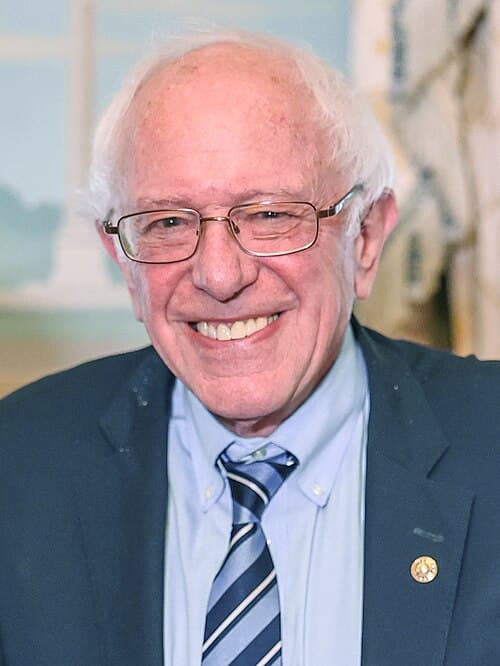
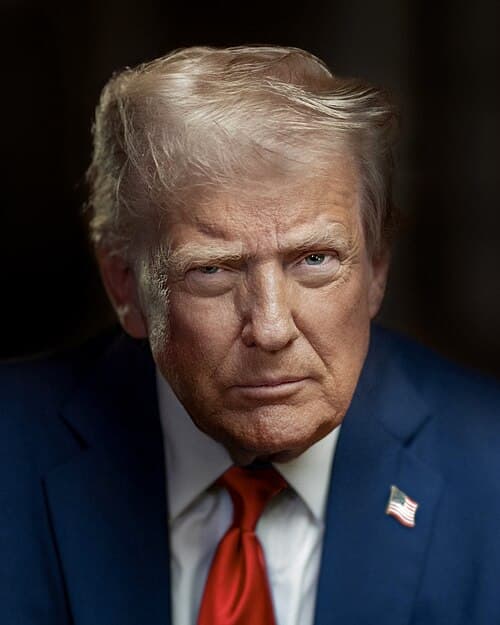
HOST: Yeah. So then if there is room for a trade deal from an expert like you, that there's room for both sides to agree to a deal that would benefit both the United States and China. How would you advise President Trump in terms of his tactic and how he should approach China? RLK: You know, I am not going to be an expert in advising President Trump on tactics. I'm not sure he's amenable to advice and he has his own style. RLK: And many people in the US — let’s put it on the table — who disagree with Trump on virtually every other policy — support Trump either overtly or quietly on his approach to China. And that's because there's general recognition in the US — from Bernie Sanders Democrats all the way on the left to the rightwing Republicans all the way on the right who favor Trump — that something needs to be done to alter the US trade relationships, and the US’ overall relationships, with China. * New TH | - ’ | HOW FAR CAN U.S.-CHINA DISPUTE GO? U.S. slapped $200 bn worth of tariffs on China Monday ADE W, | HOW FAR CAN U.S.-CHINA DISPUTE GO? China hit U.S. with S60 bn worth of tariffs Tuesday HOUSE_OVERSIGHT_026885
Sponsored
Page 10 - HOUSE_OVERSIGHT_026886
RLK: So Trump recognizes that and he is getting political credit for that — whether people like it or not. There's unlikely to be anything before the midterms, but if President Trump is doing what he's doing, he needs to recognize that these issues that I articulated are really the critical issues. And China will be willing to make changes on them. They've already made changes on many of them, like on intellectual property rights, as I said RLK: . But if Trump can recognize what is really needed and what China will do, then Trump can get a huge win out of this, which is actually at the same time beneficial to China. That's a small needle hole at this point though which to look. But I think, ultimately, that's what will happen. HOST: Robert Lawrence Kuhn, thank you very much for your expertise. I appreciate it. om a a | ns AM Robert Lawrence Kuhn Adviser to Chine TRADE WAR Br: | HOW FAR CAN U.S. meters DISPUTE GO? _ U.S. slapped $200 bn worth of tariffs on China Monday HOUSE_OVERSIGHT_026886
Entities Mentioned
Bernie Sanders
PERSON
United States Senator from Vermont since 2007
CL
Cnmese Le
PERSON
Name reference in documents
Donald Trump
PERSON • 2 mentions
President of the United States (2017–2021, 2025–present)
EW
E WAR
PERSON
Name reference in documents
LN
Lnine
PERSON
Name reference in documents

Robert Lav
PERSON
Indian choreographer

Robert Lawrence Kuhn
PERSON
American banker
VK
vrence Kuhn
PERSON
Name reference in documents
United States
LOCATION • 2 mentions
Country located primarily in North America
Statistics
Pages:10
Entities:9
Avg. OCR:91.7%
Sponsored