EFTA00172546_sub_002 - EFTA00172546_111
Document Information
Bates Range
EFTA00172546_sub_002 - EFTA00172546_111
Pages
11
Original Filename
EFTA00172546.pdf
Document Content
Page 101 - EFTA00172546_101
Limited Official Use Only—Not for Public Release leading to some, but not all, of the tiers several minutes after the SHU inmate count had been called into the Control Center; (2) the 10:00 p.m. count slip, which erroneously included the SHU Inmate 4, who had been internally transferred to Receiving and Delivery; (3) other BOP records; and (4) the Material Handlers statement to the OIG that no one conducted the 10:00 p.m. count because everyone was tired. Instead of performing the required duties to account for inmate whereabouts and wellbeing, the OIG found that officers assigned to the SHU on August 9 and 10, including the Material Handler, Noel, and Thomas, primarily remained seated in the SHU Officers' Station—sometimes without moving for a period of time, suggesting that they were asleep—and conducted a variety of internet searches on MCC New York computers. Thomas also admitted to the OIG that he "dozed off' for periods of time during his shift. The OIG's analysis of the SHU security camera video revealed that after approximately 10:40 p.m., no Correctional Officer entered Epstein's tier in the SHU until just before 6:30 a.m. when Noel and Thomas began to serve breakfast to the inmates. The OIG investigation and review concluded that the Evening Watch SHU Officer in Charge, the Material Handler, Noel, and Thomas failed to conduct the mandatory rounds and inmate counts during their respective shifts in the MCC New York SHU on August 9 and 10, 2019, and that their actions constituted violations of S C.F.R. §§ 2635.101(b)(5) and 2635.705(a), BOP Program Statements 3420.11 and 5500.14, and MCC New York SHU Post Orders. 2. False False Statements and Lack of Candor The OIG's investigation and review found that on August 9 and 10, 2019, the Evening Watch SHU Officer in Charge, the Material Handler, Noel, and Thomas made false statements when they falsified BOP records by attesting that they had completed the mandatory rounds and inmate counts when, in fact, they had not. Federal law provides that "whoever, in any matter within the jurisdiction of the executive...branch of the Government of the United States, knowingly and willfully...makes or uses any false writing or document knowing the same to contain any materially false, fictitious, or fraudulent statement or entry" has violated 18 U.S.C. § 1001(a)(3). As discussed above, the OIG found that the Evening Watch SHU Officer in Charge, the Material Handler, Noel, and Thomas failed to conduct all of the mandatory rounds and inmate counts. As part of each institutional inmate count, BOP policy and MCC New York SHU Post Orders require two correctional officers to conduct each count and memorialize the number of inmates in the SHU on an official MCC New York form, often called a count slip.69 On the count slip, both correctional officers are required to fill in the date and time the count had been performed, write the total number of inmates physically present in the unit counted, and then sign the count slip. Once the correctional officers complete and sign the count slips, the count slips are then collected and delivered to the MCC New York Control Center. Officers assigned to the Control Center are responsible for comparing the count slips from each housing unit to the institution's overall inmate count sheet to ensure that each inmate was accounted for.7° Only after all the count slips have been collected from each housing unit, and the numbers on the count slips had been matched to the 69 This BOP form is officially entitled "Metropolitan Correctional Center; New York, New York; Official Count Slip." 70 The official name for the document used to record an institutional count is "Bureau of Prisons Count Sheet: 93 Limited Official Use Only—Not for Public Release EFTA00172646
Page 102 - EFTA00172546_102
Limited Official Use Only—Not for Public Release institution's overall inmate count sheet, could the institutional count be deemed 'cleared" or completed. The Evening Watch SHU Officer in Charge, the Material Handler, Noel, and Thomas each prepared and/or signed a false count slip to create the impression that they had fulfilled their inmate accountability responsibilities when, in fact, they had not!' These individuals admitted to the OIG that instead of performing their assigned duties, they pre-filled the count slips with the number of inmates they believed were in the SHU based on what officers from the previous shift had told them and signed off on the documents knowing that they falsely attested to having completed the counts. Additionally, Noel admitted to the OIG that she had prefilled the official MCC New York forms documenting the times of the 30-minute rounds, often referred to as round sheets, and falsely attested to having completed the rounds.0 Noel and Thomas were indicted by a grand jury for their false certifications of having conducted counts and rounds. Subsequently, each entered into a deferred prosecution agreement with the U.S. Attorney's Office for the Southern District of New York. The U.S. Attorney's Office of the Southern District of New York declined prosecution for the Evening Watch SHU Officer in Charge and the Material Handler. The OIG investigation has found that the Evening Watch SHU Officer in Charge, the Material Handler, Noel, and Thomas knowingly and willingly falsified BOP records in violation of federal law by attesting that they had completed the mandatory rounds and inmate counts on the evening of August 9, 2019, and morning of August 10, 2019. Additionally, as noted above, BOP policy requires employees to cooperate fully with an official investigation and truthfully respond to questions. The OIG found that Noel lacked candor when she told the OIG that she had conducted the 10:00 p.m. count when the weight of evidence indicates that, at most, she may have conducted a round at the time. 3. Poor Judgment Regarding the Use of Overtime The OIG's investigation and review revealed that on August 9, 2019, MCC New York supervisory staff requested that a staff member fill an overtime position within the SHU, which resulted in that staff member working three shifts back-to-back, that is, 24 hours straight. The collective bargaining agreement between the BOP and unions representing BOP employees provides that "[o]rdinarily, the minimum time off between shifts will be seven and one-half (7/) hours, and the minimum elapsed time of on 'days off will be fifty-six (56) hours, except when the employee requests the change."" The Material Handler told the OIG that on August 9 he reported for a voluntary overtime shift from 12:00 a.m. to 8:00 a.m. and then worked his regular 8:00 a.m. to 4:00 p.m. shift in the warehouse. At some point 71 The Evening Watch SHU Officer in Charge and Noel signed the 4:00 p.m. count slip; Noel and the Material Handler signed the 10:00 p.m. count slip; and Noel and Thomas signed the 12:00 a.m., 3:00 a.m., and 5:00 a.m. count slips. 77 This BOP form is officially entitled "MCC New York, Special Housing Unit, 30 Minute Check Sheet." 77 BOP and Council of Prison Locals, Master Agreement, July 21, 2014-July 20, 2021 (extended until 2026). 94 Limited Official Use Only—Not for Public Release EFTA00172647
Page 103 - EFTA00172546_103
Limited Official Use Only—Not for Public Release during the day shift, the Day Watch Operations Lieutenant, a higher ranking official, called and asked the Material Handler if he could work overtime in the SHU and he agreed. The Material Handler told the OIG that he felt pressured to work the third shift, which resulted in him working 24 hours straight, from 12:00 a.m. on August 9 through 12:00 a.m. on August 10. As discussed previously, the Material Handler admitted to the OIG that on the evening of August 9, during his third shift which he worked in the SHU, he did not conduct the mandatory inmate counts and rounds because he was too tired. The OIG investigation and review concluded that the Day Watch Operations Lieutenant exercised poor judgment when he requested that the Material Handler work a third consecutive shift. As the Day Watch Operations Lieutenant, he had access to the staff roster and schedule and therefore he should have known that the Material Handler had already worked 16 straight hours. Additionally, the Day Watch Operations Lieutenant's action was inconsistent with the collective bargaining agreement and did not reflect sound correctional judgment, as it would have been extremely difficult for the Material Handler to have effectively performed his duties during his third shift. 4. Clearing the 10:00 p.m. Institutional Count Knowing that It Was Inaccurate The OIG's investigation and review determined that on August 9, 2019, MCC New York staff cleared the 10:00 p.m. institutional count knowing that the inmate counts from two housing units were inaccurate. BOP policy and MCC New York SHU Post Orders require that correctional officers conducting an institutional count relay the count verbally to the Control Center, which maintains the master count of all inmates!' If a count reported verbally does not match the master count, the Control Center must notify the Operations Lieutenant and the staff members must recount the inmates. MCC New York SHU Post Orders further provide that "[c]ount slips which appear to be altered will not be accepted." As discussed previously, the OIG determined that an internal transfer of an inmate (Inmate 4) from the SHU to Receiving and Discharge on August 9 was not documented appropriately at the time of the transfer. The failure to document the transfer, along with the SHU staff not conducting the required inmate counts, resulted in the MCC New York Control Center receiving a count slip from the SHU with an incorrect number of inmates identified as being present within the SHU at the 10:00 p.m. institutional count. During his OIG interview, Senior Officer Specialist 6, who was assigned to the Control Center, admitted that he amended the 10:00 p.m. count slips he received from the SHU and Receiving and Discharge in an attempt to reflect the correct number of inmates in the SHU following the internal inmate transfer that resulted in a SHU inmate (Inmate 4) being moved to Receiving and Discharge earlier in the day. Senior Officer Specialist 6 acknowledged that he should have requested a recount from the SHU, but instead he cleared the 10:00 p.m. count. Senior Officer Specialist 6 explained that the action he took was known as "ghost counting," something he said he would not have done without authorization from the Operations Lieutenant or someone of a higher rank than himself. The Morning Watch Operations Lieutenant denied having authorized a "ghost count" and we found no evidence to corroborate Senior Officer Specialist 6's claim that the Morning Watch Operations Lieutenant knew of and approved the false count. 74 BOP Program Statement 5270.11. 95 Limited Official Use Only—Not for Public Release EFTA00172648
Sponsored
Page 104 - EFTA00172546_104
Limited Official Use Only—Not for Public Release The OIG found that Senior Officer Specialist 6 modified the count slips received from the SHU and Receiving and Discharge, failed to request a recount of the SHU inmates, and cleared the 10:00 p.m. institutional count knowing that it was inaccurate in violation of BOP policy and MCC New York SHU Post Orders. 5. Failure to Adequately Supervise SHU Staff and Conduct Lieutenant Rounds The OIG also found that MCC New York supervisory personnel failed to effectively perform their duties, which contributed to the fact that Epstein was unobserved for many hours before his death. As discussed above, federal regulations require that MCC New York supervisory personnel "put forth honest effort in the performance of their duties," which includes appropriate supervision of SHU personnel.75 Additionally, BOP policy requires that a lieutenant visit the SHU during each shift to ensure that all procedures are being followed.76 The OIG's investigation revealed that the Evening Watch Operations Lieutenant and the Morning Watch Operations Lieutenant had oversight of the SHU during their respective shifts." The Evening Watch Operations Lieutenant told the OIG that on August 9, 2019, he did not supervise the 4:00 p.m. count or conduct any rounds in the SHU. He acknowledged that he Igned some of the pages of the 4:00 p.m. count, but he did not sign all of the pages as he should have. Beginning at 10:00 p.m. on August 9, the Morning Watch Operations Lieutenant was the sole supervisor overseeing the SHU. The Morning Watch Operations Lieutenant told the OIG that she noticed an error in the 12:00 a.m. count on August 10, which was due to SHU staff including Inmate 4, who had been internally transferred to Receiving and Discharge, among the inmates in the SHU. According to the Morning Watch Operations Lieutenant, the SHU staff should have conducted another count and submitted a new count slip, but she did not know if they actually did so. ,A•77 During her shift, the Morning Watch Operations Lieutenant conducted one round in the SHU at approximately 4:00 a.m. on August 10. The OIG's review of the available SHU security camera video revealed that the Morning Watch Operations Lieutenant was present in the SHU for approximately 7 minutes, during which time she conferred with Noel and Thomas, who were seated at and around the SHU Officers' Station in the common area of the SHU. The Morning Watch Operations Lieutenant told the OIG that she was not required to visit each tier or go to each individual cell during a lieutenant round, but rather the purpose of the lieutenant round was for her to speak with the officers on duty. This description of a lieutenant round is inconsistent with the &tements of many other supervisors and BOP lieutenant training, all of which emphasized the need for lieilrants to walk down all of the SHU tiers during a round. During their interviews with the OIG, the Northeast Regional Director, the Warden, Associate Warden 1, and the Captain clarified that they expected a lieutenant conducting a round in the SHU to check in with the officers, walk down each of the tiers in the SHU, speak with inmates, and address inmate concerns. They explained that the lieutenants did not act responsibly if they did not walk down each of the tiers to check on the 76 5 C.F.R. § 2635.101(6)(5); see also 5 C.F.R. § 2635.705(a). 76 BOP Program Statement 5270.11. 77 The Acting Evening Watch Activities Lieutenant also had oversight over the SHU during her overtime shift (4:00 p.m. to 10:00 p.m. on August 9, 2019) in an acting capacity. The Evening Watch Operations Lieutenant and the Acting Evening Watch Activities Lieutenant told the OIG that the Acting Evening Watch Activities Lieutenant did not supervise any institutional counts, which was due to the start and end time of her overtime shift. The Acting Evening Watch Activities Lieutenant also told the OIG that she conducted one round in the SHU sometime between 5:00 p.m. to 8:00 p.m., during which time she walked down all of the tiers. 96 Limited Official Use Only—Not for Public Release EFTA00172649
Page 105 - EFTA00172546_105
Limited Official Use Only—Not for Public Release inmates in the SHU. As the Acting Evening Watch Activities Lieutenant explained, unlike inmates in general population, SHU inmates cannot approach a supervisor because they are confined within a cell. Further, the BOP lieutenant training, which the Morning Watch Operations Lieutenant attended in 2011, taught that Operations Lieutenants were required to visit the SHU at least once during each shift and that "[t]his visit will be substantially more than just entering the unit, signing the log book, and talking with staff." Instead, Operations Lieutenants were trained to, among other things, walk through each range (or tier), inspect logs and reports, observe activities, and periodically observe counts within the SHU. The OIG found that the failure of the Evening Watch Operations Lieutenant and the Morning Watch Operations Lieutenant to adequately supervise SHU staff, and of the Morning Watch Operations Lieutenant to adequately conduct a lieutenant round in the SHU, which contributed to the SHU staffs failure to conduct mandatory rounds and counts, constituted a job performance failure. C. MCC New York Staff Allowed Epstein to Place an Unmonitored Telephone Call on August 9 The OIG's investigation and review revealed that on the night before his death, Epstein placed an unrecorded, unmonitored telephone call using a non-Inmate Telephone System line from 6:58 p.m. to 7:19 p.m. Other than an MCC New York call log, no other BOP records exist regarding this unmonitored call, including the identity of the person Epstein called or a summary of the conversation. Federal regulations require that the Warden of each BOP institution establish procedures to monitor inmate telephone conversations, which is "done to preserve the security and orderly management of the institution and to protect the public."78 For safety and security reasons, BOP policy requires that all inmate telephone calls be made through the Inmate Telephone System.19 BOP policy recognizes that "on rare occasion, in times of crisis," inmates may be permitted to make a telephone call outside of the Inmate Telephone System. In such circumstances, the telephone "must be placed in a secure area (e.g., a locked office), and "must be set to record telephone calls." Additionally, the staff member coordinating the call must notify the BOP's Special Investigative Services via email, providing the inmate's name and register number, the date and time of the call, the number and name of the individual called, and the reason for the call. The Special Investigative Services must enter this information into the telephone recording system within 7 days. The OIG's investigation determined that on August 9, 2019, Epstein asked to call his mother. The Unit Manager told the OIG that after Epstein's attorney visit had concluded, he agreed to allow Epstein to place a telephone call on an unrecorded legal line. The Unit Manager explained that it was his understanding that Epstein did not have the ability to place a telephone call through the Inmate Telephone System. The OIG's investigation established both that Epstein's mother was deceased at the time he asked to telephone her and that Epstein had been assigned the necessary documentation that would have allowed him to place calls through the Inmate Telephone System, although he did not take the necessary steps to complete the setup process that would have given him the ability to place calls through that system. The Captain told the OIG that when the Unit Manager was escorting Epstein from his attorney visit back to the SHU and Epstein's requested call was discussed, he told the Unit Manager that Epstein's telephone call had to be monitored 78 28 U.S.C. § 540.102. 79 BOP Program Statement P5264.08. 97 Limited Official Use Only—Not for Public Release EFTA00172650
Page 106 - EFTA00172546_106
Limited Official Use Only—Not for Public Release and logged. The Unit Manager told the OIG that he escorted Epstein from his attorney visit to the shower area of the SHU, where he connected a telephone into an unrecorded legal line, and dialed the phone number provided by Epstein. The Unit Manager said that when a male answered the call, he handed the telephone to Epstein, and then left MCC New York for the day because his shift had ended. Before leaving the SHU, the Unit Manager said he told the Evening Watch SHU Officer in Charge, the Material Handler, and Noel, who were at the SHU Officers' Station, to make sure Epstein got his 15 minutes on the telephone, but he did not instruct them to monitor the telephone call. The Unit Manager admitted that he did not verify the recipient of the telephone call, and that neither he nor anyone monitored or logged the telephone call as required. The OIG found that the Unit Manager violated BOP policy by allowing Epstein to make an unrecorded and unmonitored telephone call, and by failing to verify the telephone call recipient, monitor, and log the call. We further found that the Unit Manager exercised poor judgment when he left MCC New York while Epstein was still on the telephone call that the Unit Manager had arranged and failed to instruct the Evening Watch SHU Officer in Charge, the Material Handler, or Noel to monitor the call. D. MCC New York Staff Failed to Conduct and Document Cell Searches and Eliminate Safety Hazards in Epstein's Cell on August 9 Leaving Epstein with Excessive Linens in His Cell The OIG's investigation and review determined that MCC New York staff assigned to the SHU on August 9, 2019, failed to conduct and document searches of Epstein's cell in the SHU. BOP policy requires that BOP staff routinely and irregularly search housing units.w MCC New York SHU Post Orders require that SHU staff conduct at least five cell searches each shift during daytime and evening hours (7:45 a.m. to 12:00 a.m.), in addition to other searches of SHU cells and common areas, and BOP policy and MCC New York SHU Post Orders require written documentation of cell searches. BOP policy explains that the purpose of cell searches are to, among other things, maintain sanitary conditions and eliminate safety hazards. To that end, MCC New York General Housing Unit Post Orders provide that when an inmate is transferred out of a facility, all of the inmate's linens should be taken to Receiving and Discharge. The OIG reviewed MCC New York SHU TRUSCOPE entries for August 9, and identified only one cell search entered by MCC New York SHU staff for the entire day. During his interview with the OIG, the Day Watch SHU Officer in Charge stated that multiple cell searches were conducted in the MCC New York SHU on August 9; however, the Day Watch SHU Officer in Charge stated that he failed to document the cell searches within the TRUSCOPE system as required because he was too busy with other duties. The Day Watch SHU Officer in Charge further stated that any of the SHU staff could have logged the cell searches into TRUSCOPE, but that it was primarily the SHU Officer in Charge's responsibility to do so. The Evening Watch SHU Officer in Charge told the OIG that he and other staff members did not conduct any cell searches during his shift in the SHU on August 9. Additionally, the OIG determined that there was an excessive amount of bed linen within Epstein's cell. The Captain reviewed photographs of Epstein's cell and told the OIG that that the excessive linens were a security issue because they could give inmates materials to fashion 80 BOP Program Statement 5521.06. 98 Limited Official Use Only—Not for Public Release EFTA00172651
Sponsored
Page 107 - EFTA00172546_107
Limited Official Use Only—Not for Public Release an improvised noose or use as escape paraphernalia. The OIG found that on August 9, 2019, the Day Watch SHU Officer in Charge either failed to conduct the required cell searches or failed to document the cell searches that he conducted in the SHU, and that the Evening Watch SHU Officer in Charge failed to ensure that MCC New York staff assigned to the SHU conducted cell searches and himself failed to log cell searches in violation of BOP policy and MCC New York SHU Post Orders. Additionally, the OIG found that it was a performance failure for the Day Watch SHU Officer in Charge, the Evening Watch SHU Officer in Charge, and Noel, who served as the SHU Officer in Charge during their respective shifts on August 9 and 10, 2019, to have permitted Epstein to have an excessive amount of linens in his cell. E. MCC New York Staff Failed to Ensure that the Institution's Security Camera System was Fully Functional Resulting in Limited Recorded Video Evidence This investigation and review revealed longstanding deficiencies with MCC New York's security camera system. These deficiencies resulted in nearly all of the cameras in and around the SHU where Epstein was being housed to not record video starting in late July 2019 and continuing through the date of Epstein's death on August 10, 2019. According to forensic analysis conducted by the FBI after Epstein's death, on July 29, 2019, a disk failure in MCC New York's Digital Video Recorder (DVR) 2 system caused approximately half of the institution's cameras—including nearly all of the cameras in and around the SHU—to display only a live video feed with no video recording. MCC New York personnel did not learn of this system failure until 11 days later on August 8, 2019. MCC New York personnel determined that the DVR 2 system needed to be rebuilt to restore recording functionality. Despite the lack of recording functionality, this repair was not completed until after Epstein's death. The Warden told the OIG that he was generally aware that there were problems with the camera system. The Warden sought and received approval from BOP to replace the entire camera system and in September 2018, BOP entered into contracts totaling over $730,000 to purchase new equipment for the camera replacement project. Although MCC New York management procured new DVR components approximately 9 months prior to Epstein's death, the new system was not installed in a timely manner. The new cameras required new conduit and wiring to be installed before the camera installation. Management faced staffing shortages, temporary rotating facility managers, and other competing priorities that did not allow for completion of the installation of the wiring or the new camera system. The OIG determined that as of August 2021—nearly 3 years after MCC New York contracted for replacement camera equipment—the system upgrade still had not been completed.81 MCC New York's failure to ensure that its security camera system was fully functional and make timely repairs is consistent with the OIG's previous observations regarding weaknesses in the BOP's overall system of security cameras. Dating back to at least 2013, the OIG has repeatedly observed inadequacies in the BOP's overall system of security cameras, including inoperable cameras, an insufficient number of cameras, poor video quality, and inadequate video storage. In a 2016 report on the BOP's contraband interdiction efforts, the OIG identified specific deficiencies with the camera system, and recommended that the BOP 81 The BOP temporarily closed MCC New York in October 2021 due to substandard conditions that are unrelated to this investigation and review. 99 Limited Official Use Only—Not for Public Release EFTA00172652
Page 108 - EFTA00172546_108
Limited Official Use Only—Not for Public Release evaluate the system to determine needed upgrades. 82 In response to the 2016 recommendation, the BOP assessed the camera systems at each institution over the next several years and determined that 45 of its 122 institutions, including MCC New York, required camera system upgrades. The SOP worked to upgrade the systems at those 45 institutions between 2019 and 2021. In June 2021, the BOP reported that it had updated all cameras at the 45 institutions with the latest software and equipment, and that it had installed additional cameras to bolster surveillance. However, as reported in an October 2021 Management Advisory Memorandum issued to the BOP, the OIG analyzed the reported upgrades at the 45 institutions and found that the SOP had addressed some but not all of the deficiencies described in the 2016 OIG report. In its 2021 Management Advisory Memorandum, the OIG recommended that the BOP develop a comprehensive strategic plan for transitioning to a fully digital security camera system. The BOP has provided the OIG with a strategic plan that includes estimated cost projections and timelines for addressing the camera system concerns and completing the system upgrades 83 As of 2023, the OIG's 2021 recommendation remains open. Jg'' The BOP's failure to address the issue of functional security camera systems across t ncy and at individual institutions presents an ongoing risk to the safety of BOP staff and inmates and hal the potential to impair the investigation of and accountability for staff and inmate misconduct. It is imperative that the BOP prioritize the expeditious expansion and modernization of its security camera system to mitigate security risks. id\ II. Recommendations The OIG investigation identified multiple shortcomings in BOP policies that should be further assessed to ensure the BOP can more effectively handle issues that arise in connection with the custody and care of inmates. The recommendations address issues related to and the custody and care of inmates at risk for suicide; measures designed to increase safety, such as staff rounds, inmate counts, and cell searches; and institutional security camera systems and staffing shortages, two longstanding issues for the BOP. 1. The BOP should implement a proce r assigning a cellmate following suicide watch or psychological observation. According to the MCC New York Institution Supplement policy to the Suicide Prevention Program Policy Statement 5324.08, inmates discharged from suicide watch will be assigned a cellmate. The supplemental policy does not, however, describe how long the cellmate requirement should last or if any staff must approve the removal of the cellmate requirement. The Suicide Prevention Program Policy Statement 5324.08 does not describe any process or procedure that requires cellmate assignments for inmates coming off of suicide watch. The Warden stated there was no SOP policy mandating that an inmate coming off of suicide watch have a cellmate, but that doing so was "sound correctional judgment." The OIG's investigation and review revealed that there were knowledge gaps among MCC New York staff regarding Epstein's cellmate requirement, indicating that improved communication with institutional staff 82 U.S. DOJ OIG Review of the Federal Bureau of Prisons' Contraband Interdiction Efforts Evaluation and Inspections Report 16-05 (June 2016). 83 U.S. DOJ OIG Notification of Needed Upgrades to the Federal Bureau of Prisons' Security Camera System Management Advisory Memorandum 22-001 (October 2021). 100 Limited Official Use Only—Not for Public Release EFTA00172653
Page 109 - EFTA00172546_109
Limited Official Use Only—Not for Public Release would be beneficial. The OIG therefore recommends that the BOP implement a requirement that all inmates coming off of suicide watch or psychological observation to be assigned cellmates, provide guidance for determining when a cellmate is no longer required, and implement a process for approving, documenting, and communicating to institutional staff the assignment and removal of cellmates for these inmates. 2. The BOP should establish a contingency plan for cellmate assignment for high-risk inmates, ensuring that another cellmate can be assigned efficiently. The OIG's investigation and review found that there was no contingency plan in place to assign Epstein a new cellmate when his then-cellmate was transferred out of MCC New York. Although the failure to assign a new cellmate was due, in part, to SHU staff failing to make required notifications and supervisory staff failing to adequate supervise SHU staff, the gap in cellmate assignment was also due to the lack of a contingency plan. The Evening Watch SHU Officer in Charge told the OIG that although he knew that Epstein needed a new cellmate, he said that SHU staff did not have the authority to assign a new cellmate, which was consistent with what MCC New York supervisory personnel told the OIG. A contingency plan, such as a list of alternate cellmates, would have increased the likelihood that Epstein would not have been housed alone at the time of his death. The OIG therefore recommends that the BOP develop contingency plans for cellmate assignment for high-risk inmates. Aa- \a, 3. The BOP should implement a process that requires approval to be obtained and documented for social or legal visits while an inmate is on suicide watch or psychological observation. According to the BOP's Suicide Prevention Program Policy Statement 5324.08 and the MCC New York Institution Supplement to the suicide prevention policy, inmates on suicide watch must be under constant observation by staff or trained inmate observers. The MCC New York Institution Supplement policy states that only with rare exceptions that are approved by the Captain as well by the Associate Warden of Programs will visitation either social or legal be permitted for inmates on suicide watch. Additionally, the MCC New York Procedural Memorandum for Psychological Observation states that inmates on psychological observation will be continuously monitored by either an inmate companion or a staff member. A review of the Suicide Watch Chronological Logs for July 23, 2019, revealed Epstein was allowed to leave the suicide watch room to visit with his attorneys for more than 6 hours. According to the Psychological Reconstruction conducted by the Assistant Director of the Reentry Services Division, during Epstein's psychological observation on July 24 through July 30, 2019, Epstein was also allowed to visit with his attorneys between 8-11 hours each day without direct observation. Although the MCC New York supplemental policy described an approval process for social and legal visits while an inmate is on suicide watch or psychological observation, the OIG found no evidence that Epstein's legal visits were approved by the Captain or an Associate Warden. Additionally, the BOP Suicide Prevention Program Policy Statement 5324.08 does not describe any process or procedures that allows inmate to have legal or social visits while on suicide watch or psychological observation. The OIG therefore recommends that the BOP develop and implement a process for such visits to be approved and documented. 101 Limited Official Use Only—Not for Public Release EFTA00172654
Sponsored
Page 110 - EFTA00172546_110
Limited Official Use Only—Not for Public Release 4. The BOP should improve its methods of accounting for inmate whereabouts and wellbeing by expanding institutional controls and documentation. The OIG's investigation and review revealed many inmate accountability deficiencies. Most fundamentally, MCC New York staff assigned to the SHU on August 9 and 10, 2019, did not conduct many of the required rounds and inmate counts. Additionally, there was lacking or delayed documentation regarding inmates, including cell assignments and internal inmate transfers. Internal reports, such as the daily call out list and the lieutenant log, are either not retained or subject to continuous modification, which reduces their utility as accountability tools. Therefore, the OIG recommends that the BOP develop a plan to improve its methods of accounting for inmate whereabouts and wellbeing, institutional controls, and documentation. 5. BOP policy should clarify what is required of a lieutenant when conducting a round. The OIG's investigation and review revealed significant gaps in the supervision of MCC New York staff assigned to the SHU. Although BOP policy requires MCC New York lieutenants to conduct at least one round in the SHU during each shift, what was required of a lieutenant during the round is not specified. During their interviews with the OIG, experienced MCC New York supervisory personnel described what should be done during a round, which is also reflected in BOP lieutenant training, but this expectation was not memorialized in any BOP or MCC New York policy or Post Order. The OIG recommends that the BOP develop a policy, either at an agency-wide or institution-specific level, to define what is expected of supervisory personnel during a round in the SHU to better ensure that BOP staff are appropriately supervised. 6. The BOP should develop and implement a plan to address staffing shortages at its prisons. Since at least 2015, the OIG has repeatedly found the need for BOP to address staffing shortages, including medical staffing shortages,' This investigation and review revealed the direct impact of staffing deficiencies on inmate safety. For example, the Material Handler worked three consecutive shifts-24 hours straight— on August 9, 2019, which was certainly a contributory cause to the lack of adequate means of accounting for inmate location and wellbeing in the SHU. The Material Handler told the OIG that no one did the 10:00 p.m. SHU inmate count because they were tired. Additionally, the OIG's investigation and review found that in connection with MCC New York's upgrade of its security camera system, the BOP's Northeast Regional Office arranged for technicians from other BOP institutions to perform temporary duty (TDY) assignments to MCC 84 U.S. DOJ 016, Analytic of the Federal Bureau of Prisons' Fiscal Year 2019 Overtime Hours and Cogs Management Advisory Memorandum 21.011 (December 2020); U.S. DOJ OIG, Review of the Federal Bureau of Prisons' Use of Restrictive Housing for Inmates with Mentallllnecc Evaluation and Inspections Division Report 17-05 (July 2017); U.S. DOJ OIG, Audit of the Federal Bureau of Prisons' ContrarrNo. DIBP0616BPA 12004 Awardod to Soertrum Sorviros, Inc.. Vic-torville, California Audit Division Report 17-20 (March 2017); U.S. DOJ OIG, Audit of the Federal Bureau of Prisons' Contract with Coreavic Inc. to Operate the Adams County Correctional Center in Natchez Mississipp4 Audit Division Report 17-08 (December 2016); U.S. DOJ 01G, Review of the Federal Bureau of Prisons' Mediral Staffing (hallows Evaluation and Inspections Division Report 16-02 (March 2016); U.D. DOJ OIG, Review of the Impact of an Aging Inmate Population on the Federal Bureau of Prisons Evaluation and Inspections Division Report 15.05 (May 2015). Additionally, multiple remote inspections the 016 conducted as part of its pandemic response oversight work revealed that staffing shortages impacted the BOP's ability to respond to Inmates' medical needs during the Coronavirus disease 2019 pandemic. These findings are summarized in the OIG's Capstone report. 102 Limited Official Use Only—Not for Public Release EFTA00172655
Page 111 - EFTA00172546_111
Limited Official Use Only—Not for Public Release New York to perform necessary mechanical, electrical, plumbing, and wiring work. Yet, during the course of the TDY rotations, work was not consistently conducted on the camera upgrade because sometimes TDY staff were used to cover shortages at MCC New York's custody posts. Without adequate staffing, the BOP cannot fulfill its mandate to ensure safe and secure correctional facilities. The OIG therefore recommends that the SOP develop and implement a plan to address staffing shortages at its institutions. 7. The BOP should clarify and improve the cell search policy. The OIG's investigation and review found that there were an excessive amount of linens in Epstein's cell at the time of his death. BOP policy and MCC New York SHU Post Orders require that SHU cells be searched, but they do not specifically address the issue of excessive bed linens, which the Captain told the OIG present a safety hazard because an inmate can use them to harm him/herself or escape from the institution. Therefore, the OIG recommends that the SOP clarify, either at an agency-wide or institution- specific level, what materials should be seized during a cell search. 8. The BOP should develop policies requiring that institutional security camera systems have the capacity to record video and that BOP institutions conduct regular security camera system functionality checks. As discussed in the Conclusions section of this chapter, the OIG found that, even though the highest levels of leadership knew of the MCC New York security camera system's recurring deficiencies, prior to Epstein's death, no one at MCC New York was tasked with the responsibility of checking the security camera system on a routine basis to ensure that the system was functional. As a result, when on July 29, 2019, video from approximately half of the institution's security cameras was no longer being recorded, the problem went undetected for 11 days. The OIG also found that there are no BOP policies that require that security camera systems have the capacity to record or that institutional staff perform periodic checks to ensure the camera system is fully functional. Cameras that are failing to provide good quality or any live video streams put the safety of BOP staff members and inmates at risk, and the lack of video recordings can potentially hinder investigations of wrongdoing by staff and inmates. The OIG therefore recommends that the BOP develop policies and protocols that require that all institutional security camera systems have the capacity to record, and that specified staff at each institution conduct periodic checks of the security camera system to determine its operational status and take corrective action as soon as possible when the system is found to be inoperable. Such routine checks would help ensure that camera system malfunctions are detected and corrective actions are initiated in a timely manner. 103 Limited Official Use Only—Not for Public Release EFTA00172656
Entities Mentioned
IG
Igned
PERSON
Name reference in documents

Jeffrey Epstein
PERSON
American sex offender and financier (1953–2019)
SS
Soertrum Sorviros
PERSON
Name reference in documents
Analytic of
ORGANIZATION
Organization referenced in documents
Audit of the Federal Bureau of Prisons' ContrarrNo
ORGANIZATION
Organization referenced in documents
BOP Program
ORGANIZATION
Organization referenced in documents
BOP Program Statement
ORGANIZATION
Organization referenced in documents
California Audit Division Report
ORGANIZATION
Organization referenced in documents
Capstone
ORGANIZATION
Organization referenced in documents
Coreavic Inc.
ORGANIZATION
Organization referenced in documents
Council of Prison Locals
ORGANIZATION
Organization referenced in documents
Digital Video Recorder
ORGANIZATION
Organization referenced in documents
Discharge
ORGANIZATION
Organization referenced in documents
Evaluation and Inspections Division
ORGANIZATION
Organization referenced in documents
G, Review of the Federal Bureau of Prisons' Mediral Staffing
ORGANIZATION
Organization referenced in documents
Inmate Telephone
ORGANIZATION
Organization referenced in documents
MCC New York Control Center
ORGANIZATION
Organization referenced in documents
MCC New York General Housing Unit Post Orders
ORGANIZATION
Organization referenced in documents
MCC New York Procedural Memorandum for Psychological Observation
ORGANIZATION
Organization referenced in documents
MCC New York SHU Post Orders
ORGANIZATION
Organization referenced in documents
MCC New York Staff
ORGANIZATION
Organization referenced in documents
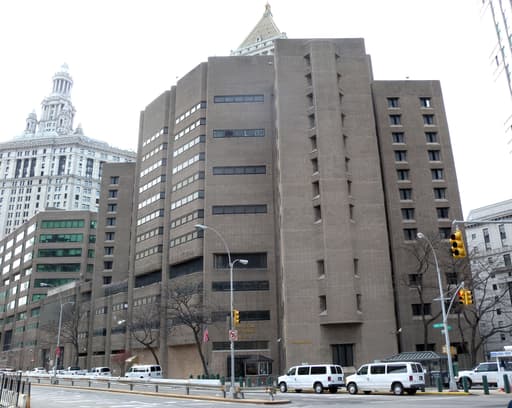
Metropolitan Correctional Center
ORGANIZATION
Metropolitan Correctional Center, New York, federal detention facility where Jeffrey Epstein died on August 10, 2019
Northeast Regional Office
ORGANIZATION
Organization referenced in documents
Office of the Southern District of New York
ORGANIZATION
Organization referenced in documents
Operate the Adams County Correctional Center
ORGANIZATION
Organization referenced in documents
Post Order
ORGANIZATION
Organization referenced in documents
Receiving and Discharge
ORGANIZATION
Organization referenced in documents
Review of the Federal Bureau of Prisons'
ORGANIZATION
Organization referenced in documents
Review of the Impact of an Aging Inmate
ORGANIZATION
Organization referenced in documents
SHU personnel.75 Additionally
ORGANIZATION
Organization referenced in documents
Special Housing Unit
ORGANIZATION
Restricted housing unit within the federal prison system
the Federal Bureau of Prisons Evaluation and Inspections Division
ORGANIZATION
Organization referenced in documents
the Federal Bureau of Prisons' Contraband Interdiction Efforts Evaluation
ORGANIZATION
Organization referenced in documents
the Morning Watch Operations Lieutenant
ORGANIZATION
Organization referenced in documents
the Reentry Services Division
ORGANIZATION
Organization referenced in documents
the SHU Inmate
ORGANIZATION
Organization referenced in documents
the SHU Officers' Station
ORGANIZATION
Organization referenced in documents
the Suicide Prevention Program Policy
ORGANIZATION
Organization referenced in documents
U.D. DOJ OIG
ORGANIZATION
Organization referenced in documents
the Southern District
LOCATION
Federal judicial district in New York City
Statistics
Pages:11
Entities:40
Sponsored