2023_06_OIG_Memorandum_23-085_sub_002 - 2023_06_OIG_Memorandum_23-085_p128
Document Information
Bates Range
2023_06_OIG_Memorandum_23-085_sub_002 - 2023_06_OIG_Memorandum_23-085_p128
Pages
28
Document Content
Page 101 - 2023_06_OIG_Memorandum_23-085_p101
94 Chapter 7: Conclusions and Recommendations I. Conclusions Our investigation and review of the Federal Bureau of Prisons’ (BOP) custody, care, and supervision of Jeffrey Epstein identified numerous and serious failures by employees of the Metropolitan Correctional Center located in New York, New York (MCC New York), including falsifying BOP records relating to inmate counts and rounds and multiple violations of MCC New York and BOP policies and procedures, which compromised Epstein’s safety, the safety of other inmates, and the security of the institution. Specifically, we found that MCC New York staff failed to undertake required measures designed to make sure that, among other things, Epstein and other inmates were accounted for and safe, such as conducting inmate counts and 30-minute rounds, searching inmate cells, and ensuring adequate supervision of the Special Housing Unit (SHU) and the functionality of MCC New York’s security camera system. We further found that multiple BOP employees submitted false documents claiming that they had performed the required counts and rounds and that several MCC New York staff members lacked candor when questioned by the Office of the Inspector General (OIG) about their actions. Two MCC New York employees, Tova Noel and Michael Thomas, were charged criminally with falsifying BOP records relating to their conducting inmate counts and rounds. The U.S. Attorney’s Office for the Southern District of New York subsequently entered into deferred prosecution agreements with Noel and Thomas and the court dismissed all charges against them after Noel and Thomas successfully fulfilled the terms of their agreements. Prosecution was declined by the U.S. Attorney’s Office for the Southern District of New York for other MCC New York employees assigned to the SHU on August 9–10, 2019, who the OIG found also created, certified, and submitted false documentation regarding inmate counts and rounds on the day before and the day of Epstein’s death. The OIG also found that the MCC New York staff failed to carry out the Psychology Department’s directive that Epstein be assigned a cellmate and that an MCC New York supervisor allowed Epstein to make an unmonitored telephone call the evening before his death. The OIG determined that the combination of these and other failures led to Epstein being alone and unmonitored in his cell, with an excessive amount of bed linens, from approximately 10:40 p.m. on August 9, until he was discovered hanged in his cell at approximately 6:30 a.m. the following day. Additionally, the OIG found that staffing shortages, a persistent issue for the BOP, compromised the ability of MCC New York staff to adequately supervise inmates. As detailed below, we make a number of recommendations to the BOP to address the serious issues we identified during our investigation and review. While the OIG determined that MCC New York staff committed significant violations of BOP and MCC New York policies and falsified records relating to their conducting inmate counts and rounds, the OIG did not uncover evidence that contradicted the Federal Bureau of Investigation’s (FBI) determination regarding the absence of criminality in connection with how Epstein died. All MCC New York staff members who were interviewed by the OIG said they did not know of any information suggesting that Epstein’s cause of death was something other than suicide. Likewise, none of the interviewed inmates provided any credible information that Epstein’s cause of death was something other than suicide.
Page 102 - 2023_06_OIG_Memorandum_23-085_p102
95 As detailed in Chapter 4 of this report, the SHU was a housing unit within MCC New York where inmates were securely separated from the general inmate population and kept locked in their cells for approximately 23 hours a day, to ensure their own safety as well as the safety of staff and other inmates. Access to the SHU was controlled by multiple locked doors. The primary entrance to the SHU (Main Exterior Entry Door) was opened remotely by a staff member in MCC New York’s centralized Control Center. Additionally, there was a second locked door at the main entrance (Main Interior Entry Door), which could be opened only with a key held by a limited number of Correctional Officers (CO) while on duty.55 Within the SHU, the entrance to each tier could be accessed only via a single locked door at the top or bottom of the staircase leading to the individual tier. Keys to open the locked tier doors were available only to a limited number of COs while on duty. Each tier had eight cells, each of which could house either one or two inmates. Each individual cell, which was made of cement and metal, could be accessed only through a single locked door, to which only a limited number of COs had keys while on duty. The SHU cell doors were made of solid metal with a small glass window and small locked slots that correctional staff used to handcuff inmates and provide food and toiletries to inmates. As a further security measure, during each shift a limited number of the COs had keys while on duty. BOP policy and practice require that all SHU inmates be locked in their cells overnight. The OIG found no evidence indicating that the door to Epstein’s cell or any other cell in the SHU tier in which Epstein was housed was unlocked on the evening of August 9–10, 2019, after SHU staff locked Epstein in his cell at approximately 8 p.m. SHU staff told the OIG that at approximately 8 p.m. on August 9, all SHU inmates were locked in their cells for the evening and that there was no indication that any of the other inmates could have gotten out of their cells. Epstein did not have a cellmate after Inmate 3 was transferred out of MCC New York on August 9, and therefore Epstein was alone in his cell the evening of August 9–10. The door to Epstein’s cell was visible from the SHU Officers’ Station, and CO Tova Noel and Material Handler Michael Thomas told the OIG that no one entered or exited Epstein’s cell during their shift on August 10. Both of them further described delivering breakfast to the L Tier at about 6:30 a.m. on August 10, and how Noel unlocked the door to the L Tier, Thomas entered the L Tier and called for Epstein, and then Thomas unlocked his cell door when Epstein failed to respond. Additionally, the three inmates who were housed in the same SHU tier as Epstein on August 9 and 10, and who had a direct line of sight to the door of Epstein’s cell from their cells, stated that no one entered or exited Epstein’s cell after the SHU staff returned Epstein to his cell on the evening of August 9, which is consistent with the security measures in place within the MCC New York SHU. Further, the OIG analyzed the available recorded video of the SHU, which was limited to the common area of the SHU, including the SHU Officers’ Station, due to the MCC New York security camera system’s video recording issues that we detailed in Chapter 6. The OIG’s analysis of the recorded video did not identify any COs (other than those assigned to the SHU during that timeframe or had a specific reason for visiting the SHU) or other individuals present in the common area of the SHU approach any of the SHU tiers, including the L Tier where Epstein was housed, between approximately 10:40 p.m. on August 9 and approximately 6:30 a.m. on August 10. In sum, the OIG’s investigation did not find any evidence that anyone was present in 55 The primary entrance doors to the MCC New York SHU are shown in Figure 4.1. Access to the secondary entrance to the SHU, which was adjacent to the elevator bay on the south side of the floor, was also controlled by an exterior entry door opened by the Control Center and an interior door opened only with a key held by one of the COs assigned to the SHU while on duty. The secondary entrance doors to the SHU are shown in Figure 4.2.
Page 103 - 2023_06_OIG_Memorandum_23-085_p103
96 the L Tier during that timeframe other than the inmates who were locked in their assigned cells on that tier of the SHU. We also noted that the surveillance camera in the L Tier, as shown in the photograph in Figure 6.7, was in plain view of the inmates and therefore inmates would have been aware that any hallway movements, including into or out of Epstein’s cell, were being live streamed and could be monitored, even if, unbeknownst to them, the Digital Video Recorder (DVR) system was not recording the live stream at that time. As the OIG has noted in numerous prior reports regarding the BOP’s camera system, BOP staff and inmates are aware of where prison cameras are located and often engage in wrongdoing in locations where they know cameras are not located.56 Additionally, the OIG did not observe on the recorded video of the SHU common area that Noel and Thomas, who were seated at the desk at the SHU Officers’ Station immediately outside the L tier during that time period, at any time rose from their seats or approached the L Tier. We additionally found that Thomas’s and Noel’s reaction on the morning of August 10 upon finding Epstein hanging in his cell, as described to us by Thomas, Noel, the responding Lieutenant, and inmates, was consistent with their being unaware of any potential harm to Epstein prior to Thomas entering Epstein’s cell at about 6:30 a.m. on August 10. We further noted that Epstein had previously been placed on suicide watch and psychological observation due to the events of July 23, 2019; that numerous nooses made from prison bed sheets were found in his cell on the morning of August 10; and that he had signed a new Last Will and Testament on August 8, 2 days before he died. No weapons were recovered from Epstein’s cell after his death. Additionally, the inmates who were interviewed consistently reported that on the evening Epstein died the SHU staff did not systematically conduct the required rounds and counts, which was one of the primary mechanisms for the SHU staff to ensure the safety and security of inmates housed in the SHU. As a result, Epstein was unmonitored and locked alone in his cell for hours with an excess amount of linens, which provided an opportunity for him to commit suicide. Finally, the Medical Examiner who performed the autopsy detailed for the OIG why Epstein’s injuries were more consistent with, and indicative of, a suicide by hanging rather than a homicide by strangulation. The Medical Examiner also told the OIG that the ligature furrow was too broad to have been caused by the electrical cord of the medical device in Epstein’s cell and that blood toxicology tests revealed no medications or illegal substances were in Epstein’s system. The Medical Examiner also noted the absence of debris under Epstein’s fingernails, marks on his hands, contusions to his knuckles, or bruises on his body that would have indicated Epstein had been a struggle, which would be expected if Epstein’s death had been a homicide by strangulation. This is not the first time that the OIG has found significant job performance and management failures on the part of BOP personnel and widespread disregard of BOP policies that are designed to ensure that inmates are safe, secure, and in good health. For instance, the OIG’s December 2022 investigation and review of the BOP’s handling of the transfer of James “Whitey” Bulger identified serious job performance and 56 U.S. Department of Justice (DOJ) OIG, Notification of Needed Upgrades to the Federal Bureau of Prisons’ Security Camera System, Management Advisory Memorandum 22-001 (October 2021); U.S. DOJ OIG, Audit of the Federal Bureau of Prisons’ Management and Oversight of its Chaplaincy Services Program, 21-091 (July 2021); U.S. DOJ OIG, Review of the Federal Bureau of Prisons’ Contraband Interdiction Efforts, Evaluation and Inspections Report 16-05 (June 2016).
Sponsored
Page 104 - 2023_06_OIG_Memorandum_23-085_p104
97 management failures at multiple levels within the BOP.57 Similar to the Bulger report, the numerous and serious transgressions that occurred in this matter came to light largely because they involved a high-profile inmate. The fact that serious deficiencies occurred in connection with high-profile inmates like Epstein and Bulger is especially concerning given that the BOP would presumably take particular care in handling the custody and care of such inmates. Regrettably, the OIG has encountered similar issues on many other occasions. For example, the OIG has investigated numerous allegations related to the falsification of official BOP documentation concerning inmate counts and rounds, several of which have resulted in criminal prosecution. The OIG currently has two open investigations into allegations of falsified inmate count and round documentation, each involving an inmate death (by suicide and homicide) or escape from a BOP facility. This investigation and review also revealed the direct impact of insufficient staffing levels on inmate safety. Witnesses repeatedly told the OIG that counts, rounds, cell searches, and other methods of inmate accountability were not undertaken because correctional staff were working multiple shifts—including one staff member who worked 24-hours straight—and were tired and overwhelmed with other duties. As discussed in greater detail in our recommendations, the OIG has repeatedly found the need for BOP to address staffing shortages. Most recently, in March 2023, the OIG found that the coronavirus disease 2019 (COVID-19) pandemic exacerbated the effects of preexisting BOP medical and nonmedical staffing shortages, an issue the OIG has identified as a concern for the BOP since at least 2015.58 Further, the OIG has repeatedly found that BOP personnel have not consistently been attentive to the needs of inmates at risk for suicide. In this investigation, that inattention manifested in the failure of MCC New York staff and supervisors to ensure that Epstein was assigned a cellmate as required by the MCC New York Psychology Department directive issued after the July 23, 2019 incident in which Epstein was discovered in his cell with an orange cloth around his neck. In a March 2023 report, the OIG found that BOP psychology staff did not assess the suitability of single-cell assignments for five of the seven inmates who died by suicide while in COVID-19 quarantine units between March 2020 and April 2021.59 The OIG’s 2017 report on the BOP’s use of restrictive housing for inmates with mental illness also noted that single-celling may present risks to inmate mental health, and both of the recommendations from that report regarding the use and oversight of single-celling remain open as of March 2023.60 Lastly, as discussed in greater detail in the conclusions and recommendations that follow, the persistent deficiencies of the BOP’s security camera systems are well documented and long-standing. 57 U.S. DOJ OIG, Investigation and Review of the Federal Bureau of Prisons’ Handling of the Transfer of Inmate James “Whitey” Bulger, 23-007 (December 2022). 58 U.S. DOJ OIG, Capstone Review of the Federal Bureau of Prisons’ Response to the Coronavirus Disease 2019 Pandemic, Evaluation and Inspections Division A-2020-011 (March 2023) (Capstone Report). 59 Capstone Report. 60 U.S. DOJ OIG, Review of the Federal Bureau of Prisons’ Use of Restrictive Housing for Inmates with Mental Illness, Evaluation and Inspections Report 17-05 (July 2017).
Page 105 - 2023_06_OIG_Memorandum_23-085_p105
98 The combination of negligence, misconduct, and outright job performance failures documented in this report all contributed to an environment in which arguably one of the most notorious inmates in BOP’s custody was provided with the opportunity to take his own life, resulting in significant questions being asked about the circumstances of his death, how it could have been allowed to have happen, and most importantly, depriving his numerous victims, many of whom were underage girls at the time of the alleged crimes, of their ability to seek justice through the criminal justice process. The fact that these failures have been recurring ones at the BOP does not excuse them and gives additional urgency to the need for Department of Justice (DOJ) and BOP leadership to address the chronic staffing, surveillance, security, and related problems plaguing the BOP. The OIG has completed its investigation and is providing this report to the BOP for appropriate action. Unless otherwise noted, the OIG applies the preponderance of the evidence standard in determining whether DOJ personnel have committed misconduct. The U.S. Merit Systems Protection Board applies this same standard when reviewing a federal agency’s decision to take adverse action against an employee based on such misconduct. See 5 U.S.C. § 7701(c)(1)(B) and 5 C.F.R. § 1201.56(b)(1)(ii). A. MCC New York Staff Failed to Ensure that Epstein Had a Cellmate on August 9 as Instructed by the Psychology Department on July 30 On July 30, 2019, the MCC New York Psychology Department sent an email to over 70 BOP staff members stating that Epstein “needs to be housed with an appropriate cellmate.” The Psychology Department’s directive that Epstein have an appropriate cellmate arose out of the events that occurred on July 23, 2019, when Epstein was found lying on the floor of his cell with a piece of orange cloth around his neck. Epstein’s cellmate at the time (Inmate 1) told MCC New York staff that Epstein had tried to hang himself, and another inmate housed on the same SHU tier at the time (Inmate 2) corroborated several aspects of Inmate 1’s account. Epstein’s accounts of what had occurred varied. Epstein initially told MCC New York staff that he thought his cellmate had tried to kill him, but thereafter he repeatedly said he did not know what had occurred. Epstein later asked two different MCC New York staff members if he could be housed with the same cellmate Epstein initially accused of having tried to harm him. As a result of this incident, Epstein was placed on suicide watch and then psychological observation. Consistent with the Psychology Department’s directive, the Captain and the SHU Lieutenant each told the OIG that they verbally informed SHU staff of Epstein’s cellmate requirement. These and other witnesses said staff members regularly assigned to the SHU knew that Epstein needed to have a cellmate. However, despite the Psychology Department’s widely disseminated July 30 email instruction and the subsequent verbal direction provided by the Captain and the SHU Lieutenant, Epstein was left without a cellmate on August 9 and, less than 24 hours later, Epstein died by suicide. 1. Failure to Make Required Notifications Regarding the Need to Assign Epstein a New Cellmate The OIG’s investigation and review revealed that on August 9, 2019, MCC New York staff assigned to the SHU failed to notify their superiors that Epstein’s cellmate, Inmate 3, had been transferred out of MCC New York and therefore Epstein needed to be assigned a new cellmate. The failure to make these required notifications—and the supervisors’ failure to properly supervise the SHU staff, discussed further below—
Page 106 - 2023_06_OIG_Memorandum_23-085_p106
99 resulted in Epstein being housed without a cellmate at the time of his death, which was contrary to the Psychology Department’s directive issued just 10 days earlier. BOP standards of conduct require that employees “obey the orders of their superiors at all times.”61 MCC New York Post Orders for the SHU require, among other things, that all SHU officers “maintain a log of pertinent information regarding inmate activity, detailing time, persons involved (if pertinent) and the event, which must be logged into TRUSCOPE.”62 Importantly, the SHU Post Orders clarify that they “are not intended to describe in detail all the officer’s responsibilities. Good judgment and common sense are expected in all situations not covered in these post orders.” On August 9, the Day Watch SHU Officer in Charge, the Evening Watch SHU Officer in Charge, and CO Tova Noel were each assigned to the MCC New York SHU as their permanent quarterly assigned post and served as the SHU Officer in Charge during their respective shifts.63 The OIG investigation found that each of these employees knew that Epstein was required to have a cellmate at all times per the Psychology Department’s directive. The OIG further found that on August 9 the Day Watch SHU Officer in Charge, the Evening Watch SHU Officer in Charge, and Noel each became aware at various times during their respective shifts that Epstein’s cellmate, Inmate 3, had been transferred from the institution with all of his belongings, a status known to all MCC New York staff members as meaning the inmate was being permanently transferred out of the institution. Specifically, the OIG investigation found that on the morning of August 9, the Day Watch SHU Officer in Charge and CO 1, who was also assigned to the SHU, reviewed the MCC New York daily call out list, a document that identifies all inmates who were leaving their housing units each day, which listed Inmate 3 as being scheduled to depart MCC New York with all of his belongings. At approximately 8:30 a.m., CO 1 escorted Inmate 3 from the SHU to Receiving and Discharge to be transferred out of the institution, and the Day Watch SHU Officer in Charge escorted Epstein from the SHU to the attorney conference room for his daily meeting with his attorneys.64 During the escort, the Day Watch SHU Officer in Charge and CO 1 discussed the need to assign Epstein with a new cellmate due to Inmate 3’s transfer.65 The Day Watch SHU Officer in Charge told the OIG, and stated in a memorandum that he prepared following Epstein’s death, that he notified his relief, the Evening Watch SHU Officer in Charge, of the need to assign Epstein a new cellmate, and that he likely notified an unspecified Lieutenant. However, the OIG did not credit the Day Watch SHU Officer in Charge’s account because no other witnesses or evidence confirmed that he had in fact passed on information regarding Epstein’s need for a new cellmate, either to a supervisor or his relief. 61 BOP Program Statement 3420.11. 62 TRUSCOPE is a BOP database that provides institution staff with detailed inmate and institution security-related information and provides unit officers an electronic event log. 63 Noel served as the SHU Officer in Charge after the Evening Watch SHU Officer in Charge’s shift ended at 10 p.m. on August 9, 2019. 64 Receiving and Discharge is the area of MCC New York that is responsible for processing inmates who enter or leave the facility. 65 The OIG did not find that CO 1 failed to make appropriate notifications because his immediate superior in his chain- of-command, the Day Watch SHU Officer in Charge, was aware of the need to assign Epstein a new cellmate.
Sponsored
Page 107 - 2023_06_OIG_Memorandum_23-085_p107
100 The OIG investigation also found that during the next shift in the MCC New York SHU, both the Evening Watch SHU Officer in Charge and Noel became aware that Epstein was without a cellmate. The Evening Watch SHU Officer in Charge told the OIG that when he escorted Epstein back to his cell after Epstein’s telephone call, he saw that Inmate 3 was not there and then he, Noel, and the Material Handler discussed the need for Epstein to have a new cellmate. The Evening Watch SHU Officer in Charge also told the OIG that he notified an unspecified supervisor. However, other witnesses did not corroborate his account. Noel told the OIG that she was unaware both that Epstein needed to have a cellmate and that Inmate 3 had been removed from the institution. Noel also told the OIG that she went to Epstein’s cell at approximately 10 p.m.—a time of day when all inmates were secured in their cells—and may have plugged in Epstein’s medical device for him. The OIG did not credit Noel’s statements that she did not know that Epstein needed a cellmate or that Inmate 3 had been removed from the SHU based on contradictory witness statements (including her own) regarding SHU staff’s knowledge of Epstein’s cellmate requirement and Inmate 3’s transfer out of the SHU.66 The OIG investigation concluded that on August 9, 2019, the Day Watch SHU Officer in Charge, the Evening Watch SHU Officer in Charge, and Noel failed to notify a supervisor as required after Epstein’s cellmate was permanently removed from the MCC New York SHU, which constituted a violation of BOP standards of conduct. Additionally, their inaction violated MCC New York SHU Post Orders because none of these individuals documented the fact the Epstein needed a new cellmate as required. Finally, all of these officers failed to exercise good judgment and common sense, as required by the SHU Post Orders, by not immediately undertaking steps through their chain-of-command to ensure that a high-profile inmate who had been released from suicide watch and psychological observation 10 days earlier had an appropriate cellmate. 2. Failure to Adequately Supervise SHU Staff The OIG also found that MCC New York supervisory personnel failed to effectively perform their duties, which contributed to the fact that Epstein was housed without a cellmate at the time of his death. Rather than passively relying on a notification from subordinates, supervisory personnel also had an obligation under federal regulations to “put forth honest effort in the performance of their duties,” which included supervision of SHU personnel.67 The OIG’s investigation revealed that the Captain and the Day Watch Operations Lieutenant, the Day Watch Activities Lieutenant, the Evening Watch Operations Lieutenant, and the Morning Watch Operations Lieutenant, among other MCC New York staff, received an email from the U.S. Marshals Service (USMS) on August 8, 2019, notifying them that Inmate 3 was scheduled to be transferred to another facility the following day. If any of these supervisors had read the email attachment, they would have known of the need to assign Epstein a new cellmate. Instead, many of these individuals told the OIG that they believed that Inmate 3 had gone to court on August 9 and they were unaware that he would not return and Epstein needed a new cellmate. The SHU Lieutenant’s shift on August 8 ended over an hour before the USMS sent the email notification and he was not working on August 9. In his absence, the Day Watch Operations Lieutenant, the Day Watch Activities Lieutenant, the Evening Watch Operations Lieutenant, and the Morning Watch Operations Lieutenant had oversight of the SHU during their respective 66 Noel reviewed a draft of the report and we considered her comments but made no changes as a result. 67 5 C.F.R. § 2635.101(b)(5); see also 5 C.F.R. § 2635.705(a).
Page 108 - 2023_06_OIG_Memorandum_23-085_p108
101 shifts, and the Captain had oversight over all of the Lieutenants.68 The OIG found that the failure of these individuals to adequately supervise SHU staff and ensure that a high-profile inmate who had recently been on suicide watch and psychological observation had an appropriate cellmate constituted a job performance failure. 3. Failure to Have a Contingency Plan for Assigning Epstein a Cellmate Additionally, the OIG found that the Warden’s failure to have a back-up cellmate assignment for Epstein constituted poor judgment. The Evening Watch SHU Officer in Charge told the OIG that although he knew that Epstein needed to be assigned another cellmate, SHU staff could not just put anyone in the cell with Epstein. The Warden confirmed this in his OIG interview, when he explained that he and BOP executive leadership selected Inmate 3 as Epstein’s cellmate following the events of July 23, 2019. The Warden told the OIG that no inmates were pre-vetted to serve as Epstein’s cellmate if Inmate 3 left MCC New York. 69 The Northeast Regional Director, the Warden, and the Captain all told the OIG that if Inmate 3 had been removed as Epstein’s cellmate, they would have had to review a new list of potential cellmate candidates to ensure that Epstein was housed with an appropriate inmate. This selection process, which involved multiple steps undertaken by high-level BOP management, would be difficult to accomplish in a short period of time and ultimately may have impeded SHU officers’ ability to house Epstein with a cellmate on August 9, 2019. 4. Lack of Candor BOP policy requires that “[d]uring the course of an official investigation, employees are to cooperate fully by providing all pertinent information they may have. Full cooperation requires truthfully responding to questions.”70 As discussed above, the Day Watch SHU Officer in Charge and the Evening Watch SHU Officer in Charge told the OIG that they notified supervisory personnel regarding the need to assign Epstein a new cellmate. Based on a lack of corroborating evidence for these assertions, the OIG found that they lacked candor in their OIG interviews in violation of BOP policy. Similarly, the OIG found that Noel lacked candor in violation of BOP policy when she said she did not know that Epstein needed a cellmate or that his then-cellmate Inmate 3 had been transferred out of the SHU. The OIG also found that the Morning Watch Operations Lieutenant lacked candor in her interview with the OIG in violation of BOP policy when she said she was not aware that Epstein was required to be housed with a cellmate. Her statement is contradicted by the fact that she was one of the MCC New York staff members who responded to the July 23, 2019 incident involving Epstein, which resulted in him being placed on suicide watch and psychological observation; she was a recipient of the Psychology Department’s July 30, 2019 68 The Senior Officer Specialist who served as the Acting Evening Watch Activities Lieutenant from 4 p.m. to 10 p.m. on August 9, 2019, told the OIG that she was not aware of Epstein’s cellmate requirement. The OIG credited her account because she did not ordinarily work in or supervise the SHU and did not receive the Psychology Department’s July 30, 2019 email regarding the need for Epstein to have an appropriate cellmate or the USMS August 8, 2019 email notifying that Inmate 3 would be transferred to another facility the following day. 69 Upon reviewing a draft of this report, the Warden told the OIG that there were no suitable backup cellmates for Epstein. 70 BOP Program Statement 3420.11.
Page 109 - 2023_06_OIG_Memorandum_23-085_p109
102 email identifying the cellmate requirement; and the statements of multiple witnesses who told the OIG that Epstein’s cellmate requirement was widely disseminated verbally by MCC New York leadership. B. MCC New York Staff Failed to Conduct Mandatory Rounds and Inmate Counts Resulting in Epstein Being Unobserved for Hours Before His Death The OIG’s investigation and review revealed that on August 9 and 10, 2019, MCC New York SHU staff did not conduct the mandatory rounds and inmate counts during their shift in the SHU. The failure to undertake these required measures to account for inmate whereabouts and wellbeing—and the supervisors’ failure to properly supervise the SHU staff, as discussed further below—resulted in Epstein being unobserved for hours before his death, which compounded the failure of MCC New York staff to ensure that Epstein had an appropriate cellmate. 1. Failure to Conduct Rounds and Inmate Counts in the SHU Federal regulations require that employees “use official time in an honest effort to perform official duties.”71 Additionally, BOP standards of conduct required that employees “[c]onduct themselves in a manner that fosters respect for the Bureau of Prisons, the Department of Justice, and the U.S. Government.”72 Because “[i]nattention to duty in a correctional environment can result in escapes, assaults, and other incidents,” BOP standards of conduct also require employees “to remain fully alert and attentive during duty hours.” BOP policy also requires “[c]ontinuous inmate accountability,” which is accomplished through rounds and inmate counts.73 Among other things, rounds and inmate counts enable staff to observe inmates and ensure that they are safe and secure in their cells and are in good health. BOP policy and MCC New York SHU Post Orders set out the requirements for these inmate accountability measures, specifying that correctional staff must conduct rounds on an irregular schedule at least twice each hour, no more than 40 minutes apart. BOP policy and MCC New York SHU Post Orders further specify that at least two MCC New York SHU staff members must conduct inmate counts at 12 a.m., 3 a.m., 5 a.m., 4 p.m., and 10 p.m. daily, and also at 10 a.m. on weekends and federal holidays. The OIG’s investigation and review revealed that an inmate (Inmate 4) was internally transferred from the SHU to Receiving and Discharge at approximately 3:15 p.m. on August 9, 2019; however, this inmate transfer was not documented until approximately 12:35 a.m. on August 10, 2019. Based on this internal transfer, BOP records, and witness statements, the OIG determined that the 4 p.m. and 10 p.m. SHU inmate counts on August 9 were erroneous. In addition, the OIG reviewed the available SHU security camera video, which did not show COs walking up or down the stairs leading to the various SHU tiers during the count times, a process that is necessary to conduct an accurate count of inmates.74 During their OIG interviews, the Evening Watch SHU Officer in Charge, the Material Handler, CO Tova Noel, and Material Handler Michael Thomas each admitted that they did not conduct all of the mandatory rounds and inmate counts in the SHU 71 5 C.F.R. § 2635.705(a); see also 5 C.F.R. § 2635.101(b)(5). 72 BOP Program Statement 3420.11. 73 BOP Program Statement 5500.14. 74 As discussed in Chapter 5, the OIG found that the security camera video was of low quality. Therefore, the OIG analyzed the video in conjunction with BOP records and witness statements regarding the personnel in the SHU and their activities.
Sponsored
Page 110 - 2023_06_OIG_Memorandum_23-085_p110
103 on the evening of August 9 and the morning of August 10. Noel told the OIG that she conducted the 10 p.m. count on August 9. The OIG did not credit her statement based on: (1) its review of the SHU security camera video, which reflects Noel walking up and down the stairs leading to some, but not all, of the tiers several minutes after the SHU inmate count had been called into the Control Center; (2) the 10 p.m. count slip, which erroneously included the SHU Inmate 4, who had been internally transferred to Receiving and Delivery; (3) other BOP records; and (4) the Material Handler’s statement to the OIG that no one conducted the 10 p.m. count because everyone was tired. Instead of performing the required duties to account for inmate whereabouts and wellbeing, the OIG found that officers assigned to the SHU on August 9 and 10, including the Material Handler, Noel, and Thomas primarily remained seated in the SHU Officers’ Station—sometimes without moving for a period of time, suggesting that they were asleep—and conducted a variety of Internet searches on MCC New York computers. Thomas also admitted to the OIG that he “dozed off” for periods of time during his shift. The OIG’s analysis of the SHU security camera video revealed that after approximately 10:40 p.m., no CO entered Epstein’s tier in the SHU until just before 6:30 a.m. when Noel and Thomas began to serve breakfast to the inmates. The OIG investigation and review concluded that the Evening Watch SHU Officer in Charge, the Material Handler, Noel, and Thomas failed to conduct the mandatory rounds and inmate counts during their respective shifts in the MCC New York SHU on August 9 and 10, 2019, and that their actions constituted violations of 5 C.F.R. §§ 2635.101(b)(5) and 2635.705(a), BOP Program Statements 3420.11 and 5500.14, and MCC New York SHU Post Orders. 2. False Statements and Lack of Candor The OIG’s investigation and review found that on August 9 and 10, 2019, the Evening Watch SHU Officer in Charge, the Material Handler, Noel, and Thomas made false statements when they falsified BOP records by attesting that they had completed the mandatory rounds and inmate counts when, in fact, they had not. Federal law provides that “whoever, in any matter within the jurisdiction of the executive…branch of the Government of the United States, knowingly and willfully…makes or uses any false writing or document knowing the same to contain any materially false, fictitious, or fraudulent statement or entry” has violated 18 U.S.C. § 1001(a)(3). As discussed above, the OIG found that the Evening Watch SHU Officer in Charge, the Material Handler, Noel, and Thomas failed to conduct all of the mandatory rounds and inmate counts. As part of each institutional inmate count, BOP policy and MCC New York SHU Post Orders require two COs to conduct each count and memorialize the number of inmates in the SHU on an official MCC New York form, often called a count slip.75 On the count slip, both COs are required to fill in the date and time the count had been performed, write the total number of inmates physically present in the unit counted, and then sign the count slip. Once the COs complete and sign the count slips, the count slips are then collected and delivered to the MCC New York Control Center. Officers assigned to the Control Center are responsible for comparing the count slips from each housing unit to the institution’s overall inmate count sheet to ensure that each 75 This BOP form is officially entitled “Metropolitan Correctional Center; New York, New York; Official Count Slip.”
Page 111 - 2023_06_OIG_Memorandum_23-085_p111
104 inmate was accounted for.76 Only after all the count slips have been collected from each housing unit, and the numbers on the count slips had been matched to the institution’s overall inmate count sheet, could the institutional count be deemed “cleared” or completed. The Evening Watch SHU Officer in Charge, the Material Handler, Noel, and Thomas each prepared and/or signed a false count slip to create the impression that they had fulfilled their inmate accountability responsibilities when, in fact, they had not.77 These individuals admitted to the OIG that instead of performing their assigned duties, they pre-filled the count slips with the number of inmates they believed were in the SHU based on what officers from the previous shift had told them and signed off on the documents knowing that they falsely attested to having completed the counts. Additionally, Noel admitted to the OIG that she had prefilled the official MCC New York forms documenting the times of the 30-minute rounds, often referred to as round sheets, and falsely attested to having completed the rounds.78 Noel and Thomas were indicted by a grand jury for their false certifications of having conducted counts and rounds. Subsequently, each entered into a deferred prosecution agreement with the U.S. Attorney’s Office for the Southern District of New York. The U.S. Attorney’s Office of the Southern District of New York declined prosecution for the Evening Watch SHU Officer in Charge and the Material Handler. The OIG investigation has found that the Evening Watch SHU Officer in Charge, the Material Handler, Noel, and Thomas knowingly and willingly falsified BOP records in violation of federal law by attesting that they had completed the mandatory rounds and inmate counts on the evening of August 9, 2019, and morning of August 10, 2019. Additionally, as noted above, BOP policy requires employees to cooperate fully with an official investigation and truthfully respond to questions. The OIG found that Noel lacked candor when she told the OIG that she had conducted the 10 p.m. count when the weight of evidence indicates that, at most, she may have conducted a round at the time. 3. Poor Judgment Regarding the Use of Overtime The OIG’s investigation and review revealed that on August 9, 2019, MCC New York supervisory staff requested that a staff member fill an overtime position within the SHU, which resulted in that staff member working three shifts back-to-back, that is, 24 hours straight. The collective bargaining agreement between the BOP and unions representing BOP employees provides that “[o]rdinarily, the minimum time off between shifts will be seven and one-half (7 ½) hours, and the 76 The official name for the document used to record an institutional count is “Bureau of Prisons Count Sheet.” 77 The Evening Watch SHU Officer in Charge and Noel signed the 4 p.m. count slip; Noel and the Material Handler signed the 10 p.m. count slip; and Noel and Thomas signed the 12 a.m., 3 a.m., and 5 a.m. count slips. 78 This BOP form is officially entitled “MCC New York, Special Housing Unit, 30 Minute Check Sheet.”
Page 112 - 2023_06_OIG_Memorandum_23-085_p112
105 minimum elapsed time of on ‘days off’ will be fifty-six (56) hours, except when the employee requests the change.”79 The Material Handler told the OIG that on August 9 he reported for a voluntary overtime shift from 12 a.m. to 8 a.m. and then worked his regular 8 a.m. to 4 p.m. shift in the warehouse. At some point during the day shift, the Day Watch Operations Lieutenant, a higher ranking official, called and asked the Material Handler if he could work overtime in the SHU and he agreed. The Material Handler told the OIG that he felt pressured to work the third shift, which resulted in him working 24 hours straight, from 12 a.m. on August 9 through 12 a.m. on August 10. As discussed previously, the Material Handler admitted to the OIG that on the evening of August 9, during his third shift which he worked in the SHU, he did not conduct the mandatory inmate counts and rounds because he was too tired. The OIG investigation and review concluded that the Day Watch Operations Lieutenant exercised poor judgment when he requested that the Material Handler work a third consecutive shift. As the Day Watch Operations Lieutenant, he had access to the staff roster and schedule and therefore he should have known that the Material Handler had already worked 16 straight hours. Additionally, the Day Watch Operations Lieutenant’s action was inconsistent with the collective bargaining agreement and did not reflect sound correctional judgment, as it would have been extremely difficult for the Material Handler to have effectively performed his duties during his third shift. 4. Clearing the 10 p.m. Institutional Count Knowing that It Was Inaccurate The OIG’s investigation and review determined that on August 9, 2019, MCC New York staff cleared the 10 p.m. institutional count knowing that the inmate counts from two housing units were inaccurate. BOP policy and MCC New York SHU Post Orders require that COs conducting an institutional count relay the count verbally to the Control Center, which maintains the master count of all inmates.80 If a count reported verbally does not match the master count, the Control Center must notify the Operations Lieutenant and the staff members must recount the inmates. MCC New York SHU Post Orders further provide that “[c]ount slips which appear to be altered will not be accepted.” As discussed previously, the OIG determined that an internal transfer of an inmate (Inmate 4) from the SHU to Receiving and Discharge on August 9 was not documented appropriately at the time of the transfer. The failure to document the transfer, along with the SHU staff not conducting the required inmate counts, resulted in the MCC New York Control Center receiving a count slip from the SHU with an incorrect number of inmates identified as being present within the SHU at the 10 p.m. institutional count. During his OIG interview, Senior Officer Specialist 6, who was assigned to the Control Center, admitted that he amended the 10 p.m. count slips he received from the SHU and Receiving and Discharge in an attempt to reflect the correct number of inmates in the SHU following the internal inmate transfer that resulted in a SHU inmate (Inmate 4) being moved to Receiving and Discharge earlier in the day. Senior Officer Specialist 6 acknowledged that he should have requested a recount from the SHU, but instead he cleared the 10 p.m. 79 BOP and Council of Prison Locals, Master Agreement, July 21, 2014–July 20, 2021 (extended until 2026). 80 BOP Program Statement 5270.11.
Sponsored
Page 113 - 2023_06_OIG_Memorandum_23-085_p113
106 count. Senior Officer Specialist 6 explained that the action he took was known as “ghost counting,” something he said he would not have done without authorization from the Operations Lieutenant or someone of a higher rank than himself. The Morning Watch Operations Lieutenant denied having authorized a “ghost count” and we found no evidence to corroborate Senior Officer Specialist 6’s claim that the Morning Watch Operations Lieutenant knew of and approved the false count. The OIG found that Senior Officer Specialist 6 modified the count slips received from the SHU and Receiving and Discharge, failed to request a recount of the SHU inmates, and cleared the 10 p.m. institutional count knowing that it was inaccurate in violation of BOP policy and MCC New York SHU Post Orders. 5. Failure to Adequately Supervise SHU Staff and Conduct Lieutenant Rounds The OIG also found that MCC New York supervisory personnel failed to effectively perform their duties, which contributed to the fact that Epstein was unobserved for many hours before his death. As discussed above, federal regulations require that MCC New York supervisory personnel “put forth honest effort in the performance of their duties,” which includes appropriate supervision of SHU personnel.81 Additionally, BOP policy requires that a Lieutenant visit the SHU during each shift to ensure that all procedures are being followed.82 The OIG’s investigation revealed that the Evening Watch Operations Lieutenant and the Morning Watch Operations Lieutenant had oversight of the SHU during their respective shifts.83 The Evening Watch Operations Lieutenant told the OIG that on August 9, 2019, he did not supervise the 4 p.m. count or conduct any rounds in the SHU. He acknowledged that he signed some of the pages of the 4 p.m. count, but he did not sign all of the pages as he should have. Beginning at 10 p.m. on August 9, the Morning Watch Operations Lieutenant was the sole supervisor overseeing the SHU. The Morning Watch Operations Lieutenant told the OIG that she noticed an error in the 12 a.m. count on August 10, which was due to SHU staff including Inmate 4, who had been internally transferred to Receiving and Discharge, among the inmates in the SHU. According to the Morning Watch Operations Lieutenant, the SHU staff should have conducted another count and submitted a new count slip, but she did not know if they actually did so. During her shift, the Morning Watch Operations Lieutenant conducted one round in the SHU at approximately 4 a.m. on August 10. The OIG’s review of the available SHU security camera video revealed that the Morning Watch Operations Lieutenant was present in the SHU for approximately 7 minutes, during which time she conferred with Noel and Thomas, who were seated at and around the SHU Officers’ Station in the common area of the SHU. The Morning Watch Operations Lieutenant told the OIG that she was not required to visit each tier or go to each individual cell during a lieutenant round, but rather the purpose of the Lieutenant round was for her to speak with the officers on duty. This description of a Lieutenant round 81 5 C.F.R. § 2635.101(b)(5); see also 5 C.F.R. § 2635.705(a). 82 BOP Program Statement 5270.11. 83 The Acting Evening Watch Activities Lieutenant also had oversight over the SHU during her overtime shift (4 p.m. to 10 p.m. on August 9, 2019) in an acting capacity. The Evening Watch Operations Lieutenant and the Acting Evening Watch Activities Lieutenant told the OIG that the Acting Evening Watch Activities Lieutenant did not supervise any institutional counts, which was due to the start and end time of her overtime shift. The Acting Evening Watch Activities Lieutenant also told the OIG that she conducted one round in the SHU sometime between 5 p.m. to 8 p.m., during which time she walked down all of the tiers.
Page 114 - 2023_06_OIG_Memorandum_23-085_p114
107 is inconsistent with the statements of many other supervisors and BOP Lieutenant training, all of which emphasized the need for Lieutenants to walk down all of the SHU tiers during a round. During their interviews with the OIG, the Northeast Regional Director, the Warden, Associate Warden 1, and the Captain clarified that they expected a Lieutenant conducting a round in the SHU to check in with the officers, walk down each of the tiers in the SHU, speak with inmates, and address inmate concerns. They explained that the Lieutenants did not act responsibly if they did not walk down each of the tiers to check on the inmates in the SHU. As the Acting Evening Watch Activities Lieutenant explained, unlike inmates in general population, SHU inmates cannot approach a supervisor because they are confined within a cell. Further, the BOP Lieutenant training, which the Morning Watch Operations Lieutenant attended in 2011, taught that Operations Lieutenants were required to visit the SHU at least once during each shift and that “[t]his visit will be substantially more than just entering the unit, signing the log book, and talking with staff.” Instead, Operations Lieutenants were trained to, among other things, walk through each range (or tier), inspect logs and reports, observe activities, and periodically observe counts within the SHU. The OIG found that the failure of the Evening Watch Operations Lieutenant and the Morning Watch Operations Lieutenant to adequately supervise SHU staff, and of the Morning Watch Operations Lieutenant to adequately conduct a Lieutenant round in the SHU, which contributed to the SHU staff’s failure to conduct mandatory rounds and counts, constituted a job performance failure. C. MCC New York Staff Allowed Epstein to Place an Unmonitored Telephone Call on August 9 The OIG’s investigation and review revealed that on the night before his death, Epstein placed an unrecorded, unmonitored telephone call using a non-Inmate Telephone System line from 6:58 p.m. to 7:19 p.m. Other than an MCC New York call log, no other BOP records exist regarding this unmonitored call, including the identity of the person Epstein called or a summary of the conversation. Federal regulations require that the Warden of each BOP institution establish procedures to monitor inmate telephone conversations, which is “done to preserve the security and orderly management of the institution and to protect the public.”84 For safety and security reasons, BOP policy requires that all inmate telephone calls be made through the Inmate Telephone System.85 BOP policy recognizes that “on rare occasion, in times of crisis,” inmates may be permitted to make a telephone call outside of the Inmate Telephone System. In such circumstances, the telephone “must be placed in a secure area (e.g., a locked office), and “must be set to record telephone calls.” Additionally, the staff member coordinating the call must notify the BOP’s Special Investigative Services via email, providing the inmate’s name and register number, the date and time of the call, the number and name of the individual called, and the reason for the call. The Special Investigative Services must enter this information into the telephone recording system within 7 days. The OIG’s investigation determined that on August 9, 2019, Epstein asked to call his mother. The Unit Manager told the OIG that after Epstein’s attorney visit had concluded, he agreed to allow Epstein to place a telephone call on an unrecorded legal line. The Unit Manager explained that it was his understanding that Epstein did not have the ability to place a telephone call through the Inmate Telephone System. The OIG’s 84 28 U.S.C. § 540.102. 85 BOP Program Statement P5264.08.
Page 115 - 2023_06_OIG_Memorandum_23-085_p115
108 investigation established both that Epstein’s mother was deceased at the time he asked to telephone her and that Epstein had been assigned the necessary documentation that would have allowed him to place calls through the Inmate Telephone System, although he did not take the necessary steps to complete the setup process that would have given him the ability to place calls through that system. The Captain told the OIG that when the Unit Manager was escorting Epstein from his attorney visit back to the SHU and Epstein’s requested call was discussed, he told the Unit Manager that Epstein’s telephone call had to be monitored and logged. The Unit Manager told the OIG that he escorted Epstein from his attorney visit to the shower area of the SHU, where he connected a telephone into an unrecorded legal line and dialed the phone number provided by Epstein. The Unit Manager said that when a male answered the call, he handed the telephone to Epstein, and then left MCC New York for the day because his shift had ended. Before leaving the SHU, the Unit Manager said he told the Evening Watch SHU Officer in Charge, the Material Handler, and Noel, who were at the SHU Officers’ Station, to make sure Epstein got his 15 minutes on the telephone, but he did not instruct them to monitor the telephone call. The Unit Manager admitted that he did not verify the recipient of the telephone call, and that neither he nor anyone monitored or logged the telephone call as required. The OIG found that the Unit Manager violated BOP policy by allowing Epstein to make an unrecorded and unmonitored telephone call, and by failing to verify the telephone call recipient, monitor, and log the call. We further found that the Unit Manager exercised poor judgment when he left MCC New York while Epstein was still on the telephone call that the Unit Manager had arranged and failed to instruct the Evening Watch SHU Officer in Charge, the Material Handler, or Noel to monitor the call. D. MCC New York Staff Failed to Conduct and Document Cell Searches and Eliminate Safety Hazards in Epstein’s Cell on August 9 Leaving Epstein with Excessive Linens in His Cell The OIG’s investigation and review determined that MCC New York staff assigned to the SHU on August 9, 2019, failed to conduct and document searches of Epstein’s cell in the SHU. BOP policy requires that BOP staff routinely and irregularly search housing units.86 MCC New York SHU Post Orders require that SHU staff conduct at least five cell searches each shift during daytime and evening hours (7:45 a.m. to 12 a.m.), in addition to other searches of SHU cells and common areas, and BOP policy and MCC New York SHU Post Orders require written documentation of cell searches. BOP policy explains that the purpose of cell searches is to, among other things, maintain sanitary conditions and eliminate safety hazards. To that end, MCC New York General Housing Unit Post Orders provide that when an inmate is transferred out of a facility, all of the inmate’s linens should be taken to Receiving and Discharge. The OIG reviewed MCC New York SHU TRUSCOPE entries for August 9, and identified only one cell search entered by MCC New York SHU staff for the entire day. During his interview with the OIG, the Day Watch SHU Officer in Charge stated that multiple cell searches were conducted in the MCC New York SHU on August 9; however, the Day Watch SHU Officer in Charge stated that he failed to document the cell searches within the TRUSCOPE system as required because he was too busy with other duties. The Day Watch SHU Officer in Charge further stated that any of the SHU staff could have logged the cell searches into 86 BOP Program Statement 5521.06.
Sponsored
Page 116 - 2023_06_OIG_Memorandum_23-085_p116
109 TRUSCOPE, but that it was primarily the SHU Officer in Charge’s responsibility to do so. The Evening Watch SHU Officer in Charge told the OIG that he and other staff members did not conduct any cell searches during his shift in the SHU on August 9. Additionally, the OIG determined that there was an excessive amount of bed linen within Epstein’s cell. The Captain reviewed photographs of Epstein’s cell and told the OIG that the excessive linens were a security issue because they could give inmates materials to fashion an improvised noose or use as escape paraphernalia. The OIG found that on August 9, 2019, the Day Watch SHU Officer in Charge either failed to conduct the required cell searches or failed to document the cell searches that he conducted in the SHU, and that the Evening Watch SHU Officer in Charge failed to ensure that MCC New York staff assigned to the SHU conducted cell searches and himself failed to log cell searches in violation of BOP policy and MCC New York SHU Post Orders. Additionally, the OIG found that it was a performance failure for the Day Watch SHU Officer in Charge, the Evening Watch SHU Officer in Charge, and Noel, who served as the SHU Officer in Charge during their respective shifts on August 9 and 10, 2019, to have permitted Epstein to have an excessive amount of linens in his cell. E. MCC New York Staff Failed to Ensure that the Institution’s Security Camera System was Fully Functional Resulting in Limited Recorded Video Evidence This investigation and review revealed longstanding deficiencies with MCC New York’s security camera system. These deficiencies resulted in nearly all of the cameras in and around the SHU where Epstein was being housed to not record video starting in late July 2019 and continuing through the date of Epstein’s death on August 10, 2019. According to forensic analysis conducted by the FBI after Epstein’s death, on July 29, 2019, a disk failure in MCC New York’s DVR 2 system caused approximately half of the institution’s cameras—including nearly all of the cameras in and around the SHU—to display only a live video feed with no video recording. MCC New York personnel did not learn of this system failure until 11 days later on August 8, 2019. MCC New York personnel determined that the DVR 2 system needed to be rebuilt to restore recording functionality. Despite the lack of recording functionality, this repair was not completed until after Epstein’s death. The Warden told the OIG that he was generally aware that there were problems with the camera system. The Warden sought and received approval from BOP to replace the entire camera system and in September 2018, BOP entered into contracts totaling over $730,000 to purchase new equipment for the camera replacement project. Although MCC New York management procured new DVR components approximately 9 months prior to Epstein’s death, the new system was not installed in a timely manner. The new cameras required new conduit and wiring to be installed before the camera installation. Management faced staffing shortages, temporary rotating facility managers, and other competing priorities that did not allow for completion of the installation of the wiring or the new camera system. The OIG determined that as of August 2021—nearly 3 years after MCC New York contracted for replacement camera equipment—the system upgrade still had not been completed.87 87 The BOP temporarily closed MCC New York in October 2021 due to substandard conditions that are unrelated to this investigation and review.
Page 117 - 2023_06_OIG_Memorandum_23-085_p117
110 MCC New York’s failure to ensure that its security camera system was fully functional and make timely repairs is consistent with the OIG’s previous observations regarding weaknesses in the BOP’s overall system of security cameras. Dating back to at least 2013, the OIG has repeatedly observed inadequacies in the BOP’s overall system of security cameras, including inoperable cameras, an insufficient number of cameras, poor video quality, and inadequate video storage. In a 2016 report on the BOP’s contraband interdiction efforts, the OIG identified specific deficiencies with the camera system, and recommended that the BOP evaluate the system to determine needed upgrades.88 In response to the 2016 recommendation, the BOP assessed the camera systems at each institution over the next several years and determined that 45 of its 122 institutions, including MCC New York, required camera system upgrades. The BOP worked to upgrade the systems at those 45 institutions between 2019 and 2021. In June 2021, the BOP reported that it had updated all cameras at the 45 institutions with the latest software and equipment, and that it had installed additional cameras to bolster surveillance. However, as reported in an October 2021 Management Advisory Memorandum issued to the BOP, the OIG analyzed the reported upgrades at the 45 institutions and found that the BOP had addressed some but not all of the deficiencies described in the 2016 OIG report. In its 2021 Management Advisory Memorandum, the OIG recommended that the BOP develop a comprehensive strategic plan for transitioning to a fully digital security camera system. The BOP has provided the OIG with a strategic plan that includes estimated cost projections and timelines for addressing the camera system concerns and completing the system upgrades.89 As of 2023, the OIG’s 2021 recommendation remains open. The BOP’s failure to address the issue of functional security camera systems across the agency and at individual institutions presents an ongoing risk to the safety of BOP staff and inmates and has the potential to impair the investigation of and accountability for staff and inmate misconduct. It is imperative that the BOP prioritize the expeditious expansion and modernization of its security camera system to mitigate security risks. II. Recommendations The OIG investigation identified multiple shortcomings in BOP policies that should be further assessed to ensure the BOP can more effectively handle issues that arise in connection with the custody and care of inmates. The recommendations address issues related to and the custody and care of inmates at risk for suicide; measures designed to increase safety, such as staff rounds, inmate counts, and cell searches; and institutional security camera systems and staffing shortages, two longstanding issues for the BOP. 1. The BOP should implement a process for assigning a cellmate following suicide watch or psychological observation, with criteria for exceptions based on the particular individual or security considerations. According to the MCC New York Institution Supplement policy to the Suicide Prevention Program Policy Statement 5324.08, inmates discharged from suicide watch will be assigned a cellmate. The supplemental 88 U.S. DOJ OIG, Review of the Federal Bureau of Prisons’ Contraband Interdiction Efforts, Evaluation and Inspections Report 16-05 (June 2016). 89 U.S. DOJ OIG, Notification of Needed Upgrades to the Federal Bureau of Prisons’ Security Camera System, Management Advisory Memorandum 22-001 (October 2021).
Page 118 - 2023_06_OIG_Memorandum_23-085_p118
111 policy does not, however, describe how long the cellmate requirement should last or if any staff must approve the removal of the cellmate requirement. The Suicide Prevention Program Policy Statement 5324.08 does not describe any process or procedure that requires cellmate assignments for inmates coming off of suicide watch. The Warden stated there was no BOP policy mandating that an inmate coming off of suicide watch have a cellmate, but that doing so was “sound correctional judgment.” The OIG’s investigation and review revealed that there were knowledge gaps among MCC New York staff regarding Epstein’s cellmate requirement, indicating that improved communication with institutional staff would be beneficial. The OIG therefore recommends that the BOP implement a requirement that all inmates coming off of suicide watch or psychological observation to be assigned cellmates with criteria for exceptions based on the particular individual or security considerations, provide guidance for determining when a cellmate is no longer required, and implement a process for approving, documenting, and communicating to institutional staff the assignment and removal of cellmates for these inmates. 2. The BOP should establish procedures to ensure inmates at high risk for suicide and for whom a cellmate is recommended will continue to have a cellmate until the recommendation is changed or rescinded, including establishing a contingency plan for cellmate re-assignment, with criteria for exceptions based on the particular individual or security considerations. The OIG’s investigation and review found that there was no contingency plan in place to assign Epstein a new cellmate when his then-cellmate was transferred out of MCC New York. Although the failure to assign a new cellmate was due, in part, to SHU staff failing to make required notifications and supervisory staff failing to adequate supervise SHU staff, the gap in cellmate assignment was also due to the lack of a contingency plan. The Evening Watch SHU Officer in Charge told the OIG that although he knew that Epstein needed a new cellmate, he said that SHU staff did not have the authority to assign a new cellmate, which was consistent with what MCC New York supervisory personnel told the OIG. A contingency plan, such as a list of alternate cellmates, would have increased the likelihood that Epstein would not have been housed alone at the time of his death. The OIG therefore recommends that the BOP develop contingency plans for cellmate assignment for high-risk inmates with criteria for exceptions based on the particular individual or security considerations. 3. The BOP should evaluate its current process for obtaining and documenting approval for social or legal visits while an inmate is on suicide watch or psychological observation, which allows for institution-specific variations in the process, and provide guidance on standard components that each institution should include in its process to mitigate security issues that can arise when an inmate is on suicide watch or psychological observation. According to the BOP’s Suicide Prevention Program Policy Statement 5324.08 and the MCC New York Institution Supplement to the suicide prevention policy, inmates on suicide watch must be under constant observation by staff or trained inmate observers. The MCC New York Institution Supplement policy states that only with rare exceptions that are approved by the Captain as well by the Associate Warden of Programs will visitation either social or legal be permitted for inmates on suicide watch. Additionally, the
Sponsored
Page 119 - 2023_06_OIG_Memorandum_23-085_p119
112 MCC New York Procedural Memorandum for Psychological Observation states that inmates on psychological observation will be continuously monitored by either an inmate companion or a staff member. A review of the Suicide Watch Chronological Logs for July 23, 2019, revealed Epstein was allowed to leave the suicide watch room to visit with his attorneys for more than 6 hours. According to the Psychological Reconstruction conducted by the Assistant Director of the Reentry Services Division, during Epstein’s psychological observation on July 24 through July 30, 2019, Epstein was also allowed to visit with his attorneys between 8–11 hours each day without direct observation. Although the MCC New York supplemental policy described an approval process for social and legal visits while an inmate is on suicide watch or psychological observation, the OIG found no evidence that Epstein’s legal visits were approved by the Captain or an Associate Warden. Additionally, the BOP Suicide Prevention Program Policy Statement 5324.08 does not describe any process or procedures that allows an inmate to have legal or social visits while on suicide watch or psychological observation. The OIG therefore recommends that the BOP evaluate its current process for such visits to be approved and documented. 4. The BOP should evaluate its methods of accounting for inmate whereabouts and wellbeing and make changes as may be appropriate to improve those methods through policy, training, or other measures. The OIG’s investigation and review revealed many inmate accountability deficiencies. Most fundamentally, MCC New York staff assigned to the SHU on August 9 and 10, 2019, did not conduct many of the required rounds and inmate counts. Additionally, there was lacking or delayed documentation regarding inmates, including cell assignments and internal inmate transfers. Internal reports, such as the daily call out list and the Lieutenant log, are either not retained or subject to continuous modification, which reduces their utility as accountability tools. Therefore, the OIG recommends that the BOP evaluate its methods of accounting for inmate whereabouts and wellbeing and make changes as appropriate to improve those methods through policy, training, or other measures. 5. BOP policy should clarify what is required of a Lieutenant when conducting a round. The OIG’s investigation and review revealed significant gaps in the supervision of MCC New York staff assigned to the SHU. Although BOP policy requires MCC New York Lieutenants to conduct at least one round in the SHU during each shift, what was required of a Lieutenant during the round is not specified. During their interviews with the OIG, experienced MCC New York supervisory personnel described what should be done during a round, which is also reflected in BOP Lieutenant training, but this expectation was not memorialized in any BOP or MCC New York policy or Post Order. The OIG recommends that the BOP develop a policy, either at an agency-wide or institution-specific level, to define what is expected of supervisory personnel during a round in the SHU to better ensure that BOP staff are appropriately supervised.
Page 120 - 2023_06_OIG_Memorandum_23-085_p120
113 6. The BOP should continue to develop and implement plans to address staffing shortages at its prisons. Since at least 2015, the OIG has repeatedly found the need for BOP to address staffing shortages, including medical staffing shortages.90 This investigation and review revealed the direct impact of staffing deficiencies on inmate safety. For example, the Material Handler worked three consecutive shifts—24 hours straight— on August 9, 2019, which was certainly a contributory cause to the lack of adequate means of accounting for inmate location and wellbeing in the SHU. The Material Handler told the OIG that no one did the 10 p.m. SHU inmate count because they were tired. Additionally, the OIG’s investigation and review found that in connection with MCC New York’s upgrade of its security camera system, the BOP’s Northeast Regional Office arranged for technicians from other BOP institutions to perform temporary duty (TDY) assignments to MCC New York to perform necessary mechanical, electrical, plumbing, and wiring work. Yet, during the course of the TDY rotations, work was not consistently conducted on the camera upgrade because sometimes TDY staff were used to cover shortages at MCC New York’s custody posts. Without adequate staffing, the BOP cannot fulfill its mandate to ensure safe and secure correctional facilities. The OIG therefore recommends that the BOP continue to develop and implement plans to address staffing shortages at its institutions. 7. The BOP should evaluate its cell search procedures and make changes as may be appropriate to improve those procedures through policy, training, or other measures. The OIG’s investigation and review found that there was an excessive amount of linens in Epstein’s cell at the time of his death. BOP policy and MCC New York SHU Post Orders require that SHU cells be searched, but they do not specifically address the issue of excessive bed linens, which the Captain told the OIG present a safety hazard because an inmate can use them to harm themselves or escape from the institution. Therefore, the OIG recommends that the BOP evaluate its cell search procedures and make changes as may be appropriate to improve those procedures through policy, training, or other measures. 90 U.S. DOJ OIG, Analysis of the Federal Bureau of Prisons’ Fiscal Year 2019 Overtime Hours and Costs, Management Advisory Memorandum 21-011 (December 2020); U.S. DOJ OIG, Review of the Federal Bureau of Prisons' Use of Restrictive Housing for Inmates with Mental Illness, Evaluation and Inspections Division Report 17-05 (July 2017); U.S. DOJ OIG, Audit of the Federal Bureau of Prisons' Contract No. DJBP0616BPA12004 Awarded to Spectrum Services, Inc., Victorville, California, Audit Division Report 17-20 (March 2017); U.S. DOJ OIG, Audit of the Federal Bureau of Prisons’ Contract with CoreCivic, Inc. to Operate the Adams County Correctional Center in Natchez, Mississippi, Audit Division Report 17-08 (December 2016); U.S. DOJ OIG, Review of the Federal Bureau of Prisons' Medical Staffing Challenges, Evaluation and Inspections Division Report 16-02 (March 2016); U.S. DOJ OIG, Review of the Impact of an Aging Inmate Population on the Federal Bureau of Prisons, Evaluation and Inspections Division Report 15-05 (May 2015). Additionally, multiple remote inspections the OIG conducted as part of its pandemic response oversight work revealed that staffing shortages impacted the BOP’s ability to respond to inmates’ medical needs during the Coronavirus Disease 2019 pandemic. These findings are summarized in the OIG’s Capstone report.
Page 121 - 2023_06_OIG_Memorandum_23-085_p121
114 8. The BOP should enhance existing policies regarding institutional security camera systems to ensure they specifically state that such systems must have the capacity to record video and that BOP institutions must conduct regular security camera system functionality checks. As discussed in the Conclusions section of this chapter, the OIG found that, even though the highest levels of leadership knew of the MCC New York security camera system’s recurring deficiencies, prior to Epstein’s death, no one was tasked with the responsibility of checking the security camera system on a routine basis to ensure that the system was functional. As a result, when on July 29, 2019, video from approximately half of the institution’s security cameras was no longer being recorded, the problem went undetected for 11 days. The OIG also found that there are no BOP policies that specifically state that security camera systems must have the capacity to record or that institutional staff must perform periodic checks to ensure the camera system is fully functional. Cameras that are failing to provide good quality or any live video streams put the safety of BOP staff members and inmates at risk, and the lack of video recordings can potentially hinder investigations of wrongdoing by staff and inmates. The OIG therefore recommends that the BOP enhance existing policies and protocols so they specifically state that all institutional security camera systems must have the capacity to record, and that specified staff at each institution must conduct periodic checks of the security camera system to determine its operational status and take corrective action as soon as possible when the system is found to be inoperable. Such routine checks would help ensure that camera system malfunctions are detected and corrective actions are initiated in a timely manner.
Sponsored
Page 122 - 2023_06_OIG_Memorandum_23-085_p122
115 Appendix A: The BOP’s Response to the Draft Report Office of the Director U. S. Department of Justice Federal Bureau of Prisons Central Office Washington, DC 20534 June 22, 2023 MEMORANDUM FOR SARAH E. LAKE FROM: SUBJECT: ASSISTANT INSPECTOR GENERAL INVESTIGATIONS DIVISION Colette S. Peters, Director Response to the Office oflnspector General's (OIG) Draft Report: Investigation and Review of the Federal Bureau of Prisons' Custody, Care, and Supervision of Jeffrey Epstein at the Metropolitan Correctional Center in New York, New York The Bureau of Prisons (BOP) appreciates the opp011unity to formally respond to the Office of the Inspector General's (OIG) above-referenced draft report. BOP values OIG's careful review of the facts and circumstances surrounding the death of Jeffrey Epstein and concurs with the recommendations resulting from this engagement. The lessons learned during the course of this engagement will be applied to the broader BOP correctional landscape. The facts and circumstances related to those few BOP employees at MCC New York in this report reflect a failure to follow BOP's longstanding policies, regulations, and/or laws. While this misconduct described in this report is troubling, those who took part in it represent a very small percentage of the approximately 35,000 employees across more than 120 institutions who continue to strive for correctional excellence every day. In the Report, OIG makes recommendations to enhance BOP policies and practices and improve accountability. In response to this and previous OIG and Government Accountability Office (GAO) engagements, BOP has already begun to evaluate nationwide trends and strengthen employee accountability.
Page 123 - 2023_06_OIG_Memorandum_23-085_p123
116 OIG Official Draft Report: BOP's Care, Custody, and Supervision of Jeffrey Epstein at MCC New York, New York June 22, 2023 Page 2 of3 In April of this year, BO P's leadership announced its new mission as "corrections professionals who foster a humane and secure environment and ensure public safety by preparing individuals for successful reentry into our communities." BOP's new core values include accountability, integrity, respect, compassion, and correctional excellence. Of note, our core value of accountability requires BOP employees to be responsible and transparent to the public, ourselves, and to those in our care and custody by the standards we establish, the actions we take, and the duties we perform. As reflected in our mission and core values, BOP is committed to providing a safe environment for both employees and adults in our custody. Recommendation One: The BOP should implement a process for assigning a cellmate following suicide watch or psychological observation, with criteria for exceptions based on the particular individual or security considerations. BOP's Response: The BOP recognizes the impo11ance of careful monitoring of adults in custody who face mental health challenges and therefore concurs with this recommendation. Our practice is to carefully consider both the well-being and safety of the individual involved and overarching safety and security concerns. In the years since Mr. Epstein's death, the BOP has updated its process related to suicide watch and psychological observation. Under BOP's revised process, upon removal from suicide watch or psychological observation, psychologists make individualized care recommendations about clinical follow-up and other custodial concerns, including housing and cellmates. Mental health, custody, and unit team employees work collaboratively to ensure that each individual removed from suicide watch is housed appropriately. Recommendation Two: The BOP should establish procedures to ensure inmates at high risk for suicide and for whom a cellmate is recommended will continue to have a cellmate until the recommendation is changed or rescinded, including establishing a contingency plan for cellmate re-assignment, with criteria for exceptions based on the pa11icular individual or security considerations. BOP's Response: The BOP concurs with this recommendation. As described in its response to Recommendation 1, BOP's current process related to suicide watch and psychological observation applies an individualized approach to the care and custody of adults in custody. Upon removal from suicide watch or psychological observation, individualized care recommendations are made by psychologists, custody, and unit team for each individual. BOP thoroughly evaluates each celling assignment on an individual basis for persons deemed to be at moderate to high risk for suicide. Recommendation Three: The BOP should evaluate its current process for obtaining and documenting approval for social or legal visits while an inmate is on suicide watch or psychological observation, which allows for institution-specific variations in the process, and provide guidance on standard components that each institution should include in its process to mitigate security issues that can arise when an inmate is on suicide watch or psychological observation.
Page 124 - 2023_06_OIG_Memorandum_23-085_p124
117 OIG Official Draft Report: BOP's Care, Custody, and Supervision of Jeffrey Epstein at MCC New York, New York June 22, 2023 Page 3 of3 BOP's Response: The BOP concurs with this recommendation. Recommendation Four: The BOP should evaluate its methods of accounting for inmate whereabouts and wellbeing and make changes as may be appropriate to improve those methods through policy, training, or other measures. BOP's Response: The BOP concurs with this recommendation. Recommendation Five: BOP policy should clarify what is required of a lieutenant when conducting a round. BOP's Response: The BOP concurs with this recommendation. Recommendation Six: The BOP should continue to develop and implement plans to address staffing shortages at its prisons. BOP's Response: The BOP concurs with this recommendation. Hiring and retaining qualified personnel is a key priority and BOP has developed and implemented a multi-pronged approach that involves enhanced recruitment efforts and appropriate incentives. While the issues raised in the OIG's report were the result of employees failing to adhere to their duties, as opposed to a staffing shortage, the BOP welcomes the opportunity to continue the significant work that has already been undertaken and that is ongoing regarding staffing. Recommendation Seven: The BOP should evaluate its cell search procedures and make changes as may be appropriate to improve those procedures through policy, training, or other measures. BOP's Response: The BOP concurs with this recommendation. Recommendation Eight: The BOP should enhance existing policies regarding institutional security camera systems to ensure they specifically state that such systems must have the capacity to record video and that BOP institutions must conduct regular security camera system functionality checks. BOP's Response: The BOP concurs with this recommendation. The BOP appreciates OIG's careful attention to this engagement, and its willingness to provide specific, feasible recommendations that address the root causes of issues raised in the incident described. Thank you for the opportunity to comment on this report. We look forward to working with OIG to close these recommendations.
Sponsored
Page 125 - 2023_06_OIG_Memorandum_23-085_p125
118 Appendix B: OIG Analysis of the BOP’s Response The Office of the Inspector General (OIG) provided a draft of this report to the Federal Bureau of Prisons (BOP), and the BOP’s response is incorporated as Appendix A. The BOP indicated in its response that it agreed with all eight recommendations. The following provides the OIG’s analysis of the BOP’s response and a summary of the actions necessary to close the recommendations. The OIG requests that the BOP provide an update on the status of its response to the recommendations within 90 days of the issuance of this report. Recommendation 1: The BOP should implement a process for assigning a cellmate following suicide watch or psychological observation, with criteria for exceptions based on the particular individual or security considerations. Status: Resolved. BOP Response: The BOP reported the following: The BOP recognizes the importance of careful monitoring of adults in custody who face mental health challenges and therefore concurs with this recommendation. Our practice is to carefully consider both the well-being and safety of the individual involved and overarching safety and security concerns. In the years since Mr. Epstein’s death, the BOP has updated its process related to suicide watch and psychological observation. Under BOP’s revised process, upon removal from suicide watch or psychological observation, psychologists make individualized care recommendations about clinical follow-up and other custodial concerns, including housing and cellmates. Mental health, custody, and unit team employees work collaboratively to ensure that each individual removed from suicide watch is housed appropriately. OIG Analysis: The BOP’s response is responsive to this recommendation. The OIG will consider whether to close this recommendation after the BOP (1) provides for the OIG’s review a proposed process for assigning a cellmate following suicide watch or psychological observation, with criteria for exceptions based on the particular individual or security considerations, that addresses issues identified in the OIG’s report; and (2) implements the process. Recommendation 2: The BOP should establish procedures to ensure inmates at high risk for suicide and for whom a cellmate is recommended will continue to have a cellmate until the recommendation is changed or rescinded, including establishing a contingency plan for cellmate re- assignment, with criteria for exceptions based on the particular individual or security considerations. Status: Resolved. BOP Response: The BOP reported the following: The BOP concurs with this recommendation. As described in its response to Recommendation 1. BOP’s current process related to suicide watch and psychological observation applies an
Page 126 - 2023_06_OIG_Memorandum_23-085_p126
119 individualized approach to the care and custody of adults in custody. Upon removal from suicide watch or psychological observation, individualized care recommendations are made by psychologists, custody, and unit team for each individual. BOP thoroughly evaluates each celling assignment on an individual basis for persons deemed to be at moderate to high risk for suicide. OIG Analysis: The BOP’s response is not fully responsive to this recommendation. Recommendation 1 focuses on the process for assigning a cellmate following suicide watch and psychological observation. Recommendation 2, on the other hand, focuses on procedures to ensure that inmates at high risk for suicide and for whom a cellmate is recommended continue to have a cellmate until the recommendation is changed or rescinded. Our investigation and review determined that BOP employees did not take steps to ensure that Jeffrey Epstein continuously had a cellmate in response to Psychology Department personnel having determined that he needed to have an appropriate cellmate, and absent any indication that security or other considerations relating to Epstein warranted his not having a cellmate. The OIG will consider whether to close this recommendation after the BOP (1) develops the recommended procedures; (2) provides the procedures to the OIG; and (3) implements the procedures. Recommendation 3: The BOP should evaluate its current process for obtaining and documenting approval for social or legal visits while an inmate is on suicide watch or psychological observation, which allows for institution-specific variations in the process, and provide guidance on standard components that each institution should include in its process to mitigate security issues that can arise when an inmate is on suicide watch or psychological observation. Status: Resolved. BOP Response: The BOP reported the following: The BOP concurs with this recommendation. OIG Analysis: The BOP concurred with this recommendation but did not provide any additional information. The OIG will consider whether to close this recommendation after the BOP (1) evaluates the current process for obtaining and documenting approval for social or legal visits while an inmate is on suicide watch or psychological observation; (2) provides guidance on standard components that each institution should include it is process; and (3) provides to the OIG documentation of the evaluation and the guidance forwarded to institutions for inclusion in their institution-specific processes. Recommendation 4: The BOP should evaluate its methods of accounting for inmate whereabouts and wellbeing and make changes as may be appropriate to improve those methods through policy, training, or other measures. Status: Resolved. BOP Response: The BOP reported the following: The BOP concurs with this recommendation.
Page 127 - 2023_06_OIG_Memorandum_23-085_p127
120 OIG Analysis: The BOP concurred with this recommendation but did not provide any additional information. The OIG will consider whether to close this recommendation after the BOP (1) evaluates its methods of accounting for inmate whereabouts and wellbeing; (2) makes any appropriate changes to improve those methods through policy, training, or other measures; and (3) provides documentation of evaluation and any appropriate changes to the OIG. Recommendation 5: BOP policy should clarify what is required of a Lieutenant when conducting a round. Status: Resolved. BOP Response: The BOP reported the following: The BOP concurs with this recommendation. OIG Analysis: The BOP concurred with this recommendation but did not provide any additional information. The OIG will consider whether to close this recommendation after the BOP (1) updates its policy to clarify what is required of a Lieutenant when conducting a round; (2) communicates the policy update to all relevant BOP employees; and (3) provides documentation of the policy update and communication to the OIG. Recommendation 6: The BOP should continue to develop and implement plans to address staffing shortages at its prisons. Status: Resolved. BOP Response: The BOP reported the following: The BOP concurs with this recommendation. Hiring and retaining qualified personnel is a key priority and BOP has developed and implemented a multi-pronged approach that involves enhanced recruitment efforts and appropriate incentives. While the issues raised in the OIG’s report were the result of employees failing to adhere to their duties, as opposed to a staffing shortage, the BOP welcomes the opportunity to continue the significant work that has already been undertaken and that is ongoing regarding staffing. OIG Analysis: The BOP’s response is responsive to the recommendation. The OIG will consider whether to close this recommendation after the BOP (1) develops and implements plans to address staffing shortages at its prisons and (2) provides documentation of such efforts to the OIG. Recommendation 7: The BOP should evaluate its cell search procedures and make changes as may be appropriate to improve those procedures through policy, training, or other measures. Status: Resolved. BOP Response: The BOP reported the following: The BOP concurs with this recommendation.
Sponsored
Page 128 - 2023_06_OIG_Memorandum_23-085_p128
121 OIG Analysis: The BOP concurred with this recommendation but did not provide any additional information. The OIG will consider whether to close this recommendation after the BOP (1) evaluates its cell search procedures; (2) makes any appropriate changes to those procedures through policy, training, or other measures; and (3) provides documentation of evaluation and any appropriate changes to the OIG. Recommendation 8: The BOP should enhance existing policies regarding institutional security camera systems to ensure they specifically state that such systems must have the capacity to record video and that BOP institutions must conduct regular security camera system functionality checks. Status: Resolved. BOP Response: The BOP reported the following: The BOP concurs with this recommendation. OIG Analysis: The BOP concurred with this recommendation but did not provide any additional information. The OIG will consider whether to close this recommendation after the BOP (1) enhances existing policies regarding institutional camera systems to include the recommended language update; (2) communicates the policy update to all relevant BOP employees; and (3) provides documentation of the policy update and communication to the OIG.
Entities Mentioned

Bulger
PERSON
Surname reference in documents
CP
Colette S. Peters
PERSON
Name reference in documents
IC
Inmate Counts
PERSON
Name reference in documents
JB
James “Whitey” Bulger
PERSON
Name reference in documents
Jeffrey Epstein
PERSON • 4 mentions
American sex offender and financier (1953–2019)
SL
SARAH E. LAKE
PERSON
Name reference in documents
TE
Thomas entering Epstein’s
PERSON
Name reference in documents
TN
Tova Noel
PERSON
Federal Bureau of Prisons correctional officer at MCC New York, charged with falsifying records night of Epstein death
“Bureau of Prisons Count Sheet
ORGANIZATION
Organization referenced in documents
Analysis of
ORGANIZATION
Organization referenced in documents
Audit of the Federal Bureau of Prisons’ Contract
ORGANIZATION
Organization referenced in documents
BO P's
ORGANIZATION
Organization referenced in documents
BOP Program Statement
ORGANIZATION
Organization referenced in documents
Capstone
ORGANIZATION
Organization referenced in documents
Capstone Report
ORGANIZATION
Organization referenced in documents
Capstone Review
ORGANIZATION
Organization referenced in documents
Care, Custody
ORGANIZATION
Organization referenced in documents
Chaplaincy Services Program
ORGANIZATION
Organization referenced in documents
Charge
ORGANIZATION
Commune in Indre-et-Loire, France
CoreCivic, Inc.
ORGANIZATION
Organization referenced in documents
Correctional Officers
ORGANIZATION
Organization referenced in documents
Costs, Management Advisory
ORGANIZATION
Organization referenced in documents
Council of Prison Locals
ORGANIZATION
Organization referenced in documents

Department of Justice
ORGANIZATION
United States Department of Justice, federal executive department responsible for law enforcement
Digital Video Recorder
ORGANIZATION
Organization referenced in documents
Discharge
ORGANIZATION
Organization referenced in documents
Evaluation and Inspections Division
ORGANIZATION
Organization referenced in documents
Evaluation and Inspections Division A-2020-011
ORGANIZATION
Organization referenced in documents
FBI
ORGANIZATION
Federal Bureau of Investigation, domestic intelligence and security service of the United States
Federal Bureau of Prisons
ORGANIZATION
U.S. federal agency responsible for incarceration of federal inmates
Federal Bureau of Prisons' Contract No
ORGANIZATION
Organization referenced in documents
Government Accountability Office
ORGANIZATION
Organization referenced in documents
Inmate Telephone
ORGANIZATION
Organization referenced in documents
Inmates with Mental Illness, Evaluation and Inspections Division
ORGANIZATION
Organization referenced in documents
Investigation and Review of the Federal Bureau of Prisons’
ORGANIZATION
Organization referenced in documents
Main Exterior
ORGANIZATION
Organization referenced in documents
MCC New York Control Center
ORGANIZATION
Organization referenced in documents
MCC New York General Housing Unit Post Orders
ORGANIZATION
Organization referenced in documents
MCC New York Lieutenants
ORGANIZATION
Organization referenced in documents
MCC New York Procedural Memorandum for Psychological Observation
ORGANIZATION
Organization referenced in documents
MCC New York Psychology Department
ORGANIZATION
Organization referenced in documents
MCC New York SHU Post
ORGANIZATION
Organization referenced in documents
MCC New York SHU Post Orders
ORGANIZATION
Organization referenced in documents
MCC New York Staff
ORGANIZATION
Organization referenced in documents
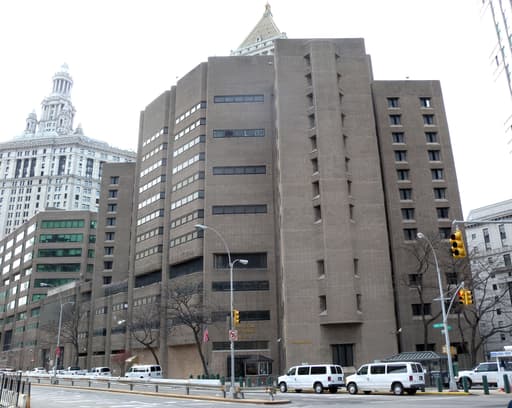
Metropolitan Correctional Center
ORGANIZATION • 2 mentions
Metropolitan Correctional Center, New York, federal detention facility where Jeffrey Epstein died on August 10, 2019
Northeast Regional Office
ORGANIZATION
Organization referenced in documents
Notification of Needed Upgrades
ORGANIZATION
Organization referenced in documents
OIG Analysis
ORGANIZATION
Organization referenced in documents
Post Order
ORGANIZATION
Organization referenced in documents
Receiving and Discharge
ORGANIZATION
Organization referenced in documents
Review of the Federal Bureau of Prisons' Medical Staffing Challenges, Evaluation and Inspections Division Report
ORGANIZATION
Organization referenced in documents
Review of the Federal Bureau of Prisons' Use of Restrictive Housing
ORGANIZATION
Organization referenced in documents
Review of the Federal Bureau of Prisons’ Use of Restrictive Housing for Inmates with Mental Illness, Evaluation
ORGANIZATION
Organization referenced in documents
Review of the Impact of an Aging Inmate Population on the Federal Bureau of Prisons
ORGANIZATION
Organization referenced in documents
SHU personnel.67
ORGANIZATION
Organization referenced in documents

Southern District of New York
ORGANIZATION
Federal judicial district covering Manhattan and surrounding areas
Spectrum Services, Inc.
ORGANIZATION
Organization referenced in documents
Supervision of Jeffrey Epstein
ORGANIZATION
Organization referenced in documents
the Adams County Correctional Center
ORGANIZATION
Organization referenced in documents
the Day
ORGANIZATION
Organization referenced in documents
the Day Watch Activities Lieutenant
ORGANIZATION
Organization referenced in documents
the Evening Watch Operations Lieutenant
ORGANIZATION
Organization referenced in documents
the Federal Bureau of Prisons' Custody, Care
ORGANIZATION
Organization referenced in documents
the Federal Bureau of Prisons’ Fiscal Year
ORGANIZATION
Organization referenced in documents
the Federal Bureau of Prisons’ Response
ORGANIZATION
Organization referenced in documents
the Federal Bureau of Prisons’ Security Camera System
ORGANIZATION
Organization referenced in documents
the L Tier where Epstein
ORGANIZATION
Organization referenced in documents
the Material Handler, CO
ORGANIZATION
Organization referenced in documents
the Medical Examiner
ORGANIZATION
Organization referenced in documents
the Reentry Services Division
ORGANIZATION
Organization referenced in documents
the SHU Inmate
ORGANIZATION
Organization referenced in documents
the SHU Officer
ORGANIZATION
Organization referenced in documents
the SHU Officers’ Station
ORGANIZATION
Organization referenced in documents
the SHU Post Orders
ORGANIZATION
Organization referenced in documents
the Suicide Prevention Program Policy
ORGANIZATION
Organization referenced in documents
the Transfer of Inmate James “Whitey”
ORGANIZATION
Organization referenced in documents
The U.S. Merit Systems Protection Board
ORGANIZATION
Organization referenced in documents

the United States Government
ORGANIZATION
United States federal government
U.S. Marshals Service
ORGANIZATION
Government agency
Appendix A.
LOCATION
Location referenced in documents
completed.87
LOCATION
Location referenced in documents
Natchez
LOCATION
Location referenced in documents
the L Tier
LOCATION
Location referenced in documents
the Southern District
LOCATION
Federal judicial district in New York City
Victorville
LOCATION
Location referenced in documents
Statistics
Pages:28
Entities:85
Sponsored