EFTA01475956_sub_001 - EFTA01475956_100
Document Information
Bates Range
EFTA01475956_sub_001 - EFTA01475956_100
Pages
100
Original Filename
EFTA01475956.pdf
Document Content
Page 1 - EFTA01475956_001
Deutsche Bank Research Global Cross-Discipline Date 8 December 2015 World Outlook 2016 Managing with less liquidity David Folkerts-Landau 'tors Peter Hooper Chief Economist Matthew Luzzetti Chief Economist Mark Wall Chief Economist Torsten Slok hi f E n mi t Deutsche Bank AG/London DISCLOSURES AND ANALYST CERTIFICATIONS ARE LOCATED IN APPENDIX 1. MCI (P) 124/04/2015. EFTA01475956
Page 2 - EFTA01475956_002
8 December 2015 World Outlook 2016: Managing with less liquidity Table of Contents Global Overview Managing with less liquidity US Dollar drag Europe Not a global engine Japan Return to steady recovery trend China Rising challenges to trigger further policy easing Asia (ex Japan) Triple troubles Latin America Still adjusting to low commodity prices Bond Market Strategy Peak policy divergence US Credit US credit feels the pressure of high commodity exposure European Credit Strategy To follow the US or march to its own beat? US Equity Strategy Still low Treasury yields despite Fed hikes to boost S&P PE — Heavy tilts to Health Care & Tech European Equity Strategy 7% upside in 2016 but beware of the risk of a near-term correction FX Strategy Plenty of run left in the USD upswing Commodities Supply adjustment is well underway for oil, not so for the metals Global Asset Allocation The case for normalization Geopolitics The EU's geopolitical crisis eclipses its economic crisis Forecast table Key Economic Forecasts Key Financial Forecasts Long-term Forecasts Contacts 3 18 23 32 34 37 40 42 49 51 EFTA01475957
Page 3 - EFTA01475956_003
53 57 59 61 67 71 74 76 77 78 Page 2 Deutsche Bank AG/London EFTA01475958
Sponsored
Page 4 - EFTA01475956_004
8 December 2015 World Outlook 2016: Managing with less liquidity Global Overview: Managing with less liquidity IIThe long-awaited turn toward the normalization of US monetary policy should finally get under way next week, with the Fed set to raise rates for the first time since 2006. In the year ahead, we could also see signals that the monetary spigots in Europe will begin to close as well. While such indications are probably more than a year away in Japan, we do not expect the BoJ to add to its asset purchases. In a world that has been awash with central bank liquidity for most of the past decade, the central question for the year ahead is how the global economy and financial markets will react as the tap on that liquidity begins to tighten. IIWhile the pivot away from this great monetary experiment is unprecedented and will not be without risks, we expect the world economy and financial markets to weather this turn in policy reasonably well. Supporting this adjustment is the expectation that major central banks -- and the Fed in particular -- will be moving far more cautiously than they have in the past as they withdraw accommodation. IIThe economic backdrop should allow for this gradual pace of policy normalization, at least initially. Global growth is expected to rebound gradually from the weakest growth rate since the financial crisis in 2015. Growth in advanced economies is projected to hold steady just shy of 2% over the next three years, with growth in the US slowing to near 2%, Europe's steady recovery continuing and Japan rebounding from disappointing growth this year. IIThe coming year should see growth in emerging market economies rebound, as the severe contractions in Russia and Brazil moderate and recent declines in export growth are expected to reverse, albeit weakly. Nonetheless, 2016 will be challenging for the emerging markets as falling commodity prices and still-weak global trade growth extend the recent experience with budgetary and balance of payments pressures. China is expected to continue its gradual deceleration, offering little respite to commodity producers. IIMarket interest rates should rise next year — we see the 10-year Treasury yield ending the year at 2.5% with risks skewed to the upside -- as the market prices a tightening Fed. US credit spreads are likely to widen further as defaults rise moderately, but we do not see Fed hikes proving problematic for credit next year. The US dollar upswing should continue, though at a more modest pace. And we see equities remaining resilient and presenting some upside, as long as the rise in rates is limited and orderly. IIThe risks around our baseline view seem more numerous than in the past due to the unprecedented shift in monetary policy. The main downside is that the market adjustment to a tightening Fed is more adverse than we anticipate. A spike in yields could set off a significant re-pricing of EFTA01475959
Page 5 - EFTA01475956_005
global risk assets. This reaction would intensify if the Fed finds itself behind the curve as inflation rises from a tight labor market. Beyond the Fed, a sharper-than-expected slowdown in China next year would have obvious knock-on effects on commodities, global trade and emerging markets. Meanwhile, intensified European political risk is also possible if differences of opinion between countries on divisive themes like the refugee crisis spill over into other policy areas IIOn the positive side, a surprising recovery in productivity growth in advanced economies, especially the US, would allow normalization to proceed very slowly and support a stronger recovery on the demand side of the economy. Risks are also skewed to the upside of our US economic outlook. The rebound in business fixed investment from a low base could be stronger than expected, especially with the peak impact from the drop in oil likely behind us, and the drag from a stronger dollar should begin to wane after mid-year. Deutsche Bank AG/London Page 3 EFTA01475960
Page 6 - EFTA01475956_006
8 December 2015 World Outlook 2016: Managing with less liquidity Introduction and Summary Barring a significant negative economic or financial shock in the week ahead, the long-awaited turn toward the normalization of US monetary policy should finally get under way before the end of this year. The 25-basis-point fed funds rate hike now widely anticipated at the Fed's December meeting would be the first such move since June 2006. In the year ahead, we could also see signals that the monetary spigots in Europe will begin to close as well. While such signals are probably more than a year away in Japan, we don't expect the BoJ to add to its asset purchases, implying a gradual easing of stimulus there. In a world that has been awash with central bank liquidity for most of the past decade, there is both great curiosity and great concern about how the global economy and financial markets will react as the tap is finally shut on that liquidity. This question is a central focus of our World Outlook for 2016. The pivot away from this great monetary experiment is unprecedented and will not be without risks. However, we expect both the world economy and global financial markets to weather this turn in policy reasonably well, partly because major central banks -- and the Fed in particular -- have made it abundantly clear that they will be moving far more cautiously than they have in the past as they withdraw accommodation. Markets appear so far to have settled comfortably into the expectation that the Fed will be moving very slowly, expecting only about half the pace of hikes as the median Fed expectation, which is, in turn, about half the pace of historical Fed hiking cycles. The economic backdrop should allow for this gradual pace of policy normalization, at least initially. Global growth has been slowed by significant headwinds on both the demand side and the supply side of major economies. While moderate consumer spending growth has increasingly been the principal driver of a sluggish recovery, capital spending has been very slow to advance. A result of weak business investment has been that labor productivity growth has slowed to historically low rates in advanced economies. The inevitable slowing of China's economy to a more sustainable pace has also been a significant headwind to growth with dramatic implications for the world economy. China's slowdown has been a major factor underlying the weakening of commodity markets, trade flows, business investment, and manufacturing activity globally. But the slow growth of supply—or decline in potential growth—has also meant that sluggish recoveries in demand have been able to achieve considerable progress in removing economic slack. The US and Japanese economies are already nearing full employment, and even Europe's labor market has shown gains. The progress to date in reducing unemployment will help, along with the stabilization of energy and other commodity prices, to push inflation higher in the year ahead from recent extreme lows. The prospective pickup in wage and price inflation, as well as the continuing improvement in the labor EFTA01475961
Sponsored
Page 7 - EFTA01475956_007
market, is what is inducing the Fed to commence policy normalization. Spillovers from the Fed's move will help the ECB and the BoJ to achieve their inflation targets, as prospective rate increases in the US further strengthen the dollar against the euro and the yen. This raises the question of how far this policy divergence can go. Economic slack is declining enough to push Europe's core inflation close to its historical average by end-2016. Stable and eventually rising commodity prices, supportive currency developments, and rising inflation expectations could lead the ECB to start talking before year end about tapering in 2017. In this light, the recent extension of its QE program, while disappointing to the markets, could prove to have been unnecessary. For the Bo], any change in policy stance seems unlikely until well after the April 2017 consumption tax increase. Page 4 Deutsche Bank AG/London EFTA01475962
Page 8 - EFTA01475956_008
8 December 2015 World Outlook 2016: Managing with less liquidity But the changing market expectations for ECB and Bo] policy have the potential to induce another bout of market turbulence akin to the taper tantrum of mid-2013, though likely with more limited implications for the global economy and financial markets. While our baseline scenario sees a global economy that continues to grow at a moderate pace over the next two years, there are substantial risks on either side. On the down side, global financial markets could respond much more negatively to Fed normalization than we expect, with adverse repercussions for household and business spending around the globe. The gap between the market's and the Fed's forecasts for interest rates suggests that this negative response could result from an upward adjustment in market expectations towards the Fed, even without more aggressive tightening than the Fed currently envisions. A signal that the Fed will begin to wind down its reinvestment of securities could add to this turbulence. This downside risk would be exacerbated if there were a surprising resurgence of inflation pressures in the US as the unemployment rate moves below full employment. Such a development would likely prompt the Fed to adopt a significantly more rapid pace of normalization. A more aggressive Fed would, in turn, be negative for risk assets with potentially strong depressing effects on aggregate demand. A sharper-than-expected slowdown in China next year would have obvious knock-on effects on commodities, global trade and emerging markets. But on the positive side, it is possible that the recent poor performance of productivity growth globally (especially in the US) has been an aberration, and that recent technological advances could spur a surprising recovery. Faster supply-side growth would allow normalization to proceed very slowly and support a stronger recovery on the demand side of the economy. In addition, the risks to our US outlook are skewed to the upside: the peak drag on business investment from the sharp drop in oil prices is likely behind us, and the drag from net exports from the dollar surge is likely to dissipate beyond mid- year. In what follows, we begin by presenting our baseline forecast for the global economy and financial markets, with an emphasis on 2016, but also a peek into 2017. We then provide a more detailed description of the outlook for the globe's major economic blocks. Next, we summarize our asset class views for the year ahead. We conclude by fleshing out the upside and downside risks to our baseline outlook in more detail. Deutsche Bank AG/London Page 5 EFTA01475963
Page 9 - EFTA01475956_009
8 December 2015 World Outlook 2016: Managing with less liquidity Global outlook Disappointing global growth to pick up slightly next year Growth in global economic activity is now projected to bottom this year and rise gradually toward trend by 2017, led primarily by an acceleration in emerging market economies. We expect global growth will have dipped to 3.1% in 2015, its slowest pace since the global financial crisis in 2009. This slowdown has been driven primarily by a deceleration in emerging market economies, where growth is expected to have fallen by more than one-half of a percentage point from 2014. The sharp contractions in Russia and Brazil are the main reason for this deceleration. Conversely, faster growth in the euro area and Japan implies a modest pickup in growth in advanced economies this year. Over the next two years changes in the global growth outlook are likely to be driven entirely by fluctuations in emerging market growth. Next year growth is projected to rise gradually, as the severe contractions in Russia and Brazil moderate. This should help boost emerging market growth by almost one-half of a percentage point, even with growth slowing further in China. But the emerging markets growth story is not simply a technical one: recent declines in export growth should reverse, albeit weakly, providing a more positive basis for recovery than the 'less bad' Brazil and Russia outlooks. Growth in advanced economies should remain stable at just below 2% in 2016, as a more- thandoubling in growth in Japan and a slight pickup in the euro area offset deceleration in the US. Further acceleration in global economic activity in 2017 is likely to be due to additional improvement in Russia and Brazil, while a pickup in India and stability in China would imply a modest acceleration in emerging Asia. Advanced economy growth is once again expected to remain just shy of 2% in 2017, despite a halving of growth in Japan. Figure 2: Fluctuations in growth in emerging market economies driving global growth dynamics over next two years GDP growth, % G7 US Japan Euro area Asia (ex-Japan) China India EEMEA Russia Latin America Brazil EM economies Global EFTA01475964
Sponsored
Page 10 - EFTA01475956_010
2014 2015F 2016F 2017F 1.8 1.7 2.4 -0.1 0.9 6.4 7.3 7.1 2.4 0.6 0.8 0.1 Advanced economies 1.7 4.6 3.4 Source: Deutsche Bank Research 1.9 2.4 0.7 1.5 6.1 7.0 7.3 1.0 -3.7 -0.8 -3.7 1.9 4.0 3.1 1.9 2.1 1.5 1.6 6.1 6.7 7.5 1.9 -0.7 -0.1 -2.4 1.9 4.4 3.3 2.1 0.8 1.5 6.3 6.7 7.8 EFTA01475965
Page 11 - EFTA01475956_011
2.5 0.5 2.2 1.0 1.8 4.9 3.6 1.5 1.6 2.8 0.4 3.4 2.0 6.7 6.0 7.8 CPI inflation, % 2014 2015F 2016F 2017F 0.3 0.2 0.8 0.1 2.4 1.4 4.9 8.7 15.6 9.0 0.3 5.6 3.4 1.5 1.9 0.7 0.9 2.9 1.8 5.4 6.7 9.2 8.5 1.4 5.9 4.0 2.1 2.3 2.1 1.6 2.9 1.8 5.0 EFTA01475966
Page 12 - EFTA01475956_012
5.9 7.1 12.5 15.2 18.8 19.4 6.3 6.2 1.3 5.3 3.6 2.0 5.7 4.2 Figure 1: Global growth to rise toward trend from its slowest pace since 2009 10 % yoy -6 -4 -2 0 2 4 6 8 Real GDP growth Forecasts World Advanced economies Emerging economies Note: Trend period: 1995:2017 Source: IMF, Haver Analytics LP, Deutsche Bank Research Page 6 Deutsche Bank AG/London 1995 1996 1997 1998 1999 2000 2001 2002 2003 2004 2005 2006 2007 2008 2009 2010 2011 2012 EFTA01475967
Sponsored
Page 13 - EFTA01475956_013
2013 2014 2015 2016 2017 EFTA01475968
Page 14 - EFTA01475956_014
8 December 2015 World Outlook 2016: Managing with less liquidity Growth marked down broadly this year and next Compared to our previous global update in June, growth has once again been marked down broadly for 2015 and 2016. Sharper-than-expected contractions in emerging market economies were the main downside surprise to our growth forecast for 2015. Projectedd growth in Russia has been marked down by 0.5 percentage points — after downward revisions earlier this year, while the forecast for Brazil has been reduced 2.3 percentage points since June. On the other hand, growth expectations for advanced economies were upgraded modestly, as upside surprises to growth in the US and the euro area more than offset disappointing growth in Japan. Figure 3: Global growth projections revised down for 2015 and 2016 GDP forecast & revision (% yoy) Forecast level Current G7 US Japan Euro area Asia (ex-Japan) China India EEMEA Russia Latin America Brazil Advanced economies EM economies Global 1.9 2.4 0.7 1.5 6.1 7.0 7.3 1.0 -3.7 -0.8 -3.7 1.9 4.0 3.1 1.9 2.1 1.5 1.6 6.1 6.7 7.5 EFTA01475969
Page 15 - EFTA01475956_015
1.9 -0.7 -0.1 -2.4 1.9 4.4 3.3 2.1 0.8 1.5 6.3 6.7 7.8 2.5 0.5 2.2 1.0 1.8 4.9 3.6 Forecast change since June 15 WO Update 2015F 2016F 2017F 2015F 2016F 1.8 0.1 0.3 -0.4 0.1 -0.2 0.0 -0.2 -0.2 -0.5 -1.0 -2.3 0.1 -0.3 -0.2 -0.5 -0.9 -0.3 0.0 -0.2 0.0 0.0 -0.3 -0.3 -2.0 -3.0 -0.4 -0.5 2017F EFTA01475970
Sponsored
Page 16 - EFTA01475956_016
-0.4 Note: June 15 World Outlook update forecasts have been recalculated using IMF WEO October -15 PPP weights Source: Deutsche Bank Research The downward revision to expected global growth is more significant and broad-based for 2016. This growth is now expected to be 0.4 percentage points slower next year compared to our June forecasts, as advanced and emerging market economies were downgraded by similar amounts. Within advanced economies, the downward revision to US growth (-0.9 percentage points) is most severe. This downgrade is due mostly to the increased drag on net exports from greater-than-expected dollar appreciation, while reduced estimates of potential growth have also contributed. Expected growth in Japan was also revised down, though by a more modest 0.3 percentage points, while the growth outlook in the euro area is unchanged. Once again, Russia and Brazil represent the main downgrades to growth within emerging markets, while our outlook for a slight slowdown in China and pickup in India is unchanged. DB's top-line global growth forecast roughly consistent with alternative projections Our downgraded global growth forecast is about in line with outside alternatives from the IMF and Bloomberg through 2017. However, this consistency masks significant regional differences. In particular, while our US growth forecasts are nearly one-half of a percentage point below alternative Deutsche Bank AG/London Page 7 n.a -0.7 -0.2 -0.1 n.a 0.0 -0.2 n.a -0.8 n.a -1.1 n.a n.a n.a EFTA01475971
Page 17 - EFTA01475956_017
8 December 2015 World Outlook 2016: Managing with less liquidity forecasts for 2016 and 2017, our China growth forecasts are a few tenths above alternatives over this same timeframe. The Chinese government may clarify in the coming weeks its growth target for 2016, and forecasts for growth below 6.5% may be revised higher if, as seems likely, the government's target is at least that high. Meanwhile, our outlook for growth to remain near 1.5% in the euro area is close to alternative forecasts from the IMF, Bloomberg and Consensus Economics. Figure 4: In-line global growth forecasts mask regional differences Consensus Forecast table, GDP growth, % Global DB (Jun'15 WO) DB (Current) Bloomberg (Nov Survey) Bloomberg (DB aggregation) IMF (Oct'15) IMF (DB aggregation) US DB (Jun'15 WO) DB (Current) Bloomberg (Nov Survey) IMF (Oct'15) Consensus Economics (Oct Survey) Euro area DB (Jun'15 WO) DB (Current) Bloomberg (Nov Survey) IMF (Oct'15) Consensus Economics (Oct Survey) China DB (Jun'15 WO) DB (Current) Bloomberg (Nov Survey) IMF (Oct'15) Consensus Economics (Oct Survey) 2015F 3.3 3.1 3.0 3.0 3.1 3.0 2.2 2.4 2.5 2.6 2.5 1.4 1.5 EFTA01475972
Page 18 - EFTA01475956_018
1.5 1.5 1.5 7.0 7.0 6.9 6.8 n.a 2016F 3.8 3.3 3.4 3.4 3.6 3.4 3.0 2.1 2.5 2.8 2.6 1.6 1.6 1.7 1.6 1.7 6.7 6.7 6.5 6.3 n.a Note: June 15 World Outlook update forecasts have been recalculated using IMF WEO October -15 PPP weights Source: Deutsche Bank Research, cited sources 2017F n.a 3.6 3.4 3.7 3.8 3.6 2.8 2.1 2.5 2.8 2.5 1.6 1.5 1.8 1.7 1.6 6.7 EFTA01475973
Sponsored
Page 19 - EFTA01475956_019
6.7 6.3 6.0 n.a Global inflation to accelerate after bottoming in 2015 Global inflation is projected to rebound strongly over the next two years after falling to its lowest level since the financial crisis. Both the decline and the anticipated rebound are driven primarily by the sharp decline in global commodity prices over the past 18 months and our expectation that prices will be roughly stable in the coming year. But inflation dynamics are varied across regions. In advanced economies, headline inflation fell about 1 percentage point this year, leaving price increases only a few tenths above deflationary territory. The sharp drop in headline inflation was driven by the 60% decline in oil prices since mid-2014. Meanwhile, inflation in Latin America and EMEA economies rose this year, due mostly to sharp currency depreciations. Weak currencies don't seem to have had the same effect in emerging Asia, though. Figure 5: Global inflation to rebound strongly 10 % yoy Inflation Forecasts 8 6 4 2 0 -2 -4 World Advanced economies Emerging economies Note: Trend period: 2000-:2017 Source: IMF, Haver Analytics LP, Deutsche Bank Research Page 8 Deutsche Bank AG/London 2000 2001 2002 2003 2004 2005 2006 2007 2008 2009 2010 2011 EFTA01475974
Page 20 - EFTA01475956_020
2012 2013 2014 2015 2016 2017 EFTA01475975
Page 21 - EFTA01475956_021
8 December 2015 World Outlook 2016: Managing with less liquidity Inflation is expected to rebound sharply in 2016 and rise modestly further in 2017. The initial acceleration is driven primarily by the stabilization of energy price, removing what has been a considerable downward force on broad price indexes. Hence, the gap between headline and core inflation will close in the coming year. In addition, core inflation rates in the G3 economies have already begun to rise gently, and our expectation is that even after the commodity price effect lifts headline inflation, the underlying rising trend in core inflation will continue to push inflation higher. Advanced economy inflation is projected to rise by 1 percentage point next year and 0.6 percentage points in 2017. On the other hand, inflation in emerging market economies — less influenced in most cases by energy prices -- is expected to rise modestly next year and remain stable in 2017. Upside risks to inflation from food prices are a concern-this year has seen the most pronounced El Nino cycle on record and weather patterns may be equally disruptive next year. As yet, however, food prices globally are not showing any upward momentum. Figure 7: Global inflation revised up led by emerging market economies Inflation forecast & revision % yoy G7 US Japan Euro area Asia (ex-Japan) China India EEMEA Russia Latin America Brazil Advanced economies EM economies Global Forecast level Current 1.5 1.9 0.7 0.9 2.9 1.8 5.4 8.7 15.6 15.2 EFTA01475976
Sponsored
Page 22 - EFTA01475956_022
9.0 0.3 5.6 3.4 6.7 9.2 18.8 8.5 1.4 5.9 4.0 2.1 2.3 2.1 1.6 2.9 1.8 5.0 5.9 7.1 19.4 6.2 2.0 5.7 4.2 Forecast change since June 15 WO Update 2015F 2016F 2017F 2015F 2016F 0.3 0.2 0.8 0.1 -0.1 0.0 -0.1 -0.2 2.4 1.4 4.9 -0.2 -0.2 -0.2 0.2 0.4 2.2 0.5 -0.1 0.2 0.1 -0.5 -0.6 2017F EFTA01475977
Page 23 - EFTA01475956_023
-0.3 -0.5 -0.6 -0.9 -0.3 1.0 2.2 6.2 2.6 -0.5 0.7 0.2 Note: June 15 World Outlook update forecasts have been recalculated using IMF WEO October -15 PPP weights Source: Deutsche Bank Research Our inflation forecasts have undergone significant revisions since the June update. Global inflation expectations have been revised up by 0.1 and 0.2 percentage points for 2015 and 2016. The impetus for this revision is higher inflation in emerging market economies resulting from greater-than-expected currency depreciation. This is most pronounced in Latin America, where forecast inflation has been revised up by 2.2 and 6.2 percentage points for 2015 and 2016, respectively. Inflation has been marked down broadly across advanced economies and emerging Asia, with forecasts falling by a few tenths for 2015 and by about one-half of a percentage point for next year. n.a -0.3 0.2 -0.1 n.a -1.2 -0.5 n.a 0.3 n.a 1.2 n.a n.a n.a Figure 6: G3 core inflation %yoy US (PCE) -2.0 -1.5 -1.0 -0.5 0.0 0.5 1.0 1.5 2.0 2.5 EFTA01475978
Page 24 - EFTA01475956_024
3.0 2008 2009 2010 2011 2012 2013 2014 2015 Note: Japan "core core" inflation, net of the consumption tax increase. Source: CEIC, Deutsche Bank Research Euro area Japan Deutsche Bank AG/London Page 9 EFTA01475979
Sponsored
Page 25 - EFTA01475956_025
8 December 2015 World Outlook 2016: Managing with less liquidity Regional detail US outlook US GDP growth is projected to have slowed to less than 2% in the second half of 2015, and we see it picking up slightly to just over 2% during 2016 and 2017. The economy should be driven predominantly by a healthy expansion of consumer spending, plus some outsized gains in residential investment as the housing market continues to tighten. Business investment growth should remain relatively subdued, held back by, among other factors, a strengthening dollar, election-year uncertainties, subdued corporate earnings growth, and in the longer term, tightening financial conditions. Output growth should be restrained substantially in the year ahead by the lagged depressing effects on net exports of past substantial appreciation of the dollar and some further increases to come. That restraint should ease over time, but domestic demand growth should slow as the Fed's normalization of monetary policy progresses. And that slowing should help keep the labor market from overshooting too much The modest pace of GDP growth that we are projecting should be more than enough to effect ongoing tightening of the US labor market. With labor productivity growth and labor force growth both running at historically depressed rates, we estimate that potential GDP growth has slowed to around 1% currently, and is likely to rise only gradually as productivity and labor force growth pick up over the period ahead. We see the unemployment rate falling into the mid-4% area over the next couple years, putting it noticeably below NAIRU, but not by enough to effect more than a gradual pickup in wage and price inflation. We see core PCE inflation returning to near 2% two years hence, roughly in line with FOMC projections. However, our forecast for growth is a bit below consensus and the FOMC median projection, and we see the dollar rising more than the Fed is likely to have assumed. On a trade-weighted basis, we expect the dollar to rise nearly 5% next year. While significant, this appreciation is a notable deceleration from the 20% rise in the trade- weighted dollar since mid-2014. Accordingly, we expect the Fed to raise rates slightly less rapidly than anticipated in the most recent (September) FOMC median projection (a projection that could be revised down somewhat for the December FOMC meeting). At the same time, our projection for 100 bps of Fed rate hikes by the end of 2016 (including a 25 bp liftoff this month) and another 100 bps during 2017 is noticeably more than the market has been pricing. We also expect the Fed to taper the reinvestment of its maturing asset holdings and allow its balance sheet to begin to run off naturally after mid-2016. Outlook for Europe We expect euro area GDP growth to be broadly unchanged at 1.6% in 2016 and to slow in 2017. This reflects the shifting intensity of countervailing EFTA01475980
Page 26 - EFTA01475956_026
headwinds and tailwinds. Global growth should rise, but less than we previously thought. Lower oil prices were a source of strong stimulus in 2015 and allowed private consumption to compensate for weaker net trade. However, we expect oil prices to be flat in 2016 and to rise about 10% in 2017 as supply constraints bite. Dual monetary and fiscal easing should help protect euro area economic growth from the fading oil stimulus in 2016. With both monetary and fiscal policy likely to tighten modestly in 2017, economic growth will be more exposed to the squeeze from higher oil prices. The net result is that we expect the average annualised rate of GDP growth to slow from 1.7% in 2016 to 1.4% in 2017. The euro exchange rate is expected to fall about 5% in trade weighted terms in 2016, with EURUSD breaching parity. A partial normalisation of euro area rate markets is likely to cause some tightening of financial conditions later in the Page 10 Deutsche Bank AG/London EFTA01475981
Page 27 - EFTA01475956_027
8 December 2015 World Outlook 2016: Managing with less liquidity year. With productivity and potential growth running low, the output gap should gradually narrow even with these modest rates of GDP growth, and past euro depreciation starting to become more visible in inflation. Core inflation should be close to historical norms in H2 2016. By end 2016, the ECB's medium-term headline inflation projections should be at levels consistent with tapering starting to be discussed at the ECB and implemented in 2017; we see the first ECB policy rate hike only at the end of 2018. The risk is that oil prices continue to decline in the near term and weigh on headline inflation. If this weakens medium-term inflation expectations, the late-2016 tapering risk should dissipate and the pressure for further ECB easing will grow. The refugee crisis will remain a theme in Europe and fear of a repeat of the Paris terror attacks will linger. While refugee and security-related public spending is likely to lead to some relaxation in the fiscal stance in the year ahead, we expect compliance with Europe's fiscal rules to improve into 2017. We expect euro area political uncertainty to rise as 2017 approaches. The refugee crisis has created frictions within and between countries, but the common threat to security highlighted by the attacks in Paris may unify Europe and reduce the risk of local political events — including Greek debt relief negotiations, Portugal's minority government, Catalonia's independence bid and the UK's EU negotiations — from undermining area-wide stability in 2016. In our view, the unity won't last into 2017. The closer we get to the Dutch, French and German elections in 2017 — Italy may bring forward its election into 2017 too — the more political tensions are likely to build and impose a risk premium on the recovery. There is little basis to expect a strong non-cyclical euro area recovery either. France may make some further modest progress on structural reforms in early 2016, but reform progress across the zone over the next couple of years is likely to remain slow. UK economic growth appears set to slow over the next couple of years — but despite fiscal austerity, sterling currency strength and maybe some EU referendum-related uncertainty, GDP growth should be no worse than trend. We expect the robust labour market to keep private consumption growth well supported. Inflation base effects should push inflation up to close to the lower bound of the Bank of England's inflation target range before mid-year. We continue to expect the Bank of England to raise policy rates for the first time in this cycle in May. The EU referendum could be held as soon as late next year. According to opinion polls, the outcome looks closer than the last referendum in 1975 when 66% voted to remain in the EU. Outlook for Japan After what we view as a soft patch over the summer, due in part to unseasonable weather but also to a temporary pullback in capital investment, EFTA01475982
Sponsored
Page 28 - EFTA01475956_028
we see the economy bouncing back strongly in Q4 and then returning to its underlying 1-1.5% trend during 2016. For an economy that has been repeatedly buffeted by shocks — some self-inflicted, most genuinely exogenous — we are conscious of the difficulty of making firm forecasts. But we do see Japan's economy as following an underlying growth rate well above its longrun potential and are therefore likely to continue to see the labour market tightening from what is already the lowest unemployment rate in 20 years. Household income growth, reflecting the combination of rising wage growth and employment, should remain at about 2-2.5%, providing the main driver of growth for the economy. While headline inflation should rise through 2016 as the base effect on past oil price declines drops out of rising beyond 1% until 2017. "Core prices, Deutsche Bank AG/London Page 11 the year-on-year core" inflation, comparison, we don't see it excluding food and energy EFTA01475983
Page 29 - EFTA01475956_029
8 December 2015 World Outlook 2016: Managing with less liquidity has risen sharply in recent months and we expect this to continue for a few more months, rising to above 1% in the first half of 2016. But with the lagged effects of yen depreciation wearing off, we expect inflation to stabilize at about 1% rather than moving higher. This may induce the BoJ eventually to add to its asset purchases, but our base case is that it would choose to continue the current level of investments for longer rather than increase the scale of purchases. In any event, the risks likely remain tilted in the direction of any negative shock to growth or inflation expectations leading to an augmentation of QE. China and other emerging markets The coming year will likely remain challenging for emerging markets as falling commodity prices and weak global trade growth are likely to extend the recent experience with budgetary and balance-of-payments pressures and slow growth in many EM economies. We expect growth in China to slow further in the coming year to 6.7% from 7.0% in 2015 and 7.4% in 2014, offering little respite for commodity producers. This will probably force continued output cuts to close the supply-demand gap for resources. We think that by the end of 2016, this will have been achieved in the oil market, thanks to production cuts, especially in the US; but in most other commodity markets, balance should be restored only in 2017. But the China forecast offers some hope in that the source of demand growth could shift at the margin back towards more commodity-intensive infrastructure and property investment. The 2017 forecast offers more encouragement for commodity exporters in the form of an end to the China slowdown — growth is expected to be maintained at 6.7% — perhaps allowing for the return to a positive cycle in commodity prices once supply cuts have been effected in 2016. In the near term, we think maintaining the gentle downward glide path to growth in China will require more fiscal and monetary stimulus — we expect two more rate cuts, for example — but the recovery in the property market could remove some of the downward pressure on Chinese growth. The rate at which property prices are rising — and the stabilization of prices in more and more smaller cities — combined with the rise in land sales revenues could be taken as indicators that property investment could be heading for a familiar boom following the 2014 'bust'. Our forecast is for a more restrained rebound, however, as a large stock of unsold properties and slowing of rural-to-urban migration serve to limit developers' enthusiasm to reinvest. In India, we expect only a very modest pickup in activity and only late in our forecast horizon. Banks and corporates will have to resolve a growing stock of problem assets and stalled projects, a task that we don't expect will be EFTA01475984
Page 30 - EFTA01475956_030
completed quickly. The growth outlook, therefore, has a very gradual rise over the next two years. We are optimistic that the government's reform plans can, in the medium term, put India on a path towards much higher growth rates, but much hard work remains to be done in the meantime, including the implementation of tax, labour, land acquisition and investment reforms. For 2016, growth forecasts for Brazil and Russia offer only the prospect of a slowing pace of decline and eventual stabilization in activity, with growth expected to return in 2017. Given the size of these economies, this should be enough to boost regional growth forecasts. But a slower pace of recession is hardly cause for celebration. More encouragement comes in Argentina's likely adoption of more positive economic policies. The path to restoring investor confidence and market access will not be easy — likely involving a devaluation of the official exchange rate and a significant decline in government spending — but we have a fundamentally positive outlook for the Argentine economy at last, albeit again one that offers more growth potential in 2017 than in 2016. Page 12 Deutsche Bank AG/London EFTA01475985
Sponsored
Page 31 - EFTA01475956_031
8 December 2015 World Outlook 2016: Managing with less liquidity For most other emerging markets, a positive outlook requires an end to commodity price declines and also an end to the puzzling weakness in exports. In Figure 8, we plot the growth in real exports of goods and services in the major EM economies by region against US and EU combined GDP growth. Aside from weighting EM countries by the size of their exports rather than GDP, we have made one other notable change, adjusting Chinese exports for alleged over-invoicing in early 2013. This latter modification serves to highlight that the decoupling of Asian exports from US and EU GDP growth is really a very recent phenomenon, emerging only in the last year. Growth in Emerging Europe exports has similarly decoupled from EU growth over the past year. Export growth in Latin America has been weak but reasonably closely aligned with US growth. Many hypotheses have been proposed to explain the loss of export vitality, some of which we find unconvincing. "Onshoring" of manufacturing back to the US seems inconsistent with the weakness in US manufacturing output — particularly in information and communications technology, which is the mainstay of Asian exports to the US. Manufacturing output growth in the EU has followed a similar pattern to imports, implying again that domestic production doesn't seem to be rising at the expense of imports. Indeed, import penetration into the US and European Union is not falling. While China has seen a loss of competitiveness in labour-intensive manufacturing, that has more than been offset by increasingly competitive higher-value industries. China now exports automobiles, high-speed trains and, soon, passenger jets; its share of global manufactured goods exports is rising today at about the same pace it was in the pre-crisis years. With only about a year's data, it is hard to arrive at a convincing explanation, but we think the following factors are important. First, slower growth in Chinese demand for commodity imports may have depressed overall export volumes among the commodity exporters. Second, those sectors that saw the greatest outward migration in production from advanced to emerging economies are now much more mature. Of particular importance, consumer electronics devices — mobile phones, laptops and tablets — are now ubiquitous in advanced economies and most emerging markets too. There simply doesn't need to be the growth in sales of such products since for most consumers the need simply is to replace worn-out devices. Third, as China moves up the value chain, production networks may be shrinking. As Chinese suppliers become more proficient, it may require fewer imports of intermediate goods to produce exports. And as multinationals in China focus more on serving the domestic market — now growing in USD terms as fast as the US market — they may be replacing more expensive imported components with locally sourced 'good enough' parts. Finally, the sharp depreciation of the euro in 2014 must surely have played a role, as the weak euro has depressed the growth of imports EFTA01475986
Page 32 - EFTA01475956_032
while stimulating exports in Europe. Some of these influences depressing EM exports may become less of a constraint in the year ahead. The much slower pace of growth in the IT sector noted above likely reflects a temporary inventory depletion phase, which we think could end in the coming months with both production and imports rebounding. Even a mature sector like IT is likely still to see some growth as long as the broader economy is growing. The euro is expected to depreciate, but less than it did in 2014. As the competitive advantage of China shifts to higher-value goods, carrying the rest of Asia with it even if to a lesser degree than ten years ago, it is reasonable to expect export volume growth to recover. This matters for the large number of small open economies in the EM universe, for which export growth has a highly significant influence on economic activity. Even the modest recovery in export growth that we forecast for 2016 and 2017 will be enough, we think, to take GDP growth somewhat higher in most emerging economies. Deutsche Bank AG/London Page 13 Figure 8: EM exports of goods and services vs. G2 GDP Asia (lhs) EMEA (lhs) 10 15 20 25 30 -20 -15 -10 -5 0 5 2005 2007 2009 2011 2013 2015 Note: Regional data weighted by 2014 nominal USD goods and services exports. Source: Haver Analytics LP, Deutsche Bank Research %yoy Latam (lhs) US&EU GDP (rhs) %yoy -6 -4 EFTA01475987
Page 33 - EFTA01475956_033
-2 0 2 4 6 8 EFTA01475988
Sponsored
Page 34 - EFTA01475956_034
8 December 2015 World Outlook 2016: Managing with less liquidity Given the challenges facing many EM economies, the coming year will likely see a marked divergence in monetary policy across the regions. In Latin America, despite a reasonably subdued growth backdrop, we expect central banks to raise interest rates in most countries and by almost as much as the Fed. In EMEA, we see rates going up in South Africa and Turkey and later in the year in Israel, but continuing to come down in Russia. In Asia, in sharp contrast to past Fed cycles, we expect only the Philippines will see rate hikes in 2016. Instead, we expect central banks in China, India, Indonesia and Taiwan to cut rates. By implication, interest rate differentials in Asia should move in favour of the US dollar, implying a risk of continued weakness in Asian currencies against the dollar. We expect most emerging market currencies to outperform the euro, though. Of particular note, we expect only about a 4.5% depreciation of the RMB against the USD, mostly late in the year as the PBOC cuts rates. The possibility that policymakers in China decide to move the exchange rate in a larger, discrete, devaluation is probably the greatest risk to the emerging markets currency outlook as that would likely trigger similar moves in other EM currencies. Partly for that reason — that it wouldn't get much of a competitive advantage from a devaluation — we don't expect China to devalue the RMB. Summary of strategy views on the markets Rates: Peak policy divergence As the divergence between US and European monetary policy may have peaked, we believe that 2016 should see a partial convergence of US and European bond yields. Our end-year forecasts see the 10-year Bund around 1.1% and 10-year US Treasury at 2.5% (although our macro forecast—with the Fed on a slow but steady uptrend — may be consistent with a somewhat higher yield by end 2016). In Europe, absent an external shock, the market is likely to focus in the second half of the year on the prospects of the ECB discussing (but not implementing) a tapering-off of asset purchases, while the front end should remain anchored. This should lead to steeper curves. In the US, the terminal rate priced by the market is arguably too low, and we see scope for the market to re-price this on the back of some improvement in historically low productivity and a reduction in growth headwinds that have been suppressing the neutral rate. However, the pace of hikes next year looks closer to fair given the lagged impact of the US dollar on core PCE inflation, which should limit the scope of hikes in 2016. Credit: US credit feels the pressure of high commodity exposure US credit markets made a U-turn midway through 2015, as doubts began to surface with respect to issuer fundamentals and exposure to commodities and EM. Though current spread levels are more attractive than those prevailing just a few months ago — both HY and IG are at 3- to 4-year wides — we expect the EFTA01475989
Page 35 - EFTA01475956_035
push-and-pull to continue between those seeking more yield and those seeing signs of a cycle turn. However, we expect only a moderate rise in ex-energy defaults and continued pressure on HY spreads. Higher vulnerability of HY therefore makes IG credit a more attractive alternative, especially in light of current levels. We recommend avoiding sectors exposed to the energy sector's capital expenditure declines, such as capital goods. Two to three hikes by the Fed should not be problematic for credit. Fundamentals are better for European credit: debt accumulation has been nowhere near as aggressive as in the US market, and European credit has far less exposure to the energy and materials sectors. Overall, Europe is some way behind the US in terms of a deteriorating credit cycle, so we believe European credit can continue to outperform even if US credit widens further. Page 14 Deutsche Bank AG/London EFTA01475990
Page 36 - EFTA01475956_036
8 December 2015 World Outlook 2016: Managing with less liquidity US equity strategy: Still-low Treasury yields despite Fed hikes to boost S&P PE Our S&P 500 targets are 2100 for 2015 end and 2250 for 2016 end, representing 5-10% upside. Health Care and Tech — which represent more than one-third of the S&P 500 — are why we are reasonably bullish for 2016, while Energy and Industrials remain a significant concern. Most of the rest of the market, both the S&P and the Russell 2000, seems fully valued except a few big Banks, Utilities, Airlines, and some of our specific stock picks. We do not believe that a recession looms or that S&P profits will fall again in 2016. We also do not expect the S&P will suffer a bear market or a sharp correction. But there are a number of key risks for equities: any further dollar gains must be slow, wage gains must be accompanied by better productivity, and the rise in yields as the Fed hikes must be gradual and contained. European equity strategy: 7% upside in 2016E but beware of the risk of a nearterm correction We see around 7% upside for the European equity market by end 2016, with a target of 410 for the Stoxx 600. European equities should benefit from stronger EPS growth, low real bond yields, FX support from a further decline in the euro and relatively attractive valuations. Among sectors, we like European banks, where investor pessimism persists despite relative return on equity rising to a seven-year high, and cyclicals, especially tech and auto. We are more cautious on the outlook for the resource sectors and consumer staples, which are exposed to a further decline in commodity prices and an additional drop in emerging market exchange rates and rise in US bond yields. There is a risk of a 5-10% correction in the near term if an adverse reaction to Fed hikes leads to a substantial tightening in global financial conditions. FX: Plenty of run left in the USD upswing Following the historical 20% surge in the US dollar over the past year and a half (on a trade-weighted basis), we see the dollar upswing extending for at least another two years, though at a more modest pace. There are several unique circumstances with the current dollar upcycle, including that G10 central banks are not expected to follow the Fed's tightening impulse this time around. How 2016 shapes up will be heavily influenced by whether the main macro driver is the Fed or China. If it is the Fed, US dollar gains are likely to be slow and broad-based. Conversely, if the RMB again becomes a source of instability, US dollar gains should be heavily concentrated in commodity and EFTA01475991
Sponsored
Page 37 - EFTA01475956_037
EM currencies. Our end-2016 forecasts are largely unchanged: EUR/USD at 0.90, USD/JPY at 128, and GBP/USD at 1.27. Commodities: Supply adjustment is well underway for oil, not so for the metals We expect OPEC will have engineered one of the sharpest historical declines in US production by next year. While we expect that the first half of 2016 will remain oversupplied and risks remain to the downside during this period, the steady contraction of US supply along with trend rates of demand growth should lead to a more normalised market balance in 2017. However, the current recovery period for oil will likely be one of the slowest and most extended on record. We remain bearish on the outlook for gold as the Fed enters a tightening cycle and the US dollar appreciates further. Several factors contribute to a difficult outlook for industrial metals: the barriers to exit for many industrial metals are high, the industry still has not adjusted to structurally lower Chinese demand growth, and long gestation projects continue to add supply to the market. While supply cuts should gather momentum in 2016, we expect price stabilisation only in 2017 when markets should start to look more balanced. Deutsche Bank AG/London Page 15 EFTA01475992
Page 38 - EFTA01475956_038
8 December 2015 World Outlook 2016: Managing with less liquidity Asset allocation: 2016 Outlook: The Case for normalization Our global asset allocation strategists discuss several key themes and catalysts for the year ahead: First, rate normalization cycles have always been associated with significant price losses on 10-year Treasury securities. Second, although credit spreads tend to tighten with higher rates, the over- allocation to credit — especially high grade — tends to keep credit vulnerable to rate hikes. Third, the equity risk premium is at a 70-year high and should fall as rates rise, providing some upside to equities. Fourth, although oil should continue to be pressured by a rising dollar, it now looks close to fair value. Fifth, rising EM growth and more favorable positioning should support EM once US rates reprice the Fed. As a result, our asset allocation is overweight equities in the US and Japan but neutral European equities and underweight EM; underweight bonds, cash and commodities; and long the dollar. Geopolitics: The EU's geopolitical crisis eclipses its economic crisis Our geopolitical strategist considers the implications of the accelerating external and internal geopolitical threats to the EU. The migration crisis, the war in Syria, and tensions with Russia related to its association with the Ukraine are likely to push the economic disputes of the euro crisis to the back burner and bring the geopolitical dimension — the original motivation for European unity — back to the forefront. The still-incomplete Union now has to develop policy through a security lens, as bringing stability to its surroundings is vital to the stability of the EU. Risks to the Outlook: Downside risks IIFed exit tantrum. We have assumed that the market's reaction to Fed normalization will be relatively muted, partly because we assume the Fed will strive, initially at least, to ease its way gradually into the exit process Given the current gap between Fed expectations and market expectations, the reaction to the exit path we forecast, as well as to the tapering of reinvestment, could be substantially more negative than we envision. Tenyear yields could spike above the nearly 3% peak level reached during the taper tantrum in 2013. This shock could spill over into a sharp drop in risk asset values, with negative implications for consumer and business spending domestically, as well as major declines in emerging market and i ther risk assets abroad. Inflation surge. The negative scenario we have just described would be EFTA01475993
Page 39 - EFTA01475956_039
intensified substantially if the Fed proves to be significantly behind the curve and inflation pressures pick up more rapidly than expected, forcing the Fed to tighten policy a good deal more aggressively than now envisioned. This could easily happen if labor force participation continues to trend down, GDP growth picks up more in line with consensus expectations, and productivity growth remains depressed. Under these circumstances, unemployment could easily move below 4% over the year ahead, and wage inflation, which is already showing signs of stirring upward, could surge enough to influence longer-term inflation expectations and push up core price inflation substantially more than currently expected or desired. IIEuropean politics: Our baseline expectation is that the common threat to security highlighted by the recent terror attacks in Paris unifies Europe at least temporarily. This should prevent various national idiosyncratic events from undermining area-wide stability. The risk is that the differences of opinion between countries on divisive themes like the refugee crisis spill over into other policy areas, creating less beneficial outcomes to situations such as Greek debt relief talks, the minority government in Portugal, fiscal Page 16 Deutsche Bank AG/London EFTA01475994
Sponsored
Page 40 - EFTA01475956_040
8 December 2015 World Outlook 2016: Managing with less liquidity flexibility, the UK's EU membership negotiations, etc. We expect the fiscal crisis early warning indicators based on macro fundamentals to remain low and improve very modestly in 2016. The risk in the disunity scenario is that idiosyncratic national political risks materialise and amplify market concerns. IIManaging rebalancing in China: We continue to see downside risks in China, especially from the external vantage. While the government may be committed to keeping growth from falling below 6.5%, the need to restructure commodity-intensive heavy industrial sectors, coupled with the weak property investment outlook, offers little support to commodity exporters who will have to continue to make cuts of their own. We see this challenge as being fraught with downside risks in China, as restructuring will inevitably lead to job losses, which we struggle to see being offset by hiring in other sectors. A rise in unemployment and consequent slowing of consumption growth could weaken neighbouring economies' exports to China. I pside risks Productivity rebound: We have assumed that business fixed investment remains subdued, helping to keep labor productivity growth depressed. But given recent technological advances, it might take only a relatively moderate increase in capital spending to reap a substantial rebound in productivity growth. Incentives to raise productivity will increase as the labor market continues to tighten, so our pessimism about investment growth may not be so well founded. In any event, a relatively quick return of the growth in US labor productivity for overall GDP from its near-zero level in recent years to a historically more normal level of 1.5-2% would mean the economy could grow at 2%-plus without tightening the labor market further, and allowing the Fed to normalize rates at an even slower than we are projecting. This would be a plus for the US and global economy. IIUpside surprise to US growth: Our substantial markdown to US growth expectations has lowered the bar for an upside surprise next year. And there are reasons to view the risks to this outlook as skewed to the upside: fiscal headwinds have faded and there is potential for a stronger fiscal boost next year; the peak response of business investment to the sharp drop in oil prices is likely behind us; and the peak drag of the dollar on net exports should dissipate beyond mid-year. With the consumer expected to continue to show solid gains, especially as wages rise, and with housing market activity still well below normalized levels, we could see our first upward revision to US growth — relative to the start of the year — since the financial crisis. Peter Hooper, (1) 212 250 7352 Matthew Luzzetti, (44) 20 754 73288 Michael Spencer, (852) 2203 8303 EFTA01475995
Page 41 - EFTA01475956_041
Mark Wall, (44) 20 754 52087 Torsten Slok, (1) 212 250 2155 Deutsche Bank AG/London Page 17 EFTA01475996
Page 42 - EFTA01475956_042
8 December 2015 World Outlook 2016: Managing with less liquidity US: Dollar drag IIOn the back of weak manufacturing and international trade data, secondhalf 2015 real GDP growth is poised to rise by less than 2% as currentquarter output is projected to increase just 1.5%. This would result in 2015 growth of 2.0% (04/Q4), slightly below the 2.2% average annualized gain in economic output since the economy exited recession more than six years ago. More importantly, we expect 2016 real GDP growth to come in at only 2.2% (Q4/Q4), down 50 basis points from our previous estimate. This is due to a reassessment of the negative effects of the rising dollar and the possibility of further appreciation yet to come. IINevertheless, with real potential GDP growth only around 1% due to slowing productivity growth, even a trend-like 2% GDP growth rate would likely be enough to put further downward pressure on the unemployment rate. Consequently, this should keep the Fed on track to raise interest rates, albeit at a very modest pace, as policymakers gain confidence that a tightening labor market will engender faster wage gains and a cyclical firming of inflation toward their 2% long-term goal. IIThe US factory sector is bearing the brunt of depressed global demand. The manufacturing ISM survey is in contraction territory, and the industrial production index is down from its cyclical peak in December 2014. Given that changes in the trade-weighted dollar tend to affect net exports with a substantial lag, the economy has yet to experience the full impact of the appreciating dollar. If the trade-weighted dollar remains at its current level or appreciates further, net exports could pose a more significant drag on US economic activity. IIBased on the appreciation to date, we estimate the rise in the dollar is worth roughly 60 basis points of monetary tightening. The fact that the currency is doing some of the Fed's work for it is one reason why we expect the trajectory of interest rates to be mildly shallower than that implied by the FOMC's central-tendency forecasts. The strong dollar will also weigh on import prices, and hence consumer goods inflation. To be sure, there is a risk that the US dollar will rise substantially further because the Fed is the only major central bank that is beginning to remove monetary accommodation. Other central banks, notably the ECB, are further easing monetary policy. Furthermore, the US factory sector is being hamstrung by a mini-inventory cycle that is also depressing output. This destocking will likely end next quarter. In the interim, the consumer looks set to continue to do the heavy lifting with respect to growth, but we expect spending to modestly slow over the course of next year because of the waning impact of the energy tax cut, a substantial portion of which appears to have been saved. EFTA01475997
Sponsored
Page 43 - EFTA01475956_043
II Additionally, we see only modest scope for non-residential investment to fill the void, as the uncertainty around global growth prospects and the outcome of the US Presidential Election may keep companies in a waitand-see mode with respect to capital spending plans. While the drag from energy-related capital spending should dissipate in the coming quarters, it is not likely that we will see a meaningful boost to output growth from non-residential investment over the next several quarters. Page 18 Deutsche Bank AG/London EFTA01475998
Page 44 - EFTA01475956_044
8 December 2015 World Outlook 2016: Managing with less liquidity Figure 1: Macro-economic activity & inflation forecasts: US Economic activity 2015 (% qoq, saar) GDP Private consumption Investment (inc. inventories) Gov't consumption Exports Imports Contribution (pp): Stocks Net trade Industrial production Unemployment rate, % Prices & wages (% yoy) CPI Core CPI Producer prices Compensation per empl. Productivity Source: National authorities, Deutsche Bank Research Q1 0.6 1.7 8.6 -0.1 -6.0 7.1 0.9 -1.9 n.a 5.6 -0.1 1.7 -3.3 1.8 0.6 Q2 3.9 3.6 5.0 2.6 5.1 3.0 0.0 0.2 n.a 5.4 0.0 EFTA01475999
Page 45 - EFTA01475956_045
1.8 -3.2 2.4 0.8 3.0 -0.3 1.7 0.9 2.1 -0.6 -0.2 n.a 5.2 0.1 1.8 -3.2 2.4 0.4 1.5 2.7 2.0 2.7 -1.3 1.4 -3.0 0.0 -1.2 -0.4 n.a 5.0 0.9 2.0 -1.2 2.6 1.3 6.4 1.6 -7.0 2.0 0.0 -1.2 n.a 4.9 2.1 2.0 2.2 3.3 2.0 2016 2.2 2.7 EFTA01476000
Sponsored
Page 46 - EFTA01475956_046
6.1 1.6 -5.0 2.0 0.0 -1.0 n.a 4.8 1.8 1.9 1.9 4.0 1.4 2.1 2.3 6.3 1.6 -3.0 3.0 0.0 -0.9 n.a 4.7 2.0 2.0 2.5 4.4 1.3 2.4 2.2 6.2 1.6 0.0 3.0 0.0 -0.5 n.a 4.6 2.0 2.1 2.5 4.5 1.3 2015F 2016F 2017F Q3 Q4F 01F Q2F Q3F Q4F % yoy % yoy % yoy 2.1 2.4 3.1 5.0 0.8 1.1 EFTA01476001
Page 47 - EFTA01475956_047
5.0 0.1 -0.6 0.0 5.3 0.2 1.8 -2.7 2.3 0.8 2.1 2.7 3.9 1.6 -3.3 1.9 -0.3 -0.7 3.0 4.8 1.9 2.0 2.3 4.1 1.5 2.1 2.1 4.5 1.6 0.9 3.6 0.0 -0.5 3.0 4.4 2.3 2.2 3.2 4.5 1.3 The Fed goes it alone. As US monetary policy diverges from that of its major trading partners in 2016, the dollar should continue to appreciate. As a result, we expect net exports to continue to drag meaningfully on economic activity. At the same time, the strong dollar will weigh further on import prices, likely suppressing consumer goods inflation through 2017. These projections are corroborated by simulations of the Federal Reserve Board's FRB/US macroeconomic model. Therefore, we have cut our 2016 real GDP growth forecast (Q4/04) to 2.2% from 2.7%. Additionally, we have lowered our 2016 core PCE inflation forecast (Q4/Q4) by two-tenths to 1.7%. For 2017, our EFTA01476002
Page 48 - EFTA01475956_048
growth and core PCE inflation forecasts are similarly modest at 1.9% and 2 1%, respectively. Moreover, the effect of the appreciating dollar on growth and inflation should serve as a headwind to rate hikes. For this reason we expect only a cumulative 100 basis points (bps) of interest rate increases through yearend 2016, and 200 bps of hikes through 2017. These forecasts are slightly more conservative than the FOMC's most recent median projections, which call for policy rate increases of 125 bps and 250 bps through 2016 and 2017, respectively. The Greenback goes gangbusters. Since July 2014, the inflation-adjusted broad trade-weighted dollar has appreciated 16%, among the largest moves on record. The dollar has gone from strength to strength because the US economy is arguably the healthiest of the major industrialized economies, and the Fed has consistently signaled its intention to raise interest rates this year. Other central banks such as the BOJ and the ECB are at very different stages of the business cycle and are pursuing expansionary monetary policies to lift inflation. What does FRB/US say? To gauge the implications of the strengthening dollar for monetary policy, we simulated a one-time, 16% shock to the real tradeweighted dollar in the Fed's macroeconomic model of the US economy, often referred to as FRB/US. All else being equal, the simulated shock causes the real output gap to widen by nearly -50 bps by yearend 2016 and more than -70 bps by yearend 2017. Even absent any additional shocks, the dollar drag will remain substantial for about four years according to the FRB/US model. With the dollar likely to remain firm, if not appreciate a bit further, it is possible that the dollar drag might persist even longer than the FRB/US model presently projects. Deutsche Bank AG/London Figure 2: The real trade-weighted dollar has appreciated sharply Index 100 110 120 130 80 90 1980 1985 1990 1995 2000 2005 2010 2015 Source: FRB, Haver Analytics LP, Deutsche Bank Research Real broad trade-weighted USD index Figure 3: According to the FRB/US model, dollar appreciation would result in a large drag on output Response of output gap bps 10 EFTA01476003
Sponsored
Page 49 - EFTA01475956_049
-80 -70 -60 -50 -40 -30 -20 -10 0 0 2 4 6 8 10 12 14 16 18 20 Quarters after shock Source: FRB, Deutsche Bank Research Page 19 EFTA01476004
Page 50 - EFTA01475956_050
8 December 2015 World Outlook 2016: Managing with less liquidity The impact of the trade-weighted dollar on inflation is much more benign than the impact on growth. According to our FRB/US simulations, the recent dollar appreciation would subtract between one- and two-tenths from core PCE inflation over the next couple of years. This may not seem like much, but core inflation has been running significantly below the Fed's 2% target for the past three years. For inflation to rise toward that level, either dollar strength will have to reverse, or services prices will have to rise further, thereby offsetting the effect of the former on goods prices. Given our expectation of a further significant decline in the unemployment rate, services prices, which are dominated by the cost of labor and housing rents, should increase further. Since services account for roughly two-thirds of the core PCE deflator and goods the remaining one-third, acceleration in services prices could offset the deflationary impact of the strong dollar on goods prices. Our forecast assumes that services inflation will continue to accelerate, thus allowing policymakers to proceed with interest rate hikes, but at a very gradual pace relative to prior monetary tightening cycles. Inflation is expected to only gradually return to its 2% target over the next couple of years. The estimates of the FRB/US model are broadly consistent with our estimates of the impact of the appreciation of the dollar on the contribution of net exports in the GDP accounts. 1 Figure 4: According to the FRB/US model, dollar appreciation would result in a modest drag on inflation Response of core inflation -16 -14 -12 -10 -8 -6 -4 -2 0 bps 0 2 4 6 8 10 12 14 16 18 20 EFTA01476005
Page 51 - EFTA01475956_051
Quarters after shock Source: FRB, Deutsche Bank Research Traditionally, changes in the trade-weighted dollar tend to impact net exports with a lag of approximately two years. When the dollar strengthens, net exports tend to weaken as US export prices become less competitive in the global marketplace and imported goods become relatively cheaper. In the process, domestic production and employment could suffer. The manufacturing sector is most acutely impacted by the strength of the dollar. However, this weakness is being exacerbated by the excessive inventory building in the first three quarters of the year, which has left inventories elevated relative to demand. Hence, de-stocking is likely contributing to the slowdown in manufacturing output as well. While the inventory unwind should prove temporary, the lagged impact from the dollar will likely prevent a meaningful recovery in the manufacturing sector, which is in contraction territory. It is noteworthy that the manufacturing ISM is highly correlated with real GDP growth, even though the manufacturing sector accounts for only 12% of total economic output. Watching the dot plot. The appreciation of the dollar is a key reason why the Fed trimmed its growth and inflation forecasts this year. A stronger dollar has the same effect on growth and inflation as monetary tightening. Therefore, dollar strength will likely continue to be a meaningful headwind to rate hikes in 2016 and 2017, and possibly beyond. The Figure 8 below shows the FOMC's "dot plot" versus our forecasts and the latest futures market pricing. While the fixed income market is nearly fully pricing a December rate hike, financial market participants expect a much shallower trajectory for the fed funds rate than what the Fed is currently projecting. If the Fed does not reduce its longerterm forecasts of the fed funds rate, the ongoing divergence between what investors are expecting and the Fed is predicting could cause financial market turbulence. Our own estimates of the path of interest rates are between those of the financial markets and monetary policymakers. Figure 5: The expected drag from net exports due to dollar appreciation is meaningful % yoy 10 15 -15 -10 -5 0 5 Real broad trade weighted USD (lhs) Contribution of net exports in real GDP (rhs) EFTA01476006
Sponsored
Page 52 - EFTA01475956_052
%, inverted axis 2015 estimates Correlation = 0.54 1980 1985 1990 1995 2000 2005 2010 2015 Source: FRB, BEA, Haver Analytics LP, Deutsche Bank Research -2 -1 0 1 2 Figure 6: The manufacturing ISM and the new export orders series are both in contraction territory ISM manufacturing 30.0 37.5 45.0 52.5 60.0 67.5 PMI composite index Index New export orders Correlation = 0.62 1990 1995 2000 2005 2010 Source: ISM, Haver Analytics LP, Deutsche Bank Research 2015 1 Fed Vice Chair Fischer cited similar effects in a Jackson Hole speech earlier this year. Page 20 Deutsche Bank AG/London EFTA01476007
Page 53 - EFTA01475956_053
8 December 2015 World Outlook 2016: Managing with less liquidity The "energy tax cut" was saved. Our forecasts are predicated on the continuation of decent consumption growth, because there is little evidence pointing to a sustained increase in business fixed investment. Conceivably, the latter could be boosted if oil prices rebound, thereby providing a lift to energyrelated capital expenditures. However, rising energy prices could dampen consumer spending as real incomes would compress. Essentially, there is asymmetry in consumer behavior, as falling energy costs do not really lift spending but rising energy costs hurt spending. Note that despite easy money, good job gains, rising net wealth and falling energy costs, the household savings rate has increased 110 bps over the last 12 months to 5.6%.2 As the Fed attempts to push short-term rates higher, it is possible that households will allocate more disposable income to savings. If consumers become more cautious about the economic outlook—the recent declines in consumer confidence bear watching—and spending is reined in, growth will slow to an even more underwhelming pace that leaves the economy vulnerable to an external shock, as there will be even less of a cushion between expansion and contraction. In this case, the Fed will likely pursue a much shallower path of rate hikes than what it is presently assuming. Despite our baseline expectation of just 2% economic growth, the unemployment rate is likely to continue to decline further. Our central forecast assumes the rate will fall to 4.6% by yearend 2016, which is below the Fed's 4.9% median central tendency of the non-accelerating inflation rate of unemployment, also referred to as the NAIRU. The unemployment rate is then expected to move even lower in 2017. In turn, this should keep the Fed on a monetary-policy tightening track, as wage costs accelerate in response to tightening labor supply. As always, there are risks to the economic and financial outlook. Arguably, there is greater uncertainty than in the recent past because of the notable divergence in global central bank policy. This makes the economic outlook much more tenuous than in recent years. IIWith respect to downside risks to growth, the recent dollar appreciation could continue to exert a larger-than-anticipated drag on the economy through the exports channel. IIBeyond the possible further strengthening of the dollar, financial market conditions could tighten because of higher interest rates. As the Fed begins the process of interest rate normalization and contemplates the wind-down of its $4.5 trillion balance sheet, a sudden spike in rates, similar to the 2013 "taper tantrum", could meaningfully dent housing activity (a current bright spot in the US economy) and engender an even weaker profile of investment spending. EFTA01476008
Page 54 - EFTA01475956_054
II With the economy nearly 6.5 years removed from recession, the business cycle is getting old in terms of years. While cycles do not die from old age but rather from imbalances built up in the system, downturns tend to be unexpected. The current cycle is longer than the 2001-07 episode and ranks as the fifth-longest in the last 150 years. It is hard to see the economy expanding for another six-plus years without a recession. In an environment of just 2% GDP growth, the economy is vulnerable to a negative exogenous shock, especially with little countercyclical policy available to the authorities—monetary policy is providing record stimulus and fiscal policy is paralyzed at the moment. Figure 7: Underlying GDP growth has consistently reverted back to a sub-3% trend % yoy -6 -4 -2 0 2 4 6 8 Real GDP Current business cycle Average of last 9 cycles -4 -2 0 2 4 6 8 10 12 14 16 18 20 22 24 "0" represents the recession end date Source: BEA, Haver Analytics LP, Deutsche Bank Research Figure 8: Our forecasts for rate hikes are between those of the market and the Fed -1 0 1 2 3 4 5 Minutes Sep-15 Sep-15 Median DB Forecast OIS 2015 2016 Source: Deutsche Bank Research 2017 2018 Longer Term Figure 9: The unemployment rate has fallen below the CBO's estimate EFTA01476009
Sponsored
Page 55 - EFTA01475956_055
of the NAIRU 10 2 4 6 8 1990 1995 2000 2005 2010 2015 Source: BLS, CBO, Haver Analytics LP, Deutsche Bank Research Unemployment rate vs NAIRU Unemployment rate NAIRU 2 "Oil prices and consumer spending: A crude relationship" US Economics Weekly November 20, 2015. Deutsche Bank AG/London Page 21 EFTA01476010
Page 56 - EFTA01475956_056
8 December 2015 World Outlook 2016: Managing with less liquidity IIOf course, there is always the possibility that growth surprises to the upside—although this is less likely because the economy has underperformed policymakers' expectations over the past half-dozen years. In terms of the upside risks to growth, the rapid appreciation of the dollar may already reflect the expected divergence of central bank policies. In turn, the pace of dollar appreciation may slow significantly over the coming quarters, and could even reverse, resulting in less drag on domestic production from the export sector than we currently assume. IIAnother potential upside risk is the labor market. As the job market continues to strengthen and the unemployment rate declines meaningfully further, wage and income growth may rise faster than expected, providing households with even more spending power than we envision. In this scenario, the pace of Fed rate hikes would be significantly faster than that implied by the current median FOMC projections. IIThe final upside risk pertains to inflation. The aforementioned potential for accelerating wage gains combined with a more dramatic recovery in energy prices relative to our projection—possibly due to either a stronger recovery in overseas growth or substantially less oil production—may push headline inflation more quickly back toward the Fed's 2% target. Relative to all of the aforementioned risks, this is perhaps the one that financial markets are least prepared for. Figure 10: External balances & financial forecasts Fiscal balance, % of GDP Trade balance, USD bn Trade balance, % of GDP Current account, USD bn Current account, % of GDP Financial forecasts Official 3M rate USD per EUR JPY per USD USD per GBP 2014 2015F 2016F -2.8 -508 -2.9 -390 -2.2 -2.4 -545 -3.0 -436 -2.4 EFTA01476011
Page 57 - EFTA01475956_057
0.13 0.46 1.09 123 1.51 -2.2 -664 -3.6 -531 -2.8 0.875 1.08 0.97 128 1.37 2017F -2.1 -742 -3.8 -593 -3.1 Current Q1-2016 02-2016 Q4-2016 0.625 0.83 1.01 127 1.42 1.125 1.33 0.90 128 1.27 Source: Deutsche Bank Research as of December 07. Joseph A. LaVorgna, (1) 212 250 7329 Brett Ryan, (1) 212 250 6294 Aditya Bhave, (1) 212 250 0584 Page 22 Deutsche Bank AG/London EFTA01476012
Sponsored
Page 58 - EFTA01475956_058
8 December 2015 World Outlook 2016: Managing with less liquidity Europe: Not a global engine IIWe expect euro area GDP growth to be broadly unchanged at 1.6% in 2016 and to slow in 2017. The global recovery will be less supportive than we previously thought. This year's stimulus from lower oil prices won't be repeated and probably reverses in 2017. Joint monetary and fiscal policy will help compensate in 2016 but not in 2017. IIBroad financial conditions should start 2016 easy before tightening into year-end. The output gap will gradually narrow even with these modest rates of GDP growth and past euro depreciation is starting to become more visible in inflation. By end 2016, the ECB's medium-term headline inflation projections should be at levels consistent with a tapering discussion. While refugee and security-related public spending is likely to see fiscal policy relax next year, we expect compliance with fiscal rules to [Improve in 2017. Political uncertainty is likely to rise into 2017. The refugee crisis has created frictions but the common threat to security may unify Europe and reduce the risk of local political events — Greek debt relief negotiations, Portugal's minority government, Catalonia's independence bid, the UK's EU negotiations — from undermined area-wide stability in 2016. The unity won't last into 2017. The closer we get to the Dutch, French and German elections in 2017 —Italy may bring forward its election into 2017 too — the more disharmonious the EU is likely to sound. This will weigh on structural reform, and market may take notice. Despite fiscal austerity, a strong currency and maybe some EU referendum-related uncertainty, UK GDP growth will be no worse than trend in 2016, helped by robust private consumption. Inflation base effects will push inflation back up and we continue to see the Bank of England achieving rates lift-off in May. The referendum vote could be as soon as late next year. According to opinion polls, the outcome looks closer than the last referendum in 1975 when 66% voted to remain in the EU. IIThe EMEA region is a case of contrasting paths. CEE is characterized by decent growth with little or no inflation and scope to ease further if necessary. The economies elsewhere in EMEA are either experiencing recession or faltering growth but high inflation affords little if any room to provide offsetting policy support. Figure 1: Macro-economic activity & inflation forecasts: 2015F 2016F 2017F GDP (% yoy) EU Euro area Germany France EFTA01476013
Page 59 - EFTA01475956_059
Italy Spain UK Sweden Denmark Norway Switzerland 1.8 1.5 1.7 1.1 0.7 3.2 2.4 3.2 1.6 1.4 1.0 1.9 1.6 1.9 1.4 1.4 2.8 2.5 2.7 1.7 1.4 1.2 Source: National authorities, Deutsche Bank Research 1.7 1.5 1.6 1.5 1.0 2.3 2.3 2.5 1.8 2.2 1.6 CPI (% yoy) 2015F 2016F 2017F 0.1 0.1 0.2 0.1 0.1 -0.6 0.0 0.0 EFTA01476014
Page 60 - EFTA01475956_060
0.5 2.1 -1.1 1.0 0.9 1.2 0.8 0.8 0.7 1.1 1.0 1.4 2.4 -0.4 1.7 1.6 1.7 1.3 1.5 1.6 1.9 1.9 1.8 2.3 0.3 EEMEA Poland Hungary Czech Republic Romania Russia Ukraine Kazakhstan Israel Turkey South Africa GDP (% yoy) 2015F 2016F 2017F 1.0 3.4 2.7 4.5 3.7 1.9 3.5 2.4 2.7 4.0 -3.7 -9.7 1.5 EFTA01476015
Sponsored
Page 61 - EFTA01475956_061
2.4 2.9 1.3 -0.7 3.0 2.0 2.8 3.1 1.1 2.5 3.5 3.3 3.2 3.0 0.5 3.0 3.6 3.5 3.5 1.3 CPI (% yoy) 2015F 2016F 2017F 6.7 1.1 2.1 1.6 8.7 -0.9 0.0 0.4 -0.6 15.6 48.7 6.4 -0.5 7.6 4.6 -0.2 9.2 15.3 14.2 0.8 7.8 6.4 5.9 1.7 2.7 2.0 2.6 7.1 9.3 EFTA01476016
Page 62 - EFTA01475956_062
6.5 1.2 7.5 6.5 Deutsche Bank AG/London Page 23 EFTA01476017
Page 63 - EFTA01475956_063
8 December 2015 World Outlook 2016: Managing with less liquidity Euro area Modest growth to continue in 2016, slow in 2017 Our forecast for euro area GDP growth in 2016 remains unchanged at 1.6%. A modest pick-up in global growth should help as should the benefits of easier monetary and fiscal policy, including a weaker currency. Compared to our previous forecasts, policy easing has increased in volume. This is balanced by less external support than we were expecting earlier. Political and geopolitical risk may weigh too. The net impact is we see a little less growth in exports, private consumption and investment in 2016, a little more from government consumption but overall GDP growth broadly unchanged at 1.6%. Our expectation is that euro area GDP growth will decelerate in 2017 to 1.5%. Full-year GDP growth masks the true extent of the slowdown: average annualized rates of growth should slow from 1.7% in 2016 to 1.4% in 2017. Global growth should accelerate into 2017, but we expect headwinds from rising oil prices, the euro exchange rate, fiscal policy and political uncertainty. Euro area and global GDP growth are normally highly correlated. Disappointing external growth was masked in 2015 by much lower-than-expected oil prices. Global growth is expected to accelerate modestly in 2016, but less than we expected in our last quarterly review. The ratio of global trade to global GDP growth has also deteriorated further. We expect the euro exchange rate to depreciate over the next year thanks to the ECB's monetary policy stance but to be no weaker than we were previously assuming. Lower oil prices helped private consumption compensate for disappointing net trade in 2015. Employment was a little better than expected, compensation growth was weaker, but a lower deflator (lower oil prices) pushed real private consumption growth higher. Real PCE growth will probably slow in 2016. Base effects will push the deflator up while small improvements in employment and wages, a looser fiscal stance and a decline in savings (low interest rates, robust confidence) should limit the deceleration in PCE growth. 2017 will likely be more difficult for private consumption as oil prices are expected to rise 10% in dollar terms and the fiscal rules are expected to bite again. Figure 2: As the lower oil price effect fades in 2016, real compensation growth should deteriorate, dragging on private consumption % yoy -2.5 -2.0 -1.5 -1.0 -0.5 0.0 EFTA01476018
Sponsored
Page 64 - EFTA01475956_064
0.5 1.0 1.5 2.0 2.5 3.0 3.5 4.0 2012 2013 PCE deflator Compensation per employee Employment Real total compensation 2014 2015 Source: Deutsche Bank Research , Eurostat 2016 2017 Figure 3: Investment spending recovery has flattened EA non-construction investment spending (lhs) German mfg orders from EA ex heavy transport (rhs) 10 15 20 -20 -15 -10 -5 0 5 % yoy %yoy 10 20 30 correlation, orders lagged 1 qtr: 0.88 2004 2006 2008 2010 2012 2014 Source: Deutsche Bank Research , Eurostat, Haver Analytics LP -40 -30 -20 -10 0 EFTA01476019
Page 65 - EFTA01475956_065
Figure 4: Macro-economic activity & inflation forecasts: Euro area Economic activity 2015 (% qoq, saar) GDP Private consumption Investment Gov't consumption Exports Imports Contribution (pp): Stocks Net trade Industrial production Unemployment rate, % Prices & wages (% yoy) HICP Core inflation Producer prices Compensation per empl. Productivity Source: National authorities, Deutsche Bank Research Page 24 Q1 2.1 1.9 5.6 2.2 4.2 6.3 0.2 -0.7 0.9 11.2 -0.3 0.7 -2.9 1.4 0.4 1.4 1.5 -1.9 1.0 6.5 3.9 -0.5 1.3 1.9 11.0 0.2 0.8 -2.1 EFTA01476020
Page 66 - EFTA01475956_066
1.4 0.7 1.2 1.6 2.8 0.4 3.2 5.3 0.3 1.4 1.7 2.0 1.8 4.5 4.1 -0.7 2.0 10.8 0.1 0.9 -2.6 1.4 0.7 -0.6 0.3 2.0 10.7 0.3 1.0 -2.5 1.4 0.5 1.7 1.7 3.6 1.2 4.1 5.3 0.2 2016 2015F 2016F 2017F Q2 Q3F Q4F 01F Q2F Q3F Q4F % yoy % yoy % yoy 1.6 1.7 1.4 3.2 1.3 4.1 4.9 0.2 -0.3 EFTA01476021
Sponsored
Page 67 - EFTA01475956_067
1.8 10.6 0.9 1.2 -0.6 1.4 0.4 -0.2 1.8 10.4 0.6 1.2 -0.6 1.4 0.5 1.8 1.4 3.7 1.2 4.1 5.1 0.3 -0.3 1.6 10.3 1.0 1.3 0.5 1.5 0.6 1.8 1.4 3.4 0.8 4.1 4.5 0.2 0.0 1.6 10.2 1.3 1.4 1.4 1.5 0.6 1.5 1.8 2.0 1.2 4.7 5.1 EFTA01476022
Page 68 - EFTA01475956_068
-0.2 0.1 1.4 11.0 0.1 0.9 -2.5 1.5 0.6 1.6 2.8 1.2 4.2 4.8 -0.1 0.0 2.0 10.4 0.9 1.3 0.2 1.5 0.6 1.5 1.4 2.8 0.6 4.1 4.6 0.3 -0.2 2.3 10.0 1.6 1.5 1.6 1.6 0.6 Deutsche Bank AG/London EFTA01476023
Page 69 - EFTA01475956_069
8 December 2015 World Outlook 2016: Managing with less liquidity The investment spending recovery is losing momentum and turning volatile. Financing conditions should remain supportive — most visible to date in construction spending — but sluggish export demand and geopolitical risks will likely weigh. The euro area labour market has improved more rapidly than the historic Okun coefficient would have implied. This is consistent with weaker post-crisis productivity. Limited prospective returns may be dampening the investment recovery. The Juncker investment plan (European Fund for Strategic Investments or EFSI) will help to lean again this trend. Sovereign QE began in early 2015. The principal transmission channel was a weaker exchange rate but the benefits were squeezed by the 7% appreciation of the euro trade-weighted index between March and September, reversing half the decline that preceded QE. This knocks 0.1% off 2016 GDP growth. There are also domestic transmission channels for QE. Real economy credit conditions have improved to pre-crisis levels. The average interest rate on bank loans to the non-financial corporate sector has fallen 80bp from the peak. Lower interest rates supported asset prices and 2015 saw collateral values play a role in easing lending standards for the first time since 2007. Policy stance to benefit from joint monetary/fiscal policy push Financial conditions remain close to the easiest levels of the cycle even after the miscommunication ahead of the December ECB meeting that left the market disappointed with the outcome. What the ECB announced was nevertheless close to our original expectations. We have not changed the FX assumption underlying our economic forecasts that the euro falls by 5% in trade-weighted terms between 2015 and 2016. The ECB appears confident its unconventional policies are working, for example, through the bank lending channel. There are challenges, however. First, it may prove difficult to accelerate the credit impulse in 2016. The credit impulse is based on the second derivative of bank credit. The credit impulse improved in 2015 from the transition from deleveraging to credit expansion; for some large countries like Spain, there was only a slower pace of deleveraging. Maintaining the credit impulse at the same level in 2016 requires lending to accelerate. With high debt ratios in several countries, this will be challenging, not least in Spain. Second, the ECB is concerned about the high level of NPLs and the slow pace of dealing with them. The flattening in the rate of GDP growth could raise banks' caution. The flattening yield curve will also reduce banks' incentive to lend. The euro area benefited more from a combined monetary/fiscal stimulus in 2015 than had been anticipated with the fiscal stance supportive of economic growth for the first time since 2010. This should continue in 2016. The bottomup aggregation for the fiscal stance looks no stronger than 2015 but is EFTA01476024
Sponsored
Page 70 - EFTA01475956_070
probably an underestimate (e.g., higher refugee and security-related public spending). We do not believe the joint policy push will persist. We are concerned that the Commission's flexibility on the fiscal rules will reverse. Our early warning indicator of fiscal crisis risk is below the levels it reached for the peripherals in 2009-2010. A moderate slippage in fiscal performance over the next year won't change this assessment; the fiscal risk sub-index should be no worse in 2016 than in 2014. Our concern is more that idiosyncratic national political risks materialise and amplify market concerns, for example, in Portugal (see below). End 2016 could see the first ECB tapering discussion If growth and inflation perform in line with our baseline forecasts, the measures announced by the ECB on 3 December ought to be the last major Deutsche Bank AG/London Page 25 Figure 5: Unexpected 2015 euro appreciation dampens 2016 GDP growth Index 100 105 110 80 85 90 95 2012 2013 Actual Current assumption Source: Deutsche Bank Research , ECB 2014 2015 Euro trade-weighted index Forecast Difference equivalent to -0.1% off GDP growth in 2016 2016 2017 Previous assumption Figure 6: Financial conditions are easy 0.0 0.2 0.4 0.6 EFTA01476025
Page 71 - EFTA01475956_071
0.8 1.0 1.2 Euro area narrow Financial Conditions Index (market-based) Rising means easier, falling means tighter # of standard deviations 20140101 20140618 20141203 20150520 20151104 Source: Deutsche Bank Research , Bloomberg Finance LP, Haver Analytics LP Figure 7: Bottom-up fiscal stance estimates underestimating extent of fiscal easing in 2016 1.5 0.5 1 -0.5 0 -1.5 -1 -2 2007 2009 2011 2013 2015 Source: Deutsche Bank Research , European Commission 2017 Forecasts 'Fiscal Stance' (change in the structural primary budget balance ), pp of GDP positive numbers are a tightening of the fiscal stance, negative numbers a loosening of the fiscal stance EFTA01476026
Page 72 - EFTA01475956_072
8 December 2015 World Outlook 2016: Managing with less liquidity easing moves of the cycle. The outlook for economic recovery is not strong, but modestly above-trend economic growth means a gradual narrowing of the output gap and hence a gradual normalisation of core inflation. We expect that roughly a year from now the ECB will have to think about whether to extend QE again or to taper in 2017. It may be slightly more marginal after what happened on 3 December, but the balance of probabilities suggests that a tapering discussion is likely to take place. On current expectations, core inflation will have risen to within a couple of tenths of its historical average in H2 2016 and will be on course for a further correction upwards in 2017 and 2018. The ECB has tended to announce new unconventional policy measures when the two-year ahead consensus headline inflation forecast is 1.6% or lower and tighten policy when it is 1.9% or higher. If our forecasts for core and non-core inflation are correct — in particular our expectation for rise in oil prices in 2017 — headline inflation ought to satisfy the criterion for tightening policy. Mario Draghi is likely to be cautious A sustainable correction in inflation is the objective — this means more than just reaching the inflation target for one year. The ECB will be nervous of creating its own 'taper tantrum'. We expect the ECB to taper its QE purchases, meaning that purchases will continue after the current scheduled end date of March 2017 at a declining rate. A decision to taper is the first step towards exit and that is likely to result in a euro fixed income market correction/normalisation later in 2016, tightening financial conditions. We see the first ECB policy rate hike only at the end of 2018. The risk is that oil prices continue to decline in the near term and weigh on headline inflation. If this weakens medium-term inflation expectations, the late2016 tapering risk will dissipate and the pressure for further ECB easing will grow. Political risks to rise into 2017 In Spain we think the tail risk of a radical party having a position of influence within the new government is low. Beyond that, however, the euro area is dotted with potential risks. Portugal's minority Socialist government looks unlikely to survive a major test, particularly if it requires more austerity and reform. The Catalan independence bid is a source of uncertainty. Ireland's outgoing coalition has a tailwind from strong GDP growth but is short of majority on current polls. Italy is the peripheral with the largest proportion of votes going to eurosceptic and populist parties. The risk is that the 2018 Italian EFTA01476027
Sponsored
Page 73 - EFTA01475956_073
election is brought forward one year. Opinion polls leave the UK referendum on EU membership — possibly in late 2016 — too close to call for now. The greatest political tests for Europe next year come from the refugee and terror crises. The conservative backlash in Germany against Merkel's initial welcoming is very gradually narrowing differences across countries on how best to address the refugee wave. The new terror dimension to the refugee crisis we believe will more likely than not lead Europe to a more unified stance. Germany may be more willing to compromise on otherwise more divisive issues like Greece debt and fiscal easing to secure a better deal for refugees, for example, or more funds to deal with the crisis 'at source'. However, we do not expect any real progress on euro area integration — greater fiscal autonomy as a compromise for Catalonia would be the opposite of what a stronger euro area requires — nor do we expect the unified stance to last into 2017. The closer we get to the German, French and Dutch elections in 2017, the more disharmonious Europe is likely to sound. Political uncertainty will likely be another hurdle to growth in 2017 while elections create reasons for further delays to structural reforms. Page 26 Figure 8: Balance of probabilities points to initial ECB tapering discussion in late 2016 1.0 1.2 1.4 1.6 1.8 2.0 2.2 Policy tends to tighten above 1.9% Probable area of forecast by H2 2016 Unconventional policies implemented below 1.6% ECB Survery of Professional Forecasters two-year ahead consensus headline inflation forecast 2000 2002 2004 2006 2008 2010 2012 2014 2016 Source: Deutsche Bank Research , ECB Figure 9: Fiscal risk get more worse in 2016; it is political risk we need to focus on 0.0 0.1 0.2 EFTA01476028
Page 74 - EFTA01475956_074
0.3 0.4 0.5 0.6 0.7 0.8 0.9 1.0 Early warning indicator fiscal sub-index Forecast EA weighted avg max min 2005 2007 2009 2011 2013 2015 0.0 indicates none of the components are above the crisis threshold level, 1.0 indicators all are above the crisis threshold Source: Deutsche Bank Research Figure 10: Other indicators & financial forecasts: Euro area 2014 M3 growth, % yoy eop Fiscal balance, % of GDP Public debt, % of GDP Trade balance, EUR bn Trade balance, % of GDP Current account, EUR bn Current account, % of GDP Financial forecasts Official 3M rate 10Y yield USD per EUR JPY per EUR GBP per EUR 3.7 -2.6 94.5 241.8 2.4 245.6 2.4 2015F 4.7 -2.2 94.6 328.0 EFTA01476029
Page 75 - EFTA01475956_075
3.2 308.0 3.0 0.05 2016F 5.5 -2.0 94.0 295.8 2.8 290.8 2.7 0.05 2017F 5.2 -1.6 92.8 256.3 2.3 251.3 2.3 Current 01-2016 02-2016 04-2016 0 05 0.05 -0.11 0.69 1.09 134 0.72 -0.15 0.65 1.01 128 0.71 -0.15 0.80 0.97 124 0.71 Source: National authorities, Deutsche Bank Research, as of December 07 -0.15 1.10 0.90 115 0.71 Deutsche Bank AG/London EFTA01476030
Sponsored
Page 76 - EFTA01475956_076
8 December 2015 World Outlook 2016: Managing with less liquidity Summing up The net result of all these forces is that we see euro area GDP growth at 1 6% in 2016, the mildest of accelerations on 2015 and consistent with our earlier views. However, the composition of growth has changed compared to earlier views. Export growth is expected to be a little slower, with indirect impacts on investment and employment. Monetary and fiscal policy will try to fill the hole left by the discontinuation of this year's oil stimulus. The biggest risk to rowth g in 2016 is that the joint policy effort does not replace the fading stimulus. We fear 2016 will mark the peak rate of growth in this recovery and growth will be slower in 2017. Oil prices pose a significant threat Our commodity strategists expect oil prices to rise in 2017, for supply not demand. The fiscal rules are likely to bite more in 2017 than 2016. If inflation is rising, the ECB will probably not turn on the monetary spigot again either. Structural reform has been very modest, meaning little expectation for a noncyclical recovery. The onus will increasingly be on the global recovery to compensate. Given the repeated overestimation of global growth in recent years, a stronger global economy has a lot to prove. Euro area inflation: Normalising Euro area inflation should recover gradually over the coming quarters as (1) the drag from lower commodity costs is assumed to progressively fade, (2) the weaker exchange rate is putting upward pressure on non-commodity import prices and (3) improving economic conditions and ECB support for expectations allow some normalisation in domestic inflation. Point (1), above, is likely to mean that consumer energy inflation will rise quickly into 2016; under our assumptions, headline and core inflation are expected to converge by the end of 2016. Indirect effects via domestic production costs are however one factor working against a quick rise in underlying inflation. (2) has been increasingly visible in some HICP components, with HICP durable goods inflation for example running at close to record highs in October. This should continue to exert some upward pressure on consumer prices through next year, especially on goods prices, but also on some services components, such as package holidays. (3) Growth above trend and falling unemployment are expected to support margins and allow some rise in labour costs, while higher spot inflation and ECB policy should push up inflation expectations. In that context, domestic inflation is projected to rise, although only gradually. We see inflation close to 1% on average next year and around 1.6% in 2017. oil GDP in 2017. reasons, EFTA01476031
Page 77 - EFTA01475956_077
UK: On course to a mid-year rate hike The outlook remains for GDP growth to slow to trend over 2016 and 2017. In our view, government spending will slow due to ongoing austerity and we expect investment and exports to be held back by the EU referendum and a fragile external backdrop/strong currency, respectively. Growth will likely be weighted towards consumption. Inflation should rise and undermine purchasing power, but only slowly. We expect interest rates to rise too, and household finances are more highly geared than ever. However, the slowdown in private consumption growth should be more muted thanks to robust employment growth and the capacity for households to reduce the savings rate. Figure 11: Headline and core inflation to correct upwards in 2016 -1.0 -0.5 0.0 0.5 1.0 1.5 2.0 2.5 3.0 3.5 % yoy Euro Area HICP inflation Forecast Headline Core (ex efat) 2010 2011 2012 2013 2014 2015 2016 2017 Source: Deutsche Bank Research , Eurostat Figure 12: The inflation benefits of euro depreciation are materialising 1.5 2 0.5 1 -0.5 0 2000 2003 2006 2009 2012 Source: Deutsche Bank Research , ECB, Eurostat 2015 HICP core goods (NEIG) (lhs) EUR trade-weighted, 18m lead (rhs) % yoy % yoy, inverted -20 EFTA01476032
Page 78 - EFTA01475956_078
-15 -10 -5 0 5 10 15 20 Figure 13: Household confidence points to inflation turning point HICP, recreation & personal services (lhs) Household confidence, financial situation (15m lead, rhs) 0 1 2 3 4 5 6 % yoy % balance 10 -15 -10 -5 0 5 2001 2003 2005 2007 2009 2011 2013 2015 2017 Source: Deutsche Bank Research , Eurostat, European Commission Deutsche Bank AG/London Page 27 EFTA01476033
Sponsored
Page 79 - EFTA01475956_079
8 December 2015 World Outlook 2016: Managing with less liquidity After remaining within a narrow band (0.lpp) of zero for most of this year, inflation looks set to rise with base effects likely to add 0.6-0.7% by February. We expect CPI to average 1.1% in 2016 but it will probably still be shy of 1% at the time of the May inflation report. Evidence of rising inflation will be important to the BoE when it comes to deciding to tighten policy, as will improved prospects for wages and economic growth generally. Some on the Monetary Policy Committee would no doubt feel uncomfortable raising rates at the same time as having to explain the downside miss to its inflation target, but we do not expect this to stop the Bank from hiking. Should the Fed raise rates in December as we expect, then our call for the first BoE move in May looks reasonable based on past experience. The Bank is not governed by US policy — but there are numerous reasons we think the MPC will follow suit with a lag: i) globalisation has meant increased synchronisation, with both the BoE and Fed facing the same external conditions, ii) the UK is sandwiched between the tightening Fed and loosening ECB, iii) given the potential risks from a Fed move (particularly to EM), it seems reasonable for the BoE to wait given the UK's external sensitivity, and iv) in signaling the start of a hiking cycle a Fed tightening could push the dollar higher leaving the pound weaker (note our bearish sterling forecasts) — giving the BoE more room to cut. Figure 14: Macro-economic activity & inflation forecasts: UK Economic activity 2015 (% qoq, saar) GDP Private consumption Investment Gov't consumption Exports Imports Domestic demand Contribution (pp): Stocks Net trade Industrial production Unemployment rate, % Prices & wages (% yoy) CPI Producer prices Compensation per empl. Productivity Source: National authorities, Deutsche Bank Research The timing of UK rate rises could be impacted by the EU referendum. Currently the referendum bill is going through the upper house, where peers have amended the legislation which — if retained — would allow 16/17-yearolds EFTA01476034
Page 80 - EFTA01475956_080
to vote. This is contentious, as younger voters are seen as more supportive of EU membership. Whether or not this amendment is upheld, allowing 16/17-year-olds to vote could delay the previously expected timing of the vote — either because of the time it takes to register the additional voters or because the bill goes back and forth before the elected Commons finally gets its way to drop the amendment. A pre-summer vote thus looks difficult (given the referendum cannot be held within four months of the bill being passed), with autumn more likely — if not into 2017. The Conservative Party's manifesto pledged a referendum before end 2017. A delay raises the risk that inward investment is not merely deferred but diverted to other countries. This could be particularly disruptive to growth given that the UK has the largest stock of inward investment globally outside Page 28 Figure 15: Other indicators & financial forecasts: UK 2014 2015F 2016F 2017F M4 growth, % Fiscal balance, % of GDP, FY Trade balance, GBP bn Trade balance, % of GDP Current account, GBP bn Current account, % of GDP Financial forecasts Official 3M rate 10Y yield USD per GBP GBP per EUR -1.1 -4.9 -92.9 -5.1 0.4 -4.0 -6.6 -80.4 -4.3 0.50 0.58 1.90 1.42 0.71 2.6 -2.5 -6.8 -60.6 -3.1 0.75 0.84 EFTA01476035
Page 81 - EFTA01475956_081
2.00 1.37 0.71 3.5 -1.0 -123.7 -124.9 -133.4 -146.0 -6.8 -7.1 -60.0 -3.0 Current 01-2016 Q2-2016 04-2016 0.50 0.57 1.93 1.51 0.72 1.00 1.12 2.40 1.27 0.71 Source: National authorities, Deutsche Bank Research, as of December 07 Q1 1.5 3.1 6.3 4.4 -4.7 4.1 0.1 -0.6 1.6 5.5 0.1 -1.8 2.3 0.8 Q2 2.6 3.7 4.2 1.6 7.8 2.5 -10.4 -2.3 -1.3 1.4 2.4 5.6 0.0 EFTA01476036
Sponsored
Page 82 - EFTA01475956_082
-1.6 2.6 1.1 1.9 3.0 5.4 5.3 3.6 0.9 -1.5 0.8 5.3 0.0 -1.8 3.0 0.7 23.8 7.9 2.5 2.4 4.1 0.0 2.4 1.9 1.7 2.4 4.9 0.0 2.4 2.6 2.6 -0.1 0.0 0.8 5.3 0.1 -1.2 1.9 0.9 0.1 0.0 0.8 5.2 0.7 -0.1 2.4 1.7 2016 2.6 2.4 5.7 EFTA01476037
Page 83 - EFTA01475956_083
0.0 2.0 2.6 2.8 0.1 -0.1 0.8 5.1 1.0 0.1 2.3 1.5 2.5 2.4 5.7 0.0 2.0 2.5 2.7 0.0 -0.1 0.8 5.1 1.1 1.0 2.5 2.1 2.5 2.4 5.7 0.0 2.0 2.5 2.6 0.0 -0.1 0.8 5.0 1.5 1.6 3.0 2.1 2015F 2016F 2017F Q3 Q4F Q1F Q2F Q3F Q4F % yoy % yoy % yoy 2.6 2.4 3.0 3.9 2.4 3.5 3.4 EFTA01476038
Page 84 - EFTA01475956_084
2.4 -0.9 -0.1 1.2 5.4 0.0 -1.6 2.4 0.9 2.5 2.6 5.1 0.8 2.7 4.0 2.8 0.2 -0.5 0.9 5.1 1.1 0.6 2.6 1.9 2.3 2.4 6.0 0.0 1.8 2.2 2.4 -0.2 -0.2 0.8 4.9 1.9 1.9 3.4 1.8 Deutsche Bank AG/London EFTA01476039
Sponsored
Page 85 - EFTA01475956_085
8 December 2015 World Outlook 2016: Managing with less liquidity of the US. The government needs to balance the competing objectives of a swift enough vote to retain investment, but allowing sufficient time for negotiations with Brussels. EU membership renegotiations will begin at this month's European Council meeting. A deal seems more likely at the February Council meeting at the earliest. Mr Cameron's four themes for renegotiation are explored in our 27 November Focus Europe, but in short the key demands are: i) improving competitiveness by reducing red tape and deepening the Single Market — where work is already under way, ii) economic governance — ensuring that rules governing the euro area are not automatically imposed on the UK, iii) returning greater sovereignty to the UK — the 'Europe where necessary' philosophy, and most contentiously iv) constraining migration by use of the benefits system. The vote looks likely to be closer than the last EU referendum in 1975 when the tally was 66% for remaining in. Polls have swung towards those favouring exit recently, with some even showing a majority wanting to leave. However, the average poll shows "In" slightly trumping "Out" (around 43% vs 40%). But similar to 1975, a government campaigning to remain in, supported by the opposition and the media in general, may well produce a vote to remain in the EU — albeit in modestly amended form. Still, we should expect a bumpy ride between now and then as some polls raise the risk of exit. European politics: Testing times to continue into 2016 The environment for European policymakers has become even more challenging following the terrorist attacks in France in mid-November. Managing (and containing) the massive influx of refugees since the summer was already keeping many EU member states busy, above all Germany. The controversial decision on a quota for the redistribution of refugees and the lack of full application of European rules has provided some evidence for the different interests and the respective understanding of solidarity on this topic. Politics has started to move. Fuelled by the threat of terrorist attacks, a more coherent response to the refugee crisis should be felt in different policy areas. Foreign and security policy will become more extensive including a stronger control of the EU's external borders and most likely a more conservative European response to the refugee crisis. In terms of fiscal monitoring, the fiscal framework in the euro area provides sufficient flexibility (to a reasonable extent) should higher public spending related to foreign and security or asylum policy drive budget deficits beyond the agreed trajectory up. The European Commission intends to provide a thorough assessment of member state budget plans in Q1/ 2016. EU-28 relations with Russia might be reviewed as Russia is seen as an important partner in coping with the tensions in the Middle East and by extension the refugee crisis and the threat of terrorism. A number of the sanctions imposed in 2014 have been linked to a successful implementation of EFTA01476040
Page 86 - EFTA01475956_086
the Minsk 2 agreement by the end of this year. The overall political environment — if not again deteriorating after the most recent events in Turkey and Ukraine — might work towards a re-assessment of parts of the sanctions over the course of 2016. The Netherlands will assume the EU Council Presidency in the first half of 2016. One major topic will be re-negotiating the terms of British EU-membership. The Dutch are well positioned as a mediator in this complex process as they share some of the demands put forward by British PM Cameron but firmly support European integration. There is considerable political goodwill by the EU Deutsche Bank AG/London Page 29 Figure 16: Huge influx of refugees in Europe* 100 200 300 400 500 600 700 800 900 0 2008 2009 2010 2011 2012 2013 2014 2015 *Schengen states, i e. EU28 + Iceland, Liechtenstein, Norway and Switzerland Sources: Eurostat, Deutsche Bank Research eop, Thous. monthly figures ,Thous. application proceedings pending (lhs) asylum applicants (rhs) 100 120 140 160 180 20 40 60 80 0 EFTA01476041
Page 87 - EFTA01475956_087
8 December 2015 World Outlook 2016: Managing with less liquidity partners to keep Britain in the EU. However, there is also a substantial risk that the deal struck is not perceived as sufficient by the British public to vote in favour of EU membership in the in/out referendum. The Juncker Commission is following through on its promise to reduce the deluge of laws and to focus on clear priorities. One of them is improving and extending the single market. Proposals have been presented for the service sector as well as the digital economy. Another is the September Action Plan to establish a Capital Markets Union by 2019. It seeks better integration of capital markets to complement bank financing of the real economy in Europe, e.g., with less restrictive rules for securitisation. Aimed at unlocking investment in Europe (additional EUR 315bn over the next three years) is the European Fund for Strategic Investment EFSI, which is up and running now. Finally, the Commission has tabled a proposal on the third pillar of the banking union, a pan-European deposit insurance scheme. The proposal envisages a gradual merging of national schemes starting in 2017 with a system of reinsurance and ending with a European backstop fund in 2024. Despite the longer phasing-in of the new system, Germany has already expressed its strong reservations regarding the Commission's initiative. Thus the time line appears to be more than ambitious. EMEA: Contrasting paths Growth in EMEA appears set to accelerate, to nearly double to 2% next year as Russia and Ukraine emerge from their deep recessions. Elsewhere, we expect growth to remain relatively stable or contract slightly. We're not quite ready to call the end of the recession in Russia just yet but the economy has shown clear signs of bottoming over the last few months. The recovery, however, is likely to be slow. Oil prices look set to remain low, likely prompting the government to rein in spending over the coming year. Access to financing will remain difficult so long as sanctions are still in place. Inflation is falling and this will support a recovery in real incomes and confidence. Overall, however, we would expect the recovery to be hesitant, with the economy bouncing along a floor for the next year or so. This points to a contraction of 3.7% this year and a further 0.7% drop in 2016. The longer-term outlook is barely less challenging. Poor productivity performance and a shrinking work force should cap potential growth to 1-2%. Structural reforms are needed to raise the economy's productive potential but these seem further away than ever as Russia has pursued a more inwardlooking growth strategy following the deterioration in its relationship with the west. The outlook for Russia is subject to significant risks, mostly associated EFTA01476042
Sponsored
Page 88 - EFTA01475956_088
with the price of oil and geopolitics. But these risks are much more balanced, if not slightly skewed to the upside, than was the case heading into this year. The geopolitical landscape has shifted since last month's terrorist attacks in Paris, which have raised the prospect that Western leaders might soften their stance on sanctions in exchange for Russian support in targeting Islamic State forces in Syria. Whether this will prove to be the case is still far from clear. It will be difficult for the EU to start to remove sanctions as early as January (when they are set to expire) while progress in implementing the Minsk agreement remains so patently partial. But recent developments do make a reduction in sanctions at some point next year more rather than less likely. The economy has held up rather better in Turkey, the region's other geopolitical hotspot. After multiple elections over the last two years, the domestic political outlook became clearer when the AKP regained its overall Page 30 Figure 17: EMEA: pickup in growth reflects fading recessions EMEA -4 -3 -2 -1 0 1 2 3 4 5 6 7 2009 2011 Source: Deutsche Bank Research 2013 2015F 2017F EMEA excluding Russia and Ukraine Figure 18: Russia recessions compared -12 -10 -8 -6 -4 -2 0 EFTA01476043
Page 89 - EFTA01475956_089
Peak-to-trough drop in output 1998 2008-09 * estimated/forecast Source: Deutsche Bank Research 2015 * Deutsche Bank AG/London EFTA01476044
Page 90 - EFTA01475956_090
8 December 2015 World Outlook 2016: Managing with less liquidity majority in parliament last month. This should at least provide investors with a bit more clarity, even as the risks emanating from its southern borders remain acute. Against this backdrop, we think growth will remain positive albeit relatively mediocre at around 3% over the next year or so. Any upside will likely be capped by the need to further tighten monetary conditions to shore up the lira and keep inflation in check as and when the Fed begins to normalize its policy. The economy in South Africa has been in the doldrums, growing by barely 1% this year. The year ahead is unlikely to be any better as declining profits weigh on investment and household demand. The government will be unable to provide offsetting support as it will need to stick to its hard spending ceilings, and possibly raise taxes, to stabilize the level of debt. Monetary policy will be similarly pro-cyclical. Longstanding structural weaknesses have continued to weigh on the rand. The resulting upward pressure on prices may now be amplified by a severe drought. The central bank has already hiked rates a couple of times in the last few months and, like the Turkish central bank, will likely to have to tighten further in the coming year in response to the Fed. Central Europe by contrast has been a relative island of stability over the past year, growing by around 3.6%, the fastest pace since 2008. Public investment might weaken a little following the shift to a new EU budget envelope. Some transitory factors that supported growth this year will also fade, such as the surge in inventories in the Czech Republic and the provision of refunds to holders of foreign currency mortgages in Hungary. Growth is thus set to slow this year, but only moderately, as the region's fundamentals remain generally healthy. The risks to the growth outlook are primarily external and, as ever, tied to a slowdown in the Euro Area. An escalation of the VW crisis would also weigh on the region's prospects given the importance of the group in the region's manufacturing base. The outlook is particularly uncertain in Poland given the lack of clarity on the new government's fiscal policy stance and the significant upcoming changes in the central bank's rate-setting monetary policy committee. With domestic demand expected to remain strong and the sharp drop in oil prices in late 2014 now dropping out of the base, inflation should start to inch higher in the coming quarters (except in Romania where another VAT cut will offset this). Food prices are also expected to climb as the impact of the earlier EFTA01476045
Sponsored
Page 91 - EFTA01475956_091
drought starts to bite. Imported inflation, however, is expected to remain very subdued. This will likely limit the pace of any acceleration in inflation, which we expect to remain below target across the region in the first half of the year. While we're not expecting any rate cuts, the benign outlook for inflation leaves scope for some further loosening of monetary policy across the region in the near term if growth disappoints. In contrast to other emerging markets in the region, Central Europe is also less exposed to the Fed rate hiking cycle and should continue to benefit from the tailwinds provided by further ECB easing. Figure 19: EMEA: two very different inflation stories % yoy 10 -2 0 2 4 6 8 2014 Russia, South Africa, & Turkey CEE & Israel Inflation* 2015 * simple averages Source: Deutsche Bank Research 2016 2017 Figure 20: CEE: growth set to remain robust % yoy -4 -3 -2 -1 0 1 2 3 4 5 6 7 Real GDP growth in Central Europe * EFTA01476046
Page 92 - EFTA01475956_092
2005 2007 2009 2011 2013 2015F 2017F * Simple average Source: Deutsche Bank Research Mark Wall, (44) 20 7545 2087 Markus Heider, (44) 20 7545 2167 Stefan Schneider, (49) 69910 31790 Barbara Boettcher, (49) 69 910 31787 George Buckley, (44) 20 7545 1372 Caroline Grady, (44) 20 7545 9913. Deutsche Bank AG/London Page 31 EFTA01476047
Page 93 - EFTA01475956_093
8 December 2015 World Outlook 2016: Managing with less liquidity Japan: Return to steady recovery trend IIWe forecast the Japanese economy to return to underlying trend growth of real GDP at annualized 1.0-1.5% after a temporary soft patch in Q2 and Q3 2015 IIWe see low likelihood of meaningfully negative second-round effects from the global slowdown to domestic non-manufacturers despite an inevitable impact on the Japanese manufacturers. A soft patch, not a recession Real GDP shrank 0.2%qoq (annualized -0.8%) in Q3, the second consecutive negative contraction, but we do not think this means the economy has entered a recession because of the large negative inventory contribution in Q3 growth and the low accuracy of Japanese preliminary GDP estimate. Our Nowcast index (DBNCI) has been revised upward and is now trending gradually higher. We think the Japanese economy was in a soft patch in Q2 and Q3 but these instances were mild and transitory and should be followed by real final sales (GDP minus inventories) growth at an underlying trend of an annualized 1.0-1.5%. Resiliency of non-manufacturing sector Because the scale of the ongoing global economic slowdown from early 2015 is limited compared to the collapse of the IT bubble in 2000-2001 or the global financial crisis of 2007-08, we forecast a low likelihood of meaningfully negative second-round effects from the global slowdown to domestic nonmanufacturers, thus leading to a recession, despite an inevitable impact on the Japanese manufacturers. Predicting an expansion in domestic demand (mainly private consumption) Although we predict a return to an economic expansion with annualized growth of 1.0-1.5% from Q4 2015, this is likely to be driven not by exports but rather by domestic demand (in particular private consumption). Nominal aggregate wages (= total cash earnings per person x number of employees) are maintaining growth of an annualized 2.0-2.5% and inflation is predicted to converge at around 1%, so 1.0-1.5% growth in real aggregate wages is probably the underlying trend. Therefore, we think real private consumption could maintain annualized growth of 1.0-1.25%. Figure 3: Macro-economic activity & inflation forecasts: Japan Economic activity 2015 (% qoq, saar) GDP Private consumption Investment Gov't consumption EFTA01476048
Sponsored
Page 94 - EFTA01475956_094
Exports Imports Contribution (pp): Private inventory Net trade Industrial production Unemployment rate, % Prices & wages (% yoy) CPI Core CPI Producer prices Compensation per empl. Productivity Source: National authorities, Deutsche Bank Research Q1 4.6 1.7 6.4 1.1 Q2 -0.7 -2.3 -0.4 2.6 8.0 -16.1 7.8 -10.8 1.8 0.2 6.3 3.5 2.3 2.0 0.5 0.6 -1.9 0.9 -1.3 -5.5 3.3 0.5 0.5 -2.2 0.2 1.3 -0.8 2.1 -2.7 1.2 10.9 7.1 -1.9 EFTA01476049
Page 95 - EFTA01475956_095
0.8 -5.2 3.4 0.1 0.8 -3.6 0.8 1.0 3.4 1.4 2.0 1.2 4.6 0.5 0.9 3.0 3.4 0.3 0.9 -2.8 1.3 1.2 -0.5 1.8 1.4 1.8 1.2 5.8 5.4 0.2 0.2 2.6 3.4 0.6 1.1 -0.9 1.9 1.1 2016 1.1 1.4 0.7 1.2 6.6 8.1 0.0 -0.1 3.0 3.4 0.5 1.1 EFTA01476050
Page 96 - EFTA01475956_096
-0.9 1.9 1.1 1.4 1.2 1.2 7.4 6.6 0.0 0.3 3.4 3.4 0.8 1.0 0.4 1.9 1.7 1.8 2.4 1.6 1.2 7.6 7.1 Figure 1: DBNCI turned to uptrend 29-Oct-15 19-Nov-15 -0.4 -0.2 0.0 0.2 0.4 0.6 0.8 Index 30-Nov-15 Jan-2014 Jul-2014 Jan-2015 Jul-2015 Note: Horizontal line shows -0.25 threshold for recessions. Source: Deutsche Bank Research Figure 2: Rising nominal wages Nominal aggregate wages, 3mma Nominal wage index per-capita, 3mma Employment index 100 105 110 115 90 95 EFTA01476051
Sponsored
Page 97 - EFTA01475956_097
2000 2003 2006 2009 Source: MHLW, Deutsche Bank Research 2012 2015 Index, CY 2010=100, sa 2015F 2016F 2017F Q3 Q4F 01F Q2F Q3F Q4F % yoy % yoy % yoy 1.6 0.7 -0.6 0.0 1.4 3.3 0.7 -0.4 0.3 4.1 3.4 1.0 1.0 1.3 1.7 1.0 0.3 0.5 -0.9 3.4 0.8 1.1 -2.0 0.7 0.4 1.5 1.3 0.8 1.3 5.1 4.1 -0.1 0.3 1.4 3.4 0.7 1.0 0.0 1.9 1.2 0.8 EFTA01476052
Page 98 - EFTA01475956_098
-0.2 1.0 1.2 6.9 4.7 -0.1 0.5 1.7 3.3 2.1 1.9 2.6 1.8 0.5 Page 32 Deutsche Bank AG/London EFTA01476053
Page 99 - EFTA01475956_099
8 December 2015 World Outlook 2016: Managing with less liquidity Little hope for an export recovery We do not carry high hopes for exports to recover due to Japan-specific factors (continued outward foreign direct investment, low price elasticity for luxury goods exports, an exclusion of Japanese manufacturers from the global supply chain since the Great East Japan Earthquake) as well as a global factor, namely the shift to a closed economy regime (disappearance of growth frontiers: decline in benefits of international trade). CPI inflation to converge at around 1% The level of CPI excluding energy clearly turned around in H1 2013 after 15 years of declines up to 2012, and has maintained an upward trend of around 1% annualized since then. Deflation has clearly ended, mainly as the result of QE that started at a cautious pace under former-BoJ Governor Shirakawa in 2012. There is an argument that inflation will slow from now on due to a stable JPY exchange rate and a weak rise in wages; however, the fact that the Japanese economy is moving from the flat section on the Phillips curve to the steeper section indicates that an economic expansion will have larger impact on inflation than before. This regime shift should fully offset possible drags on inflation from a stable JPY exchange rate and slow wage growth. Not predicting additional monetary easing Based on the facts that the BoJ at present is promising an almost open-ended easing with no set limit on the timeline and that the scale of the monetary base increase is an annual JPY8Otrn (16% of GDP), an overwhelming scale compared to other countries, we forecast monetary policy is likely to maintain the current easing stance (no more rounds of easing). Were the BoJ to enact additional monetary easing reluctantly, we believe this would only occur in the case of a sharp slowdown in the global economy, JPY appreciation, and a slump in share prices. Japanese economy almost reaches its new steady state We have reiterated several times that the new steady state of the Japanese economy since the introduction of QQE in April 2013 is 2% nominal GDP growth, 1% CPI inflation, 1% 10-year JGB yield, and 5% M2 growth. The Japanese economy has been in the transition process and seems to be very close to this new steady state. Figure 7: Other indicators & financial forecasts 2014 M2 growth, % Fiscal balance, % of GDP Public debt, % of GDP Trade balance, USD bn Trade balance, % of GDP Current account, USD bn EFTA01476054
Sponsored
Page 100 - EFTA01475956_100
Current account, % of GDP Financial forecasts Official 3M rate 10Y yield JPY per USD JPY per EUR 3.4 -5.9 213.6 -99.8 -2.2 24.9 0.5 2015F 3.8 -5.4 211.6 -9.3 -0.2 137.0 3.3 0.10 0.15 0.40 127 128 Figure 4 : Export volume of major countries Total (38 countries) Germany Japan 100 120 140 160 40 60 80 2002 2005 2008 2011 2014 Note: Total includes EU 28 countries, US, Japan, Canada, Brazil, Mexico, China, Hong Kong, Korea, Taiwan and Singapore. China is included from January 2005. Source: Haver Analytics LP, Deutsche Bank Research Index, CY 2010=100 US China EFTA01476055
Entities Mentioned
AB
Aditya Bhave
PERSON
Name reference in documents

Angela Merkel
PERSON
Chancellor of Germany from 2005 to 2021
BB
Barbara Boettcher
PERSON
Name reference in documents
BR
Brett Ryan
PERSON
Name reference in documents
CG
Caroline Grady
PERSON
Name reference in documents

David Cameron
PERSON
British politician (born 1966)
DF
David Folkerts-Landau
PERSON
Person referenced in documents
DB
Doug Band
PERSON
American presidential advisor
FI
Fischer
PERSON
Ambiguous surname reference in Epstein art and financial documents
GB
George Buckley
PERSON
Name reference in documents
JL
Joseph A. LaVorgna
PERSON
Name reference in documents

Mario Draghi
PERSON
Italian economist, academic, banker and politician; former prime minister of Italy
MW
Mark Wall
PERSON
Person referenced in documents
MH
Markus Heider
PERSON
Name reference in documents
ML
Matthew Luzzetti
PERSON
Name reference in documents

Michael Jackson
PERSON
American singer, songwriter, record producer, and dancer (1958–2009)
MS
Michael Spencer
PERSON
Person referenced in documents

Paul Ryan
PERSON
Speaker of the United States House of Representatives from 2015 to 2019
PH
Peter Hooper
PERSON
Person referenced in documents
PH
Phillips
PERSON
Ambiguous surname - refers to multiple people in Epstein documents
SH
Shirakawa
PERSON
Name reference in documents
SS
Stefan Schneider
PERSON
Name reference in documents
TS
Torsten Slok
PERSON
Person referenced in documents
Bloomberg Finance LP
ORGANIZATION
Bloomberg Finance LP, financial data and media company

Bloomberg L.P.
ORGANIZATION
American privately held financial, software, data, and media company
Capital Markets Union
ORGANIZATION
Organization referenced in documents
CEE &
ORGANIZATION
Organization referenced in documents
Consensus Economics
ORGANIZATION
UK magazine
DBNCI
ORGANIZATION
Organization referenced in documents

Deutsche Bank
ORGANIZATION
German global banking and financial services company

European Council
ORGANIZATION
Institution of the European Union defining the EU's general political direction and priorities and consisting of heads of state or government of the EU's member states

European Union
ORGANIZATION
Political and economic union of 27 European states

Eurostat
ORGANIZATION
Statistics agency of the European Union
Federal Reserve
ORGANIZATION
Federal Reserve System, central banking system of the United States
Financial Conditions
ORGANIZATION
Organization referenced in documents
Focus Europe
ORGANIZATION
Organization referenced in documents
FRB/US
ORGANIZATION
Organization referenced in documents
GBP/USD
ORGANIZATION
Organization referenced in documents
Global Asset Allocation
ORGANIZATION
Organization referenced in documents
Global Overview: Managing
ORGANIZATION
Organization referenced in documents
Health Care and Tech
ORGANIZATION
Organization referenced in documents
IIBroad
ORGANIZATION
Organization referenced in documents
IINevertheless
ORGANIZATION
Organization referenced in documents
IIUpside
ORGANIZATION
Organization referenced in documents
IIWhile
ORGANIZATION
Organization referenced in documents
IIWith
ORGANIZATION
Organization referenced in documents
Monetary Policy Committee
ORGANIZATION
Organization referenced in documents
NAIRU
ORGANIZATION
Organization referenced in documents

Outlook
ORGANIZATION
Microsoft free web-based email service
Projectedd
ORGANIZATION
Organization referenced in documents
S&P PE
ORGANIZATION
Organization referenced in documents
Sovereign QE
ORGANIZATION
Organization referenced in documents
Strategic Investment EFSI
ORGANIZATION
Organization referenced in documents
the Bank of England's
ORGANIZATION
Organization referenced in documents
The Conservative Party's
ORGANIZATION
Organization referenced in documents
the EU Council
ORGANIZATION
Organization referenced in documents
The Juncker Commission
ORGANIZATION
Organization referenced in documents
the Single Market
ORGANIZATION
Organization referenced in documents

U.S. Treasury
ORGANIZATION
United States Department of the Treasury, executive department of the federal government
Utilities
ORGANIZATION
Utility company or services
Catalonia
LOCATION
Location referenced in documents
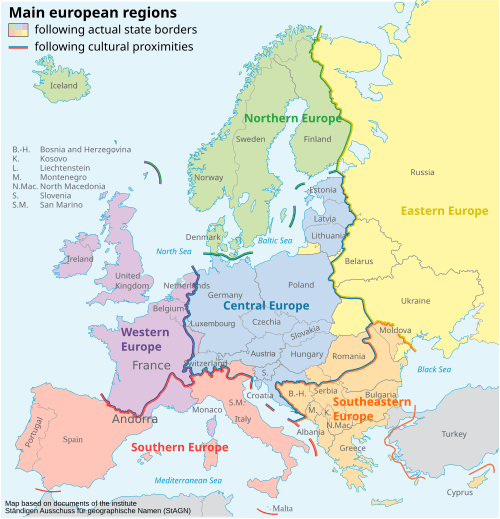
Central Europe
LOCATION
Region of Europe

Denmark
LOCATION
Country in Northern Europe and North America
El Nino
LOCATION
Location referenced in documents

Hungary
LOCATION
Country in Central Europe

Ireland
LOCATION

Jackson Hole
LOCATION
Valley in Teton County, Wyoming, United States

Kazakhstan
LOCATION
Sovereign state in Eastern Europe and Central Asia
late2016
LOCATION
Location referenced in documents

Latin America
LOCATION
Region of the Americas where Romance languages are primarily spoken

Liechtenstein
LOCATION
Country in Central Europe

Minsk
LOCATION
Capital and largest city of Belarus

Norway
LOCATION
Country in Northern Europe

Philippines
LOCATION
Archipelagic country in Southeast Asia

Romania
LOCATION
Country in Southeast Europe

South Africa
LOCATION
Country in southern Africa
the Czech Republic
LOCATION
Location referenced in documents
the Euro Area
LOCATION
Location referenced in documents
the Great East Japan Earthquake
LOCATION
Location referenced in documents
Thous
LOCATION
Location referenced in documents
Statistics
Pages:100
Entities:80
Sponsored