EFTA00121856_sub_003 - EFTA00121856_300
Document Information
Bates Range
EFTA00121856_sub_003 - EFTA00121856_300
Pages
100
Original Filename
EFTA00121856.pdf
Document Content
Page 201 - EFTA00121856_201
EFTA00122056
Page 202 - EFTA00121856_202
EFTA00122057
Page 203 - EFTA00121856_203
EFTA00122058
Sponsored
Page 204 - EFTA00121856_204
EFTA00122059
Page 205 - EFTA00121856_205
EFTA00122060
Page 206 - EFTA00121856_206
EFTA00122061
Sponsored
Page 207 - EFTA00121856_207
EFTA00122062
Page 208 - EFTA00121856_208
EFTA00122063
Page 209 - EFTA00121856_209
EFTA00122064
Sponsored
Page 210 - EFTA00121856_210
EFTA00122065
Page 211 - EFTA00121856_211
EFTA00122066
Page 212 - EFTA00121856_212
EFTA00122067
Sponsored
Page 213 - EFTA00121856_213
EFTA00122068
Page 214 - EFTA00121856_214
EFTA00122069
Page 215 - EFTA00121856_215
EFTA00122070
Sponsored
Page 216 - EFTA00121856_216
EFTA00122071
Page 217 - EFTA00121856_217
EFTA00122072
Page 218 - EFTA00121856_218
EFTA00122073
Sponsored
Page 219 - EFTA00121856_219
EFTA00122074
Page 220 - EFTA00121856_220
EFTA00122075
Page 221 - EFTA00121856_221
EFTA00122076
Sponsored
Page 222 - EFTA00121856_222
EFTA00122077
Page 223 - EFTA00121856_223
EFTA00122078
Page 224 - EFTA00121856_224
EFTA00122079
Sponsored
Page 225 - EFTA00121856_225
EFTA00122080
Page 226 - EFTA00121856_226
EFTA00122081
Page 227 - EFTA00121856_227
EFTA00122082
Sponsored
Page 228 - EFTA00121856_228
EFTA00122083
Page 229 - EFTA00121856_229
EFTA00122084
Page 230 - EFTA00121856_230
EFTA00122085
Sponsored
Page 231 - EFTA00121856_231
EFTA00122086
Page 232 - EFTA00121856_232
EFTA00122087
Page 233 - EFTA00121856_233
EFTA00122088
Sponsored
Page 234 - EFTA00121856_234
EFTA00122089
Page 235 - EFTA00121856_235
EFTA00122090
Page 236 - EFTA00121856_236
EFTA00122091
Sponsored
Page 237 - EFTA00121856_237
INSTITUTIONAL SUPPLEMENTS/PROGRAM STATEMENTS FIREARMS AND BADGES INMATE ACCOUNTABILITY INMATE PERSONAL PROPERTY SECURITY INSPECTIONS TOOL CONTROL MAIL MANAGEMENT VISITING PROCEDURES INMATE CORRESPONDENCE ALCOHOL SURVEILLANCE/TESTING ENTRANCE PROCEDURES INMATE TELEPHONES .ON SCREENING SEARCHING/DETAINING PERSONS SEXUAL ABUSE PREVENTION/INTERVENTION INMATE DISCIPLINE SPECIAL HOUSING SUICIDE PREVENTION SEARCHES OF HOUSING UNITS/INMATES AND WORK AREAS ESCORTED TRIPS USE OF FORCE/APPLICATION OF RESTRAINTS POSTED PICTURE FILE HUNGER STRIKES ESCAPES DEATH NOTIFICATIONS P.S. 500.13 Z.S. NYM 5511.06 I.S. NYM 5580.07 I,S. NYM 5500.13 I.S. NYM 5500.13 P.S. 5800.16 I.S. NYM 5267.08 I.S. NYM 5265.14 I.S. NYM 6590.07 I,S. NYM 5500.13 P.S. 5264.08 P.S. 5522.02 P,S. 5510.15 P.S. 5324,12 P.S. 5270.09 P.S. 5270,10 P.S. 5324.08 P.S. 5521.06 P.S. 5538.07 I.S. NYM 5566.06 P.S. 5510.13 P.S. 5562.05 P.S. 5553.07 EFTA00122092
Page 238 - EFTA00121856_238
PS 5500.14 10/19/2012 Chapter 7, Page 1 CHAPTER 7 FIREARMS AND BADGES 700. DEFINITIONS. Probable cause, reasonable determination, or reasonable belief means facts and circumstances known to the employee at the time of the use of firearms that would cause a reasonable employee to conclude that the action is appropriate. 701. CARRYING OF FIREARMS. Title 18 O.S.C. § 3050, authorizes the Attorney General to prescribe rules and regulations relating to the carrying of firearms by Bureau officers and employees. This authority is delegated to the Director in 28 CFR 0.96(o). When approved by the Warden, institution staff are permitted to carry firearms when: • transporting inmates, • assigned co escape posts, ana • assigned to security posts which require firearms as standard issued equipment. Carrying or the use of personal or privately owned firearms while on duty is prohibited. Post orders, riot plans, and escape plans will include instructions for carrying firearms. a. Duty Assignment. Employees must not be assigned to duties that require the carrying of firearms prior to successfully completing the firearms familiarization training course. b. Staff Qualification. New employees must not be assigned to posts requiring the carrying of firearms before completing the Introduction to Correctional Techniques Training at the Federal Law Enforcement Training Center. In extraordinary circumstances, an exception may be made for an employee who has completed the local firearms familiarization training with written approval of the Warden and Regional Director. c. Re-qualification. Staff must complete satisfactorily the Bureau's approved firearms training course each year. Allowances will be made in accordance with applicable laws, rules, and regulations. EFTA00122093
Page 239 - EFTA00121856_239
PS 5500.14 10/19/2012 Chapter 7, Page 2 Chaplains, dentists, physicians, and other positions which the Director specifically exempts from carrying firearms are not required to complete the firearms familiarization training conducted at the institution and Staff Training Academy. d. Other Use of Firearms. Only the Director or Director's designee may authorize, in writing, Bureau staff to carry Government-issued firearms for purposes not expressed in this Program Statement. 702. USE OF FIREARMS. Firearms must be used only when deemed necessary for the following Law Enforcement purposes: • Prevent escapes; • Prevent loss of life or serious physical injury; • ✓rnrorr nnwPrnmpnr prnnorry. nrnn morArminarl^n Print- the damage or loss of property would contribute directly to an escape, loss of life, or serious physical injury; and • Maintain or restore control of a correctional institution. The use of firearms is prohibited if force other than firearms appear reasonably sufficient to accomplish law enforcement purposes. Examples are, but not limited to: • Prevention of escape; • Prevention serious physical injury; and • Restoration of control in a correctional institution. The necessity to use firearms arises when all available means of achieving the law enforcement purpose have failed or are likely to fail. An employee is not required to jeopardize personal safety or the safety of others before using firearms to prevent serious injuries/bodily harm or death. If use of firearms is deemed necessary, staff must shoot the subject with every intention of hitting "center mass" to ensure the subject is stopped. EFTA00122094
Sponsored
Page 240 - EFTA00121856_240
PS 5500.14 10/19/2012 Chapter 7, Page 3 Staff will not attempt to shoot a limb which creates a lesser chance of stopping the subject and may pose a danger to staff, other inmates, or persons in the community. Firearms must not be used solely to disable moving vehicles or aircraft. Firearms will only be used against the driver or other occupants of a moving vehicle when the: • Employee has a reasonable belief that the subject poses an imminent danger of death or serious physical injury to the employee or others. • Public safety benefits of using such force outweigh the risks to the safety of the employee or others. As soon as practicable, medical attention must be provided to any persons injured during an incident involving use of firearms. •aro&'uM° wzii used if the employee recognizes a potential escapee as an inmate sentenced under the Juvenile Justice and Delinquency Prevention Act. a. Escape Prevention. The use of firearms is authorized when deemed necessary to prevent an escape in the following situations. (1) Perimeter Walls. At institutions secured with perimeter walls, prior to using firearms, staff must reasonably believe that an inmate has the capability to escape. For example, the inmate may be carrying items that could be used to perpetrate an escape, such as, but not limited to, a ladder, grappling hook, or rope, suggesting an intent to escape. An employee who determines an escape is in progress must issue a verbal warning, then fire a warning shot prior to shooting the subject. (2) Multiple Perimeter Fences. At institutions secured with multiple perimeter fences, prior to using firearms, staff must reasonably believe that an inmate has the capability to escape. For example, the inmate may be carrying items such as, but not limited to, a ladder, blankets, grappling hooks, ropes, broom handles, or sticks, that will perpetrate an escape. EFTA00122095
Page 241 - EFTA00121856_241
PS 5500.14 10/19/2012 Chapter 7, Page 4 An employee who determines an escape is in progress must issue a verbal warning, then fire a warning shot prior to shooting the subject. Verbal warnings and warning shots are not required when the employee reasonably believes there is imminent threat danger of death or serious physical injury to self or others. When authorized, throughout this policy, warning shots should be used only if there is no apparent danger to self, other staff and inmates, or the community. Warning shots will be fired into the ground and never into the air or in an indiscriminate direction. The inmate is not required to be on the first/inner perimeter fence before the employee issues the warning. When the inmaie acLualiv caul-cm:Ls the iiisLiinneL petimeLeL twice in an attempt to climb or demonstrates an attempt to get on or over the first/inner perimeter fence, and the employee reasonably determines an escape is being attempted, the employee may shoot the subject. The employee is not required to wait until the inmate is between the perimeter fences or over the first/inner fences. (3) Metropolitan Correctional Centers (MCCs) and Metropolitan Detention Centers (MDCs). When an employee reasonably determines that an escape is being attempted from a MCC or MDC, the employee should give a verbal warning. If the inmate continues, the employee may shoot the subject. Warning shots are prohibited due to the possibility of injury to innocent bystanders. (4) Minimum Security Institutions. Ordinarily, firearms are not used to prevent escapes from minimum security level institutions. However, weapons are authorized when the escaping' inmate has used or threatened to use force which is likely to cause serious physical injury or has manifested an imminent threat of death or serious physical injury to the employee, other staff and inmates, or the community. Verbal warnings and warning shots should be used when feasible. (5) Escapes with Outside Assistance. Firearms may be used against persons who are not inmates, if they are facilitating an escape and have used or threatened to use force which is likely EFTA00122096
Page 242 - EFTA00121856_242
PS 5500.14 10/19/2012 Chapter 7, Page 5 to cause death or serious physical injury against the employee, other staff and inmates, or the community. Verbal warnings and warning shots must be used when feasible. (6) Escape from Escorted Trip or Prisoner Transport. When an employee reasonably determines an escape is being attempted from an escorted trip or prisoner transport, the employee must issue a verbal warning. If the inmate continues and the escape is occurring within the immediate environs of a correctional institution, the employee will fire a warning shot, if feasible, prior to shooting the subject. Outside the immediate environs of a correctional institution, the employee should not fire a warning shot prior to shooting the subject due to the possibility of injury to innocent bvbLandvL . Absent the use or threat of force which would likely cause serious physical injury or a manifested imminent threat of death or serious physical injury to the employee, other staff and inmates, or the community, it is not permissible to use firearms to prevent an escape of an inmate in transit to or from a minimum security level institution. The exception to the rule is when the escorting employees are transporting inmates at the same time to a minimum and non-minimum security level institutions. (7) Once An Escape Has Occurred. After an escape from a transport vehicle or an institution, and the immediate environs has been successful, employees attempting to apprehend the escaped prisoner may not use firearms unless there is probable cause to believe: (a) The subject has committed a felony involving the infliction or threatened infliction of serious physical injury or death. (b) The subject's escape would pose an imminent danger of death or serious physical injury to the employee or others. Note: The phrase "after an escape from a transport vehicle or an institution and the immediate environs has been effectuated" should be interpreted in the following manner: EFTA00122097
Sponsored
Page 243 - EFTA00121856_243
PS 5500.14 10/19/2012 Chapter 7, Page 6 • As long as a staff member is in continuous pursuit of an escaping inmate, whether the escape takes place from an institution, transport vehicle, or outside facility (such as a hospital), the escape has not yet been effectuated. The use of firearms is permissible under the escaping inmate standard. • The immediate environs of an institution is defined as the property lines of the correctional facility. This boundary may be expanded by the Warden with the Regional Director's concurrence and should be defined as explicitly as possible. A verbal warning should be given if it would not pose a risk of death or serious bodily injury to the officer or others. Warning shots are prohibited due to the possibility of icaloceuL bysupimieL . b. Prevent the Loss of Life or Serious Physical Injury. Staff may use firearms when reasonable belief exists that the subject poses a threat of death or serious physical injury to staff, inmates, or others. Firearms will be used in the same manner as for escapes; verbal warnings and warning shots should be given, when feasible, prior to shooting the subject. When authorized, warning shots should be used only if there is no apparent danger to other staff and inmates, or the community. Verbal warnings and warning shots are not required when the employee reasonably believes there is imminent danger of death or serious physical injury to self or others. In a hostage situation, once it has been contained and attempts to negotiate have begun, only the Warden may order the use of firearms 'to resolve the hostage situation. Warning shots will not be fired as in an attempt to resolve a hostage situation, nor used to create a diversion. c. Protect Government Property. Firearms may be used to prevent damage to or destruction of Government property when the loss of that property could contribute directly to an escape or attempted escape, serious physical injury, or loss of life. For example, the use of firearms may be necessary when persons are attempting to damage or disable a fire truck during a fire within the institution. If individuals attempt to break into a EFTA00122098
Page 244 - EFTA00121856_244
PS 5500.14 10/19/2012 Chapter 7, Page 7 building where weapons, gas, or other security risk items are stored, firearms may also be used. Firearms must be used in the same manner as for escapes; verbal warnings and warning shots should be given, when feasible, prior to shooting the subject. When authorized, warning shots should be used only if there is no apparent danger to other staff, other inmates, or the community. Verbal warnings and warning shots are not required when the employee reasonably believes there is imminent danger of death or serious physical injury to self or others. d. Maintain or Restore Control of a Correctional Institution. Firearms may be used to maintain or restore control of a correctional institution when the employee reasonably believes the intended subject of the use of firearms is participating in a A 4 c“---*°0-oa 'n Mgt th ----- no thc oofcty of otoff, othor inmates, or the community. Firearms must be used in the same manner as for escapes; verbal warnings and warning shots should be given, when feasible, prior to shooting the subject. When authorized, warning shots should be used only if there is no apparent danger to staff, other inmates, or the community. Verbal warnings and warning shots are not required when the employee reasonably believes there is imminent danger of death or serious physical injury to self or others. 703. ARMED ESCORT BY COMMERCIAL AVIATION. The Warden may authorize staff to carry firearms when transporting an inmate by commercial air carrier. Title 14 CFR Part 108.11, Carriage of Weapons, and Part 108.21, Carriage of Passengers Under the Control of Armed Law Enforcement Escorts (1995),,allows law enforcement officials, while performing their duties, to travel while armed. Staff must notify the air carrier prior to departing the institution of the intent to carry firearms. Staff must complete all required forms and provide required information to the carrier. Staff must follow the procedures detailed in the above referenced regulations. EFTA00122099
Page 245 - EFTA00121856_245
PS 5500.14 10/19/2012 Chapter 7, Page 8 When not transporting inmates, Bureau staff, carrying firearms aboard commercial aircraft, must declare this to the carrier and have the weapon placed in checked baggage. The above referenced regulations should be referred to for additional requirements concerning the placement of firearms in checked baggage. 704. REPORTING REQUIREMENTS. A written report must be submitted to the Warden upon the discharge of any firearm, privately owned or issued by the Bureau. This rule applies when the employees is on duty and off duty, except for training or recreational purposes. For an incident while on duty, the report must be submitted prior to the end of the employee's duty shift. :Cr' LVA. an inCidant While off duty, the zeport must be prior to the end of the employee's next duty shift. OULOWSLI-.CLA The discharge of any firearm, once reported, will be investigated and reviewed through the After-Action Reporting and Review processes. 705. IDENTIFICATION BADGES. Upon request, the Correctional Services Administrator, Central Office, will issue Bureau identification badges in leather carrying cases to each institution. The Captain will maintain strict accountability of Bureau badges. Lost or stolen badges must be reported immediately in writing to the Correctional Services Branch, Central Office. Except for tower and perimeter patrols and established stationary check points, staff assigned to duties which require the carrying of firearms will be issued a Bureau identification badge. The badge must be displayed when necessary to establish the staff member's authorization to carry a firearm. Appropriate badge holders will be provided so as to allow the employee the ability to securely attach the badge to his or her outerwear. Badges may not be used as methods of routine identification. Employee procurement or possession of unauthorized badges, either official or duplicated, is prohibited (see the Program Statement on Standards of Employee Conduct). EFTA00122100
Sponsored
Page 246 - EFTA00121856_246
PS 5500.14 10/19/2012 Chapter 7, Page 9 706. NON-DISCLOSURE OF BUREAU STAFF NAMES IN SHOOTING INCIDENTS. Disclosure of an employee's name following a shooting incident will follow the guidelines as prescribed in the Program Statement on News Media Contacts. EFTA00122101
Page 247 - EFTA00121856_247
EFTA00122102
Page 248 - EFTA00121856_248
EFTA00122103
Sponsored
Page 249 - EFTA00121856_249
EFTA00122104
Page 250 - EFTA00121856_250
EFTA00122105
Page 251 - EFTA00121856_251
EFTA00122106
Sponsored
Page 252 - EFTA00121856_252
EFTA00122107
Page 253 - EFTA00121856_253
EFTA00122108
Page 254 - EFTA00121856_254
EFTA00122109
Sponsored
Page 255 - EFTA00121856_255
EFTA00122110
Page 256 - EFTA00121856_256
EFTA00122111
Page 257 - EFTA00121856_257
EFTA00122112
Sponsored
Page 258 - EFTA00121856_258
EFTA00122113
Page 259 - EFTA00121856_259
EFTA00122114
Page 260 - EFTA00121856_260
EFTA00122115
Sponsored
Page 261 - EFTA00121856_261
EFTA00122116
Page 262 - EFTA00121856_262
EFTA00122117
Page 263 - EFTA00121856_263
EFTA00122118
Sponsored
Page 264 - EFTA00121856_264
EFTA00122119
Page 265 - EFTA00121856_265
EFTA00122120
Page 266 - EFTA00121856_266
EFTA00122121
Sponsored
Page 267 - EFTA00121856_267
EFTA00122122
Page 268 - EFTA00121856_268
EFTA00122123
Page 269 - EFTA00121856_269
EFTA00122124
Sponsored
Page 270 - EFTA00121856_270
EFTA00122125
Page 271 - EFTA00121856_271
EFTA00122126
Page 272 - EFTA00121856_272
EFTA00122127
Sponsored
Page 273 - EFTA00121856_273
EFTA00122128
Page 274 - EFTA00121856_274
EFTA00122129
Page 275 - EFTA00121856_275
EFTA00122130
Sponsored
Page 276 - EFTA00121856_276
EFTA00122131
Page 277 - EFTA00121856_277
EFTA00122132
Page 278 - EFTA00121856_278
EFTA00122133
Sponsored
Page 279 - EFTA00121856_279
EFTA00122134
Page 280 - EFTA00121856_280
EFTA00122135
Page 281 - EFTA00121856_281
EFTA00122136
Sponsored
Page 282 - EFTA00121856_282
EFTA00122137
Page 283 - EFTA00121856_283
EFTA00122138
Page 284 - EFTA00121856_284
EFTA00122139
Sponsored
Page 285 - EFTA00121856_285
EFTA00122140
Page 286 - EFTA00121856_286
EFTA00122141
Page 287 - EFTA00121856_287
EFTA00122142
Sponsored
Page 288 - EFTA00121856_288
EFTA00122143
Page 289 - EFTA00121856_289
EFTA00122144
Page 290 - EFTA00121856_290
EFTA00122145
Sponsored
Page 291 - EFTA00121856_291
EFTA00122146
Page 292 - EFTA00121856_292
EFTA00122147
Page 293 - EFTA00121856_293
EFTA00122148
Sponsored
Page 294 - EFTA00121856_294
EFTA00122149
Page 295 - EFTA00121856_295
EFTA00122150
Page 296 - EFTA00121856_296
EFTA00122151
Sponsored
Page 297 - EFTA00121856_297
EFTA00122152
Page 298 - EFTA00121856_298
EFTA00122153
Page 299 - EFTA00121856_299
EFTA00122154
Sponsored
Page 300 - EFTA00121856_300
EFTA00122155
Entities Mentioned
NM
nrnn morArminarl^n
PERSON
Name reference in documents
SN
S. NYM
PERSON
Name reference in documents
Carriage of Weapons
ORGANIZATION
Organization referenced in documents
Central Office
ORGANIZATION
Central administrative office
CFR 0.96(o
ORGANIZATION
Organization referenced in documents
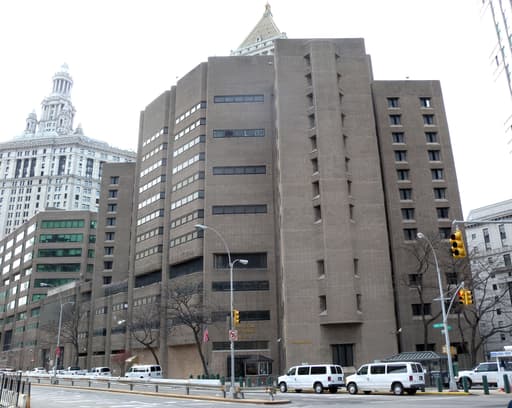
Metropolitan Correctional Center
ORGANIZATION
Metropolitan Correctional Center, New York, federal detention facility where Jeffrey Epstein died on August 10, 2019
Metropolitan Detention Centers
ORGANIZATION
Organization referenced in documents
News Media Contacts
ORGANIZATION
Organization referenced in documents
Restore Control of a Correctional Institution
ORGANIZATION
Organization referenced in documents
Staff Training Academy
ORGANIZATION
Organization referenced in documents
the After-Action Reporting and Review
ORGANIZATION
Organization referenced in documents
the Correctional Services Branch
ORGANIZATION
Organization referenced in documents
the Juvenile Justice
ORGANIZATION
Organization referenced in documents
Print-
LOCATION
Location referenced in documents
Statistics
Pages:100
Entities:14
Sponsored