EFTA02498362_email_003
Document Information
Bates Range
EFTA02498362_email_003
Pages
1
Original Filename
EFTA02498362.pdf (email 3: Re: Re:)
Document Content
Page 1 - EFTA02498362_003
Noam From: jeffrey E. [mailto:[email protected] <mailto:[email protected]> ] Sent: Saturday, June 20, 2015 10:52 PM To: Noam Chomsky Subject: Re: Re: 1.1 will wait on valeria. we can craft a fun few days 2, try this on but only if you get a moment , i know you are busy it appear to me that ""language" can be defined as the biological organizing principle that creates a shape space. "coherent sentences " are defined as those that fit on the shape. The projections on the sensory motors, allows communication. . There are an infinite digital number of sentences.that do fit on the shape , but orders of magnitude more, that do not fit.- to attempt a naive representation, imagine a hemisphere, ( symmetric), any continuous line drawn on its surface , is a sentence. there are infinite numbers of lines that can be drawn. however, trying to connect two points , directly without traversing the hemishpere is also infinitely possible but most solutions need to leave the surface. The principle that organizes the shape is NOT an input device. one can map inputs onto the shape but it is not THE shape , ex, a hemisphere bowl in 3 space, analogy, one can put marbles in the bowl and they will map a path to the bottom. but the shape of the bowl . determines how fast they move, and in which direction, . the shape of the bowl is the language. there is a shape for vision as well. . it exists without input, certain paths are more probable etc. 3. I will contact Yang On Sat, Jun 20, 2015 at 10:41 PM, Noam Chomsky < > wrote: Valeria's not here right now, so will have to check with her about late September. Really intriguing possibilities, and a delightful offer. On Yang, I read his work quite differently. He does make use of word frequencies and probability distributions, but as far as I am aware in pretty straightforward and innocuous ways. And he's quite sophisticated about these matters. Smart and interesting guy. You might want to contact him directly. I don't recall his using Zipf's "laws," but it wouldn't matter much. Mandelbrot showed back in the '50s that they were a statistical artifact, near meaningless. I was, incidentally, surprised to see how he dealt with this result in his autobiography. I think he called it his "Keplerian moment," or something like that. 3 EFTA_R1_01623729 EFTA02498364
Entities Mentioned

Jeffrey Epstein
PERSON
American sex offender and financier (1953–2019)
KE
Keplerian
PERSON
Surname reference in documents
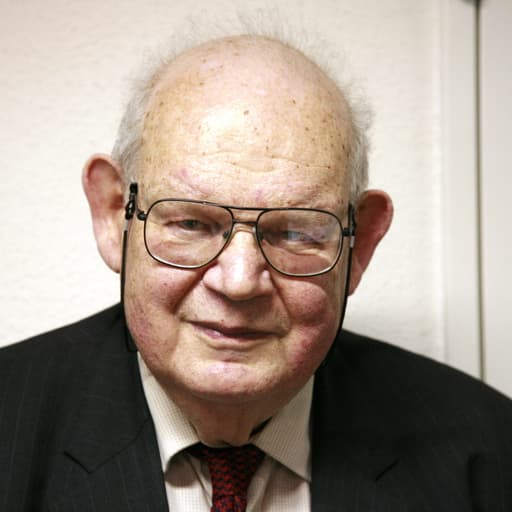
Mandelbrot
PERSON
Polish-born, French and American mathematician (1924–2010)
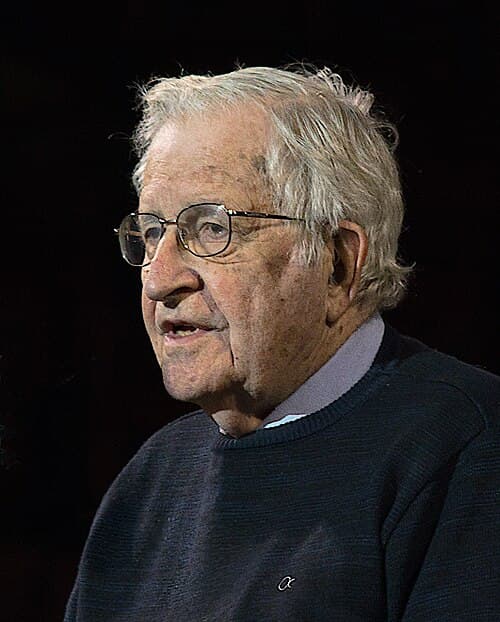
Noam Chomsky
PERSON • 2 mentions
American linguist and activist (born 1928)
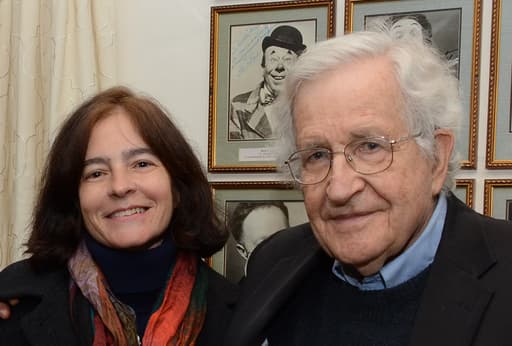
Valeria Chomsky
PERSON
Brazilian translator and linguist, wife of Noam Chomsky (married 2014)
Statistics
Pages:1
Entities:5
Sponsored