EFTA02496528_email_003
Document Information
Bates Range
EFTA02496528_email_003
Pages
3
Original Filename
EFTA02496528.pdf (email 3: Re:)
Document Content
Page 1 - EFTA02496528_007
M, Noam Chomsky «= hre =wrote: I follow up to the point where you wr=te "the organizing principle of the shape is language... =80 No doubt it can (partially) be described in language, but that's not what y=u mean. Zipf's law is a rank-frequenc= distribution. And also meaningless, as Mandelbrot showed 60 years a=o. I hope Yang is clear about this. He surely knows.</=> Noam From: Jeffrey E. [mailto:[email protected]=m] Sent: Sunday, June 21, 2015 2:48 PM To: Noam Chomsky Subject: Re: Re: it is my failing not =ours. the old math requires numbers . too li=iting. ( we can put a metric overlay on later in the chain) i=agine a shape in real space. it is readily apparent if a line either fits on the shape or not . how=do you know. ? you compare the line with the shape. your visual system allows the mental shape to either map onto or not onto the shape in a coherent manner. the shape is not an input device ,it is an object . the organizing principle of the shape is la=guage, the shape is a collection of grammars. line= on the shape are either coherent or not. coherent ones are le=itimate sentences . yang is flexible in his use of the term probability.=. for example he in a number of papers refers to zipf as a probabiltiy dis=ribution. i have checked a number of his papers after your last remark, I think it is a mistake. he m=ans that after empirical measurement . for ex word frequency, . if ten times out of 100 the corpus has the word x. then he describes the probablility of finding the word as 10 perc=nt . this is not correct. it is only the probablity of finding the word in the=frequency list . but he is very accomplished at mathematical m=dels. On Sun, Jun 21, 2015 at 1:03 PM, Noam Chomsky =rote: Interesting image, but I don'= see what it tells us about language. The problem looks to me like this, ro=ghly. Take, say, the human visual system. There's a genetic component that determines that humans will=have a mammalian and not an insect visual system, and much else. Same wit= other 7 EFTA_R1_01621074 EFTA02496534
Page 2 - EFTA02496528_008
subsystems of the organism — "organs," =80 modules." Language in particular. The technical name fo= this component, whatever it turns out to be, is UG. UG therefore de=ermines that certain systems are possible I-languages for humans, others are not. =1 presume that is what the "biological organizing principle =9D for language is. It's plainly not an input system, though=it determines possible input systems for human languages. I don =80 t see how we improve understanding by looking at it from this perspective.</=pan> A minor technical problem, not serious, has to do with distinguishing digit=l infinity from continuity, like continuous lines on the surface of a hemi=phere. I think you'll find Yang inte=esting. Noam From: jeffrey E. [mailto:[email protected]=m] Sent: Saturday, June 20, 2015 10:52 PM To: Noam Chomsky Subject: Re: Re: 1.1 will wait on vale=ia. we can craft a fun few days 2, try this on but only if you get a moment , i know you =re busy it appear to me that ""language" can be defined as the biological organizing principle that creates a shape spa=e. "coherent sentences " are defined as those that f=t on the shape. The projections on the sensory motors, allows commun=cation. . There are an infinite digital number of sentences.that do fit on the shape , but=orders of magnitude more, that do not fit.- to attempt a naive=representation, imagine a hemisphere, ( symmetric), any continuous line drawn on its surface , is a sentence. there are infinite numbers of lines that can be drawn. however, try=ng to connect two points, directly without traversing the hemishpere is also infinitely possible but most solutions need to leav= the surface. The principle that organizes the shape is NOT an input device. one can map inputs onto the shap= but it is not THE shape , ex, a hemisphere bowl in 3 =pace, analogy, one can put marbles in the bowl and they will map a p=th to the bottom. but the shape of the bowl . determines how f=st they move, and in which direction, . the shape of the bowl is the language= there is a shape for vision as well. = it exists without input, certain paths are more probable etc. 3. I will contact Yang • , Noam Chomsky «= wrote: 8 EFTA_R1_01621075 EFTA02496535
Page 3 - EFTA02496528_009
Valeria's not here right now,=so will have to check with her about late September. Really intrigui=g possibilities, and a delightful offer. On Yang, I read his work quite differ=ntly. He does make use of word frequencies and probability distribut=ons, but as far as I am aware in pretty straightforward and innocuous ways. And he's quite sophisticated about these matters. Smart and int=resting guy. You might want to contact him directly. I don't recall his using Zipf=E2 s "laws," but it wouldn't matter much. Mandelbrot showed back in the '50s that they were a statistical artifact, near meaningless. I was, incidentally, surprised to see how he dealt with this result in =is autobiography. I think he called it his "Keplerian moment=" or something like that. Noam From: Jeffrey E. [mailto:[email protected]=m] Sent: Saturday, June 20, 2015 12:10 PM To: Noam Chomsky Subject: Re: Re: I think you might try to plan on late september, ta=ing my apt and spending a few days with valeria in the city, A= it is the openiing of the UN general assembly , as well as the Clinton global initiative New york is rife with people with a= least influence, if not new ideas. . I, we. can organize man= fun interactions. my house becomes a respite for the select f=w, to take off their ties , and talk openly. You would be welcome to join as many create or participate as you prefer. yangs work deals with language as signals . his relia=ce on Zipf like distributions is a good example of naive probablities. . empirically zipf appears. but cannot be derived from any of his or anyones elses to date. so somewhat misleading to suggest the&=uot; probililty of word , x appearing, " it is the =istake of frequency vs probablity, and careless common usage.=u> • am Chomsky «. wrote: Sounds like a most interesting person= And someone it would be very interesting to talk to. I presum= he spends time in NY. Hope we can work it out. Would be interested in learning more =bout your critique of the use of probability in language work, mostly by computational cognitive scientists, as far as I know. I =80 ye written critiques of 9 EFTA_R1_01621076 EFTA02496536
Entities Mentioned
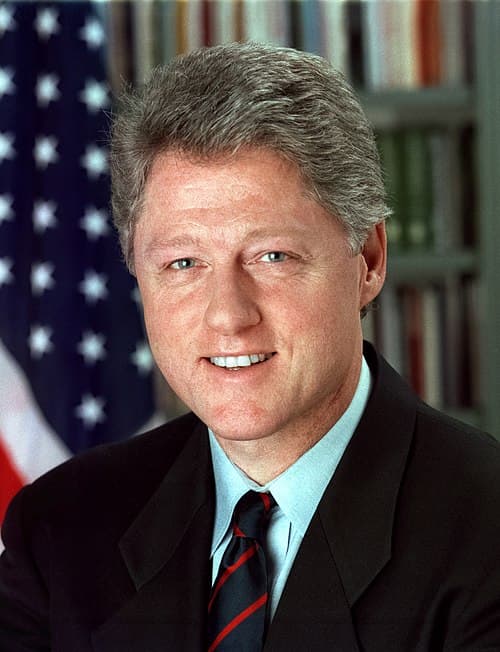
Bill Clinton
PERSON
President of the United States from 1993 to 2001 (born 1946)

Jeffrey Epstein
PERSON • 2 mentions
American sex offender and financier (1953–2019)
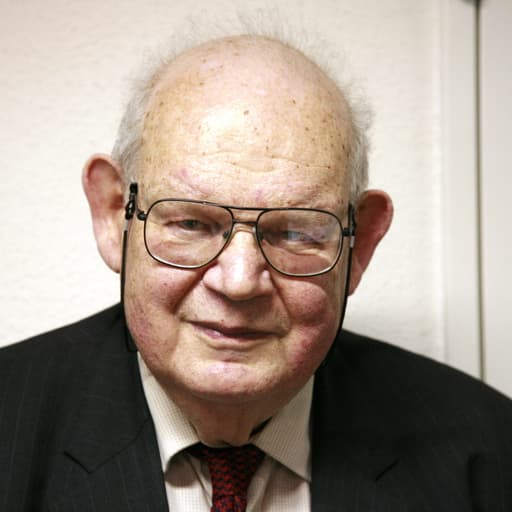
Mandelbrot
PERSON
Polish-born, French and American mathematician (1924–2010)
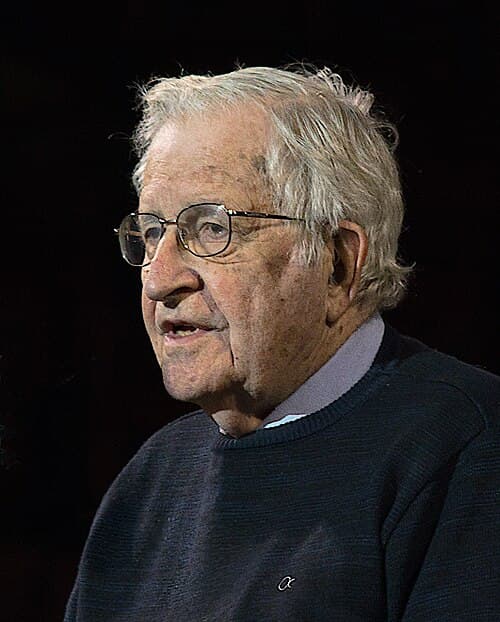
Noam Chomsky
PERSON • 2 mentions
American linguist and activist (born 1928)
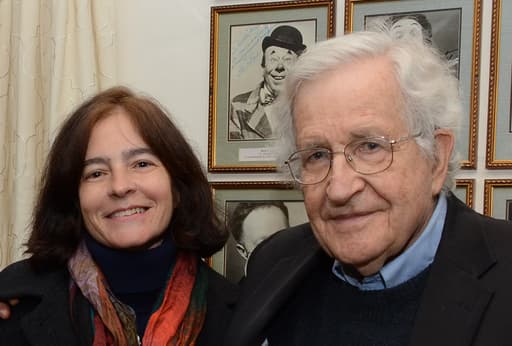
Valeria Chomsky
PERSON
Brazilian translator and linguist, wife of Noam Chomsky (married 2014)
Statistics
Pages:3
Entities:5
Sponsored