EFTA00034760 - EFTA00034773
Document EFTA00034760 is an institution supplement from the Metropolitan Correctional Center (MCC) in New York, dated November 13, 2014.
This document outlines the procedures and operations related to pretrial inmates at the MCC New York, which primarily confines pretrial inmates for the U.S. Marshals Service. It details staff responsibilities and emphasizes the importance of reading it in conjunction with the program statement. The document also addresses the care, custody, and control of inmates in pretrial status, acknowledging the challenges of separating them from convicted inmates due to the facility's design and operation.
Key Highlights
- •The document establishes procedures and operations for the Metropolitan Correctional Center (MCC) in New York concerning pretrial inmates.
- •The U.S. Marshals Service is identified as the primary entity for whom the MCC New York confines pretrial inmates.
- •The document acknowledges the difficulty of always separating pretrial inmates from convicted inmates.
Frequently Asked Questions
Books for Further Reading

Perversion of Justice: The Jeffrey Epstein Story
Julie K. Brown
Investigative journalism that broke the Epstein case open

Filthy Rich: The Jeffrey Epstein Story
James Patterson
Bestselling account of Epstein's crimes and network

Relentless Pursuit: My Fight for the Victims of Jeffrey Epstein
Bradley J. Edwards
Victims' attorney's firsthand account
Document Information
Bates Range
EFTA00034760 - EFTA00034773
Pages
14
Document Content
Page 1 - EFTA00034760
U.S. Department of Justice Federal Bureau of Prisons Me►ropolitan Correctional Center New York, NY 10007 Institution Supplement OPI: NUMBER: DATE: SUBJECT: CMC NYM 7331.04e November 13, 2014 Pretrial Inmates 1. PURPOSE AND SCOPE: The primary mission of the Metropolitan Correctional Center (MCC), New York, is to confine pretrial inmates for the United States Marshals (USM) Service. Pretrial inmates are defined as those individuals who are legally detained, but for whom the Bureau of Prisons has not yet received notification of conviction. Ordinarily, pretrial inmates will be separated, to the extent possible, from convicted inmates. The purpose of this supplement is to establish the procedures and operations, as well as staff responsibilities, for the operation of the institution, as it relates to pretrial inmates. It is paramount this supplement is read in conjunction with the program statement as information stated in national policy is not reiterated within. H. DIRECTIVES AFFECTED: a. Directives Rescinded: I.S. 7331.04d, Pretrial Inmates, dated June 25, 2009. b. Directives Referenced: P.S. 7331.04, Pretrial Inmates, dated January 31, 2003. III. PROCEDURES: MCC New York provides the care, custody. and control of inmates for the USM Service, while they are in pretrial status. However, all pretrial inmates remain the responsibility of the U.S. Marshal Service until they arc convicted by the Court. In addition to pretrial inmates, MCC New York also confines sentenced inmates and holdovers. Additionally, MCC New York houses inmates on writs to the local district courts who have already been sentenced in other federal or state courts. Although pretrial inmates are ideally separated from convicted inmates, it is not always possible or practical to keep all pretrial inmates separate from those who have been convicted. Due to the unique design, structure, and operation of MCC New York, staff may. based upon sound correctional judgment, permit pretrial inmates, who do not present a risk to the security or orderly running of the institution, to have regular contact with convicted inmates. Therefore, pretrial inmates at this facility may be housed with convicted inmates, provided a waiver is signed. However, it is essential that pretrial inmates be separated from sentenced inmates before and during the intake screening process. Sensitive L iiiii led Official Use Only CONFIDENTIAL SDNY_000 12240 EFTA00034760
Page 2 - EFTA00034761
NYM 7331.04e Pretrial Inmates Page 2 A. Procedures for Admission: The following procedures shall be followed when processing all new commitments, to include the verification of commitment papers, and searches of inmates and property. 1. Inmates entering the Receiving and Discharge (R&D) area will be identified by Correctional Systems (CS)staff, formerly Inmate Systems Management (ISM) staff via an interview with the remanding official and the inmate. CS staff will review the Prisoner Remand (BP377) for accurate and complete information. All legal documents delivered with the inmate will be verified. 2. All inmates will walk through a metal-weapon detector, be pat searched, and visually searched; a hand-held metal detector may also be used. All inmate property will be searched. 3. Prior to being escorted to their assigned housing units, all new commitments will receive two jumpsuits, two pair of socks, two pair of underwear, one ditty bag {a toothbrush, toothpaste, a comb, and shaving cream), one pair of tennis deck shoes, and one institution bedroll {two blankets, two sheets, one pillow case, one towel, and one washcloth). Female pretrial inmates receive two pair of pants and shirts, versus jumpsuits, and two bras. B. Intake Screening (Social Interview): Due to the lack of available information concerning pretrial inmates, it is imperative a thorough intake screening is completed on all new commitments. Unit team staff will conduct intake screening on all inmates committed to the institution between the hours of 7:30 a.m. and 9:00 p.m. Monday thru Friday. If members of the Unit Team are not available, a Lieutenant will conduct the intake screening. All staff members conducting intake screening must be CIM certified. 1. Staff conducting intake screening for new commitments will receive a SENTRY generated Intake Screening form (BP-64) from R&D staff once the inmate has been loaded into SENTRY. Staff must pay special attention to the CMC Clearance and Separatee Data printout attached to the Intake Screening form. If SENTRY is not operational, staff should utilize the manual Intake Screening form (BP-312) {Attachment A). If possible, the staff member conducting the intake screening should obtain pertinent information from the Deputy U. S. Marshal, or arresting agent, committing the inmate. Staff conducting the intake screening must review the U.S. Marshals Remand to Custody form to determine the offense with which the inmate is being charged. The interviewer should notate if the inmate is charged with a sophisticated crime, such as, Racketeering or Engaging in a Continuing Criminal Enterprise, or a violent offense such as, Murder, Bank Robbery, or Sensitive Limited Official Use Only CONFIDENTIAL SDNY_00012241 EFTA00034761
Page 3 - EFTA00034762
NYM 7331.04e Pretrial Inmates Page 3 Extortion. The staff member conducting the interview will document any security concerns on the Intake Screening form. Staff will also assess the inmate's physical and mental condition, and document his/her conclusions on the Intake Screening form. If a psychological condition is noted, screening staff must notify the Duty Psychologist immediately of any noted mental concerns inmate. If on a weekend, the screening staff must call the on call Duty Psychologist to interview the inmate. If available, the staff member conducting the screening must review the Pre-Sentence Report and the Central File. The staff member's review of this material shall be documented on the Intake Screening form. Finally, the staff member conducting the interview will determine if the inmate can be placed in the general population of this institution. If the inmate's placement in general population would pose a threat to the security or orderly running of the institution, the Operations Lieutenant should be notified in order for the inmate to be placed in Administrative Detention. The conclusion that the inmate warrants placement in Administrative Detention should be documented directly on the Intake Screening form. This form must be signed by the staff member conducting the intake screening. When intake screening court returns, the supplement on Intake Screening must be reviewed. A separate questionnaire will be completed which addresses all questions on the SENTRY generated form. All intake screening must occur in the privacy of a room with only the inmate being intake screened and staff. If a notorious pretrial inmate, an inmate whose presence could attract undue attention to the Bureau of Prisons, or an inmate who requires a higher degree of security based on a serious volatile background or violent crime is committed, the intake screener will make copies of (Inmate Alert Notice) for the Supervisory Correctional Systems Specialist (SCSS), CMC, SIS Office, the Lieutenant's Office and the Captain. The Captain will then notify the Warden and Executive staff 2. The staff member conducting the intake screening will ensure the intake screening form is Filled out completely and correctly, to include all times and dates. The staff member conducting the intake screening must also ensure the following forms are completed: a. Pretrial Inmate Notice of Separation/Work Waiver, BP-S203.073: Staff will ensure Section II of this form is completed for each new pretrial inmate. If a pretrial inmate refuses to sign this form, staff will document this fact and any reasons the inmate provides for refusing to sign on the form. Each new pretrial inmate should also be asked to complete Section IV of this form, the work waiver section. If a pretrial inmate does not wish to volunteer for a work assignment, this fact should also be documented on the form. If an inmate's ability to comprehend this waiver appears questionable, a referral to Psychology Services will be made for determination of competency. Sensitive Limited Official Use Only CONFIDENTIAL SDNY_00012242 EFTA00034762
Sponsored
Page 4 - EFTA00034763
CONFIDENTIAL SONY 00012243 EFTA00034763
Page 5 - EFTA00034764
NYM 7331.04e Pretrial Inmates Page 4 b. Pretrial Inmate Interview, BP-S562.073: This form must be completed in conjunction with the Intake Screening Form. It is essential a thorough review of the inmate's status be completed upon his/her commitment. This form must be completed and signed by the staff member conducting the intake screening interview. c. Acknowledgment of Inmates (BP407 and 408): Staff must either have each inmate read or read to each inmate the policies/procedures on these forms; staff must cross off the method of advisement not used. Staff must ensure these forms are completed in their entirety. 3. The intake screener is also responsible for distributing the "Inmate Rights and Responsibilities" to all new commitments. The intake screener will ensure each inmate acknowledges his/her receipt of the rights and responsibilities by circling the appropriate response on the Intake Screening form and signing it. If an inmate refuses to sign the BP-64 to acknowledge receipt of the rights and responsibilities, staff shall document this fact on the form. The completed BP-64 shall be filed in the inmate's unit management file, hereinafter called the drop file. 4. CS staff are responsible for reviewing the U.S. Marshals receipt to review the status of those inmates returning from court each day. If an inmate's pretrial status changes, ISM staff will make the necessary changes in SENTRY. ISM staff is also responsible for interviewing the escorting Deputy U.S. Marshal to determine if any unusual circumstances occurred in court which could affect an inmate's classification at this institution. 5. All new commitments will be issued the pamphlet entitled "Sexual Abuse/Assault Prevention and Intervention." C. Medical Intake Screening and Procedures: 1. All new commitments are examined by a physician's assistant. The physician's assistant will screen all inmates in accordance with BOP medical procedures to determine if there are any reasons for not placing the inmate in general population, or for restricting work assignments. Specific attention shall be given to evidence of depression and potential suicide, and whether the inmates are victims of recent sexual assaults during a period of incarceration. A copy of the completed Intake Screening Medical form (BP-354) will be placed in the inmate's file maintained in Correctional Systems. All pretrial inmates will receive a complete medical screening within fourteen days of their arrival at this facility. Sensitive Lunifed Official Use Only CONFIDENTIAL SDNY_00012244 EFTA00034764
Page 6 - EFTA00034765
NYM 7331.04e Pretrial Inmates Page 5 2. The Health Services Department will conduct sick call, triage, and physical exams for each housing unit Monday through Friday. Medical emergencies are handled immediately. 3. Medical staff is on duty seven days a week, in the event of a medical emergency. Pretrial inmates receive the same level of basic medical care, including dental care, provided to sentenced inmates. The decision to defer or deny elective medical procedures shall be based on the same policies or guidelines which apply to sentenced inmates. The transient nature of pretrial inmates often precludes many elective procedures. Emergency medical treatment is provided in accordance with local procedures, for both pretrial and sentenced inmates. The Unit Manager is responsible for preparing a letter from the Warden to the Judge, through the U.S. Marshal, to notify the Court of any inmate receiving any psychiatric medication and/or any other medication that may alter the inmates courtroom behavior. It has been established locally that the medications which fall under the realm of "psychiatric medication which may affect courtroom behavior" are anti-psychotic, anti-manic, and on occasion, anti-depressants medications. The Pharmacist is responsible for providing the respective Unit Manager a list of inmates prescribed either anti-psychotic or anti-manic medication on a daily basis. The Psychiatrist will provide the Unit Manager with a list of inmates prescribed anti-depressants when he believes the medication "may affect courtroom behavior." (See Attachment B). A copy of this letter will be sent to the Assistant United States Attorney (AUSA), the USM, and the inmate's attorney, via the AUSA. A copy of this letter will also be put in the inmate's medical file and forwarded to Psychology. These same procedures apply to inmates committed for 4241(a) and 4242 psychological studies. D. Housing: Pretrial inmates, who are appropriate for general population, are placed in one of the seven general population housing units; six male units and one female unit. Five male housing units contain secure two-man rooms; four units have a capacity of housing 96 inmates; one unit has the capacity to house 94 inmates. There is one male dormitory unit which has the capacity of housing 156 inmates. The female unit houses 79 inmates and housing style varies from two to six woman rooms. 1. Unit Assignment: Due to the unique nature and structure of this facility, the MCC has the capability of housing inmates who must be separated from one another. Therefore, as long as an inmate does not present any unusual security or medical concerns which would require his/her placement in Administrative Detention, pretrial inmates will be assigned housing units in general population using their separation needs as the primary factor. The officer assigned to the Counts and Assignments (C&A) Office is responsible for ensuring that inmates are initially placed in the appropriate housing units. This decision will be based upon accessing SENTRY and determining the inmate's separation needs; and also information provided by unit staff, ISM staff, or a Lieutenant. Sensitive Limited Official Use Un(y CONFIDENTIAL SDNY_000 12245 EFTA00034765
Sponsored
Page 7 - EFTA00034766
NYM 7331.04e Pretrial Inmates Page 6 MCC New York's unique design and mission require that many activities are provided on the units (i.e., meal serving, pill line, recreation); the units are partially self-sufficient requiring movement off the unit only for purposes of medical care, outdoor recreation, law library, some educational classes, movement to court, and attorney meetings. 2. Procedures: Unit Managers are responsible for the operations within their housing units, to include sanitation, clothing, property, feeding, recreation, etc. Ordinarily, Unit Managers may change an inmate's quarters assignment for valid reasons. Unit staff must review an inmate's CMC Clearance and Separatee Data before moving an inmate. Prior to moving an inmate classified as a disruptive group member or in the posted picture file, the Unit Manager must confer with the SIS Office to ensure there exists no other security reason preventing the move. To avoid sensitive information being brought onto the units, the Unit Managers can confer with the CMC who has SENTRY access to Security Threat Group (STG) information. Also, the Unit Manager must consult with the C&A Officer before making the move to ensure the institutional count is not disrupted and for further review of the inmate's CMC Clearance and Separatee Data. 3. High Security Cases: Those inmates identified as requiring a greater degree of security and control, but who do not require placement in the Special Housing Unit, are to be placed on higher floors for increased security. Pretrial inmates whose presence in the general population would pose a threat to the security or orderly running of the institution will be housed in administrative detention in the Special Housing Unit. E. Admission and Orientation (A&O): An Institutional A&O Program for pretrial inmates is not required. Based on the extreme population pressures, unique needs to separate inmates by floor and constant movement, inmates identified in this section will not be required to receive institution and unit A & O, however, upon intake screening they will receive the following: 1. Inmate Rights and Responsibilities (located in the A & O Handbook) 2. Bureau Prohibited Acts and Disciplinary System (located in the A & O Handbook) 3. Completion of the Inmate Acknowledgment Forms (BP-S407/408) A&O Handbooks are posted on all general population units in English and Spanish. All new commitments housed in the Special Housing Unit receive a copy of the handbook. F. Visiting: Immediate family members and one person of "meaning" will be placed on the visiting list absent strong circumstances that preclude visiting. Immediate family is defined as mother, father, step-parents, step-children, foster parents, grand-children, brothers, sisters, spouse and children. As the situation presents itself, other non-immediate family members will be allowed to visit at the approval of the Associate Warden of Programs (AWP). Further, in circumstances, when an inmate requests more than ten visitors to be placed on their visiting list, the Unit Manager will approve / deny any visitor exceeding the limit. Pretrial inmates may complete a Sensitive Landed Official Use Only CONFIDENTIAL SDNY_00012246 EFTA00034766
Page 8 - EFTA00034767
NYM 7331.04e Pretrial Inmates Page 7 visiting list for immediate family members as soon as they reach their assigned housing unit. Pretrial inmates have the opportunity for social visits once a week. Ordinarily, each social visit will last a maximum of one hour, the exception to this policy being when a visitor traveled more than three hours. Visiting hours for pretrial inmates are from 12:30 p.m. to 3:30 p.m., and from 5:30 p.m. to 8:30 p.m., Monday thru Friday. The visiting day for each unit remains the same, yet the times change every other week to enable visitors to come in the afternoon and the evening. G. Pretrial Inmate Reviews: The Unit Manager is responsible for scheduling and documenting pretrial inmate reviews for all pretrial inmates assigned to his/her unit. Each pretrial inmate committed to this institution will be scheduled for a review within 21 days of admission. Subsequent reviews will be conducted every 90 days. It is the responsibility of the Case Manager and the Counselor to obtain the necessary information in order to hold a meaningful review. The Pretrial Inmate Review Report (BP-S561.073) shall be used to document these reviews. If an inmate refuses to attend a scheduled review, staff shall document the refusal, and if known, the reason. The emphasis of this review will be placed on the inmate's current legal proceedings, institutional adjustment, work/sanitation evaluations, and program recommendation based on needs and availability. The unit team should also review the inmate's CIM status, and document the review in the file (i.e. on team sheet, activity record in FOI Exempt section). Unit staff should also verify the accuracy of all load data and update Sentry as needed. A pretrial inmate review must have at a minimum, two Unit Staff in attendance. A docket containing the names of general population inmates scheduled for review should be posted in the multipurpose area of the unit at least 48 hours prior to the scheduled review. The Unit Manager is also responsible for monitoring the inmate's pretrial status. Once an inmate pleads guilty/is convicted, the inmate's Admission/Release status should be updated by CS to reflect holdover status rather than pretrial status. These inmates are no longer considered to be pretrial inmates. Once the inmate changes to A-HLD status, conducting a team is no longer necessary. However, the Case Manager shall ensure that monitoring of these cases are conducted informally through an informal interview documented on the Activity Log. Unit staff must carefully monitor the status of the cases of those inmates who have been identified as requiring a greater degree of security and control, or those inmates involved in high profile cases. All pretrial inmates are normally classified as IN custody. Ordinarily, there should be no reason to consider changing a pretrial inmate's custody. Changes in the custody levels of pretrial inmates should only occur in rare cases. If unusual circumstances occur, the unit team must refer a recommendation to increase an inmate's custody from IN to MAXIMUM to the Warden for approval. The Regional Director must approve a reduction of a pretrial inmate's custody from IN to a lower custody level. Sensitive Limited Official Use Only CONFIDENTIAL SDNY_00012247 EFTA00034767
Page 9 - EFTA00034768
NYM 7331.04e Pretrial Inmates Page 8 H. File Accountability: Unit Management inmate files will be maintained in the CS. All files must be maintained consistent with the Program Statement and supplement pertaining to central files. All files are to be counted quarterly, with a SENTRY generated roster. All files must be secured at all times and no file may be left in a staff's office overnight. For specific handling procedures, the supplement on central files should be referenced. I. Property: Beyond those items issued by CSstaff during the admission process, section III(AX3) within, further clothing is issued by the Laundry Department to balance out the amount allowed by local policy. Approved clothing for pretrial inmates is listed in the institution supplement on Inmate Personal Property. Other items such as bar soap, laundry detergent, additional disposable razors, paper, pencils, and envelopes are distributed on each housing unit. Once arraigned and remanded to custody, all personal clothing will be shipped to an address provided by the inmate. Lock boxes are not used at this facility. The committing federal agents of newly arrested persons who have not been arraigned are responsible for safeguarding all money and valuable items until inmates are remanded to custody, at which time the inmates will forward all valuables to a person identified by themselves; monies will be credited to their commissary accounts. A pretrial inmate may have two sets of court clothes delivered to the institution for a jury trial or for sentencing. Court clothing requests must be approved by a member of the unit team 48 hours prior to the delivery of the clothing. Clothing exchange is Mondays, Wednesdays, Thursdays, and Fridays from 12:30 p.m. to 1:30 p.m., excluding holidays, in the front lobby. Pretrial inmates may retain clothing items such as T-shirts, shorts, sweatshirts and sweatpants purchased at other institutions. Pretrial inmates may also retain all legal work, including audio tapes, pertaining to their current legal action. J. Education: The Education Department provide pretrial inmates with educational opportunities such as Adult Continuing Education (ACE). The Education Department maintains the institution's law library. A satellite law library is also maintained in the Special Housing Unit. Pretrial inmates have the opportunity to spend a reasonable amount of time to do legal research and prepare legal documents in the Law Library. More specifically, to obtain certain legal materials pretrial inmates may make copies of legal materials via use of the debit card system. Inmates who claim indigence must obtain the Indigence Form in Education and have it approved by their unit team. Inmates may check out materials by consulting with staff from the Education Department. The Education Department will provide current newspapers, including Spanish Newspapers, to each pretrial unit. Sensitive Limited Official Use Only CONFIDENTIAL SDNY_00012248 EFTA00034768
Sponsored
Page 10 - EFTA00034769
NYM 7331.04e Pretrial Inmates Page 9 K. Recreation: Pretrial inmates may participate in recreation activities from 6:00 a.m. until 11:00 p.m., except during official counts. Movies are shown on the units on weekends via the Closed-Circuit Television System. The Recreation Department conducts outdoor recreation seven days a week, and rotates the pretrial units' access to the roof on a daily basis. Pretrial inmates have access to approximately five hours of outdoor recreation a week. L. Legal Resources: The institution's Legal Department will coordinate and approve all legal activities unique to a pretrial facility. Examples of these activities include arranging co-defendant meetings, and providing inmates and defense attorneys with video tape players to review video tapes. Unit staff will deliver audio tapes to those inmates who receive them from their defense attorney or the U.S. Attorneys Office. Unit staff will also provide inmates with tape players to review their tapes. Read-only computer CD access is available in the Education Department if inmates' attorneys send legal material on CDs. Pretrial inmates may make unmonitored calls to his/her attorney by submitting a request to a member of their unit team. Staff will not limit a pretrial inmate's access to unmonitored legal calls, however, these calls are granted to the extent that staff resources allow and must meet the requirements as stated in the Program Statement Legal Activities, Inmate. All legal mail sent to pretrial inmates is opened in their presence. Pretrial inmates may meet with their attorneys in the Attorney Conference Room ordinarily from 8:00 a.m. to 10:00 p.m., each day, including weekends and holidays. Exceptions to these times are made on a case by case basis. M. Institutional Work Assignments: All pretrial inmates are responsible for housekeeping tasks in their rooms and in the common living areas. Pretrial inmates may be assigned as unit orderlies and receive performance pay. Each pretrial unit shall have no more than 12 orderly positions. Pretrial inmates may also be assigned a work detail outside the confines of the unit, provided the inmates do not have separatees in the building and are not a security risk. The unit team will review each inmate's eligibility for a work assignment during pretrial inmate reviews. A pretrial inmate does not earn extra good time. The unit team must ensure Section IV of the Notice of Separation/Work Waiver form is executed prior to an inmate's assignment to any work detail. Any pre-trial inmate, not on writ from a state facility, whose status changes to holdover by virtue of the fact the inmate has been convicted or pled guilty, is eligible to work. This policy is contingent upon the fact the inmate does not have any separatees in the building. N. Community Activities: All pretrial inmates remain in the custody of the USM Service until convicted by the Court, and therefore, are not eligible for community-based activities. In the case of an emergency, unit staff shall facilitate contact with the pretrial inmate's attorney, who may seek from the Court a decision concerning release from custody, or an escorted trip. Additionally, unit staff will notify the U.S. Attorney's Office and the USM of the emergency. Staff shall document contact with each of these agencies in the inmate's file. Release of the inmate requires a Court Order, and an escorted trip must be approved by the Court. Ordinarily, the USM Service will provide the escorts. This rule does not apply to emergency medical trips to a local hospital. bensitsve Ladled U/ftc/al Use Only CONFIDENTIAL SDNY_00012249 EFTA00034769
Page 11 - EFTA00034770
NYM 7331.04e Pretrial Inmates Page 10 O. Religious Programs: Pretrial inmates in general population may participate in religious group activities. Staff may enlist the aid of contract or volunteer personnel to assist in the ministering of pretrial inmates. Due to the large number of separatees housed at this facility, any inmate who appears on the institution's daily separation roster may not attend group services in the Chapel located on Unit 5 North. Religious services for female inmates will be conducted in the programs room of the female unit. Pretrial inmates who have separatees, and those housed in the Special Housing Unit, must be ministered to individually on his/her unit. Inmates have the opportunity to fill out a Religious Preference Summary during Intake Screening P. Marriage: Pretrial inmates may request permission to marry in accordance with current BOP policy. Unit staff shall contact the Court, the U.S. Attorney's Office, and in the case of an alien, the Bureau of Immigration and Customs Enforcement to advise them of the marriage request of the inmate and to request their comments. Psychiatric and Psychological Counseling: Due to the transient nature of pretrial inmates, individual counseling is limited to inmate needs, resolutions, and crisis intervention. Pretrial inmates may be allowed the opportunity to receive counseling services by submitting a "Request to a Staff Member" to the Psychology Department. Further, should inmates have any drug dependency issues the 40-Hour Drug Program is available to pretrial male and female inmates via submitting a "Request to a Staff Member" to the Psychology Department. It Death or Serious Illness: In the event of death or serious illness, unit staff shall prepare letters, for the Warden's signature, notifying the committing Court, the United States Attorney, the inmate's attorney of record, and the designated family member or next of kin, and other agency with an interest (i.e. Consulate). S. Discipline: Pretrial inmates are required to abide by the Bureau of Prisons rules and regulations. New commitments are provided with the inmates' rights and responsibilities. Regulations pertaining to discipline - prohibited acts, types of disciplinary actions which may be taken, and the disciplinary system within the institution - are posted on all units, except in the Special Housing Unit, and are explicit in the Admission and Orientation Booklet. The respective Unit Manager is responsible for ensuring a letter, signed by the Warden, is forwarded to the Court, through the U.S. Marshal, advising the Court of any findings of guilt, for serious high and greatest severity incident reports, by the Discipline Hearing Officer (DHO). Furthermore, if the inmate violates any of the rules and regulations of the Bureau of Prisons, a letter will be sent to the United States Probation Office and prosecuting Assistant United States Attorney which specifies all violations. Upon an inmate's plea of guilt/conviction, the discipline history of the inmate will be reviewed by the respective Unit Manager, or designee. Sensitive Limited Official Use Only CONFIDENTIAL SDNY_000 12250 EFTA00034770
Page 12 - EFTA00034771
NYM 7331.04e Pretrial Inmates Page 11 T. Release of Funds and Property: Pretrial inmates released during normal business hours will receive their personal property and funds the same day. Property and funds belonging to pretrial inmates released during non-business hours will be mailed to the inmate, or may be picked up the following business day. IV. EFFECTIVE DATE: This Supplement is effective upon issuance. Approved By: Warden DISTRIBUTION: Warden Associate Wardens Executive Assistant Department Heads NERO Detention Services Branch, Central Office AFGE. President Inmate Law Library Sensthre Limited Official Use Only CONFIDENTIAL SDNY_00012251 EFTA00034771
Sponsored
Page 13 - EFTA00034772
NYM 7331.04e Pretrial Inmates Attachment A INTAKE SCREENING FORM INSTITUTION: HOUSING RESTRICTIONS: YES NO NAME: REG.NO.: UNIT: DATE ARRIVED: TIME ARRIVED: TIME INTERVIEWED: I. HOLDOVERS: Type of transfer (look at Transfer Order) A. 309 B. 329 C. YCA D. CMC (Category) E. Security Level F. Marion Control Case G. Other II. COMMITMENTS: A. Is inmate a CMC? (Check designated TWX for clearance) ( )YES ( ) NO B. Transfer Code: (if 309/307/329, check DHO action for time owed) C. Special Housing Recommendation: (Check J&C/PSI, Computation Sheet) YCA Chemical Abuse Program Other (i.e. misdemeanant, study, unsentenced, amputee, etc.): EXPLAIN THE ABOVE ITEMS: III. A. B. INMATE INTERVIEW Do you know of any reason you should not be placed in general population? ( ) YES Are you a government witness, or have you assisted law enforcement agents in any way? ( ) NO ) YES ) NO C. Are you a CMC case? ( ) YES ( ) NO D. Have you ever testified against anyone in court ? ( ) YES ( ) NO E. Are you are member or associate of any gang? ( ) YES ( ) NO F. Have you ever been sexually assaulted? ( ) YES ( ) NO G. Have you recently been sexually assaulted? ( ) YES ( ) NO EXPLAIN ANY OF THE ABOVE ITEMS : I have / have not received a copy of the institution's Admission and Orientation Handbook defining my Rights and Responsibilities and the INTERVIEWER'S SIGNATURE: INMATE SIGNATURE: prohibited acts/disciplinary severity scale. TITLE: REG.# DATE CHECKLIST: I. Picture ID: YES NO 2. BP-ADMIN-I93 Reviewed: YES NO 3. PSI Reviewed: YES NO 4. Central File Reviewed: YES NO 5. CMC Status OK for Population: YES NO 6. Emotional Condition OK for Population: YES NO 7. General Physical Appearance (Comments): YES NO BP-312(51) Sensitive Limited Official Use Only CONFIDENTIAL SDNY_000 12252 EFTA00034772
Page 14 - EFTA00034773
NYM 7331.04e Pretrial Inmates Attachment B INMATES PRESCRIBED PSYCHIATRIC MEDICATION Date: The following inmates were prescribed anti-psychotic or anti-manic medications on the above date. ANTI-PSYCHOTIC Inmate Name Register Number Inmate Name Register Number ANTI-MANIC Inmate Name Register Number Inmate Name Register Number To the Psychiatrist: The following inmates were prescribed ANTI-DEPRESSANT medication. Place a "check mark" next to those inmates whose courtroom behavior may be affected by this medication and then fax to respective Unit Manner or CMC at 646 836-7683. Inmate Name Register Number Inmate Name Register Number Psychiatrist's Signature Date Sensitive Landed Offletal Use Only CONFIDENTIAL SDNY_00012253 EFTA00034773
Entities Mentioned
Adult Continuing Education
ORGANIZATION
Organization referenced in documents
Central Office
ORGANIZATION
Central administrative office
Consulate
ORGANIZATION
Consulate or diplomatic office
CSstaff
ORGANIZATION
Organization referenced in documents
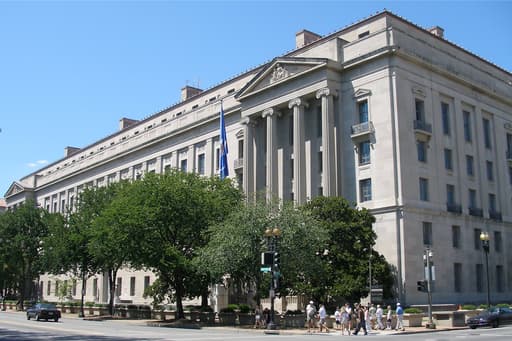
Department of Justice
ORGANIZATION
United States Department of Justice, federal executive department responsible for law enforcement
Federal Bureau of Prisons
ORGANIZATION • 2 mentions
U.S. federal agency responsible for incarceration of federal inmates
Inmate Systems Management
ORGANIZATION
Organization referenced in documents
J&C/PSI
ORGANIZATION
Organization referenced in documents
Legal Department
ORGANIZATION
Legal department
MCC New
ORGANIZATION
Organization referenced in documents
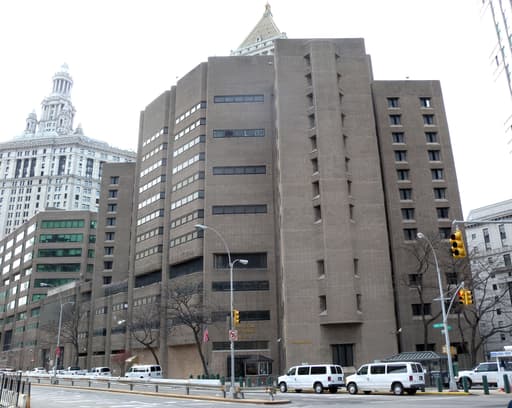
Metropolitan Correctional Center
ORGANIZATION
Metropolitan Correctional Center, New York, federal detention facility where Jeffrey Epstein died on August 10, 2019
Sentry
ORGANIZATION
Security or surveillance company
SIS Office
ORGANIZATION
Organization referenced in documents
Special Housing Unit
ORGANIZATION
Restricted housing unit within the federal prison system
the 40-Hour Drug Program
ORGANIZATION
Organization referenced in documents
the Bureau of Immigration and Customs Enforcement
ORGANIZATION
Organization referenced in documents
the committing Court
ORGANIZATION
Organization referenced in documents
the Counts and Assignments (C&A) Office
ORGANIZATION
Organization referenced in documents
the Discipline Hearing Officer
ORGANIZATION
Organization referenced in documents
the Duty Psychologist
ORGANIZATION
Organization referenced in documents
the Education
ORGANIZATION
Organization referenced in documents
The Health Services Department
ORGANIZATION
Organization referenced in documents
the Laundry Department
ORGANIZATION
Organization referenced in documents

The Recreation Department
ORGANIZATION
Organization referenced in documents
the SIS Office
ORGANIZATION
Organization referenced in documents
the United States Marshals (USM) Service
ORGANIZATION
Organization referenced in documents
the United States Probation Office
ORGANIZATION
Organization referenced in documents
the USM Service
ORGANIZATION
Organization referenced in documents
U.S. Attorney's Office
ORGANIZATION
U.S. federal prosecutors office
U.S. Marshals
ORGANIZATION
Organization referenced in documents
Unit Management
ORGANIZATION
Organization referenced in documents
Unit Manner
ORGANIZATION
Organization referenced in documents
Unit Staff
ORGANIZATION
Organization referenced in documents

Spain
LOCATION
Country in southwestern Europe with territories in Africa

United States
LOCATION
Country located primarily in North America
Statistics
Pages:14
Entities:35
Avg. OCR:0.9%
Sponsored