EFTA00029584 - EFTA00029586
This document is a letter from Scott A. Srebnick, an attorney representing Michael Avenatti, to Judge Paul G. Gardephe, regarding Avenatti's prison conditions as a pretrial detainee in January 2020.
The letter, dated January 20, 2020, requests the Court to inquire into Avenatti's custody status and consider his removal to the general prison population. It describes Avenatti's confinement in the Special Housing Unit on the 10-South of the Metropolitan Correctional Center (MCC) in New York, a high-security floor where El Chapo was once housed. Avenatti's attorney argues that these conditions hinder his ability to prepare for trial.
Key Highlights
- •Avenatti was held in the Special Housing Unit (SHU) at the Metropolitan Correctional Center (MCC) in New York.
- •Scott A. Srebnick, Avenatti's attorney, requests the court to improve Avenatti's prison conditions to allow for effective trial preparation.
- •Avenatti was moved to MCC New York after being detained in Santa Ana, California, for allegedly violating bail conditions.
Frequently Asked Questions
Books for Further Reading

Perversion of Justice: The Jeffrey Epstein Story
Julie K. Brown
Investigative journalism that broke the Epstein case open

Filthy Rich: The Jeffrey Epstein Story
James Patterson
Bestselling account of Epstein's crimes and network

Relentless Pursuit: My Fight for the Victims of Jeffrey Epstein
Bradley J. Edwards
Victims' attorney's firsthand account
Document Information
Bates Range
EFTA00029584 - EFTA00029586
Pages
3
Document Content
Page 1 - EFTA00029584
Case 1:19-cr-00373-PGG Document 176 Filed 01/20/20 Page 1 of 3 LAW OFFICES SCOTT A. SREBNICK, P.A. SCOTT A. SREBNICK. • ALSO ADMITTED IN NEW YORK January 20, 2020 Via ECF Honorable Paul G. Gardephe United States District Judge Thurgood Marshall U.S. Courthouse 40 Foley Square New York, NY 10007 Re: United States v. Avenatti, No. Si 19 Cr. 373 (PGGI Letter Concerning Mr. Avenatti's Prison Conditions Dear Judge Gardephe: 201 S. Bisaynt Boulevard Suite 1210 Miami. Florida 33131 Tab 305-2819019 Fax: 305-377-9937 E-mail: scouesrebnicklaw.com InvW.MbniCklatre.CoM We write to inform the Court of Mr. Avenatti's conditions as a pretrial detainee and to request that the Court inquire into his custody status and direct the Bureau of Prisons to consider his immediate removal to general population. Under Mr. Avenatti's current conditions of confinement, we cannot effectively prepare for trial and Mr. Avenatti cannot meaningfully assist in his defense. As the Court is aware, Mr. Avenatti was remanded into custody last week, at the request of the United States Attorney for the Central District of California, on the theory that Mr. Avenatti violated his bail conditions in the CDCA because of financial transactions that prompted the prosecutors there to claim that he was an "economic danger." There was no allegation that Mr. Avenatti was a risk of flight or that he posed a physical danger to anyone or to himself. On Friday, January 17, 2020, after spending three nights in the Santa Ana jail, under solitary confinement conditions, Mr. Avenatti was flown from California to New York. Since then, he has been housed in the Special Housing Unit on the notorious 10-South of the MCC- New York. It is the most secure floor in the entire facility. He is in a cell reportedly once occupied by El Chapo, on a floor that houses individuals charged with terrorism offenses. He is apparently under special administrative measures (SAMs), which almost completely restricts his communications with the outside world. He has been locked down for 24 hours a day, in solitary confinement, except for attorney visits and two medical exams. There is an officer outside his cell 24 hours a day and two cameras focused on him. Mr. Avenatti was permitted two social calls upon arriving at the facility, but none since. He was told that his classification entitles him to one pre-scheduled social call per month. The temperature in his cell feels like it is in the mid-40s. He is forced to sleep with three blankets. Not surprisingly, he has been having great difficulty functioning. He has not been permitted to shave. We do not know the reason why he has been confuted in the SITU, under SAMs. EFTA00029584
Page 2 - EFTA00029585
Case 1:19-cr-00373-PGG Document 176 Filed 01/20/20 Page 2 of 3 Upon learning that Mr. Avenatti had been moved to MCC-New York, undersigned counsel (Scott Srebnick) traveled to New York early Saturday morning (January 18). That afternoon, Ms. Perry and I visited Mr. Avenatti at the facility. We arrived at 2pm and left just before 7pm. We were required to visit with him in the SHU, not in the legal visiting room on the third floor. The visit was a non-contact legal visit, which means we communicated with Mr. Avenatti through a partition that was part screen / part glass. We were told that such was the protocol of the Special Housing Unit. There was no opening in the glass/screen partition for us to hand Mr. Avenatti documents to review, or for him to make notes on a document, and we were not authorized to do so in any event. Although the officers allowed Mr. Avenatti to review a document at our request at the beginning of our visit, if we wanted him to review any additional documents, it would have required us to disturb the busy officers and have them repeatedly transfer documents back and forth. That was untenable.' While we were told that certain accommodations can be made for inmates in the SHU — at the discretion of legal staff — we were told that legal staff would not return until Tuesday, January 21 (after the holiday), so that no meaningful changes could be made until then (at the earliest). On Saturday night, I communicated with government counsel regarding Mr. Avenatti's situation and have been in regular communication with government counsel throughout the weekend and today. While government counsel have made several inquiries at my request to determine whether any accommodations could be made in the interim, the bottom line is that his conditions have not changed.2 I visited with Mr. Avenatti on Sunday and again today, both times for several hours. Reviewing documents together through the partition is challenging to say the least. It takes many times longer to review documents and make decisions. Needless to say, Mr. Avenatti wants to have an active role in his own defense. That is simply not feasible under these conditions. And, inasmuch as I cannot prepare responses to the various government filings while I am visiting with Mr. Avenatti, the additional time that it takes to visit with him has made it inordinately difficult to deal with the multiple issues in the case. In the meantime, the government has made four additional productions of discovery since Mr. Avenatti was remanded last week. The new discovery apparently includes recordings of Mr. Avenatti's testimony at bar proceedings. Mr. Avenatti has not reviewed any of the new discovery, much less the new recordings, and we have no idea how, when, or under what conditions he will be able to review the new materials. Moreover, we have exchanged with the government drafts of transcripts of the recordings that are at the center of this case — the telephone call and meeting between Mr. Avenatti and the Nike lawyers. We have not yet To be clear, all of the officers at MCC-New York with whom we, and Mr. Avenatti, have interacted have been professional, respectful and courteous. The circumstances we describe herein are not at all a criticism of the corrections officers, but rather a reflection of the reality of his placement in the SHU. 2 The one accommodation is that today I was permitted to leave a small amount (some three inches worth) of the recent discovery with the officers in SHU for them to determine later whether to allow Mr. Avenatti to have the documents in his cell. As I write this letter, I do not know whether he was allowed to review the documents. EFTA00029585
Page 3 - EFTA00029586
Case 1:19-cr-00373-PGG Document 176 Filed 01/20/20 Page 3 of 3 been able to meaningfully review the government's version of the transcripts with Mr. Avenatti and we do not know when he will be able to review those transcripts while simultaneously listening to the recordings. Perhaps we will know more tomorrow, when the legal staff returns. Although, as mentioned earlier, we have been in communication with government counsel to help address these difficult conditions (and counsel has been as helpful as they can be), we bring this matter to the Court's attention today to seek the Court's assistance given the Court's desire — and ours — to commence the trial of this matter as soon as possible. Our principal ask is that Mr. Avenatti be moved to general population, where he has the same ability to confer with counsel as other pretrial detainees. While we understand that there may be hypersensitivity about Mr. Avenatti given the profile of the case, and recent issues at the institution, this situation is truly hampering our ability to prepare for trial. We ask that accommodations be made consistent with his right to a fair trial and to be "afforded reasonable opportunity for private consultation with counsel." 18 U.S.C. §3142(iX3). Specifically, we ask at a minimum that Mr. Avenatti: 1) be allowed to keep legal materials in his cell; 2) have access to a computer, like other pretrial detainees, to review discovery similar to other pretrial detainees; 3) have contact legal visits in the regular attorney visiting room, where we can review documents and freely communicate with him; and 4) have the same social call privileges as detainees in general population so that he can communicate with his family to help make arrangements with third parties to fund his defense. Respectfully, 1s/ Scott A. Srebnick Scott A. Srebnick Jose M. Quinon E. Danya Perry EFTA00029586
Entities Mentioned
EP
E. Danya Perry
PERSON
Name reference in documents
EC
El Chapo
PERSON
Mexican drug lord, referenced in Epstein-related media coverage documents
GA
Gardephe
PERSON
Surname reference in documents
JQ
Jose M. Quinon
PERSON
Person referenced in documents
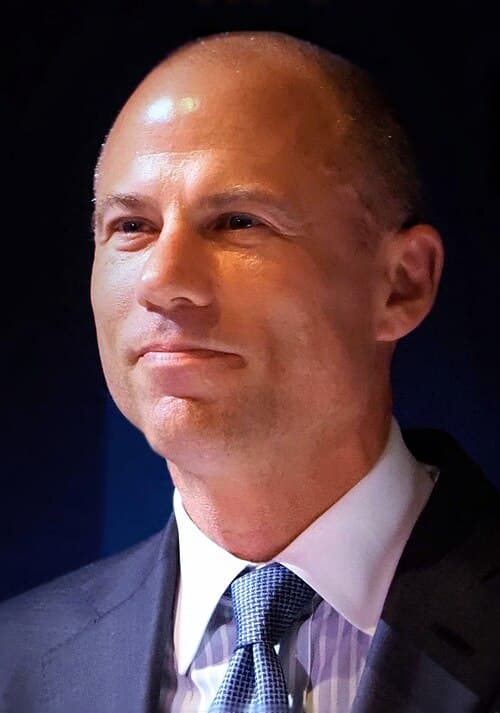
Michael Avenatti
PERSON
American attorney
PG
Paul G. Gardephe
PERSON
Person referenced in documents
SS
Scott A. Srebnick
PERSON
Person referenced in documents
Thurgood Marshall
PERSON
Associate Justice of the Supreme Court of the United States from 1967 to 1991 (1908–1993)
Federal Bureau of Prisons
ORGANIZATION
U.S. federal agency responsible for incarceration of federal inmates
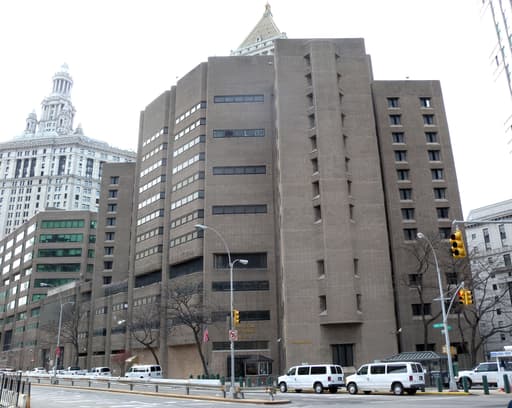
Metropolitan Correctional Center
ORGANIZATION
Metropolitan Correctional Center, New York, federal detention facility where Jeffrey Epstein died on August 10, 2019
Special Housing Unit
ORGANIZATION
Restricted housing unit within the federal prison system

Santa Ana
LOCATION
City in El Salvador
the Central District of California
LOCATION
Location referenced in documents
Statistics
Pages:3
Entities:13
Avg. OCR:0.9%
Sponsored