EFTA00028003 - EFTA00028025
Document EFTA00028003 is a declaration by Maureen P. Baird, a former employee of the Federal Bureau of Prisons, submitted to THE WESTMINSTER MAGISTRATES' COURT.
The document is a declaration from Maureen P. Baird, who worked for the Department of Justice and Federal Bureau of Prisons from 1989 to 2016, and served as Warden at multiple correctional facilities. Baird provides her expert opinion based on her experience, possibly in response to declarations submitted by others in relation to a case involving Julian Paul Assange. The declaration touches upon the operations policies of the Bureau of Prisons and the Communication Management Unit at USP Marion.
Key Highlights
- •Maureen P. Baird declares her experience as a former Warden at multiple Federal Correctional Institutions.
- •The document references Julian Paul Assange as the other party in the case.
- •The declaration is related to the operations and policies of the Bureau of Prisons.
Frequently Asked Questions



Document Information
Bates Range
EFTA00028003 - EFTA00028025
Pages
23
Document Content
Page 1 - EFTA00028003
IN THE WESTMINSTER MAGISTRATES' COURT BETWEEN: THE GOVERNMENT OF THE UNITED STATES OF AMERICA -v- JULIAN PAUL ASSANGE DECLARATION OF MAUREEN P. BAIRD I, MAUREEN P. BAIRD, hereby declare under penalty of perjury the following: 1. From March 1989 through September 2016, I was employed by the Department of Justice, Federal Bureau of Prisons, and served in many capacities. My last three positions held were; Warden, Federal Correctional Institution, (FCI) Danbury, Connecticut (2009-2014), Senior Executive Service (SES) Warden, Metropolitan Correctional Center (MCC), New York (2014-2016), and SES Warden, United States Penitentiary, (USP), Marion, Illinois (2016-Retired). 2. In my capacity as Warden, at these institutions, I was responsible for the overall operation and entire components of each prison. I am fully knowledgeable of the operations policies of the Bureau of Prisons, (BOP) and very specifically familiar with the operations of the Communication Management Unit at USP Marion. 3. Since my retirement from the Bureau of Prisons, I have maintained contact with many former colleagues. I have kept abreast of new policies and laws that directly impact the Bureau of Prisons. Since early 2017, I have worked as an independent prison consultant and have provided expert witness testimony. 1 EFTA00028003
Page 2 - EFTA00028004
4. A copy of my resume which includes my relevant work experience has been provided to Counsel in this case. 5. I was contacted by Mr. Assange's solicitors and asked to provide a declaration focused on topics within my expertise in response to the Declaration submitted by Dr. Administrator of the Psychology Services Branch of the Bureau of Prisons, dated August 24th 2020 and the Fourth Supplemental Declaration o Assistant United States Attorney, Alexandria, Virginia, dated September 3nd 2020. I was asked to provide my expert opinion as someone who worked many years in the same federal prison system as Dr I will provide my opinion based on my experience regarding conditions of confinement in the Bureau of Prisons for inmates assigned Special Administrative Measures (SAMs), offenders assigned to the Communications Management Unit (CMU), and inmates housed in solitary/isolation/restrictive housing units. 6. In preparation for this declaration, in addition to the Declaration of D andal, I also reviewed previously submitted Declarations prepared by dated January 17'h 2020 and February 19th 2020 as well as two Affidavits submitted by Justice Advocacy Group, LLC, Alexandria, Virginia, the Affidavit a, Attorney, New York, New York and two Statements of Attorney, Washington, DC dated and 18ih October 2019 and 18th July 2020 7. I am advised, Mr. Assange is pending extradition to the United States for his alleged criminal activity charging: Conspiracy to Receive National Defense Information, Obtaining National Defense Information, Disclosure of National Defense Information, 2 EFTA00028004
Page 3 - EFTA00028005
and Conspiracy to Commit Computer Intrusion. If a conviction of these charges results in the United States, he faces a potential lengthy sentence without the possibility of parole. Declaration talSeptember 3rd, 2020) Special Administrative Measures 8. In reviewing documents, he makes several references to the possibility of Mr. Assange being placed under Special Administrative Measures, (SAMs), authorized by the Attorney General and implemented by the wardens of the facility where the offender is housed. As the former Warden of MCC New York, which housed SAMs inmates pending trial in the Southern District of New York, I am very familiar with the restrictions which accompany a SAMs Order. I agree, in part, with the information provided specifically, his description of SAMs and the usual restrictions placed on an offender under SAMs. The restriction of social visits, telephone calls, correspondence, access to other inmates, and placement in a restrictive form of housing is commonplace for SAMs inmates. 9. In the Affidavits prepared he provides in great detail, the effects and outcome of SAMs imposed on inmates. I agree with the references and the accurate descriptions provided by in his affidavits regarding the effects of SAMs on inmates and the conditions of confinement associated with these measures. 10. In his Fourth Supplemental Declaration dated September 3rd 2020, challenges some of the assertions regarding SAMs provided by For anyone to suggest that an inmate assigned under SAMs, would be able to participate in group 3 EFTA00028005
Sponsored
Page 4 - EFTA00028006
counseling is baffling to me. The main premise of assigning SAMs, is to restrict a person's communication and the only way to accomplish this is through isolation. For example lists a variety of programs available to inmates assigned to the ADX. I don't doubt all of these programs exist, but I believe they are available only to a select group of inmates housed at that facility. Even if the Warden, Unit Team, Lieutenant or Captain wanted to allow SAMs inmates to participate in certain group programs, they do not have the legal authority to sanction such an action. All of these robust programs which says are available, they would be meaningless and non-existent to l. if he were assigned under SAMs. There may be certain courses/programs available to inmates assigned SAMs, but I believe all of those would be some type of self-study, which could be completed by an inmate, housed alone in his prison cell. 11. Inmates assigned SAMs, whom I had responsibility for, were always housed alone, in the most restrictive housing unit, more isolated than what most individuals would deem solitary confinement to be. During my 18-months at MCC New York, I conducted, at a minimum, weekly tours of the 10-South housing unit, where SAMs inmates were confined. Inmates were in solitary confinement, technically, for 24-hours per day. There was absolutely no communication, by any means, with other inmates. The only form of human interaction they encountered was when correctional officers opened the viewing slot during their inspection rounds of the unit, when institution staff walked through the unit during their required weekly rounds, or when meals were delivered through the secure meal slot in the door. One-hour recreation was offered to inmates in this unit each day; however, in my experience, often times an inmate would decline this opportunity 4 EFTA00028006
Page 5 - EFTA00028007
because it was much of the same as their current situation. The recreation area, in the unit, consisted of a small barren indoor cell, absent any exercise equipment. During my tenure at MCC New York, I had a stationary exercise bicycle placed in the designated recreation cell. I am uncertain if that bicycle is still in place. 12. As with most restrictive housing units within the federal prisons, there is a limited list of commissary items for inmates to purchase on their designated shopping day. The products available for purchase are much more condensed than the commissary items available to inmates in a general population housing unit. Telephone calls to immediate family members were allowed once per month; however, as with any SAMs inmate, the call must be scheduled in advance and coordinated through BOP staff and agents from the Federal Bureau of Investigation (FBI). All telephone calls must be live monitored by an FBI agent. Similar telephone calls, the inmate's limited social visits with immediate family members also required live audio monitoring by the FBI. The vast majority of inmates under SAMs at MCC New York, were not United States citizens, nor did their families reside in this Country. This made it very difficult for their families to visit and due to the time differences, difficult to arrange for telephone calls. 13. There are two very differing views presented by anauly 16, 2020, Affidavit, Section 50-51), with regard to an inmate's due process rights to challenge SAMs. I would agree with stance, that application of SAMs, in a legal sense, affords the opportunity for inmates to challenge its implementation, but it is likely more of a circular argument. Inmates are required to receive notification of the restrictions and the basis for SAMs at the time of initial implementation and again when restrictions are being renewed. In his January 17, 2020, Declaration, section 99,M 5 EFTA00028007
Page 6 - EFTA00028008
states an inmate may challenge the SAMs through the GOP's Administrative Remedy Program. During my 28 years with the BOP, there were times that I was responsible for responding to Administrative Remedies. With certainty, I declare, for the purpose of challenging a SAMs, it would be a futile process. The BOP exercises no controUjurisdiction over SAMs imposed by the Attorney General. Wardens are bound to abide by the SAMs imposed on an inmate. An inmate's only possibility of having his SAMs reconsidered, would be for him to exhaust the Administrative Remedy process, so he could file a motion with the Court. 14. also points out in section 66, of his Fourth Supplemental Declaration, that inmates' First Amendment rights are not violated under SAMs. He provides the example that these inmates' have access to "free-flowing incoming and outgoing mail." As I explain in my report, all mail for inmates classified under SAMs, is carefully reviewed prior to ever reaching the intended recipient. Regardless of how innocuous something may appear, if it does not meet with the approval of the reviewer, for any reason, that piece of mail will be immediately rejected. 15. provides in his Declaration the avenues for inmates to object to any SAMs renewal. He advises an inmate will meet with his unit team and the supervising law enforcement agency case agent, where he will be afforded the opportunity to present evidence and/or discuss issues and provide information indicating there is no need to extend SAMs, or why a modification to the restrictions are justified. The information is compiled by the case manager and forwarded to the Warden through the institution's legal department. All of this, in most cases, is an exercise in futility where a recommendation for continued SAMs is involved. As a former senior executive of the 6 EFTA00028008
Sponsored
Page 7 - EFTA00028009
BOP, I do not know of any warden who would recommend discontinuing SAMs at the possible risk of serious harm to others resulting or the potential for threats to national security. It is not realistic and I can say with near certainty, it is not going to happen. 16. Likewise, in other scenarios suggested bA as avenues of appeal available for an inmate, they are futile. He advises an inmate can object to his SAMs during his twice-yearly unit team reviews, initial classification review, and when his progress report is being prepared by his case manager. Having been a case manager for several years, early on in my BOP career, it is unrealistic to think these avenues would provide anything more than an outlet for an inmate under SAMs to vent his frustration. A case manager may listen to his concerns: however, even if the case manager believed a change in status was warranted, there is no possible way, that they would initiate a recommendation for removal of the restricted measures. This type of recommendation is far above their authority of a case manager or any member of an inmate's unit team. 17 asserts these SAMs are imposed in, "up to one year" increments, with the time-requirements the same for any extension beyond one year. During my term as Warden at MCC New York, I have never seen an inmate have SAMs removed, only extended. 18 states that SAMs are not imposed for punitive reasons, but rather to minimize a threat to national security or for other reasons not applicable in this case. By strict definition of SAMs, it is correct to state it is not punitive, but the effects and consequences of these administrative measures through my experience, are tortuous for the recipient, and while technically not intended, feel punitive to those who have these measures enforced upon them. Placement in this type of isolation, for any extended time 7 EFTA00028009
Page 8 - EFTA00028010
period is dehumanizing. In my opinion, any person with a conscience and an ounce of compassion, would believe these extreme tactics utilized for any reason are cruel and inhuman. Humane prison conditions, in my psyche, require more than just providing basic necessities such as; food, clothing, shelter, medical care and safety to an inmate. 19. In his Fourth Supplemental Declaration, in section, 67 implies that as long as these basic needs are met, there is not a violation of an inmate's Eighth Amendment rights. As a human being, and secondly, a warden, I had to justify in my own mind, that this form of treatment against another, was out of necessity. I would rationalize for myself, that because, I did not make the decision on who was subjected to SAMs, I had no control over the implications and effects of these extreme measures. Inmates under SAMs would often ask me why they were being punished so severely. The majority of inmates I encountered under SAMs, were charged with an act of terrorism against the United States. However, regardless of the criminal charges levied against them, all SAMs inmates endured identical conditions. There was not a section for terrorists and a separate section for large-scale drug offenders. I is extradited and subjected to SAMs, he will be treated similarly to all other prisoners under SAMs. I have witnessed first-hand, these unduly harsh conditions experienced by inmates under SAMs. 20. I know from my time at MCC New York, as Warden, even if I wanted to make concessions, as a way to make living conditions more humane, I was restricted from doing so. Small concessions, such as adding items to the commissary list for certain holidays, was within my purview, however; the things that were substantial and mattered, those things which could make a real difference, were not within my authority. 8 EFTA00028010
Page 9 - EFTA00028011
Florence ADX 21. In section 28, of his Fourth Supplemental Declaration,-accurately states prison designations (post-sentencing), are decided by the BOP and many factors go into the decision on where an offender will serve his sentence. As a former Designator for the BOP, I clearly understand all the factors considered when determining placement for a sentenced inmate. It is also my belief, asa states, the BOP's philosophy is to secure inmates in the least restrictive environment commensurate with an inmate's security needs. The problem with those inmates that are assigned SAMs, there are limited choices. If the inmate isn't gravely ill, requiring placement at a Federal Medical Center, regardless of the length of sentence, or any other factors, as suggested by!. I don't believe there are other options, except for placement at the ADX. As provides in his second Affidavit dated July 16, 2020, if a conviction results an' is assigned SAMs, he will very likely be housed in the Special Security Unit (H Unit), at the ADX facility. I would agree witlaassessment that if convicted could potentially spend the remainder of his life in this very restrictive housing unit, where he would be deprived of some very basic human needs. 22 provides several exhibits which depict the desolate and degrading conditions associated with placement at the ADX for an inmate who has imposed SAMs. In one example, (Exhibit 13, Affidavit ofl , dated July 16, 2020), quoted one former ADX Warden as stating, how the ADX Superrnax Prison is a "Fate Worse Than Death", that was "Not Built For Humanity". former Warden of the ADX and previous collegue of mine, was a very respected and relied upon, BOP Administrator. 9 EFTA00028011
Sponsored
Page 10 - EFTA00028012
23. In section 45, o Fourth Supplemental Declaration, he states that inmates incarcerated in H Unit at the ADX have the opportunity to participate in a multi- phase program, that was designed primarily for inmates under SAMs. His summary is absent any detail or description of what this program actually is. Based on what he provided, I interpreted his portrayal of the "Program," as the actual Special Security Housing Unit and not really a program at all. Any program involvement that would encompass other inmates, would not only violate the conditions of SAMs, it would defy the entire reasoning and intent of the assigned administrative measures. 24. In section 102, of his first Declaration, and in sections 28-29 of his fourth Supplemental Declaration suggests not all inmates, post-conviction, who are under SAMs, are housed at the Administrative Maximum Security United States Penitentiary, (ADX), Florence, Colorado. He provides that if medically necessary, a SAMs offender may be housed at a federal medical facility. He further contends, most inmates subject to SAMs are housed at the ADX, but there may be circumstances that warrant housing elsewhere. As someone who spent the majority of her adult life working for the BOP and as a former Designator, who decided where inmates would serve their sentences, absent a medical requirement, or a protected Witness Security Case, I am not familiar with any alternative long-term options, aside from the ADX, for offenders under SAMs. Federal Medical Centers, in my experience, are reserved for the very ill inmates, usually those who have a life-threatening illness that requires on-going medical treatment not available at other federal prisons. These medical facilities may also have an in-patient psychiatric/mental health unit designed to house inmates who suffer from severe mental illness. 10 EFTA00028012
Page 11 - EFTA00028013
25. In the affidavit of she provides a very detailed account of the experience of her client, Mostafa Kamel Mostafa, who is currently incarcerated at the ADX, assigned to H-Unit, with SAMs assigned. I reviewed her Affidavit and based on my experience with the BOP, especially my time spent as Warden at MCC New York, I find her descriptive account of what life has been like for her client, Mr. Mostafa to be believable and credible. 26. I arrived to MCC New York in 2014, after being promoted to Senior Executive Service Warden from my former position as Warden of the FCI Danbury federal prison. I had not previously worked at a facility where inmates assigned SAMs were housed. I clearly remember Mr. Mostafa through my meetings with him during my rounds of the 10-South SAMs Unit. I remember he was disabled, having gone through a bilateral amputation of both forearms. I recall how difficult it was for him to attend to his basic hygiene needs and how isolation in the 10-South unit was having detrimental effects on his mental well- being. Until recently, I did not know that Mr. Mostafa was serving a life sentence at the ADX and that SAMs was still in place in his case. 27. provides a history of the legal challenges Mr. Mostafa has experienced and provides a correlation to his conditions of confinement and that which would be experienced by Mr. Assange, if extradited and placed under SAMs by the Attorney General. I agree with her description of the devastating effects caused by isolation as a result of SAMs. Similar to everything I previously provided in this report regarding SAMs, she also provides in her statement. To describe the setting of the ADX and MCC New York for inmates assigned to prolonged SAMs as unduly harsh, is an understatement. In section 34 of her Affidavit,IMMprovides the findings of the 11 EFTA00028013
Page 12 - EFTA00028014
High Court of Justice, Queen's Bench Division, specifically comments regarding the High Court's views on a lengthy period of incarceration at the ADX in isolation. 28. The conditions of confinement experienced by Mr. Mostafa as outlined in detail in- _' Affidavit, are the same conditions shared by other inmates who are assigned under SAMs. Should Mr. Assange be extradited to the United States and assigned SAMs, his fate will be equal to that of Mr. Mostafa. I am uncertain how the BOP has been able to continue with these types of isolation units, given all the studies, reports and findings of the horrific physical and psychological effects they have on inmates. 29. With the Court's decision in Cunningham v. Federal Bureau of Prisons, generated by inmates at the ADX and further explained in great detail in report, some accommodations have been made to help negate the effects of long- term isolation on an inmates' emotional well-being. This decision does not contribute to the well-being of those offenders under SAMs. As I explained throughout my report, the very premise of SAMs is to prevent their contact with the outside world and especially, with other inmates. Communications Management Unit 30. There are extensive discussions in declarations and Affidavits regarding the possibility of a Communication Management Unit (CMU) placement for Mr. Assange, if a conviction results in the charges against him. There are two federal prisons which have a CMU, the United States Penitentiary (USP) Marion, Illinois and the USP Terre Haute, Indiana. I was the Warden for a brief time at the Marion facility and was responsible for overseeing the CMU at that institution. 12 EFTA00028014
Sponsored
Page 13 - EFTA00028015
31 an provide very detailed descriptions of CMUs and each offer their opinions about these types of prison environments. CMUs are a separate prison within a prison, where almost every aspect of their prison life occurs within that housing unit. I believe both individuals provide valid assessments of certain aspects of the CMUs; however, I accept description as more closely depicting the realities and accuracies of these types of restrictive housing units. CMUs are not as restrictive as the conditions associated with an inmate assigned under SAMs, but they are far more limited than what is available at a mainline institution. At the Marion prison, a small outdoor recreation area is available to the inmates; however, it does not remotely offer the same exercise or recreational accommodations found at a regular prison facility. There are tables set up in the outdoor recreation cages, where inmates can participate in board or card games. There is limited space for outdoor walking and short of walking in circles, or a short horizontal pattern, it is difficult for an inmate to engage in any meaningful and healthy outdoor exercise. 32. Contrary tol lassertion, inmates in CMUs are not afforded the same opportunities as those available to inmates in general population, to communicate with others, outside of the prison environment. Similar to the restrictive measures of SAMs, all outside communication of these inmates must be live monitored by an FBI agent. All telephone calls need to be scheduled in advance and an agent must be available to listen and record any call with an inmate's family members. This is not as easily accomplished as it appears. Agents are not always available on certain days or at certain times, and the inmate's counselor must also be available to coordinate any telephone calls. All 13 EFTA00028015
Page 14 - EFTA00028016
incoming and outgoing mail is carefully scrutinized before delivery to the intended recipient. 33.I laccurately describes how social visiting in CMUs is limited and restrictive in comparison to inmates in general population at other BOP facilities. Programs within CMU's are also very limited and do not offer the same opportunities as those afforded to inmates housed in the general population of the main section of the institution. During my regular weekly rounds of the Marion CMU, I often had a barrage of complaints from these inmates pertaining to the absolute boredom they experienced and lack of meaningful programs in the unit. 34. The majority of inmates I encountered in the CMU, similar to what depicts, were convicted of domestic and international terrorist crimes, violent crimes against others, threatening public officials and sometimes associated with anti-government groups. The English language was not the first language of the majority of the inmates in this unit, some did not speak English and Arabic was primarily the language in which they conversed. A large contingent of these inmates were Muslim and some would only associate with other inmates of the same ethnic and religious background. 35. Both aadescribe how inmates can appeal their placement in a CMU. As correctly points out, an inmate has the ability to challenge the CMU decision through the GOP's Administrative Remedy Program. This four-tiered, mainly internal, appeals process has various requirements, and is arduous and lengthy, as suggested by. It often results in a denial of whatever remedy the inmate is requesting. I would confidently state that it is unlikely any inmate has ever been successful in his appeal to be transferred out of the CMU. Inmates in the CMU receive 14 EFTA00028016
Page 15 - EFTA00028017
bi-annual Program Reviews, which are informal, scheduled meetings where they meet with members of their unit team and discuss amongst other things, their continued placement in the CMU. As Warden, I would meet with the CMU unit team staff and discuss each case to determine if we believed there was a continued need for these types of restrictive measures. A recommendation was then forwarded from the Warden to the GOP's Counter-Terrorism Unit and finally to the GOP's Assistant Director of Correctional Programs, for a final decision. During my assignment at USP Marion, I recall only one time, where I made a recommendation for an inmate to be transferred out of the CMU, but that recommendation was met with a denial. I do not recall any inmate ever being transferred out of the CMU, other than a transfer to the sister-CMU at the USP Terre Haute. Every individual must determine for themselves, if these procedures afford an inmate due process or it is just a circumstance of which an inmate has no control or recourse. Declaration of Dr.M idated August 24th 2020 36. In her Declaration, Dr provides a detailed overview of mental health services offered in the BOP. She accurately describes the types of inmates the BOP houses and provides a plethora of programs offered to the inmate population through the institutions' Psychology Services Departments. 37. Dr. criticizes the findings made by regarding psychologists staffing levels throughout the BOP. She points out the BOP was recently authorized and has started to recruit for 48 new psychologist positions. I believe the BOP is well- intended on hiring additional psychologists to fill these vacancies. The problem, which Dr. does not mention, is the difficulty the BOP has in recruiting qualified 15 EFTA00028017
Sponsored
Page 16 - EFTA00028018
mental health professionals. Psychologist positions have always been considered "hard to fill positions" in the BOP, presenting a significant challenge for the Agency. Psychologists in the communities are often not interested in working in a prison environment, the salaries offered are lower than what is offered in the private sectors, and many federal prisons are located in very rural areas, all making a job as a psychologist with the BOP, unattractive and difficult to successfully recruit. Often times, the Agency would offer sign-on bonuses as a means to capture the attention of prospective psychologists. Dr. believes the GOP's staffing level of psychologists is adequate and improving. I would only agree with Dr. summation, if and when, the BOP hires all of these new psychologists, and fills most of their current vacant mental health staff positions, which will likely not occur anytime soon, or ever. For purposes of the current staffing conditions, I find the information presented by is accurate and realistic. 38. With regards to staffing levels in the BOP in general, there are opposing views between and The numbers with respect to staff to inmate ratios are fluid and the BOP continues in their quest to recruit qualified staff. The Agency is currently offering a 10% retention bonus for corrections officers at specific "hard-to-fill" locations. The federal prisons in Florence, Colorado, including the ADX are on this list with 16 other federal facilities. I II, in section 16 of his most recent Supplemental Declaration refers to how all BOP staff, with the exception of a few, are considered law enforcement and receive identical training as correctional officers. While technically accurate, some of these staff have not received specific correctional officer training since they began their careers several years ago. In his second Affidavit, in 16 EFTA00028018
Page 17 - EFTA00028019
section 13, provides a very detailed and accurate explanation of how the BOP handles staff shortages. The BOP utilizes this system of "Augmentation", throughout the country on a regular basis. In my view, the BOP is continues to operate federal prisons, while dangerously under-staffed. Position vacancies have been an ongoing challenge for many years, and I see no quick resolution to this problem. 39. The Office of the Inspector General (OIG) (Exhibit 5 in Second Statement of • 1, criticized the BOP's staffing levels in their July 2017 Review of the Federal Bureau of Prisons' Use of Restrictive Housing for Inmates with Mental Illness Report. The OIG report demonstrated how the BOP was understaffed in mental health services and not meeting the treatment needs of inmates with mental illness. The BOP's standard is to have one psychologist for every 500 assigned inmates. Institutions reviewed during OIG's inspection, fell significantly short in meeting this standard. As of October 2015, during a time I was still employed with the BOP, the OIG found that only 57% of its authorized Psychiatrist positions were filled. This Report further offers a detailed description regarding the psychological damage and effects long term isolation can have on inmates. 40. Dr. and both refer to the 2014 report, Federal Bureau of Prisons: Special Housing Unit Review and Assessment. In my opinion, the findings of the report stand for themselves. Dr. implies in section 37, of her Declaration, that inmates are content at the ADX. She bases this assumption solely on inmates not wanting to transfer to another federal prison. In my years of working in the prisons, inmates would often express to me, they did not want to be transferred to another prison, as just the idea of a transfer, to an unknown destination was in itself, anxiety-provoking 17 EFTA00028019
Page 18 - EFTA00028020
and frightening. Remaining at their current prison, regardless of the conditions experienced, was a better option than having to start the process over again at a prison which could end up being worse. 41. A variety of programs are provided in Dr. Declaration, many of which I am familiar with, having worked in many federal prisons during my career and three Regional Offices. No doubt the BOP offers some viable inmate programs, including residential programs, especially those available to inmates with mental health concerns. There are specific programs designed to address Mr. Assange's diagnoses of Depression, Anxiety, Asperger's Syndrome and others. The problem with this, as Dr. also points out, is that some of these specialized residential programs, such as the Skills Program are only offered at a limited number of federal prisons. The Skills Program is offered at the Federal Correctional Institution, Danbury, Connecticut and the Federal Correctional Complex, Coleman, Florida. The security levels of these institutions are Low and Medium Security, respectively. Mr. Assange would not qualify for placement at either of these institutions, as he would likely be classified as a High Security Level offender, making him ineligible for placement at Danbury or Coleman. 42. Irrespective of all of these programs available to inmates in the BOP, if a SAMs assignment were placed on Mr. Assange, the restrictions which accompany this, will rule out any possibility for him to engage in such activities and programs. The SAMs will override the need for programs and will dictate what is allowed for Mr. Assange during any period of incarceration. Safety and security will always be the primary goal of the Agency and all other matters are secondary. 18 EFTA00028020
Sponsored
Page 19 - EFTA00028021
43. Dr. makes reference to the psychological assessments of two medical professionals who purported Mr. Assange would be an extreme high risk for suicide, if he were extradited. I have reviewed these assessments, and similar to the concerns expressed by the medical professionals, Mr. Assange's mental health and continuous thoughts of harming himself are very troubling. All staff receive training on how to respond to potentially suicidal inmates; however, we realize if a person wants to commit suicide or in the course of events leading up to suicide, the individual changes their mind, it unfortunately in most cases is too late, and the person is unable to be revived. The example of August 2019 suicide of Jeffrey Epstein, at the MCC New York, comes to mind. 44. Suicides in prison often occur in solitary confinement and during pre-trial status. With the likelihood of Mr. Assange being housed in solitary confinement, he would be at greater risk for suicide and/or self-harm. There are cameras on the ranges of the Unit, but, as with the case of Jeffrey Epstein, those cameras malfunction, are not always operable or left unattended. 45. If an instance occurred where Mr. Assange was in the act of committing suicide, staff in a restrictive housing unit cannot render immediate assistance and would need to wait until more staff arrive at the scene. It takes time for staff to respond to an emergency and they are prohibited for their own safety, from entering the cell until enough staff are present. The outcome would likely result in the death of death of Mr. Assange. 46. I do agree with Dr. that the BOP has a robust suicide prevention program and employs dedicated staff to treat offenders who present with mental health concerns. If extradited to the United States, it is paramount that Mr. Assange's psychiatric reports 19 EFTA00028021
Page 20 - EFTA00028022
transfer with him, (these reports are not always provided by the transferring agency). These reports would allow staff to be aware of his mental health history. During the intake screening process, upon entering any federal facility, one of the prison psychologists would assess him, through a series of questions, and determine Mr. Assange's risk of suicide. This is where the systems of safeguard have proven not to be effective. One of the primary tools utilized in a suicide assessment is the reliance on an inmate to self-report in a truthful manner how he is feeling. When inmates are dishonest about their suicide intentions, and they often are, (as in the case of Jeffrey Epstein), other cues to determine the risk of self-harm may be missed which could result in a dire outcome. If the assessment determines there is a present risk of taking his life, he would be placed on suicide watch. Individuals who are on suicide watch, remain in that status until the risk of suicide has significantly subsided. 47. As a former warden, I've personally had the unfortunate experience of receiving that phone call, informing me of an inmate's successful suicide. In two of the cases I recall, although other inmates were aware of the individuals' propensity and plans for suicide, they failed to report it to staff. This could have made the difference between life or death for those inmates. Regardless of how robust the Bureau of Prisons' Suicide Prevention Program is, the Agency cannot prevent someone who is intent on committing suicide, and too often inmates slip through the cracks. 48. Further in her Declaration, Dr. provides a summation of when the BOP utilizes restrictive housing for inmates and the reasons why an inmate would be placed in this type of restrictive setting. She states the obvious reasons, such as the need to curtail the actions of violent or aggressive inmates; however, she also infers restrictive housing is 20 EFTA00028022
Page 21 - EFTA00028023
utilized for inmates who are deemed a security threat or for those who cannot be safely housed with other inmates in general population. This is a catch-all phrase that allows for BOP staff to place any offender in restrictive housing based on their belief of any safety concern. 49. An offender, with criminal conduct similar to Mr. Assange would be placed in restrictive housing, regardless of any SAMs assignment, upon his arrival at every federal prison throughout his entire term of imprisonment. The length of time he would remain in this restrictive setting is impossible to predict. There have been many studies, investigations, reports completed on the effects of prolonged placement in isolation. I have even referenced an OIG report in this Declaration, which discusses this subject at length. From my experience, of close to three decades of working in federal prisons, I would agree that long term isolation can have serious negative effects on an inmate's mental health. There are very limited programs offered to inmates in these restrictive settings, including mental health programs. There may be occasional one-on-one intervention with a mental health professional, but often that intervention will take place by attempting to communicate through a steel door or the food slot built into the door. With the limited number of Psychology Staff, time simply does not permit any type of extensive individualized counseling with inmates in restrictive housing. It would take a minimum of two staff, and sometimes more, depending on the security and custody level of the inmate, to shackle the inmate, unlock his cell and escort him to another secure location. If psychologists were to engage in this type of counseling, they would spend their entire shift focusing solely on this limited group of inmates. It is not feasible to expect that, especially given the already high demands of their caseloads, coupled with a 21 EFTA00028023
Sponsored
Page 22 - EFTA00028024
shortage of psychology staff as well as psychology staff being utilized to fill in for vacant correctional officers' posts. 50. All of these policies which effect how the BOP manages and cares for mentally ill inmates are specific and thorough. However, policies, regardless of how meaningful and well-intended they are, for the reasons cited in the last paragraph, are not always carried- out and coincide with what occurs in actual practice. Declaration of Truth and Continuing Duty to Court 51. I understand that my primary duty is to the Court. I have complied with that duty and will continue to comply with that duty. I have set out in my statement what I understand from those instructing me to be the issues in respect of which my opinion as an expert is required. All the matters on which I have expressed an opinion are within my field of expertise. 52. I have done my best, in preparing this statement, to be accurate and complete. I have mentioned all matters that I regard as relevant to the opinions I have expressed. 53. I have not included in this statement, anything which has been suggested to me by anyone, including lawyers instructing me, without forming my own independent view of the matters. At the time of signing the statement, I consider it to be complete and accurate. I will notify those instructing me if, for any reason, I subsequently consider that the report requires any correction or qualification. 54. I understand that this report will be evidence that I would be prepared to give under oath, subject to any correction or qualification I may make before swearing to its veracity. I confirm that I have made clear which facts and matters referred to in this report are within my own knowledge and which are not. Those that are in my own knowledge I 22 EFTA00028024
Page 23 - EFTA00028025
confirm to be true. The opinions I have expressed represent my true and complete professional opinions on the matter to which they refer. 55. I, Maureen Baird, attest under penalty of perjury that, on this 11th day of September 2020, this document is true and accurate to the best of my knowledge, information, and belief. ek• _ Sa stawt,,D Maureen P. Baird 23 EFTA00028025
Entities Mentioned
AD
Administrator
PERSON
Name reference in documents
CO
Coleman
PERSON • 2 mentions
Surname reference in Epstein documents
CU
Cunningham
PERSON
Ambiguous surname reference in Epstein documents

Jeffrey Epstein
PERSON • 3 mentions
American sex offender and financier (1953–2019)
MB
MAUREEN P. BAIRD
PERSON
Name reference in documents
MO
Mostafa
PERSON
Surname reference in documents
MM
Mostafa Kamel Mostafa
PERSON
Name reference in documents

Virginia Giuffre
PERSON
Advocate for sex trafficking victims (1983–2025)
a Federal Medical
ORGANIZATION
Organization referenced in documents

Assange
ORGANIZATION
Australian editor, publisher, and activist (born 1971)
Counter-Terrorism Unit
ORGANIZATION
Organization referenced in documents

Department of Justice
ORGANIZATION
United States Department of Justice, federal executive department responsible for law enforcement
FBI
ORGANIZATION
Federal Bureau of Investigation, domestic intelligence and security service of the United States
FCI Danbury
ORGANIZATION
Organization referenced in documents
Federal Bureau of Prisons
ORGANIZATION • 2 mentions
U.S. federal agency responsible for incarceration of federal inmates
Federal Correctional Institution
ORGANIZATION
Government agency

High Court of Justice
ORGANIZATION
Organization referenced in documents
Justice Advocacy Group, LLC
ORGANIZATION
Organization referenced in documents
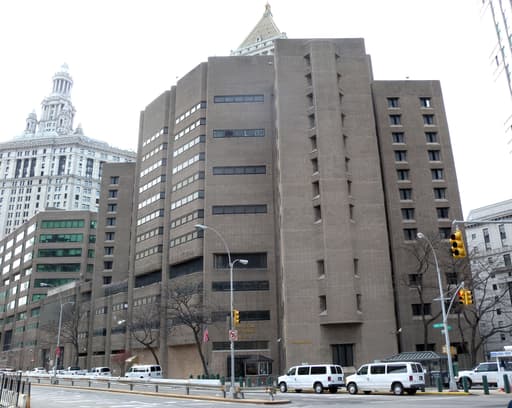
Metropolitan Correctional Center
ORGANIZATION
Metropolitan Correctional Center, New York, federal detention facility where Jeffrey Epstein died on August 10, 2019
Psychology Services Departments
ORGANIZATION
Organization referenced in documents
Psychology Staff
ORGANIZATION
Organization referenced in documents
Queen's Bench Division
ORGANIZATION
Organization referenced in documents
THE GOVERNMENT OF THE UNITED STATES OF AMERICA
ORGANIZATION
Organization referenced in documents
the MCC
ORGANIZATION
Organization referenced in documents

the Office of the Inspector General
ORGANIZATION
Organization referenced in documents
The Skills Program
ORGANIZATION
Organization referenced in documents
THE WESTMINSTER MAGISTRATES' COURT
ORGANIZATION
Organization referenced in documents
USP Marion
ORGANIZATION
Organization referenced in documents

Alexandria
LOCATION
City in Egypt

Colorado
LOCATION
State of the United States of America
Danbury
LOCATION • 2 mentions
City in Fairfield County, Connecticut, United States

Florence
LOCATION
Italian city and commune, located in Tuscany

India
LOCATION
State of the United States of America
Terre Haute
LOCATION
City in Indiana

Washington D.C.
LOCATION
Capital city of the United States of America
Statistics
Pages:23
Entities:35
Avg. OCR:0.9%
Sponsored