EFTA00014077 - EFTA00014081
Document EFTA00014077 is a legal document from the United States District Court for the Southern District of Florida, concerning a case (08-80736-CIV-MARRA/JOHNSON) involving a petitioner, Jane Doe, seeking enforcement of her rights under the Crime Victims Rights Act (CVRA) in relation to Jeffrey Epstein.
The document is the government's response to Jane Doe's emergency petition. It argues that there is no 'court proceeding' under 18 U.S.C. § 3771(b) because Jeffrey Epstein has not been formally charged with a federal statute in the Southern District of Florida, even though he was charged with felony solicitation of prostitution in Florida state court. The document also references an ongoing federal investigation into Epstein. This document highlights the legal complexities and victim rights issues surrounding the Jeffrey Epstein case, particularly concerning the Crime Victims' Rights Act.
Key Highlights
- •Concerns Jane Doe's petition for enforcement of rights under the Crime Victims Rights Act (CVRA).
- •Involves Jeffrey Epstein and his alleged offenses.
- •The U.S. Attorney's Office argues there's no 'court proceeding' under federal law because Epstein hasn't been federally charged in this district.
Frequently Asked Questions
Related Links
Books for Further Reading
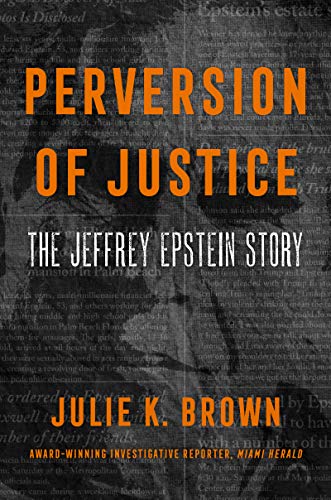
Perversion of Justice: The Jeffrey Epstein Story
Julie K. Brown
Investigative journalism that broke the Epstein case open

Filthy Rich: The Jeffrey Epstein Story
James Patterson
Bestselling account of Epstein's crimes and network

Relentless Pursuit: My Fight for the Victims of Jeffrey Epstein
Bradley J. Edwards
Victims' attorney's firsthand account
Document Information
Bates Range
EFTA00014077 - EFTA00014081
Pages
5
Document Content
Page 1 - EFTA00014077
UNITED STATES DISTRICT COURT SOUTHERN DISTRICT OF FLORIDA CASE NO. 08-80736-CIV-MARRA/JOHNSON IN RE: JANE DOE, Petitioner. GOVERNMENT'S RESPONSE TO VICTIM'S EMERGENCY PETITION FOR ENFORCEMENT OF CRIME VICTIM RIGHTS ACT, 18 U.S.C. § 3771 The United States of America, by and through its undersigned counsel, files its Response to Victim's Emergency Petition for Enforcement of Victim Rights Act, 18 U.S.C. § 3771, and states: I. THERE IS NO "COURT PROCEEDING" UNDER 18 U.S.C. § 3771(b) Petitioner complains that she has been denied her rights under the Crime Victims Rights Act, 18 U.S.C. § 3771. In the emergency petition filed by the victim, she alleges the Government has denied her rights since she has received no consultation with the attorney for the government regarding possible disposition of the charges (18 U.S.C. § 3771(a)(5)); no notice of any public court proceedings (18 U.S.C. § 3771(a)(2)); no information regarding her right to restitution (18 U.S.C. § 3771(a)(6)); and no notice of rights under the Crime Victim Rights Act (CVRA). Emergency Petition, ¶ 5. The instant case is unique in several respects. First, in 2006, Jeffrey Epstein was charged with felony solicitation of prostitution in the Circuit Court of the Fifteenth Judicial Circuit, Palm Beach County, Florida. This charge was based upon the offenses alleged in paragraph 1 of the petition. Second, while Epstein has been under federal investigation, he has not been charged in the Southern District of Florida. Title 18, U.S.C., section 3771(b)(1) provides in pertinent part that, "[ijn any court proceeding involving an offense against a crime victim, the court shall ensure that the crime victim is afforded the rights described in subsection (a)." There is no "court proceeding" in the instant case since Epstein has not been charged with violation of any federal statute. No federal grand jury indictment has been returned, no has any criminal information been filed. In her memorandum, petitioner relies upon In Re Dean , 527 F.3d 391 (5 a Cir. 2008), where the Fifth Circuit held that the CVRA required the government to "confer in some reasonable way with the victims before ultimately exercising its broad discretion." Id. at 395. In Dean , the government sought and obtained an ex parte order permitting it to negotiate a plea agreement with BP Products North America, without first consulting with the victims, individuals injured and survivors of those killed in a refinery explosion. A plea agreement was ultimately negotiated and the victims objected. The appellate court found that the CVRA granted a right to confer. However, the court declined to grant mandamus relief for prudential reasons, finding that the district EFTA00014077
Page 2 - EFTA00014078
court had the benefit of the views of the victims who chose to participate at the hearing held on whether the plea agreement should be accepted. Id. at 396. Dean is distinguishable because the government ultimately filed federal criminal charges in that case. In contrast, no charges have been filed in district court. The only "court proceeding" that has occurred is the one in state court. Petitioner argues that "the plain language of the CVRA extends victims' rights to situations `in which no prosecution is underway.'" Petition at 5, citing 18 U.S.C. § 3771(d)(3). Section 3771(d)(3) provides, in pertinent part, that: The rights described in subsection (a) shall be asserted in the district court in which a defendant is being prosecuted for the crime or, if no prosecution is underway, in the district court in the district in which the crime occurred ... This provision does not set forth when rights under CVRA accrue, but only designates the venue in which enforcement of any rights may occur. Congress has provided a venue for the assertion of purported rights under the CVRA, but because it provided for a venue for instances where no prosecution is underway, does not mean it intended to grant such rights. Certain rights granted under 18 U.S.C. 3771(a) likely do apply prior to the initiation of a federal criminal proceeding, such as the right to be reasonably protected from the accused (§ 3771(a)(1)), and the right to proceedings free from unreasonable delay (§ 3771(a)(7)). It is also clear that other rights in § 377I(a) only apply after criminal proceedings have been initiated, since they refer to a "public court proceeding" or "public proceeding." § 3771(a)(2), (3), and (4). Whether § 3771(a)(5), the reasonable right to confer with the attorney for the Government in the case, applies in cases where a federal criminal proceeding is neither commenced nor even contemplated, can only be answered by looking to the text in § 3771(a), not the enforcement provision in § 3771(d)(3). Nothing in § 3771(a)(5) supports the petitioner's claim that she had a right to be consulted before the Government could enter into a non-prosecution agreement which defers federal prosecution in exchange for state court resolution of criminal liability, and a significant concession on an element of a claim for compensation under 18 U.S.C. § 2255. II. THE GOVERNMENT HAS USED ITS BEST EFFORTS TO COMPLY WITH 18 U.S.C. § 3771(a) The Epstein case was investigated initially by the Palm Beach Police Department in 2006. Exhibit A, Declaration of Assistant United States Attorney ¶ 2. Subsequently, the Palm Beach Police Department sought the assistance of the Federal Bureau of Investigation (FBI). Id. Throughout the investigation, when a victim was identified, victim notification letters were provided to the victim by both the FBI Victim-Witness Specialist and AUSA Id. , 1 3. Petitioner's counsel, Brad Edwards, Esq., currently represents and M. The victim notification letter to was hand-delivered by FBI agents. EFTA00014078
Page 3 - EFTA00014079
The letter to:M was hand-delivered by AUSA to her when she was interviewed in 2007. Throughout the investigation, AUSA and the FBI's Victim-Witness Specialist had contact with Decl., ¶ 4. Earlier in the investigation, a was represented by James Eisenberg, Esq. Consequently, all contact with was made through Mr. Eisenberg. In mid-2007, Epstein's attorneys approached the U.S. Attorney's Office in an effort to resolve the federal investigation. At that time, Mr. Epstein had been charged by the State of Florida with solicitation of prostitution, in violation of Florida Statutes § 796.07. Mr. Epstein's attorneys sought a global resolution of this matter. The United States subsequently agreed to defer federal prosecution in favor of prosecution by the State of Florida, so long as certain basic preconditions were met. One of the key objectives for the Government was to preserve a federal remedy for the young girls which Epstein had sexually exploited. Thus, one condition of that agreement, notice of which was provided to the victims on July 9, 2008, is the following: "Any person, who while a minor, was a victim of a violation of an offense enumerated in Title 18, United States Code, Section 2255, will have the same rights to proceed under Section 2255 as she would have had, if Mr. Epstein had been tried federally and convicted of an enumerated offense. For purposes of implementing this paragraph, the United States shall provide Mr. Epstein's attorneys with a list of individuals whom it was prepared to name in an Indictment as victims of an enumerated offense by Mr. Epstein. Any judicial authority interpreting this provision, including any authority determining which evidentiary burdens if any a plaintiff must meet, shall consider that it is the intent of the parties to place these identified victims in the same position as they would have been had Mr. Epstein been convicted at trial. No more; no less." The Attorney General Guidelines for Victim and Witness Assistance (May 2005), Article IV, Services to Victims and Witnesses, provides the following guidance for proposed plea agreements: (3) Proposed Plea Agreements. Responsible officials should make reasonable efforts to notify identified victims of, and consider victims' views about, prospective plea negotiations. In determining what is reasonable, the responsible official should consider factors relevant to the wisdom and practicality of giving notice and considering views in the context of the particular case, including, but not limited to, the following factors: (a) The impact on public safety and risks to personal safety. (b) The number of victims. (c) Whether time is of the essence in negotiating or entering a proposed plea. (d) Whether the proposed plea involves confidential information or conditions. (e) Whether there is another need for confidentiality. (0 Whether the victim is a possible witness in the case and the effect that relaying any information may have on the defendant's right to a fair trial. EFTA00014079
Sponsored
Page 4 - EFTA00014080
Throughout negotiations, Epstein's attorneys claimed that one reason victims came forward and pressed their claims was their desire for money. They argued that victims might have an inducement to fabricate or enhance their testimony, in order to maximize their opportunities to obtain financial recompense. The Government was extremely concerned that disclosure of the proposed terms would compromise the investigation by providing Epstein the means of impeaching the victim witnesses, should the parties fail to reach an agreement. In light of the fact (i) that the United States agreed to defer prosecution to a previously filed state criminal case; (ii) that as a result sentencing would take in state court before a state judge; (iii) that if the state resolution failed to meet minimum standards such that a federal prosecution was warranted, the victims would be witnesses and thus potential impeachment issues were of concern; and, (iv) the United States was already making efforts to secure for victims the right to proceed federally under 18 U.S.C. § 2255, even if prosecution took place in state court, the Government determined that its actions in proceeding with this agreement best balanced the dual position of the Jane Does as both victims and potential witnesses in a criminal proceeding. On Friday, June 27, 2008, at approximately 4:15 p.m., AUSA received a copy of the proposed state plea agreement, and learned the plea hearing was scheduled for Monday, June 30, 2008, at 8:30 a.m. Decl., ¶ 8. AUSA the FBI agents, and the Palm Beach Police Department, all attempted to provide notification to the victims. Id. AUSA called attorney Edwards to provide notice to his clients regarding the hearing. AUSA did this, even though she had no obligation to provide notice of a state court hearing. Mr. Edwards advised that he could not attend but that someone would be present at the hearing. Id. The Government has complied with 18 U.S.C. § 3771(c)(1) by using its best efforts to "see that crime victims are notified of, and accorded, the rights described in subsection (a)." Specifically, petitioner was afforded the reasonable right to confer with the attorney for the Government under 18 U.S.C. § 3771(a)(5). Disclosure of the specific terms of the negotiation were not disclosed prior to a final agreement being reached because the Government believed doing so would jeopardize and prejudice the prosecution in the event an agreement could not be made. Insofar as notice of any public court proceedings under 18 U.S.C. § 3771(a)(2), petitioner's counsel was notified on June 27, 2008, of the plea hearing in state court on June 30, 2008. Section 3771(d)(6) provides, in relevant part, that "[n]othing in this chapter shall be construed to impair the prosecutorial discretion of the Attorney General or any officer under his direction." The Government exercised its judgment and discretion in determining that there was a need for confidentiality in the negotiations with Epstein. The significant benefit of obtaining Epstein's concession that victims suing him under 18 U.S.C. EFTA00014080
Page 5 - EFTA00014081
§ 2255(a) were "victims" of the enumerated offenses, despite the fact he has not been convicted in federal court, was of sufficient importance to justify confidentiality of the negotiations. Petitioner's rights under the CVRA have not been violated. Therefore, her emergency petition should be denied. EFTA00014081
Entities Mentioned
BE
Bradley Edwards
PERSON • 3 mentions
Wikimedia disambiguation page
EI
Eisenberg
PERSON
Family name
JD
Jane Doe
PERSON
2001 album by Converge

Jeffrey Epstein
PERSON • 4 mentions
American sex offender and financier (1953–2019)
BP Products North America
ORGANIZATION
FBI
ORGANIZATION

Fifth
ORGANIZATION
THE CIRCUIT COURT OF THE FIFTEENTH JUDICIAL CIRCUIT
ORGANIZATION

The Palm Beach Post
ORGANIZATION
Daily newspaper in West Palm Beach, Florida
U.S. Attorney's Office
ORGANIZATION
Statistics
Pages:5
Entities:10
Avg. OCR:0.9%
Sponsored