EFTA00013976 - EFTA00013984
Document EFTA00013976 is a legal petition filed in the Southern District of Florida.
The document is a Victim's Petition for Enforcement of Crime Victim's Rights Act filed by Jane Doe against Jeffrey Epstein. It alleges that Epstein committed federal crimes, including sex trafficking of children, and that plea negotiations were underway with the U.S. Attorney's Office for the Southern District of Florida. The petition aims to assert Jane Doe's rights as a victim under the CVRA.
Key Highlights
- •Jane Doe files a petition against Jeffrey Epstein for alleged sex trafficking and related crimes.
- •The petition references ongoing plea negotiations between Epstein and the Office of the United States Attorney for the Southern District of Florida.
- •Bradley Edwards from THE LAW OFFICE OF BRAD EDWARDS & ASSOCIATES, LLC represents the Petitioner, Jane Doe.
Frequently Asked Questions
Books for Further Reading
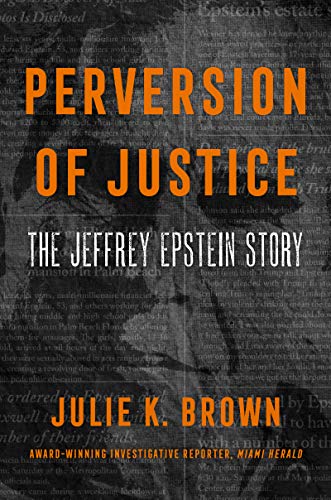
Perversion of Justice: The Jeffrey Epstein Story
Julie K. Brown
Investigative journalism that broke the Epstein case open

Filthy Rich: The Jeffrey Epstein Story
James Patterson
Bestselling account of Epstein's crimes and network
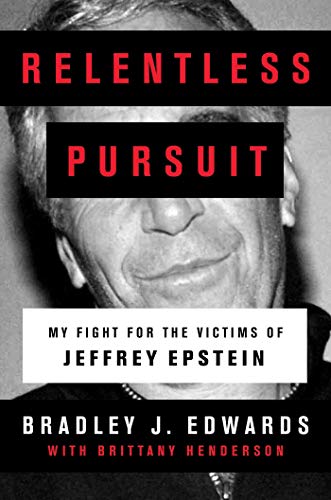
Relentless Pursuit: My Fight for the Victims of Jeffrey Epstein
Bradley J. Edwards
Victims' attorney's firsthand account
Document Information
Bates Range
EFTA00013976 - EFTA00013984
Pages
9
Document Content
Page 1 - EFTA00013976
UNITED STATES DISTRICT COURT SOUTHERN DISTRICT OF FLORIDA CASE NO.: IN RE: JANE DOE, Petitioner. VICTIM'S PETITION FOR ENFORCEMENT OF CRIME VICTIM'S RIGHTS ACT, 18 U.S.0 . SECTION 3771 COMES NOW the Petitioner, JANE DOE (hereinafter "Petitioner"), by and through her undersigned attorneys, pursuant to the Crime Victim's Rights Act, 18 U.S.C. Section 3771 ("CVRA"), and files this Petition for Enforcement in the above styled action as follows: 1. Petitioner, an adult, as a minor child was a victim of federal crimes committed by JEFFREY EPSTEIN (hereinafter "Defendant"). These crimes included sex trafficking of children by fraud, in violation of 18 U.S.C. § 1591, use of a means of interstate commerce to entice a minor to commit prostitution, in violation of 18 U.S.C. § 2422, as well as wire fraud, in violation of 18 U.S.C. § 1343. The Defendant committed these crimes within the jurisdiction of the Southern District of Florida in Palm Beach County, Florida. 2. Upon information and belief, the Defendant is the subject of a federal criminal investigation conducted by the United States of America in the Southern District of Florida. The Defendant has recently been prosecuted and pleaded guilty, on June 30, 2008, in the Circuit Court for Palm Beach County to various similar state offenses including solicitation of minors for prostitution. 3. Upon information and belief, the Defendant is engaged in plea negotiations with the Office of the United States Attorney for the Southern District of Florida concerning federal i EFTA00013976
Page 2 - EFTA00013977
crimes which he is alleged to have committed against minor children, including the Petitioner. Such negotiations may likely result in a disposition of the charges in the next several days. 4. Under the CVRA, before any charges are filed against the Defendant, the Petitioner has the rights (among others) to notice of her rights under the CVRA, to confer with the prosecutors, and to be treated with fairness. As soon as charges are filed, the Petitioner has the rights (among others) to timely notice of court proceedings, the right not to be excluded from such proceedings, the right to be heard at such public proceedings regarding conditions of release, any plea, and any sentence, the right to confer with the attorney for the government, the right to restitution, and the right to be treated with fairness and with respect for her dignity and privacy. 5. The Petitioner has been denied her rights in that she has received no consultation with the attorney for the government regarding the possible disposition of the charges, no notice of any public court proceedings, no information regarding her right to restitution, and no notice of rights under the CVRA, as required under law. 6. The Petitioner is in jeopardy of losing her rights, as described above, if the government is able to negotiate a plea or agreement with the Defendant without her participation and knowledge. WHEREFORE, for the reasons outlined above, the Petitioner respectfully requests this Court to grant her Petition, and to order the United States Attorney to comply with the provisions of the CVRA prior to and including any plea or other agreement with the Defendant and any attendant proceedings. 2 EFTA00013977
Page 3 - EFTA00013978
MEMORANDUM I. THE CRIME VICTIMS' RIGHTS ACT MAKES CRIME VICTIMS INDEPENDENT PARTICIPANTS THROUGHOUT THE CRIMINAL JUSTICE PROCESS. In October 2004, Congress passed and the President signed into law the Crime Victims' Rights Act, Pub. L. No. 108-405, 118 Stat. 2251 (codified at 18 U.S.C. § 3771). Because this appears to be the first case involving the Act to come before this Court, a bit of background may be in order. A. The CVRA Gives Crime Victims Rights to Participate in the Criminal Justice Process. Congress passed the CVRA "to give crime victims enforceable rights to participate in federal criminal proceedings." Opinion at 14. Congress was concerned that in the federal system crime victims were "treated as non-participants in a critical event in their lives. They were kept in the dark by prosecutors too busy to care enough ... and by a court system that simply did not have a place for them." 150 CONG. REC. S4262 (Apr. 22, 2004) (statement of Sen. Feinstein). To remedy this problem, Congress gave victims "the simple right to know what is going on, to participate in the process where the information that victims and their families can provide may be material and relevant ... ." Id. The CVRA gives victims of federal crimes a series of rights, including the right to notice of court proceedings, to be heard at plea and sentencing hearings, and to reasonably "confer with the attorney for the Government in the case." 18 U.S.C. § 3771(a). Victims also have a "right of access to the terms of a plea agreement ... ." In re Interested Party 1, 530 F.Supp. 2d 136, 2008 WL 134233 at *7 (D.D.C. 2008). The CVRA also assures victims broadly that they will "be treated with fairness." 18 U.S.C. § 3771(a)(8). 3 EFTA00013978
Sponsored
Page 4 - EFTA00013979
Of course, these rights would be of little use to most crime victims unless they were told about them. To ensure that victims are notified of their rights, the CVRA directs employees of the Justice Department "and other departments and agencies of the United States engaged in the detection, investigation, or prosecution of crime" to use their "best efforts to see that crime victims are notified of... the rights described [in the CVRA]." 18 U.S.C. § 3771(c)(l) (emphasis added).1 B. The CVRA Gives Victims Rights During the Investigation of a Crime. The CVRA gives victims rights during the investigation of a crime. The Fifth Circuit recently reached this conclusion, holding: The district court acknowledged that "[t]here are clearly rights under the CVRA that apply before any prosecution is underway." BP Prods., 2008 WL 501321 at *11, 2008 U.S. Dist. LEXIS 12893, at *36. Logically, this includes the CVRA's establishment of victims' "reasonable right to confer with the attorney for the Government." 18 U.S.C. § 3771(a)(5). At least in the posture of this case (and we do not speculate on the applicability to other situations), the government should have fashioned a reasonable way to inform the victims of the likelihood of criminal charges and to ascertain the victims' views on the possible details of a plea bargain. In re Dean, 527 F.3d 391, 394 (5'h Cir. 2008). The position that CVRA rights apply before charges have been filed is consistent with the Justice Department regulations under the CVRA, which explain that government officials "must advise a victim [about their rights under the CVRA] ... at the earliest opportunity at which it may be done without interfering with an investigation." A.G. GUIDELINES FOR VICTIM AND WITNESS Further supporting this requirement is another statute, 42 U.S.C. § 10607(c)(3), which directs government officials to provide victims with "the earliest possible notice of," among other things, "the filing of charges against a suspected offender." 4 EFTA00013979
Page 5 - EFTA00013980
ASSISTANCE 23 (May 2005). And the plain language of the CVRA undergirds this conclusion, as it applies not simply to prosecutors but to government agencies "engaged in the detection [and] investigation ... of crime ... ." 18 U.S.C. § 3771(c)(1). Indeed, if there were any doubt, the plain language of the CVRA extends victims' right to situations "in which no prosecution is underway." 18 U.S.C. § 3771(d)(3). II. PETITIONER IS A "VICTIM PROTECTED BY THE CVRA. Under the CVRA the crime victim is defined as "a person directly and proximately harmed as a result of the commission of a Federal offense ... ." 18 U.S.C. Section 3771(e). In particular, Defendant called Petitioner when she was a minor over a telephone (a means of interstate communication) requesting that she perform a massage in exchange for payment. As Defendant well knew, that request was fraudulent, as he not only intended to receive a massage, but also intended to have her perform sexual acts in exchange for a cash payment to Petitioner. Only when Petitioner arrived at a Defendant's mansion as directed by Defendant, did Defendant reveal his true purpose of obtaining sexual favors in exchange for payment. This conduct violated 18 U.S.C. § 2422, which forbids using a means of interstate commerce to knowingly "induce" or "entice" a minor "to engage in prostitution." In addition, this conduct was both a use of "fraud" to obtain a commercial sex act, in violation of 18 U.S.0 § 1591, and use of wire communications to perpetrate a "scheme and artifice to defraud," in violation of 18 U.S.C. § 1343. It appears obvious that Petitioner was "directly and proximately" harmed by these crimes, thereby making her a victim under the CVRA. It should be emphasized that the CVRA "was designed to be a `broad and encompassing' statutory victims' bill of rights." United States v. 5 EFTA00013980
Page 6 - EFTA00013981
Degenhardt, 405 F.Supp.2d 1341, 1342 (D. Utah 2005) (quoting 150 Cong. Rec. S4261 (daily ed. Apr. 22, 2004) (statement of Sen. Feinstein)). Congress intended the CVRA to dramatically rework the federal criminal justice system. In the course of construing the CVRA generously, the Ninth Circuit observed: "The criminal justice system has long functioned on the assumption that crime victims should behave like good Victorian children -- seen but not heard. The Crime Victims' Rights Act sought to change this by making victims independent participants in the criminal justice process." Kenna v. U.S. Dist. Court for C.D. Cal., 435 F.3d 1011, 1013 (9th Cir. 2006). Accordingly, because the CVRA is remedial legislation, courts should interpret it "liberally to facilitate and accomplish its purposes and intent." Elliott Industries Ltd. Partnership v. BP America Production Co., 407 F.3d 1091, 1118 (10th Cir. 2005) (noting remedial legislation should be "interpreted liberally to facilitate and accomplish its purposes and intent"). The CVRA itself suggests this conclusion by requiring that courts must treat crime victims with "fairness." United States v. Patkar, 2008 WL 233062 at •3 (D. Haw. 2008) (citing United States v. Turner, 367 F.Supp.2d 319, 335 (E.D.N.Y. 2005)). Not only must the CVRA as a whole be interpreted liberally, but its definition of "crime victim" requires a generous construction. After reciting the direct-and-proximate-harm language at issue here, one of the Act's two co-sponsors -- Senator Kyl -- explained that "[t]his is an intentionally broad definition because all victims of crime deserve to have their rights protected ." 150 Cong. Rec. 510912 (Oct. 9, 2004) (emphasis added). The description of the victim definition as "intentionally broad" was in the course of floor colloquy with the other primary sponsor of the CVRA and therefore deserves significant weight. See Kenna, 435 F.3d at 1015-16 (discussing significance of CVRA sponsors= floor statements). 6 EFTA00013981
Sponsored
Page 7 - EFTA00013982
The definition of "crime victims" must thus be construed broadly in favor of Petitioner. She obviously qualifies as a "victim" under the CVRA. III. PETITIONER IS ENTITLED TO NOTICE OF HER RIGHTS, AN OPPORTUNITY TO CONFER WITH THE PROSECUTORS AND TO BE TREATED WITH FAIRNESS. Because Petitioner is a "victim" under the CVRA, she has certain protected rights under the Act. Most important, the Act promises that she will have an opportunity to "confer with the attorney for the Government in the case." To date, Petitioner has not been given that right. This raises that very real possibility that the Government may negotiate and conclude a plea agreement with the Defendant without giving Petitioner her protected rights.2 Petitioner is entitled to have this conference with prosecutors before any final plea agreement is reached. The Fifth Circuit reached exactly this conclusion in a very recent case. In In re Dean, 527 F.3d 391 (5th Cir. 2008), the Government negotiated a plea agreement with the well-heeled corporate defendant without conferring with the victims. When the Government's failure was challenged in the Fifth Circuit, the Fifth Circuit concluded that the Government had indeed violated the CVRA. The Fifth Circuit observed: "In passing the [CVRA], Congress made the policy decision-which we are bound to enforce-that the victims have a right to inform the plea negotiation process by conferring with prosecutors before a plea agreement is reached." Id. at 394. This Court is obligated to protect the rights of Petitioner. The CVRA directs that "[i]n any court proceeding involving an offense against a crime victim, the court shall ensure that the 2 On information and belief, roughly the same crimes were committed against several other young females. These victims, too, are in danger of losing their right to confer under the CVRA. 7 EFTA00013982
Page 8 - EFTA00013983
crime victim is afforded the rights described in [the CVRA]." 18 U.S.C. § 3771(b)(1). The CVRA also confers on crime victims the right to "assert the rights described in [the CVRA]." 18 U.S.C. § 3771(d)(1). Therefore, this Court has its own independent obligation to intercede and ensure that the Government respects the rights of Petitioner under the CVRA. CONCLUSION The Petitioner requests the intervention of this Court to ensure that her rights are respected and accorded, as promised in the Crime Victims' Rights Act. DATED this 7th day of July, 2008. Respectfully Submitted, THE LAW OFFICE OF BRAD EDWARDS & ASSOCIATES, LLC Brad Edwards, Esquire Attorney for Petitioner Florida Bar 4542075 Hollywood, Florida 33020 Telephone: Facsimile: 8 EFTA00013983
Page 9 - EFTA00013984
CERTIFICATE OF SERVICE I HEREBY CERTIFY that a true and correct copy of the above and foregoing has been provided by United States mail and via facsimile to: l AUSA, United States Attorney's Office Florida 33401, this 7th day of July, 2008. West Palm Beach, Brad Edwards, Esquire Attorney for Petitioner Florida Bar No. 542075 9 EFTA00013984
Entities Mentioned

Albert Einstein
PERSON
German-born theoretical physicist (1879–1955)
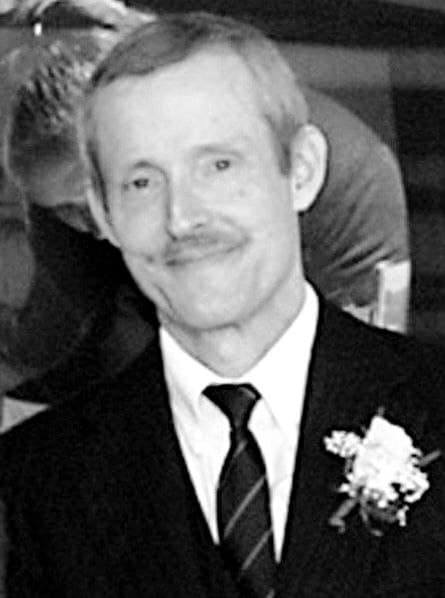
Bradley Edwards
PERSON
American attorney who represented Epstein victims, author of Relentless Pursuit
DE
Degenhardt
PERSON
Surname reference in documents
JD
Jane Doe
PERSON
Pseudonym for anonymous victims/witnesses in Epstein legal proceedings

Jeffrey Epstein
PERSON
American sex offender and financier (1953–2019)
Kenna
PERSON
Surname reference in Epstein-related documents
PA
Patkar
PERSON
Surname reference in documents
5'h Cir.
ORGANIZATION
Organization referenced in documents
BP America Production Co.
ORGANIZATION
Organization referenced in documents
BP Prods.
ORGANIZATION
Organization referenced in documents
D. Haw.
ORGANIZATION
Organization referenced in documents
Elliott Industries Ltd.
ORGANIZATION
Organization referenced in documents
Florida Bar
ORGANIZATION
Florida Bar, professional organization for attorneys in Florida
THE LAW OFFICE OF BRAD EDWARDS & ASSOCIATES, LLC
ORGANIZATION
Organization referenced in documents
the Ninth Circuit
ORGANIZATION
U.S. federal appeals court
the Office of the United States Attorney for the Southern District of Florida
ORGANIZATION
Organization referenced in documents

U.S. Dist.
ORGANIZATION
Organization referenced in documents
Statistics
Pages:9
Entities:17
Avg. OCR:0.9%
Sponsored