EFTA00009676 - EFTA00009712
Document EFTA00009676 is an Attorney's Guide to the Metropolitan Correctional Center (MCC) in New York, dated April 2008.
This guide provides information for attorneys regarding pretrial detention procedures at the MCC New York, including legal visiting hours, telephone calls, legal mail, inmate legal activities, and health services. It also covers administrative remedy programs, inmate designations, and miscellaneous information such as religious programs and personal property. The document is intended to help attorneys navigate the regulations and processes of the MCC.
Key Highlights
- •Details legal visiting procedures, including attorney processing and identification requirements.
- •Explains the process for unmonitored telephone calls and the Inmate Telephone System (ITS).
- •Outlines regulations for legal mail, including FedEx and UPS deliveries.
- •Provides information on inmate legal activities, such as access to the law library and computerized discovery materials.
- •Describes health services available to inmates, including sick call and emergency care.
Frequently Asked Questions
Books for Further Reading

Perversion of Justice: The Jeffrey Epstein Story
Julie K. Brown
Investigative journalism that broke the Epstein case open

Filthy Rich: The Jeffrey Epstein Story
James Patterson
Bestselling account of Epstein's crimes and network

Relentless Pursuit: My Fight for the Victims of Jeffrey Epstein
Bradley J. Edwards
Victims' attorney's firsthand account
Document Information
Bates Range
EFTA00009676 - EFTA00009712
Pages
37
Document Content
Page 1 - EFTA00009676
U.S. Department of Justice ATTORNEY'S GUIDE TO THE METROPOLITAN CORRECTIONAL CENTER NEW YORK, NEW YORK APRIL 2008 EFTA00009676
Page 2 - EFTA00009677
TABLE OF CONTENTS I. INTRODUCTION 1 A. Address 1 B. Telephone Numbers 1 C. Bureau of Prisons' Web Address 2 II. PRETRIAL DETENTION 3 A. Legal Visiting 3 1. Visiting Hours 3 2. Attorney Processing 4 3. Identification 4 4. Property Brought Into the Visiting Room S 5. Private Conference Rooms 6 6. Multiple Client Visits 6 7. Dress Code 7 8. Legal Representatives 7 9. Polygraphs 8 10. Depositions 8 11. Separation Assignment/Co-Defendant Meetings 9 12. Foreign Attorneys 10 13. Social Visiting 10 B. Telephone Calls 10 1. Unmonitored Telephone Calls 10 2. Inmate Telephone System (ITS) 11 3. Emergency Telephone Calls 12 C. Legal Mail 12 1. Legal Mail Envelopes 12 2. Legal Mail Packages 13 3. FedEx and UPS 13 4. Stamps 13 5. Court Clothing 14 6. Mail for Multiple Defendants 14 D. Release of Records/Information 14 1. Subpoenas 14 2. Medical Records 15 E Inmate Legal Activities 15 1. Law Library 15 2. Access to Computerized Discovery Materials 16 3 Leisure Library 16 4. Service of Process 16 F. Administrative Remedy Program 17 G. Inmate Designations 18 Court Ordered Studies 19 H. Health Services 19 1. Sick Call 19 2. Emergency Care 19 3. Medication 19 4. Independent Medical Exams 20 5. Visits with Inmates in Hospital 20 I. Special Housing Unit 20 J. Miscellaneous 21 1. Religious Programs 21 2. Food Service 21 3. Inmate Commissary 21 4. Marriage 22 5. Personal Property 22 6. Admission and Orientation Handbook 22 ATTACHMENTS Attachment A-Application to Enter Institution as Representative Form Attachment B-National Crime Information Center Form EFTA00009677
Page 3 - EFTA00009678
I. INTRODUCTION The Metropolitan Correctional Center, in New York, New York (MCC New York), is owned and operated by the Federal Bureau of Prisons (Bureau), an agency of the United States (U.S.) Department of Justice. The primary mission of MCC New York is to serve federal courts in the Southern and Eastern Districts of New York by providing pretrial detention in conjunction with the U.S. Marshals Service (USMS). This guide outlines the relevant policies and procedures applicable to attorneys representing defendants incarcerated at MCC New York. The procedures cover issues such as legal visiting, attorney-client communication, and release of information. A. Address 1. Mailing address Staff: Staff Name and Title MCC New York Metropolitan Correctional Center 150 Park Row New York, NY 10007 B. Telephone Numbers 1. MCC New York Main Number 2. Legal Department Inmates: Inmate Name and Reg. No. MCC New York Metropolitan Correctional Center 150 Park Row New York, NY 10007 (646) 836-6300 Because all calls must be cleared through the Control Center for security purposes, direct extensions are not allowed to be disseminated. The legal department is comprised of two staff attorneys and an administrative assistant. Legal Dept. Fax No. Page 1 of 22 EFTA00009678
Sponsored
Page 4 - EFTA00009679
C. Bureau The web address Locator, Bureau documents under of Prisons' Web Address is http://www.bob.clov. You can access the Inmate Program Statements, and procedures for requesting the Freedom of Information Act. Page 2 of 22 EFTA00009679
Page 5 - EFTA00009680
II. PRETRIAL DETENTION MCC New York staff are aware of the importance of the institution's pretrial detention mission. MCC New York staff are expected to act in a professional manner and are governed by a code of employee conduct. Attorneys who feel that they have been treated unprofessionally by a staff member are asked to put their complaint in writing to the Warden's Office, MCC New York, 150 Park Row, New York, NY 10007. All complaints will be looked into and appropriate action will be taken if necessary. In turn, our staff appreciate the professionalism and courtesy expected from attorneys and other officers of the court. Attorneys are expected not only to abide by the Attorney Guide, but generally to act in a professional manner. In addition, all visitors are expected to refrain from using profanity and keep their voices at a conversational level when speaking with staff, inmates and other visitors. All visitors, including attorneys, are prohibited from using cell phones within the institution, including the lobby. All visitors, including attorneys, who violate MCC New York's visiting rules, create disturbances at the institution or in any way jeopardize the security or orderly operation of the institution may have their visiting privileges restricted or suspended. The information contained in this Guide is meant to be a general guideline and is not all-inclusive. We cannot envision every circumstance that could occur, and thus the Guide does not contain the answers to all questions. For example, in the event of an institution emergency, security needs of the institution will override any portion of this Attorney Guide. A. Legal Visiting 1. Visiting Hours Legal visitation hours are as follows: Monday-Sunday (including Federal Holidays) 8:00 a.m. - 7:00 p.m. Visits during these hours do not need to be scheduled in advance. Special legal visits outside of these hours may be requested through MCC New York's Legal Department with at least 24 hours notice (The Legal Department is open Monday-Friday 7:30 a.m.- 4:00 p.m. so a request for Monday must be in b the receding Friday). Requests should be faxed to: " , Attn: Legal Department." Every effort will be made to accommodate such requests, but final approval is contingent upon the Page 3 of 22 EFTA00009680
Page 6 - EFTA00009681
availability of staff. In the event an attorney requires an emergency visit outside normal legal visiting hours and has not pre-requested it, he/she must contact the Operations Lieutenant. If there is any problem with a legal visit during off duty hours, attorneys should ask to speak with the Institution Duty Officer or Operations Lieutenant. 2. Attorney Processing MCC New York conducts a daily count of all inmates at 4:00 p.m., with an additional count at 10:00 a.m. on Saturdays, Sundays and federal holidays. Additional unscheduled counts may also occur in emergencies. During a count, inmates must be at their assigned cell or bunk, unless the inmate has been authorized to be in another area. In order to guarantee an accurate count, a request that an inmate remain in the visiting room during the count must be made at least one hour before the count, i.e., 3:00 p.m. for the 4:00 p.m. count and 9:00 a.m. for the 10:00 a.m. count. When this approval is granted, the inmate is placed on the "out count" and will be required to remain in the visiting room until the count has been completed. Inmates who have not been placed on the out count must terminate their legal visits a half hour before the count begins, i.e., 3:30 p.m. and 9:30 a.m. Attorneys who arrive at the institution within an hour before the start of a count, i.e., after 3:00 p.m. or 9:00 a.m., will not be able to visit their client until after the count clears. Counts usually take approximately 30-40 minutes to clear. During this time, all movement in the institution ceases. Consequently, attorneys and/or their representatives will not be allowed to enter or exit the Visiting Room during official counts. Visits should be scheduled accordingly to avoid unnecessary delays. 3. Identification To receive attorney entrance privileges, an individual must be able to establish his or her status as an attorney by presenting identification that verifies active membership in any state bar. Excluding Legal Aid Society Federal Defender's, NY State Attorneys are required to have a Secure Pass Identification card for entrance. Upon notification that a NY State attorney is not in possession of a Secure Pass, and upon approval from the Legal Department, attorneys will be permitted to enter the institution for 60 days from their date of approval without the Secure Pass. If an attorney is licensed in a state other than New York, he/she must contact the legal department at least 24 hours in advance so that their status as an attorney in good standing may be verified. Provided the Legal Department can verify the attorney's status, the attorney will be added on a list located in the lobby, authorizing the attorney's entrance for a one year Page 4 of 22 EFTA00009681
Sponsored
Page 7 - EFTA00009682
period with government issued picture identification, such as a drivers license. It is ultimately the attorney's responsibility to establish his or her membership in a State Bar. After completing the Notification to Visitor form, attorneys must be processed through the metal detector, have their hand stamped and sign the bound logbook before being allowed entry into the institution. By signing the Notification to Visitor forms, attorneys certify that they are not carrying firearms, explosives, weapons, ammunition, metal cutting tools, recording equipment, cellular phones, cameras, food items, narcotics, marijuana, alcoholic beverages, prescription drugs or any other item deemed contraband. All legal materials and briefcases will be searched for contraband and processed through the fluoroscope. Handbags, newspapers, portable telephones, and non-legal materials are not permitted in the Visiting Room. Official Visitors: Federal employees, including Assistant U.S. Attorneys, law enforcement officers, U.S. Court officials, U.S. Probation Officers, and Assistant Federal Public Defenders, will be permitted to visit upon presentation of appropriate identification. All visitors must present official identification, sign in and out of the logbook, and pass through the metal detector. 4. Property Brought into the Visiting Room Legal Material An attorney may bring into the visiting room legal materials related to an inmate's case, including CDs, or audio/videotapes as well as dollar bills for the vending machines. An attorney (not a paralegal, investigator, mitigation specialist or interpreter) will be authorized to provide a reasonable (not to exceed four inches) amount of legal materials to the inmate at the conclusion of the attorney visit. The inmate will be allowed to take these legal materials with him/her to his/her unit after the Officer determines the items are of a legal nature and he/she inspects them for contraband. Legal materials should not be read for content but examined only to determine that they are indeed legal materials and they are free of contraband. Inmates housed in the Special Housing Unit (SHU) will be allowed to take legal materials to their unit minus folders, paperclips, staples, rubber bands, or any other items that could be considered a security concern. All other materials, including cellular phones, pagers, newspapers, magazines, tissues, wallets and keys, are prohibited and must be secured in a lobby locker before entering the secure confines of the institution. Additionally, legal videos, CDs and audio tapes, cannot be provided to an inmate during a legal visit but may be placed in the Lobby legal mail drop box for delivery to the inmate. Mail deposited in these boxes must be small enough to fit through the Page 5 of 22 EFTA00009682
Page 8 - EFTA00009683
opening of the box. Larger packages may be broken down into several smaller envelopes. These boxes are emptied Monday- Friday, excluding federal holidays, and the contents are processed with other mail received from the post office that day. Envelopes must be clearly marked with the attorney's name (including language that identifies that person as an attorney), inmate's name and register number and the following statement: "SPECIAL MAIL-OPEN ONLY IN THE PRESENCE OF THE INMATE." See below, page 12. Unauthorized items found in the inmate's possession will be treated as contraband. Tape PIayers, VCRs & Computers to Review Discovery Material Due to security concerns, attorneys may not bring electronic equipment into the secure confines of the institution. However, MCC New York has tape players, VCRs and televisions for attorneys to review discovery materials with clients in visiting rooms. These items are available on a first come, first served basis by oral request to the visiting room officer. MCC New York also has a computer that attorneys may use to review computer CDs with their clients. The computer is available during attorney visiting hours and should be reserved at least 24 hours in advance by calling the Legal Department. Attorneys who make an appointment to use the computer will have preference over those who do not make an appointment. Attorneys should bring a copy of the CD discovery when meeting with an inmate. Audio and video cassettes and CDs may also be mailed directly to an inmate via the legal mail procedures explained below in the Legal Mail section, Cl. Inmates may review their DVD and CD-Rom discovery material as described in the Law Library Section, El. 5. Private Conference Rooms These rooms are available on a first come, first served basis. There are twelve conference rooms in the building. Institutional security and fire safety regulations restrict the total number of people that may be in the visiting room at any one time. Ultimately, it is a correctional decision where any visit will take place. 6. Multiple Client Visits Attorneys are not limited in the number of inmates they may visit in one day. However, only one inmate may be brought down to the visiting room at any time. Please see below in Separation/Codefendant Meeting Section 11 for instruction on Co- Defendant Meetings. When an attorney has finished the legal visit and the inmate has been sent back to the unit, another inmate may be brought down to the visiting room. Page 6 of 22 EFTA00009683
Page 9 - EFTA00009684
Approved legal representatives (law clerk, paralegal, interpreter, investigator, psychologist, and other experts) may accompany an attorney into the Visiting Room. If visiting independently, representatives must follow the requirements set forth in the "Legal Representatives" section below. See Section 8. Attorneys are ordinarily not permitted to bring material witnesses into the Visiting Room. Prior approval to do so must be received from the Warden and requires a court order. Written requests for such approval should clearly outline the specific circumstances requiring this type of visit. Visits will not be approved if alternative arrangements are available to defense counsel. 7. Dress Code All visitors, including attorneys, are required to dress in a manner appropriate for a correctional environment. Excessively provocative, immodest or revealing attire is reason to deny visiting. Visitors over the age of 12 will not be allowed into the institution in short skirts, mini skirts, shorts or dresses exceeding three inches above the kneecap in length. See-through clothing, halter-tops, tube tops, tank tops, any top that reveals the midriff area, low-cut shirts or blouses, revealing front and/or backless clothing, skin-tight clothing, spandex clothing and sweat pants are not allowed. Furthermore, clothing which may impede identification (e.g., hoods) or easily hide contraband (e.g., coats) present security concerns and are also prohibited. All visitors are required to wear shoes (no shower shoes, flip-flops, toe-revealing or backless shoes of any kind) and undergarments (including bras for females). The Warden has delegated to the Institution Duty Officer the ultimate decision- making authority regarding what attire is appropriate inside the Visiting Room. If the Duty Officer is not available, the Operations Lieutenant will make the final decision. A memorandum containing clothing guidelines is posted in the lobby of MCC New York. It is the responsibility of visitors to familiarize themselves with this memo and watch for updates. 8. Legal Representatives Attorneys are allowed to visit their clients upon providing evidence of their professional status. However, attorneys often need other individuals, e.g., paralegals, interpreters, mitigation specialists, private investigators, to visit their clients in connection with legal representation. These individuals do not receive the same entry privileges granted to attorneys and must first submit an application (See ATTACHMENT A) signed by a sponsoring attorney and pass a background check before being granted permission to enter MCC New York. Page 7 of 22 EFTA00009684
Sponsored
Page 10 - EFTA00009685
Once approved, the individual will be included on a list maintained in the lobby and allowed to enter the institution for one year with appropriate government issued ID. The entry application may be requested from and mailed to the Legal Departments of either MCC New York or MDC Brooklyn. Once approved the individual may enter both institutions. For mitigation specialists, every time they visit the institution for a new inmate, they must submit a court order to the Legal Department which authorizes them to enter the institution to visit with that specific inmate. Upon reapplying at the end of their one year entry period, mitigation specialists and doctors are required to produce a new order, reflecting the new year. 9. Polygraphs The Warden may permit polygraph tests in connection with state or federal criminal felony investigations. See 28 C.F.R. §551.71. Polygraph tests in connection with misdemeanor offenses, civil proceedings, or any other matters are generally disapproved, absent a federal court order. 11 ias Requests for polygraph examinations must be submitted to the Legal Department with approval by the Warden. The written request should include at least the following information: (1) Inmate's name and register number; (2) Case caption, case number and nature of matter; (3) Requested date and time; (4) Expected length of polygraph; (5) Name, title, and organization of each person attending (all non-attorneys and non-legal representatives will have to fill out an application so MCC can complete a background check (See ATTACHMENT B); (6) List of all equipment to be used; and (7) Indication of whether the inmate's consent has been obtained. The Warden must be able to confirm the validity of the request and the inmate being examined must give written consent on a form provided for that purpose. Requesters are responsible for meeting all state and local requirements in administering the test. 10. Depositions Requests for Depositions for state matters, both civil and criminal, must be submitted to the Legal Department for review. All deposition requests must be made in writing and include the following information: (1) Inmate's name and register number; (2) A court order or similar court signed document for the Page 8 of 22 EFTA00009685
Page 11 - EFTA00009686
deposition; (3) Case caption, case number and nature of matter; (4) Requested date and time; (5) Expected length of deposition; (6) Name, title, and organization of each person attending (all non-attorneys and non-legal representatives must fill out an application so MCC can complete a background check (11tE Attachment B)); (7) List of all equipment to be used; and (8) Indication of whether the inmate's consent has been obtained. Video or tape recorders are not allowed inside the institution. Furthermore, all equipment is subject to inspection prior to entering the institution. 11. Separation Assignments/Co-Defendant Meetings Co-defendant meetings must be requested at least 24 hours in advance of the meeting, e.g. for a meeting on Tuesday at 2:00 P.M., the request must be submitted by Monday at 2:00 P.M. Written requests should be faxed to the MCC New York Legal Department, , and should include the names of everyone attending the meeting, including, but not limited to, attorneys, paralegals, interpreters, investigators, co-defendants on bail and co-defendants at MCC New York. Please indicate which attorney represents each inmate. Also, please include with the request a copy of the first page of the indictment showing that the requested parties are co-defendants. This must be provided every time a meeting is requested. Separation Orders: An inmate with a "separation order" is prohibited from coming in contact with the inmate from whom he or she is separated. Such a restriction would normally prevent a co-defendant meeting. Ordinarily, the request can be accommodated if the AUSA who placed the separation order notifies the institution that the separation does not apply to co- defendant meetings. However, if the inmates have been separated due to security concerns, whether based on information developed by an outside agency or the Bureau of Prisons, MCC has the discretion to not allow the meeting. Attorneys who are aware of separation orders between co-defendants should include with their request the name and phone number of the AUSA assigned to the case in question. These requests should be made as far in advance as possible, as the meeting will not be scheduled if the responsible Assistant United States Attorney cannot be contacted. For co-defendant meetings that involve one or more inmates from MCC New York and one or more inmates from MDC Brooklyn, it is the responsibility of the defense attorney to contact the responsible Assistant United States Attorney, who will, in turn, contact the USMS to arrange transportation of the inmate. The Bureau of Prisons does not transport inmates for co-defendant meetings. Page 9 of 22 EFTA00009686
Page 12 - EFTA00009687
The request for the meeting should be sent to both MCC and MDC Legal Departments. MDC Brooklyn's Legal Department fax number is (718) 840-4250. 12. Foreign Attorneys Attorneys who are not licensed in a state or jurisdiction of the United States must provide verification of their status as a licensed attorney in good standing in a foreign jurisdiction, prior to their initial visit. Foreign attorneys should contact their respective Consulate Office, who will provide the attorney official documentation (raised seal for most countries) stating that the individual is in fact an attorney in good standing in that country. The attorney must provide to the MCC New York Legal Department, the original letter from his or her consulate verifying the foreign attorney's status as a licensed attorney in good standing. Once the status of the foreign attorney has been confirmed, that attorney will be processed as a legal visitor for future visits for one year only. The attorney may request to be placed on the list on an annual basis by following the above described procedure. 13. Social Visitors Sea www.bop.gov, MCC New York Visiting Regulations. B. Telephone Calls 1. Unmonitored Telephone Calls Inmates may place unmonitored telephone calls to their attorneys. See 28 C.F.R. §540.105; and Program Statement 5264.07, Sec.8, Telephone Regulations for Inmates. All housing units, excluding Special Housing Unit (SHU), have access to unmonitored telephones with a direct connection to the SDNY Federal Public Defenders' Office. Some units also have unmonitored telephones with a direct connection to the EDNY Federal Public Defenders' Office. If the inmate's attorney cannot be contacted on the provided telephones, the inmate must specifically request Unit Team staff assistance in writing. The Unit Team staff will review the request, and if approved, the call may be placed from the Unit Team's unmonitored telephones. In order to receive an unmonitored attorney call, the inmate or the inmate's attorney must request Unit Team approval, demonstrating that other correspondence, visiting, and normal telephone use is inadequate. Inmate requests for unmonitored attorney calls are carefully reviewed insofar as important Bureau interests are not affected. Frequent unmonitored telephone calls increase an inmate's opportunity to pursue illegal activities without detection. Additionally, staff time and attention is unfairly focused on the single inmate receiving numerous unmonitored telephone calls at the expense of the many other inmates on a caseload. Page 10 of 22 EFTA00009687
Sponsored
Page 13 - EFTA00009688
An attorney may not call an inmate. Attorneys who need to speak with an inmate and do not anticipate that the inmate will call them must visit the inmate in person or contact the inmate by letter. Similarly, attorneys may not fax documents to inmates or to MCC New York staff for delivery to inmates. 2. Inmates Telephone System (ITS) The Bureau of Prisons extends telephone privileges to inmates as part of its overall correctional management strategy. See 28 C.F.R. §540.100, et seq., Subpart I - Telephone Regulations for Inmate; and Program Statement 5264.07, Telephone Regulations for Inmates. Telephone privileges are a supplemental means of maintaining community and family ties that may contribute to an inmate's personal development. An inmate may request to call a person of his or her choice outside the institution on a telephone provided for that purpose. However, limitations and conditions may be imposed upon an inmate's telephone privileges to ensure adherence to other aspects of the Bureau's correctional management responsibilities. In addition to the procedures set forth in this subpart, inmate telephone use is subject to those limitations which the Warden determines are necessary to ensure the security or good order, including discipline, of the institution or to protect the public. Restrictions on inmate telephone use may also be imposed as a disciplinary sanction. 2gg 28 C.F.R. Part 541. Inmates must submit a list of numbers they wish to be placed on their approved telephone list. Inmates can only call numbers placed on their approved telephone list. Once an inmate submits the initial list, it will be processed as soon as possible. Inmates may submit additional telephone numbers once they are assigned a Correctional Counselor or Case Manager from the Unit Team. Inmates are capability. each inmate Ordinarily, the receiving party pays. See 28 C.F.R. §540.105. Third party, conference calls or use of two phones on the same number, or other alternative call arrangements are not permitted, thus limiting the opportunity for inmates to use the phones for criminal or other inappropriate purposes. Inmates who use the telephone improperly are subject to disciplinary actions which may result in the loss of telephone privileges, and in some cases criminal charges. advised of the institution's telephone monitoring al 28 C.F.R. §540.102. A notice is posted next to telephone advising that calls are monitored. calls are paid for by the inmate, but in some cases Inmates may place attorneys on their approved telephone list. However, the calls are recorded and subject to monitoring. Such calls are not attorney-client privileged calls. Inmates seeking attorney-client privileged calls must request an unmonitored telephone call as described above in section B(1). Page 11 of 22 EFTA00009688
Page 14 - EFTA00009689
3. Emergency Telephone Calls Inmates requiring an emergency social phone call due to a death or serious illness of an immediate family member shall submit a request to the Religious Services Department. Likewise, if an individual needs to contact an inmate for these reasons, they should call the main number and ask to speak to the Religious Services Department. C. Legal Mail All legal mail must be addressed to the inmate. All mail addressed to staff on behalf of an inmate will be returned to sender. Inmates may not receive documents via facsimile. 1. Legal Mail Envelopes: The Bureau has established procedures by which an inmate may receive confidential legal mail. See 28 C.F.R. § 540.18; and Bureau of Prisons Program Statement 5800.10, Mail Management Manual ("PS 5800.10"). The Code of Federal Regulations provides that special mail, which may only be opened in the presence of the inmate, will be treated as such "if the sender is adequately identified on the envelope, and the front of the envelope is marked `Special Mail - Open only in the presence of the inmate.'" 28 C.F.R. § 540.18(a). However, the presence of a return address with a firm name does not sufficiently identify the sender of the material as an attorney. Specifically, the attorney must be adequately identified on the envelope as an attorney . . . The use of the title "Esquire" without additional indication of the sender's occupation does not establish the bearer as an attorney or legal aid supervisor. Mail from individuals using the title "Esquire" as the exclusive identification of their status shall not be handled as special mail, even if the envelope contains some special mail markings. P.S. 5800.10, Ch. 3, p.5. To maintain consistent handling of legal mail, strict compliance with these procedures will be enforced by MCC New York mail room staff. To properly identify legal mail, counsel must write their name (not just the firm's name) and their legal status (i.e., attorney), in the return address portion of the envelope. This information, in addition to writing elsewhere on the envelope "Special Mail - Open only in presence of inmate," will ensure that legal mail is treated as confidential attorney-client communication. Page 12 of 22 EFTA00009689
Page 15 - EFTA00009690
2. Legal Mail Packages: Bureau of Prisons policy requires that incoming inmate property packages be authorized in advance unless otherwise approved under another Bureau policy. Packages containing only legal material do not need to be pre-approved; however: packages must be marked with words such as `Authorized by Bureau Policy.' This is to alert mail room staff that enclosed materials contain matter which does not require prior approval. . . . A package received without an appropriately completed [authorization form], or without markings indicating authorized materials enclosed, is considered unauthorized and shall be returned to the sender. PS 5800.10, Ch. 3, pp.8-9. This additional marking, i.e., "Authorized by Bureau Policy," is only required on packages and should be in addition to the legal mail markings explained above. Any legal mail that is delivered in a box, a padded envelope or is wrapped in shipping paper is considered a package and will be handled pursuant to the above policy. An attorney who is unsure whether a legal shipment will be considered a package or an envelope should write "Authorized by Bureau Policy" to ensure that the shipment is not rejected. (Note: An inmate who wishes to receive a non-legal material package from anyone, including an attorney, must contact a member of the Unit Team to complete the appropriate paperwork and receive approval.) 3. FedEx: Attorneys should not send packages via FedEx because no inmate mail is received directly at MCC New York. Staff pick up all inmate mail at the United States Post Office. FedEx will only deliver to the actual prison and staff are prohibited from receiving a package for an inmate that is hand-delivered to MCC New York. Attorneys who wish to expedite the delivery of documents or materials to their clients are advised to pass them during a legal visit, place the materials in one of the institution's legal drop boxes or send the materials via the Postal Service's Express or Priority Mail services. 4. Stamps Inmates may not receive stamps or stamped items other than issuance from the institution or by purchase from the commissary. 28 C.F.R. §540.21(j). These items will be treated as contraband Page 13 of 22 EFTA00009690
Sponsored
Page 16 - EFTA00009691
in the institution. Attorneys are permitted to send self- addressed envelope without affixed postage. 5. Court Clothing Court clothing for trial can be delivered in one of two ways: 1) Prior to an individual bringing in clothes, it is the inmate's responsibility to submit an "Authorization to Receive A Package or Property BP-331" to his Unit Counselor. This form can be obtained from the inmate's Unit Team. The Unit Counselor will then deliver one copy of that form to the Receiving and Discharge (R&D) Department. The inmate will receive the other copies of that form so that he may mail one to the individual who will be dropping off the court clothes. The individual bringing the clothing should call R&D staff in advance before dropping off clothes. Once authorized, they must bring the copy of the BP-331 form with the package and notify the lobby officer who will contact a staff member from the R&D department. An R&D staff member will then report to the lobby and accept the clothing. 2) A court order can be obtained in lieu of the BP-331 form mentioned above. A call to R&D in advance of dropping the clothing must still be made. Inmates are allowed up to two sets of trial clothes. 6. Mail for multiple defendants If a case involves several co-defendants who will need to view the same discovery material, the package/envelope of discovery must be addressed to the Legal Department, as described above, and the mailing must contain a cover letter indicating all inmates and Register Numbers who are to have access to this discovery material. D. Release of Records/Information 1. Subpoenas Subpoenas for documents ma be faxed to the MCC New York Legal Department at . Upon receipt of the fax, MCC New York will begin gathering the requested documents. Please be advised that the Privacy Act prohibits the release of any information pursuant to a subpoena without the written permission of the individual to whom the records pertain. This requirement applies to attorneys requesting documents about their clients. Therefore, an attorney must provide an original signed consent for release of information from his or her client along with any subpoena for information. Any records to which an inmate normally has access, i.e., the inmate's medical records and central file, will be provided directly to the Page 14 of 22 EFTA00009691
Page 17 - EFTA00009692
requesting attorney with the proper inmate consent. However, all other subpoenaed records will be provided to the United States Attorney's Office for a determination of whether to release the documents, pursuant to the Touhy regulations, 28 C.F.R. § 16.21 et seq. 2. Medical Records Medical records may be obtained by defense counsel with a Consent to Release Authorization signed by the inmate-the original consent form is required. The request can be mailed to the Legal Department. If the inmate is no longer assigned to MCC New York, then the requesting attorney must file a FOIA request to the following address: Freedom of Information Act/Privacy Act Section Office of General Counsel, Room 841 Federal Bureau of Prisons 320 First Street, N.W. Washington, D.C. 20534 Health Services staff are not at liberty to discuss information with an inmate's attorney related to that inmate's medical condition. Attorneys are encouraged to seek such information directly from their clients. If a newly arriving inmate has prior non-Bureau medical records, you may send the materials to MCC New York, ATTN: Health Services Unit. E. Inmate Legal Activities 1. Law Library The law library at MCC New York consists of legal books, electric typewriters, and computers on which inmates may access and view discovery material on CD-ROM format. The Education Department also provides copy machines for inmates to use in preparing any legal documents. Typically, inmates at MCC New York may access the law library during their scheduled law library hours, which are one day a week, Monday through Thursday. Inmates should check the bulletin boards in their respective housing units for days and times scheduled. Inmates may sign up to access the law library between the hours of 7:45 a.m. and 10:40 a.m., and from 12:30 p.m. through 3:30 p.m. Since MCC New York is a high-rise building, each floor is allowed access to the law library one day per week because many of the inmates must be separated from each other at all times for security purposes. In addition, inmates who are pro se or who have a demonstrated legal need, such as an imminent court deadline or an excessive amount of discovery material to Page 15 of 22 EFTA00009692
Page 18 - EFTA00009693
review, may be granted an additional six hours of library time on Fridays by making a request to the Education Department. All requests for additional law library time are, of course, subject to staff availability, number of inmate requests, and security concerns. If the pretrial inmate is pro se, as in representing his/herself, the inmate should provide the Education Department with official court documentation verifying his/her status. There is also a basic law library in the Special Housing Unit (SHU). If the law library does not have the reference material the inmate needs to do the research, the inmate may consult with the Education Department staff on the possibility of requesting additional materials. 2. Access to Computerized Discovery Materials MCC New York's law library has computers which inmates may access during their scheduled law library hours. All electronic discovery materials must be sent in CD-ROM formats instead of DVD disks. MCC New York currently does not have the equipment to support DVDs. Material from DVD disks should be broken down and distributed onto several CDs. MCC New York computers have the capability to play industry standard audio or video files in the following formats: 1. video clips of AVI, MPG, MPEG, WMV 2. audio clips of WAV, MP3, WMA 3. documents in PDF form, HTML, TXT, JPG, DOC Due to licensing issues, MCC New York does not support RealPlayer recorded audio or video formats, CD-RW disks, files made for a non-Microsoft computer (such as MacIntosh) or discovery in non- standard/proprietary format. 3. Leisure Library All housing units have been assigned a time for utilizing the leisure library. Inmates should check the unit bulletin board for days and times scheduled. 4. Service of Process Bureau staff are prohibited from effecting service of process on inmates. MCC New York policy requires that an inmate be served by a federal, state or local law enforcement official (Marshals or Sheriffs). Because service of process occurs within the secure confines of the institution, private process servers, who are not also law enforcement officials, may not serve inmates. The qualified process server must contact MCC New York's Inmate Systems Management department to schedule an appointment before coming to the institution. Page 16 of 22 EFTA00009693
Sponsored
Page 19 - EFTA00009694
F. Administrative Remedy Program It is imperative that inmates attempt to resolve any condition of confinement issues internally either by speaking to appropriate staff or through the Administrative Remedy Process. Further, all housing units have bulletin boards that have information explaining sick call procedures, access to discovery directions, etc. The Bureau's Administrative Remedy Program is a process through which inmates may seek formal review of an issue relating to virtually any aspect of their confinement, if informal procedures have not resolved the matter. See 28 C.F.R. Part 542 - Administrative Remedy; and Program Statement 1330.13, Administrative Remedy Proaram. This program applies as follows: (1) to inmates confined in institutions operated by the Bureau of Prisons; (2) to inmates who are designated to contract Residential Reentry Centers (RRCs), formally known as Community Corrections Centers, under Bureau of Prisons responsibility; and (3) to former inmates for issues that arose during their confinement. See C.F.R. §542.10. Inmates are obligated to attempt informal resolution of grievances prior to filing a formal request for administrative remedy. ySee 28 C.F.R. §542.13. The deadline for completion of informal resolution and submission of a formal written Administrative Remedy Request, on the appropriate form, is 20 calendar days following the date on which the basis for the Request occurred. See 28 C.F.R. §542.14. Once an inmate has filed a formal grievance at the institution level (BP-9), the Warden of that facility has 20 calendar days to investigate and provide the inmate a written response. See 28 C.F.R. §542.18. If the inmate is not satisfied with the Warden's response, he/she has 20 calendar days to file a Regional Administrative Remedy Appeal (BP-10). 21 28 C.F.R. §542.15. Once received in the Regional Office, the Regional Director has 30 calendar days to investigate and provide the inmate a written response. See 28 C.F.R. §542.18. If the inmate is not satisfied with the Regional Director's response, he/she has 30 calendar days to file a Central Office Administrative Remedy Appeal (BP-11). 28 C.F.R. §15. Once received in the Central Office, the Administrator, National Inmate Appeals, has 40 days to investigate and provide the inmate a written response. 28 C.F.R. §542.18. After receiving the Administrator's response, the inmate has exhausted the Bureau's Administrative Remedy Program. The program provides for expedited investigations and responses in emergency situations, as well as extensions of time for both filing grievances and receiving responses. At any level, an Administrative Remedy may be rejected if it does not fully comply with Program Statement 1330.13, Administrative Remedy Proaram. Page 17 of 22 EFTA00009694
Page 20 - EFTA00009695
If complaining about a sensitive issue, in the sense that the inmate's safety or well-being would be placed in danger if the request became known at the institution, the inmate may submit his administrative remedy directly to the appropriate Regional Director, marking "Sensitive" upon the request and explaining, in writing, the reason for not submitting the request at the institution. YSgg Program Statement 1330.13, Sec.8(d)(1), Administrative Remedy Proaram. If the Regional Administrative Remedy Coordinator agrees that the request is sensitive, the request shall be accepted, investigated, and responded to. Otherwise, the request will not be accepted, and the inmate will be advised in writing of that determination, without return of the request. The inmate may then pursue the matter by submitting a request for Administrative Remedy locally to the Warden. The Warden shall allow a reasonable extension of time for such a resubmission. See 28 C.F.R. §542.17. Special procedures regarding the appeal of Disciplinary Hearing Officer (DHO) actions may be found at 28 C.F.R. §542.14(d)(2). Appeals from DHO actions shall be submitted initially to the Regional Director for the region where the inmate is currently located. G. Inmate Designations The majority of inmates at MCC New York are pre-trial inmates who, if sentenced, will serve their sentence in another institution. However, an inmate is not transported to a new institution immediately upon sentencing. The sentencing court must first provide to the USMS the final presentence investigation report and a signed judgement and commitment order. The USMS must then forward these documents along with a request for designation to the Designation and Sentence Computation Center (DSCC), located in Grand Prairie, Texas. When designating an institution for an inmate to serve a sentence, the Bureau considers many factors, including but not limited to, the security level of the inmate, medical or psychiatric concerns and judicial recommendations. Once an institution has been designated, the inmate will be transported on the next bus or airlift on which space is available. This entire process often takes several weeks to complete. Contact information for DSCC is as follows: Designation and Sentence Computation Center Grand Prairie Office Complex U.S. Armed Forces Reserve Complex 346 Marine Forces Drive Grand Pr iri TX 75051 Phone: Fax: Page 18 of 22 EFTA00009695
Page 21 - EFTA00009696
Court Ordered Studies At anytime during an inmate's pre-trial confinement, the judge may order one of numerous studies found at 18 U.S.C. §4241 et seq. Once a judge signs the request for designation, the court must send a copy to the USMS and Probation who will then contact DSCC. Since the inmate is not sentenced, he is not yet in Bureau custody, therefore the Bureau cannot make the designation without an official request from the USMS to the Bureau in Grand Prairie. Neither the Legal Department nor any institution staff have a role in the process. It is up to the attorneys on the criminal case to make sure the order is processed as described in this paragraph. If questions arise, the attorneys may contact the DSCC (contact info. above). H. Health Services 1. Sick Call Inmates are advised during their initial screening and physical examination that if they wish to be evaluated by the Health Services Department, they must submit a sick call slip to the department. It is imperative that inmate's use this system, as it helps the department track requests and have inmates seen on a first need to be seen basis. If an inmate has a verified chronic condition (i.e. diabetes, hypertension, etc.) he will be placed in a chronic care clinic and scheduled for appointments automatically. Sick call slips are available on the housing units and there is a sick call box on each unit in which to submit the slips. The sick call box on each housing unit will be emptied daily by a member of Health Services Staff and given to the medical staff for triage. Requests will be prioritized in accordance with greatest medical need. Inmates will be charged a $2.00 co-pay fee for all non-chronic care, non-emergent appointments. 2. Emergency Care Any time there is a medical emergency on a unit, the inmate should notify the unit officer who can call the on-duty P.A. 3. Medication With regards to medication, MCC New York staff will make every effort to continue an inmate on a specific medication as long as the inmate has proof that he is on that medication (a prescription, a prescription bottle, etc.). However, for safety of staff and other inmates, there are several medications that an inmate may be on that are not on the national Bureau of Prisons formulary. In this instance, if medical staff find it necessary to prescribe a substitute medication, they will do so. If an inmate is prescribed a medication that has refills, it is their responsibility to notify the pharmacy when they need a refill. Page 19 of 22 EFTA00009696
Sponsored
Page 22 - EFTA00009697
This can be accomplished by placing the empty bottle on the daily pill line cart that comes around to each housing unit at least once a day. If medical staff feel that an inmate should not be in possession of certain medications they need (certain psychiatric medications), the inmate will be administered the medication by pharmacy during daily pill line. 4. Independent Medical Examinations (IME) If an attorney seeks a court order for an IME, the following information must be included: (1) Inmate's name and register number; (2) A court order or similar court signed document for the examination; (3) A provision for time and date to be determined by all affected parties; (4) Expected length of examination; (5) Name, title, and organization of each person attending (all-non attorneys and non-legal representatives will have to fill out an application so MCC can complete a background check (See Attachment B); (6) List of all equipment to be used; and (7) An indication of whether the inmate's consent has been obtained. All of the above should be faxed to the Legal Department who will make arrangements with the medical department for a convenient time and date. The physician entering will be subject to using the equipment available at MCC New York. The physician will also have to complete Attachment B. 5. Visits with Inmates in Local Hospital All USMS inmates (inmates who have not yet been sentenced) will be referred to the USMS for visiting, whether legal or social. I. Special Housing Unit (SHU) MCC New York has a SHU to house inmates separate from the general population. The SHU consists of two categories of cells: administrative detention and disciplinary segregation. Disciplinary Segregation Status. A form of separation from the general population in which inmates who commit serious violations of Bureau rules are confined by the Discipline Hearing Officer, for specified periods of time, in a cell removed from the general population. The DH0 imposes the sanction of disciplinary segregation upon determining that no other available disposition will adequately achieve the purpose of punishment and deterrence necessary to regulate an inmate's behavior within acceptable limits. Page 20 of 22 EFTA00009697
Page 23 - EFTA00009698
Administrative Detention Status. A non-punitive form of separation from the general population used when the continued presence of the inmate within the general population would pose a serious threat to life, property, self, staff or other inmates, or to the security or orderly running of the institution. This housing status may also include inmates who require protective custody, those who cannot be placed in local population because they are en route to another institution (holdovers), and those who are awaiting a hearing before the Unit Discipline Committee or Discipline Hearing Officer. Program Statement 5270.07, Inmate Discipline and Special Housing Units, found at Bureau's public website. Additionally, all newly arriving inmates at MCC are placed in the Special Housing Unit until they are screened and an appropriate housing unit (general population or SHU) is determined. J. Miscellaneous 1. Religious Programs Title 28 C.F.R. §548, Religious Programs and Program Statement 5360.09, Religious Beliefs and Practices set forth the Bureau of Prisons' policy for inmates who wish to practice their religion while incarcerated. Chaplains are available at all institutions. See 28 C.F.R. §548.12. In addition, contract religious clergy and volunteers from the community augment Bureau staff to make available a wide variety of programs, including those involving group worship, individual religions counseling, spiritual guidance, and the study of sacred writings. See 28 C.F.R. §548.14. Inmates must make all religious requests, including common fare diets, through the Religious Services Department. 2. Food Service Title 28 C.F.R. §548, Subpart C - Special Food and Meals, provides that special diets are available to meet the medical needs of diabetics and others who require low-salt, low-calorie, or other special diets. Additionally, "common-fare" meals are offered to inmates whose religious practices require dietary restrictions. See 28 C.F.R. §§547.20(b) and 548.20; Program Statement 5360.09, Religious Beliefs and Practices. The common fare program is designed to meet the dietary requirements of different religions. 3. Inmate Commissary Inmates' families and friends may send inmates funds through Western Union's Quick Collect Program or through the National Lock Box. Please see instructions at the following address: http:_//www.bop.gov/inmate Programs/money/Isla Page 21 of 22 EFTA00009698
Page 24 - EFTA00009699
4. Marriage Inmates who seek authorization to marry while in confinement must submit a written request through their Case Manager. 5. Personal Property Bureau of Prisons policy on inmate retention of personal property is found in Program Statement 5580.07, Personal Property, Inmate. See also 28 C.F.R. Part 553 - Inmate Property. Inmates may possess only that property which by policy is authorized. See 28 C.F.R. §553.11. Those rules contribute to the management of inmate personal property in the institution, and contribute to a safe environment for staff and inmates by reducing fire hazards, security risk, and sanitation problems. Personal hygiene items are issued by the institution for indigent inmates. Inmates may also purchase personal property items from the institution commissary. Inmates going out to court may bring legal material relevant to their current court proceedings. Inmates are not allowed to return from court with additional legal materials. Attorneys wishing to provide inmates with additional legal materials must send such material in the mail or deposit them material in the lobby legal mail drop boxes. 6. A&O Handbook Inmates entering MCC New York are provided with an Admission and Orientation ("A&O") Handbook, which explains institution rules and procedures. The A&O Handbook addresses subjects such as purchasing items from the commissary, inmate correspondence and the inmate administrative remedy process. Page 22 of 22 EFTA00009699
Sponsored
Page 25 - EFTA00009700
ATTACHMENT A EFTA00009700
Page 26 - EFTA00009701
METROPOLITAN DETENTION CENTER 100 29111 STREET BROOKLYN, NEW YORK 11232 (718) 840-4200 Dear Sir/Madam: METROPOLITAN CORRECTIONAL CENTER 150 PARK ROW NEW YORK, NEW YORK 10007 (646) 836-6300 We are in receipt of your request that you, or a person whom you employ or supervise, be allowed to visit and correspond in relation to legal matters with Federal Register Number In order for such visiting or correspondence to be conducted, we must request that you, or your employee or your student, complete and sign the enclosed questionnaire. Please answer the questionnaire, and ensure that all sections are completed. In addition, we must request that the sponsoring attorney execute the Attorney's Statement at the end of the questionnaire. Please return the form upon completion, either by regular or overnight mail. **BE ADVISED THAT APPLICATIONS WILL NOT BE ACCEPTED AT THE FRONT LOBBY OF THE INSTITUTION. APPLICATIONS SENT TO THIS OFFICE VIA FACSIMILE WILL BE DESTROYED UPON RECEIPT. ONLY ORIGINAL APPLICATIONS WILL BE PROCESSED.** The information supplied on this questionnaire may be used for investigative purposes in determining whether to grant this request to visit and correspond with inmates. The processing of the applications takes a minimum of 14 days from the date of receipt. It is your responsibility to contact the Legal Department to ascertain whether you, or your employee or student, will be allowed to visit or correspond with the above-referenced inmate. Upon approval, the applicants admittance to enter will expire (1) year from the applicants date of approval. It is the applicant's responsibility to reapply upon their expiration. Page 1 of 10 Revixed EFTA00009701
Page 27 - EFTA00009702
GENERAL This information is provided pursuant to Public Law 93-579, the Privacy Act of December 31. 1974. PURPOSES & USES The information you supply may be used as a basis for an investigation regarding your correspondence with , Federal Register Number . In the process of conducting the investigation, the Bureau of Prisons may disclose the information to federal, state, or local law enforcement agencies. EFFECTS OF NONDISCLOSURE You are not required to supply the information requested on the attached questionnaire. If you do not furnish the information requested, the processing of your request will be suspended, and you will receive no further consideration. If you furnish only part of the information required, the processing of your request will be attempted; however, it may be significantly delayed. If the information withheld is found to be essential to processing your request properly, you will be so informed, and your request will receive no further consideration unless you supply the missing information. Although no penalties are authorized for failure to supply the requested information, failure to supply the information could result in your not being considered for or allowed admittance to the institution or correspondence privileges with the inmate in question. Page 2 of 10 Revixed EFTA00009702
Sponsored
Page 28 - EFTA00009703
O PARALEGAL* (See Page 5) O INTERPRETER O PRIVATE INVESTIGATOR (See Page 9) K MITIGATION SPECIALIST (See Page 10) ❑OTHER APPLICATION TO ENTER AN INSTITUTION OR CORRESPOND WITH A FEDERAL PRISONER AS THE REPRESENTATIVE OF A LICENSED ATTORNEY. This form has three parts: 1.Questionnaire: This questionnaire is to be completed by each paralegal, legal assistant, clerk, student, interpreter, mitigation specialist or private investigator who seeks to enter an institution of the Federal Bureau of Prisons to visit or correspond with a federal prisoner as the representative of a licensed attorney. This application will not be processed unless this questionnaire with the original signature is received at the Legal Department. 2. Certification: Each person seeking to enter a federal institution to visit or correspond with a federal prisoner must sign the certification which follows the questionnaire. 3. Attorney's Statement: The licensed attorney sponsoring you must sign the sponsoring statement. This application will not be processed if the Attorney's Sponsoring Statement is not signed. QUESTIONNAIRE NOTE: Answer all questions. If a question does not apply to you , write "Not Applicable" in the space provided for the answer. 1. Name: A: Any alias or other name ever used: Name: When Used: 2. A. Social Security Number: B. Date of Birth: C. Place of Birth: D. Sex: E. Race: Page 3 of 10 Revixed EFTA00009703
Page 29 - EFTA00009704
3. A. Present Residential Address: B. Length of time at this address: C. Home telephone number: D. List all residential addresses (including street and number, city and state) for the last five (5) years and dates you resided at each address: Addresses Dates 4. A. Present Place of Employment: I. Name of immediate supervisor: H. Employer's business address: III. Employer's telephone number: IIII. Dates of Employment: B. List all previous employers for the past five (5) years, including employers' addresses and dates of your employment with each employer: EMPLOYER ADDRESS DATES OF EMPLOYMENT 5. A. List all schools, universities, or other educational institutions attended from grade Page 4 of 10 Revixed EFTA00009704
Page 30 - EFTA00009705
10 to present (this should include any and all legal training that you have received): SCHOOL ADDRESS DEGREE & DATE RECEIVED *B. Paralegal entrance privileges are ONLY extended to paralegals in the employ of the sponsoring attorney, not self-employed paralegals who are consulted by attorneys. Paralegal applications require the applicant A) be a current law school student or graduate B) provide a copy of their paralegal certificate or C) have a minimum of (6) months experience as a paralegal working with their sponsoring attorney AND provide a letter from the sponsoring attorney stating the applicant's duties. 6. Have you ever been convicted of ANY criminal offense? If so, complete the following. You may exclude any convictions for minor traffic violations (fine of $150.00 or less) OFFENSE DATE OF CONVICTION NAME & LOCATION OF COURT 7. Have you ever been confined in any jail, prison or penal institution? If so, complete the following: Type of Institution Location (State, Federal, Municipal County) Dates of Confinement Page 5 of 10 Revixed EFTA00009705
Sponsored
Page 31 - EFTA00009706
8. Have you ever been charged with a criminal offense? If yes, please briefly summarize circumstances and legal disposition of the case. 9. A Have you ever been denied permission to visit or correspond with an inmate by an institution within the Federal Bureau of Prisons (social or legal)? B. If so, state the institution(s), inmate(s) and date(s) of denial. 10. Are you a citizen of the United States? A. If not, give the name of the country of which you are a citizen or subject: B. Alien Registration Number: C. 11. Are you a relative of or have a social relationship with the inmate(s) you are seeking to visit with at the MDC/ MCC? If yes, explain relationship. 12. Are you currently on, or seeking to be placed on the social visiting list of any inmate(s) housed at a federal institution? Page 6 of 10 Revixed EFTA00009706
Page 32 - EFTA00009707
STATEMENT OF APPLICANT I certify that I am authorized to act as the legal representative of who is a licensed member of the bar of the State of I request that I be allowed to interview and correspond with Federal Register Number who is confined at the MDC/ MCC. I am aware of my responsibility as a representative of the above-named attorney and certify that I am able to meet this responsibility. I am also aware of the Bureau of Prisons' Policy on Inmate Legal Activities and certify that I am able to and will adhere to the requirements of this policy. I pledge to abide by Bureau of Prisons regulations and institution guidelines. I hereby certify that all of the information contained in this questionnaire is true and correct to the best of my knowledge. Furthermore, I understand that all information contained in this questionnaire may be investigated and verified through the use of federal, state and local authorities. Applicant's printed name: Applicant's signature: Date Completed: Private Investigators must submit a copy of their Private Investigators Certificate and Private Investigator's photo identification. Page 7 of 10 Revixed EFTA00009707
Page 33 - EFTA00009708
STATEMENT OF SPONSORING ATTORNEY I hereby certify that I am a licensed member of the bar of the State of and that I employ or supervise I authorize to represent me and request that as my representative she/he be allowed to interview and correspond with Federal Register Number who is currently confined at MDC Brooklyn/ MCC New York, I further certify that is aware of the responsibility of her/his role as my representative and is able to meet this responsibility. I pledge that I will supervise my representative's activities. I accept personal and professional responsibility for all acts of my representative which affect the institution, its inmates or staff. Attorney's printed name: Address: Telephone Number: Attorney's Signature: Date Completed: Page 8 of 10 Revixed EFTA00009708
Sponsored
Page 34 - EFTA00009709
PRIVATE INVESTIGATOR APPLICANTS The following visiting procedures will be applied to Private Investigators entering the institutions: Private Investigators on the approved list will be permitted to enter the institution without the accompaniment of their sponsoring attorney. Private Investigators will be required to submit a statement of sponsoring attorney as well as a copy of their Private Investigator's License EACH TIME THEY WANT TO VISIT ON BEHALF OF AN ATTORNEY OTHER THAN THE INITIAL SPONSORING ATTORNEY. Your admittance to enter will expire one year from the date of your approval or upon the expiration of your private investigators license (which ever comes first). Private Investigators will be permitted to bring pre-approved interpreters, if necessary. Please be advised that it is the responsibility of the Private Investigator to make her/his sponsoring attorney aware of the above procedures. The enclosed Sponsoring Statement form can be reproduced locally. Page 9 of 10 Revixed EFTA00009709
Page 35 - EFTA00009710
MITIGATION SPECIALIST/ DOCTOR APPLICANTS The following visiting procedures will be applied to Mitigation Specialists entering this institution: Mitigation Specialists/ Doctors on the approved list will be permitted to enter the institution without the accompaniment of their sponsoring attorney. Mitigation Specialists/ Doctors will be required to submit a court order along with the statement of sponsoring attorney EACH TIME THEY WANT TO VISIT ON BEHALF OF AN ATTORNEY OTHER THAN THE INITIAL SPONSORING ATTORNEY. A new order must be produced for each inmate that the Mitigation Specialist/ Doctor seeks to correspond with, additionally, a new order must be produced when the mitigation specialist is renewing their application after expiration. Mitigation Specialists/ Doctors will be permitted to bring pre-approved interpreters, if necessary. Mitigation Specialists/ Doctors must schedule visits by faxing a copy of the order and a letter specifying the date and time requested. The letter should include the inmate's name and register number. The request needs to be faxed to the respective Legal Department for the institution you need to visit. Please be advised that it is the responsibility of the Mitigation Specialist/ Doctors to make her/his sponsoring attorney aware of the above procedures. The enclosed Sponsoring Statement form can be reproduced locally. Page 10 of 10 Revixed EFTA00009710
Page 36 - EFTA00009711
ATTACHMENT B EFTA00009711
Sponsored
Page 37 - EFTA00009712
BP-A0660.012 AP 99 U.S. DEPARTMENT OF JUSTICE NCIC CHECK FEDERAL BUREAU OF PRISONS AUTHORIZATION FOR RELEASE OF INFORMATION NCIC (National Crime Information Center) CHECK I hereby authorize a representative of the Federal Bureau of Prisons to obtain any information on my criminal history background. i understand that this check must be done before I am allowed to enter/serve at any Bureau facility. I also understand that refusal to provide all necessary information may result in 1) denial of entry into a Bureau facility and 2) denial of volunteer/contract status. 1. Name (Last, First, Middle) 2. Address (Street address) (City, State, County, Zip Code) 3. Home Telephone Number (Area Code, Number): 4. Aliases/Nickname: 5. Citizenship (List the country you are a citizen of): 6. Social Security Number: 7. Date of Birth (Month, day, year): 8a. Sex: Ob. Race: Sc. Height: 8d. Weight: 80. Color of Eyes: 8f. Color of Hair: 9. Place of Birth (City, State, County), (List city, county and country if outside the U.S. A) 10. The above listed information is true and correct. Applicant's Signature 10a. Date PRIVACY AC7 NOTICE Authority for Collecting Information: E.O. 10450; 5 CSC 1303-1305; 42 USC 2165 and 2455; 22 USC 2585 and 2519; and 5 USC 3301 Purposes and Uses' Information provided on this form will be furnished to individuals in order to obtain information regarding activities in connection with an investigation to determine (1) fitness for Federal employment, (2) clearance to perform contractual service for the Federal Government, (3) security clearance or access. The information obtained may be furnished to third parties as necessary in the fulfillment of official responsibilities. Effects of Non-disclosures: Furnishing the requested information is voluntary, but failure to provide all or of part the information may result in lack of further consideration for employment, clearance or access, or in the termination of your employment. !This form may by replicated vie MP) EFTA00009712
Entities Mentioned
a State Bar
ORGANIZATION
Organization referenced in documents

Community
ORGANIZATION
Organization referenced in documents
Consulate Office
ORGANIZATION
Organization referenced in documents
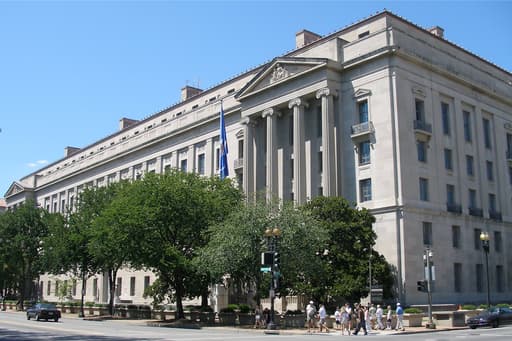
Department of Justice
ORGANIZATION
United States Department of Justice, federal executive department responsible for law enforcement
Federal Bureau of Prisons
ORGANIZATION
U.S. federal agency responsible for incarceration of federal inmates
Federal Register Number
ORGANIZATION
Organization referenced in documents

FedEx
ORGANIZATION
American multinational delivery services company
Health Services Staff
ORGANIZATION
Organization referenced in documents
Inmates Telephone System
ORGANIZATION
Organization referenced in documents
Leisure Library
ORGANIZATION
Organization referenced in documents
Lobby
ORGANIZATION
Organization referenced in documents
MCC New
ORGANIZATION
Organization referenced in documents
MDC Brooklyn
ORGANIZATION
Organization referenced in documents
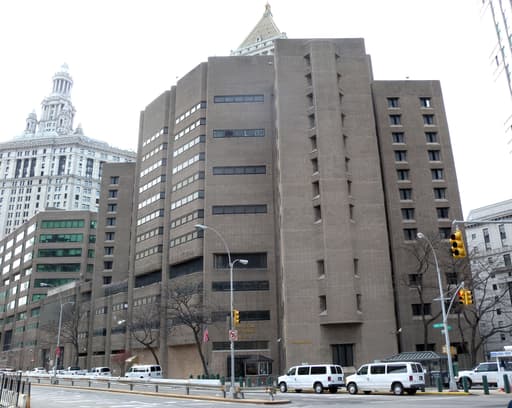
Metropolitan Correctional Center
ORGANIZATION
Metropolitan Correctional Center, New York, federal detention facility where Jeffrey Epstein died on August 10, 2019
National Inmate Appeals
ORGANIZATION
Organization referenced in documents
non-Microsoft
ORGANIZATION
Organization referenced in documents
Probation
ORGANIZATION
Organization referenced in documents
Special Housing Unit
ORGANIZATION
Restricted housing unit within the federal prison system
the Central Office
ORGANIZATION
Organization referenced in documents
the EDNY Federal Public Defenders' Office
ORGANIZATION
Organization referenced in documents

the Education Department
ORGANIZATION
Government agency
the Legal Department
ORGANIZATION
Organization referenced in documents
the MCC
ORGANIZATION
Organization referenced in documents
the MCC New York Legal
ORGANIZATION
Organization referenced in documents
the MDC/ MCC
ORGANIZATION
Organization referenced in documents
the Warden's Office
ORGANIZATION
Organization referenced in documents
U.S. Armed Forces Reserve Complex
ORGANIZATION
Organization referenced in documents
U.S. Attorney's Office
ORGANIZATION
U.S. federal prosecutors office
U.S. Court
ORGANIZATION
Organization referenced in documents
Eastern
LOCATION
Directional region of the United States
Grand Prairie
LOCATION
Location referenced in documents

United States
LOCATION
Country located primarily in North America
Statistics
Pages:37
Entities:32
Avg. OCR:0.9%
Sponsored