HOUSE_OVERSIGHT_025115
Document HOUSE_OVERSIGHT_025115 is an opinion piece from China Daily, dated May 13-14, 2017, discussing the Belt and Road Initiative and its potential benefits for both China and Europe.
The document, sourced from the House Oversight Committee, is a commentary emphasizing the potential of China's Belt and Road Initiative to stimulate global economic growth and foster cooperation between China and Europe. It highlights President Xi Jinping's vision for the initiative and suggests that Europe, particularly France under President Emmanuel Macron, should actively engage with it to achieve mutual economic benefits. The article advocates for strengthened connectivity and infrastructure development along the Belt and Road routes, viewing it as a path towards international collaboration and peace.
Key Highlights
- •The document discusses the Belt and Road Initiative as a new growth point for the world economy.
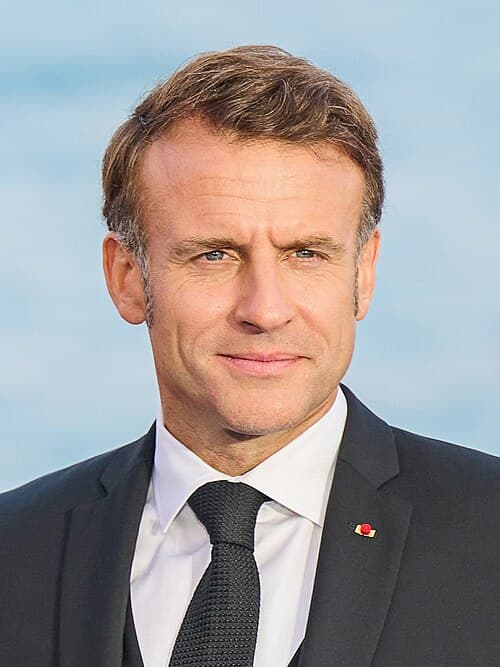
- •Emmanuel Macron's potential to accelerate Europe's interest in the Belt and Road Initiative is mentioned.
- •Xi Jinping's strategic reflection behind the Belt and Road Initiative is highlighted.
Frequently Asked Questions
Related Links

Document Information
Bates Range
HOUSE_OVERSIGHT_025115
Pages
1
Source
House Oversight Committee
Date
May 13, 2017
Original Filename
Kuhn - Initiative marks transition of grand vision - China Daily newspaper - 5.12.17.pdf
File Size
147.94 KB
Document Content
Page 1 - HOUSE_OVERSIGHT_025115
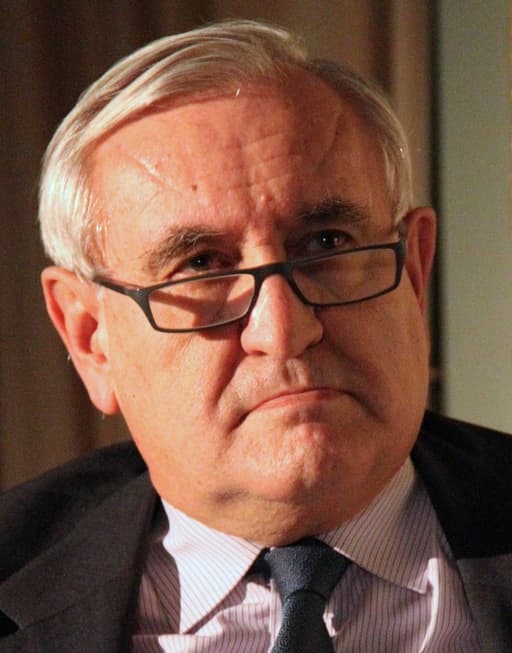
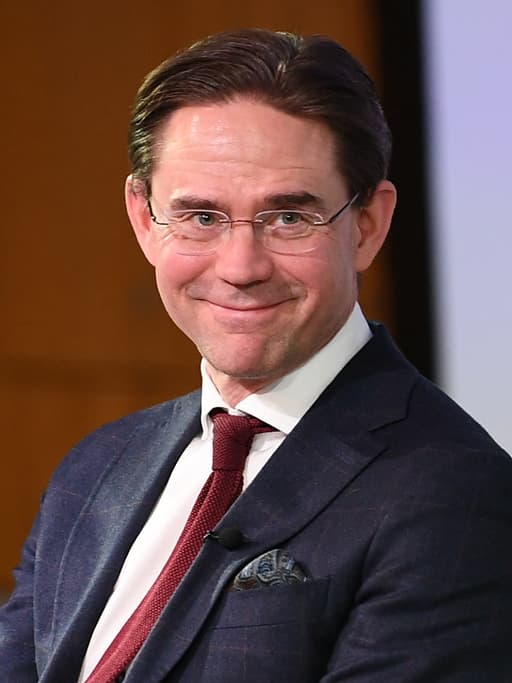
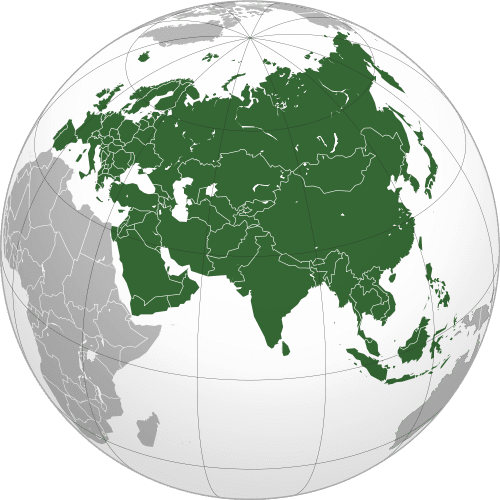
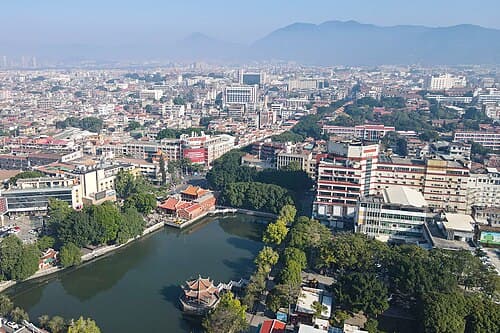
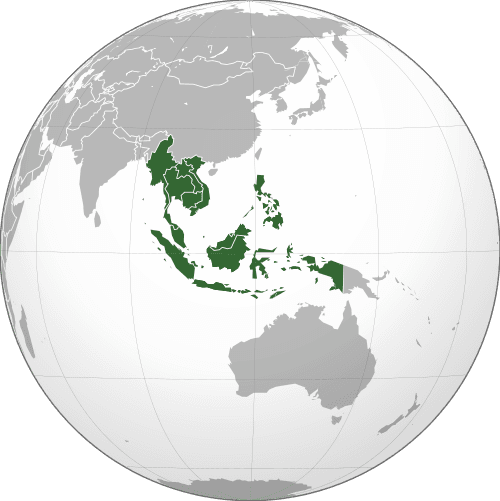
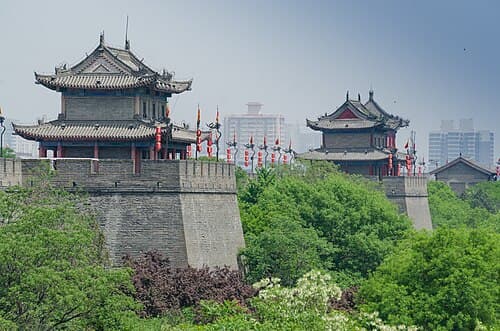
r@) May 13-14, 2017 oy COMMENT OPINION ChinaDaily chinadaily.com.cn/opinion Jean Pierre Raffarin and Xu Gai Anew growth point for world economy n Europe, the Belt and Road Initiative does not get the attention it deserves. However, the history of the ancient Silk Road has fed our imagination for centuries. Today, China speaks for reality while Europe is limiting itself to curiosity. But newly elected French President Emmanuel Macron can accel- erate Europe's interest in the initiative. President Xi Jinping surprised the rest of the world when he announced the Belt and Road Initiative. As often happens in China, the idea is the result of a deep strategic reflection. China is seeking big markets for its industrial prod- ucts. Marginal gains of globalization are shrinking, and growth needs a new revival. In Asia, this new revival is called connectivity. By helping the econo- mies along the Belt and Road routes to develop and improve their infrastructure, hard and soft, China is reinforcing its openness and the upgrading of its manufacturing sector. The initiative will also help the internationalization of its currency and, in the long run, the transformation of its growth toward quality. Europe should find interest in this. Under the initia- tive, cooperation with China on its two aisles, Eurasia and “Eurafrica’, can allow the European Union to reach its economic growth and employment targets. That big geostrategic region must become “a com- munity of interests, of responsibility and common fate” As Premier Li Keqiang has often said, “today, no nation can succeed alone” Therefore we must invent international engaging projects. This perspective is definitely pacifist. And by serving development and prosperity, it serves peace. China’s analysis needs to be studied. In the past, the East was the place where goods were born, and the West where they matured. Today, the West is standing still or even going backward while the East initiates reforms. Asian dynamics must reach Europe. As a country of new technologies, France is ready. Its interest is even more relevant since the United States has become more unpredictable and is turning toward the Asia-Pa- cific region while ignoring Europe. Eurasia is the future global balancing power. In the initiative, Europe can find a historical opportunity to put itself into a more central world position. So, is this the time to redefine transatlantic relations? For China, the West-led globalization has created harsh competitions, partly destructive. It points to civi- lizations moving backward, for example, by giving rise to populism in the West and Brexit. That is why the election of Macron as French president sends a mes- sage of trust and hope. Eurasia, marked by great civilizations such as Egyp- tian, Babylonian, Greek, Indian and Chinese, can be the place of rebirth of civilization. And oceans must again find a place in this civilization. The Belt and Road Initiative, like other innovative 21st century ideas, is not speculative or virtual. Huge financial means and multilateral tools have been invested to give shape to the initiative, which will reform global governance. The Asian Infrastructure and Investment Bank will definitely leverage growth for Eurasian economies. And the initiative, BRICS New Development Bank and the Silk Road Fund all show that China has the power to realize its vision. In the next five years, China will import $10 trillion worth of goods and invest more than $500 billion abroad. The current pace is faster than the 13th Five- Year Plan (2016-20) forecast. For the first time this year, Chinese investments abroad have exceeded foreign investments in China. France is following the initiative with interest, and must realize that it directly touches its interests and alliances. This is a great opportunity for the new French president. By choosing a message of openness, the French peo- ple have shown they are open to great adventures that serve development, hence peace. Jean Pierre Raffarin is former prime minister of France and president of the Senate’s Foreign Affairs, Military and Defense Commission, and Xu Gat ts his advisor on China affairs. CONTACT US China Daily 15 Huixin Dongjie Chaoyang, Beijing 100029 News: +86 (0) 10 6491-8366; [email protected] Subscription: +86 400-699-0203; [email protected] Advertisement: +86 (0) 10 6491-8631; [email protected] Phone app: chinadaily.com.cn/iphone China Daily USA 1500 Broadway, Suite 2800, New York, NY 10036 +1 212 537 8888 [email protected] China Daily Asia Pacific China Daily Hong Kong Room 1818, Hing Wai Centre 7 Tin Wan Praya Road Aberdeen, Hong Kong +852 2518 5111 [email protected] [email protected] China Daily UK 90 Cannon Street London EC4N 6HA +44 (0) 207 398 8270 [email protected] China Daily Africa P.0.Box 27281-00100, Nairobi, Kenya +254 (0) 20 522 3498 (Nairobi) [email protected] [email protected] [email protected] Yang Yanyi Together we can make a difference he Belt and Road Forum for International Cooperation to be held in Beijing on Sunday and Monday will see the par- ticipation of some 1,500 officials, schol- ars, entrepreneurs from more than 130 countries, and representatives from more than 70 international organizations. Of the 29 heads of state and government who will participate in the forum, quite a few are from Europe. European Commis- sion Vice-President Jyrki Katainen, too, will take part in the forum. At atime when the global economic recovery is still sluggish, trade and invest- ment remains weak, and growth impetus unstable, the forum offers an excellent opportunity to review the gains and, more importantly, to build a closer and stronger partnership. China and the European Union share much in common in pursuing shared growth, development and connectivity, including through the Belt and Road Ini- tiative, and have come up with a proud record so far. At the 17th China-EU Summit in 2015, China and the EU agreed to synergize the initiative and the Investment Plan for Europe. China and some EU countries have signed inter-governmental coopera- tion agreements and launched a Belt and Road working group mechanism to joint- ly advance the initiative. Also, China and 16 Central and Eastern European coun- tries have worked closely to enhance cooperation under the Belt and Road Ini- tiative and the 16+1 framework. As concrete steps to promote seamless traffic flows, China and the EU signed an MOU for the establishment of a “Connec- tivity Platform” China has launched rail- way freight service to some European countries. And cooperation in such areas as railways, ports, airports, power, trans- portation and logistics has gathered momentum. The two sides are also working together to deepen dialogue and cooper- ation in information and communica- tions technology. To develop practical financial avenues for mutually beneficial cooperation, Chi- naand the EU agreed to set up a co-in- vestment fund. And early this year, China became the 67th member of the European Bank of Reconstruction and Development. The Beijing forum has now raised the two sides’ interest in exploring potential areas of cooperation to create fresh ener- gy for pursuing interconnected develop- ment. To contribute to the ongoing efforts and deliberations, here are my suggestions. First, the Belt and Road Initiative is guided by the spirit of openness and constructive cooperation. Given the ris- ing protectionist and anti-globalization sentiments in many parts of the world, it is in our interest that China and the EU stay committed to free trade and economic openness, a rules-based, transparent and fair international trad- ing regime and order, and open up mar- kets, oppose protectionism and secure greater connectivity and economic development and prosperity. Second, the initiative is a win-win for- mula. The notion that this project is designed to enable China to access new markets, which will pose a challenge, even “threat”; to the future of Europe is wrong, as it neglects the fresh perspec- tives it will bring to European integration. Being open, transparent, harmonious and inclusive, the initiative is an invitation to all economies along the Belt and Road routes to build synergies between their development strategies and the initiative, explore cooperation, and share the bene- fits of the projects. Third, it is time that China and the EU capitalized on the new opportuni- ties offered by the initiative. Among oth- ers, China wishes to broaden policy coordination and advance cooperation consensus through an institutionalized dialogue mechanism, more closely col- laborate on concrete projects within the China-EU Connectivity Platform, work closely to explore ways and means of joint financing and initiating projects, and deepen China-EU legal affairs dia- logue with a view to creating a favorable environment for business. We are more than ready to add new dimensions to our cooperation with the EU. For instance, given that China is transforming its economic development model based on innovation, and innova- tion remains essential to European inte- gration, we should make deepening cooperation in science and technology and innovation our top priority. And fourth, we hope that at the Bei- jing forum and the 19th China-EU Sum- mit, China and the EU will send out this positive message: as the two parties vital to the maintenance of world peace and promotion of common develop- ment and shared destiny, China and the EU will shoulder the shared responsibil- ity of promoting the construction of a more fair, reasonable and balanced global governance system based on openness, inclusiveness and win-win cooperation, and that together we can make a difference. The author is the head of the Chinese Mission to the European Union. Robert Lawrence Kuhn Initiative marks transition of grand vision he Belt and Road Forum for Interna- tional Cooperation marks a transition of high symbolism in President Xi Jinping’s grand vision fora new era of win-win globaliza- tion. The core idea is to struc- ture, finance and build critical infrastructure in developing economies, as well as diversify and expand the Chinese econo- my, which needs restructuring. This is the fourth Belt and Road forum I will attend. Xi announced the Silk Road Economic Belt as a “grand cause benefiting people in regional countries along the ancient route” in Kazakhstan in September 2013. In June 2014, I was asked to articulate the vision at the first Belt and Road forum in Urumai, North- west China's Xinjiang Uygur autono- mous region. I described five categories: history, culture, trade, mutual develop- ment and peaceful development. The second forum was in Quanzhou, Southeast China’s Fujian province, in February 2015. It enlarged the vision to include the 21st Century Maritime Silk Road, engaging Southeast Asia, South Asia, the Middle East and East Africa. The third forum was held in Xi’an, Northwest China’s Shaanxi province, in September 2016, with the theme “Shared Memory, Common Development” To comprehend Xi’s Belt and Road Ini- tiative, one must appreciate globaliza- tion, which is founded on the perennial law of comparative economic advantage but which is suffering discontent due to its differential impact on workers in Western countries. In a reversal of histor- ic proportions, China now champions globalization, while the United States is now conflicted with “America First” pro- tectionism. China’s developmental miracle is founded on globalization, as Chinese workers made China the low-cost manu- facturing center of the world. But China’s old model no longer works — for one, workers must be paid higher salaries to rebalance severe socio-eco- nomic imbalances. China must develop new modes of globalization, leveraging its expertise and experience, especially in LI MIN / CHINA DAILY infrastructure construction, which is just what the developing economies need for their development. The initiative is to expand links between Asia, Africa and Europe, and thus reduce imbalances in national development and promote global eco- nomic growth. It focuses on projects such as high-speed railways. Development comes first, China believes; nothing good can happen without economic growth. The Beijing forum seeks consensus on major cross-regional projects, especially networks of roads, railways and shipping. At the Xi’an forum, I chaired a session (on the media), which was held at pre- cisely the same time as the first debate between US presidential candi- dates Donald Trump and Hillary Clinton. “One hundred years from today,’ I began, “when the history of our times is written, our forum on the Belt and Road (Initiative) will carry more significance than the Trump-Clinton debate.” I was joking in one sense, but notin another. Why is the initia- tive so significant? From the global perspective, poverty, under-development, and vast inequalities are deep, seem- ingly intractable problems — and economic development, cata- lyzed by infrastructure construc- tion, is an essential part of the solutions. From China’s perspective, after decades of remarkable growth, eco- nomic transformation is necessary, and this includes geographical rebalancing within China and expanding China’s trade by enhancing globalization. All of these can be achieved by the ini- tiative, but only if formulated synergisti- cally and implemented assiduously. There are substantial challenges, of course — economic, financial, structural, political instability, nationalism, terror- ism and, in certain circles, suspicion of China’s motives. But for sure, the world has great need and China has a grand plan in the Belt and Road Initiative. The author is a public intellectual, polit- icalfeconomics commentator, and inter- national corporate strategist. Sultan Ahmed Al Jaber Building a bridge to our common future he Belt and Road Forum for International Cooperation in Beijing is a milestone in the development of China’s Belt and Road Initiative, a historic effort to transform the economies along the two routes, strengthen links between them and better connect them to the rest of the world. The United Arab Emirates strongly supports the initiative, which will foster economic growth and securi- ty both regionally and globally. Substantial progress has been made since President Xi Jinping announced the initiative in 2013. During this period, China has directly invested more than $50 billion and helped establish the Asian Infrastructure Investment Bank — anew multilateral institution designed to finance vital public works in Asia’s emerging economies. The UAE is a founding member of the AITB and com- mitted to its central mission of bringing the Belt and Road Initiative vision to life. China’s approach to economic devel- opment mirrors our own. We share the same core beliefs in the essential con- nection between trade, peace and pros- perity. For both our peoples, these beliefs go beyond stated principles to concrete actions, best expressed by the strength of our bilateral trade, which has grown dramatically — almost 800 times, in the three decades since we established for- mal relations — from $63 million in 1984: to more than $50 billion in 2016. Our cultural and economic ties with China go back centuries. But today’s trade spans multiple sectors, with one of the most important being energy. Recognizing that energy demand in the economies along the Belt and Road routes will grow by 50 percent by 2040, both China and the UAE have made stra- tegic co-investment in this sector. China National Petroleum Corp and China Energy recently took a minority share in the UAE's onshore oil reserves, beginning a partnership with the Abu Dhabi National Oil Company that will secure oil supplies for decades and ease market access for essential and higher value products throughout the region. ADNOC’s petrochemical company, Borouge, is celebrating seven years of operations in China during which the trading volume has quadrupled. Bor- ouge is gearing up for market growth both within China and in the economies along the Belt and Road routes, where demand for petrochemicals and plastic, including essential utility piping and cable insulation, is expected to more than double by 2040. At the pivot point between Asia, Europe and Africa, the UAE is ideally located as a logistical hub that can facili- tate trade to and from the economies along the Belt and Road routes. DP World’s Jebel Ali Port is the largest in the Middle East and Abu Dhabi Ports Com- pany is one of the fastest growing. Last year, Abu Dhabi Ports Company part- nered with China’s shipping giant COS- CO to build a new terminal at Khalifa Port that will double cargo capacity, fur- ther expanding the flow of commerce among the economies along the Belt and Road routes and the world’s other major trading blocs. As many economies along the two routes look to extend their footprint in Africa, the UAE represents a natural nexus for developing mutually beneficial trading links. The 65 economies along the two routes account for 30 percent of global GDP. By 2040, they will account for almost two- thirds, thereby becoming the world’s most significant driver of economic growth. Making the right investments now will ensure this growth remains sus- tainable and more evenly spread. In short, the success of the Belt and Road Initiative can provide the founda- tion for a more secure, prosperous and progressive future for the world. The author is a minister of state in the United Arab Emirates and ADNOC Group CEO. HOUSE_OVERSIGHT_025115
Entities Mentioned
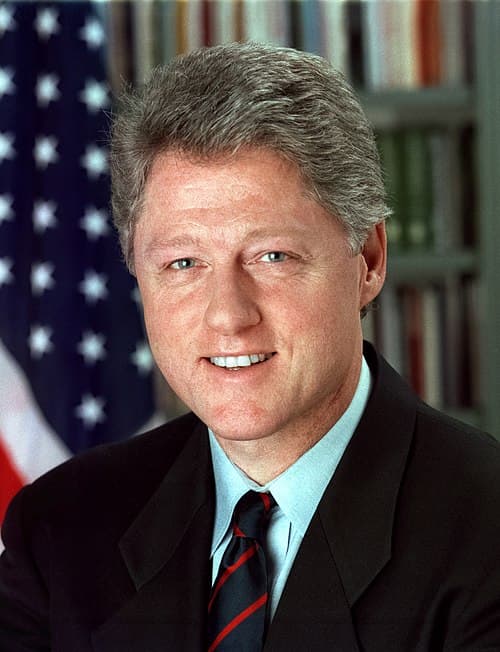
Bill Clinton
PERSON
President of the United States from 1993 to 2001 (born 1946)

Bradley Cooper
PERSON
American actor
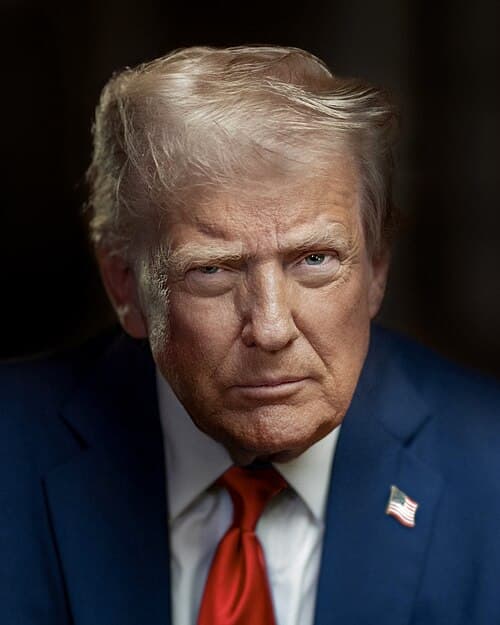
Donald Trump
PERSON • 2 mentions
President of the United States (2017–2021, 2025–present)
Emmanuel Macron
PERSON • 2 mentions
President of France and Co-Prince of Andorra since 2017
Huixin Dongjie Chaoyang
PERSON
Name reference in documents
Jean Pierre Raffarin
PERSON
94th Prime Minister of France
Jyrki Katainen
PERSON
Finnish politician
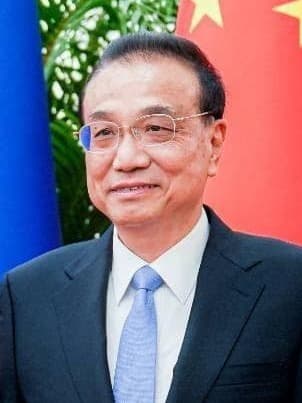
Li Keqiang
PERSON
Premier of the People's Republic of China from 2013 to 2023
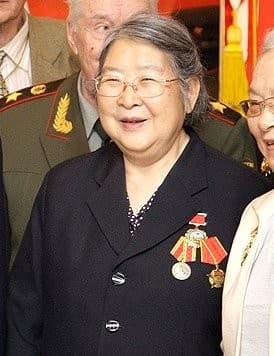
LI MIN
PERSON
Daughter of Mao Zedong

Robert Lawrence Kuhn
PERSON
American banker
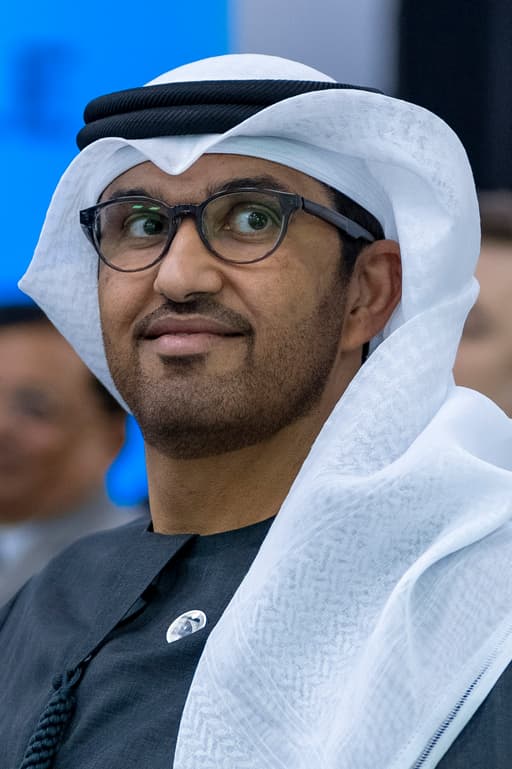
Sultan Ahmed Al Jaber
PERSON
COP28 President-Designate
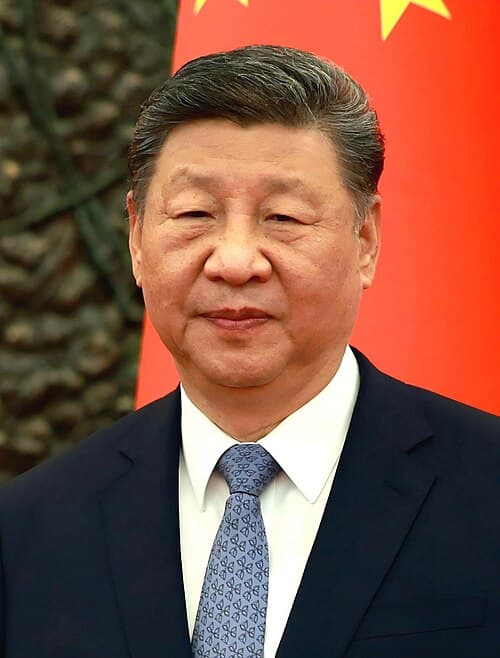
Xi Jinping
PERSON • 3 mentions
General Secretary of the Chinese Communist Party since 2012
Xu Gai
PERSON
Person, CBDB = 147421
XG
Xu Gat
PERSON
Name reference in documents
Abu Dhabi Ports Company
ORGANIZATION
Organization referenced in documents
Borouge
ORGANIZATION
Organization referenced in documents
BRICS New Development Bank
ORGANIZATION
Organization referenced in documents
China Daily
ORGANIZATION
Chinese Communist Party propaganda outlet
Entergy
ORGANIZATION
Organization referenced in documents
Foreign Affairs, Military and Defense Commission
ORGANIZATION
Organization referenced in documents
Mission to the European Union
ORGANIZATION
Organization referenced in documents
The Asian Infrastructure and Investment Bank
ORGANIZATION
Organization referenced in documents
the Asian Infrastructure Investment Bank
ORGANIZATION
Organization referenced in documents
the Belt and Road
ORGANIZATION
Organization referenced in documents
the Belt and Road Initiative
ORGANIZATION
Organization referenced in documents
the European Commission
ORGANIZATION
Organization referenced in documents
the Investment Company
ORGANIZATION
Organization referenced in documents
the Silk Road Fund
ORGANIZATION
Organization referenced in documents

Worlds
ORGANIZATION
Organization referenced in documents

Aberdeen
LOCATION
City in Scotland, United Kingdom
East Africa
LOCATION
Easterly region of the African continent
Eurafrica
LOCATION
Idea of strategic partnership between Africa and Europe
Eurasia
LOCATION
Continental landmass comprising Europe and Asia
Fujian province
LOCATION
Titular province of the Republic of China without administration, notionally covering three small island groups in the Taiwan Strait in the name of the ROC's former mainland province of Fujian
Kazakhstan
LOCATION
Sovereign state in Eastern Europe and Central Asia

Kenya
LOCATION
Country in Eastern Africa
Middle East
LOCATION
Geopolitical region encompassing Egypt and most of Western Asia, including Iran
Nairobi
LOCATION
Capital city of Kenya
Quanzhou
LOCATION
Prefecture-level city in Fujian, China
Shaanxi province
LOCATION
Province of central China with its capital Xi'an, the ancient homeland of the Zhou and center of several major dynasty
Southeast Asia
LOCATION
South-eastern region of Asia
Southeast China
LOCATION
Location referenced in documents
the Belt and Road routes
LOCATION
Location referenced in documents
the Silk Road
LOCATION
Location referenced in documents

United Arab Emirates
LOCATION
Country in Western Asia
Urumai
LOCATION
Location referenced in documents
Xi’an
LOCATION
Capital of Shaanxi Province, China
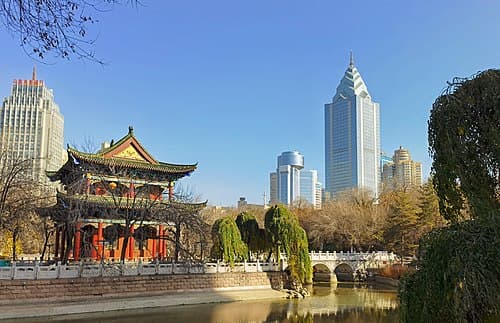
Xinjiang Uygur
LOCATION
Autonomous region in China
Statistics
Pages:1
Entities:48
Avg. OCR:94.6%
Sponsored