HOUSE_OVERSIGHT_023570
20170514_CNDY_omPrintsite_ASECT_CHN-BRO_WOR_011_011_omSpread-011-011_C_omVersion_omTime
This document is a news article from the China Daily newspaper, dated May 14, 2017, discussing the potential expansion of China's Belt and Road Initiative (BRI) into Latin America.
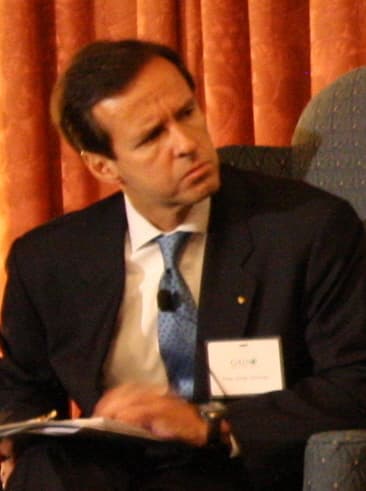
The article, titled 'Time for a ‘Belt and Sea Lane’ for Latin America,' features Jorge-Tuto Quiroga advocating for China to extend its Belt and Road Initiative to Latin America, suggesting a parallel effort called the 'Belt and Sea Lane'. It argues that shifts in the Americas, including growing economic links between China and South America, the end of populism in the region, and the election of Donald Trump, create an opportunity for China to expand its influence. The article highlights South America's reliance on China as a purchaser of commodities and the potential for the BRI to offer investment and technological collaboration.
Key Highlights
- •The document proposes a 'Belt and Sea Lane' initiative for China and Latin America.
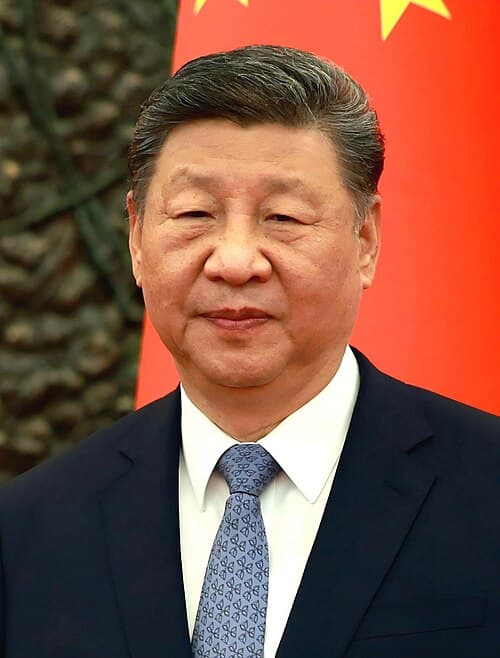
- •Xi Jinping is mentioned as the host of the Belt and Road Forum for International Cooperation.
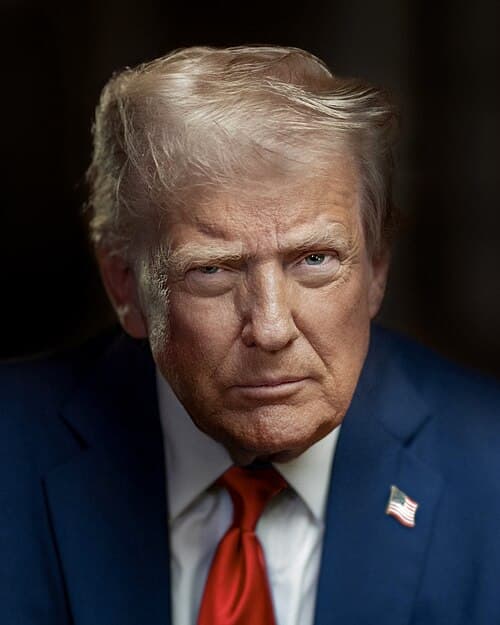
- •Donald Trump's election is presented as a factor influencing the opportunity for China in Latin America.
Frequently Asked Questions
Related Links
Books for Further Reading
Document Information
Bates Range
HOUSE_OVERSIGHT_023570
Pages
1
Source
House Oversight Committee
Date
May 14, 2017
Original Filename
Kuhn - Xi's philosophy for engaging with the world embodies in initiative China Daily newspaper - 5.14.17.pdf
File Size
267.64 KB
Document Content
Page 1 - HOUSE_OVERSIGHT_023570
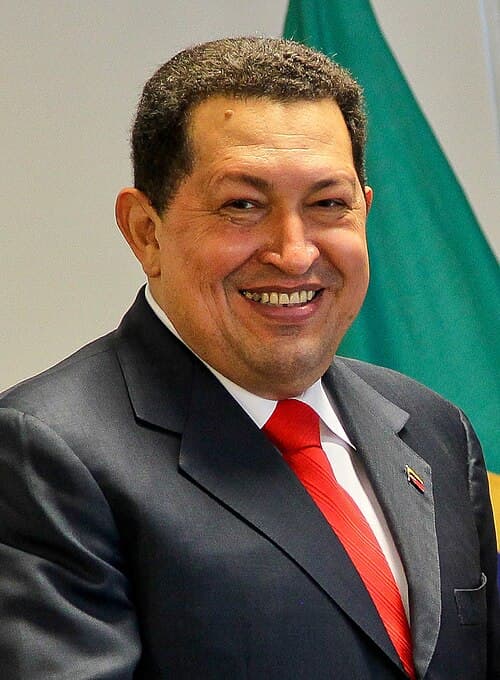
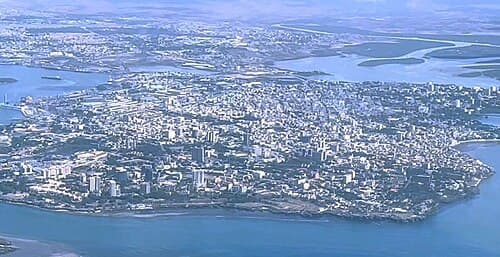
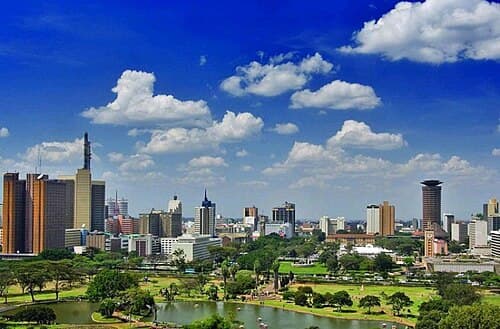
BELT AND ROAD FORUM Sunday, May14,2017 CHINADAILY FOR INTERNATIONAL COOPERATION Jorge-Tuto Quiroga Time for a ‘Belt and Sea Lane’ for Latin America resident Xi Jinping will host dozens of world leaders on Sunday and Monday at the Belt and Road Forum for International Cooperation, as China’s Belt and Road Ini- tiative has seized worldwide attention. Right after this important event, the Chinese government should take advan- tage of the major shifts in the Americas, look across the Pacific and launch a parallel effort: the “Belt and Sea Lane” initiative for China and Latin America (Mexico, the Caribbean, and Cen- tral and South America). Three recent seismic changes have dramatically affected Latin America. First, the economic links that China has developed over the past 13 years with South America. Second, the end of populism in this region. Third, the election of Donald Trump as president of the United States, which will severely damage eco- nomic integration in the Americas, as shown by the recent demise of the US-led Trans-Pacific-Partnership agreement. Let us broadly review these three waves to understand the opportu- nity for China. South America swayed from the “lost half decade” of 1998- 2003, to the “golden decade” of 2004-14, and this change hap- pened mainly because of China. South American nations are rich in minerals, energy and food, which China started buying at growing prices and in ever increasing volumes. China is the main purchaser and price driver for commodities; whether it is copper from Chile, soybeans from Argentina or Paraguay, iron ore and grains from Brazil, gold from Peru, beef from Uruguay, tin from Bolivia, oil from Venezuela and Ecuador, or coal from Colombia. This economic link became crystal clear in the US financial crisis of 2008 that slowed down the economies of Mexico, Cen- tral America and the Caribbean (CAC), which all depend heavily on exports to the US market and remittances from there, but South America kept growing so long as China kept growing. The dividing line became clear: in Latin America, south of the Pana- ma Canal the economic driver is China, north of the Panama Canal it still is the US. China has become the main buyer of South American com- modities, a more important lender and an active investor. The challenge remains to have China become a full blown, long-term development partner for South America. The Chinese influence in Mexico-CAC is different. Here China is viewed as a competitor for access to the US market with man- ufactured goods (Mexico) and textiles (CAC), as well a price hik- er for food products, and fuel that CAC needs to import. So the Chinese economic influence is dominant in South America. The US has been the prevailing influence in Mexico and CAC, until Trump was elected. The future for Mexico and CAC is now uncertain. With sky-high commodity prices, South America was gov- erned according to the Hugo Chavez project in Venezuela, the Workers Party (PT) in Brazil, the Kirchner power couple in Argentina, and other like-minded projects in the region. South American coffers were filled by Chinese purchases of oil, grains and minerals, as populist regimes reigned over South America. There was a tendency to nationalize companies, spend freely, set low unsustainable consumer prices, close off free trade and not be very friendly to foreign investment in general. With the commodity price decline since 2014 (especially oil prices) and voters fed up with and tired of corruption and abus- es of populist regimes, the tide turned. More countries now have market-friendly governments. The end of populism in South America bodes well for China, as the current governments are more open to Chinese investment, more open to trade and can assure a better structural framework to collaborate with China. For the first time in its history, the US has elected a president who combines a protectionist trade position with an anti-migra- tion policy. Trump has particularly targeted Mexico, promising to deport 11 million people, to build a wall by seizing remittan- ces sent from the US, to hike duties for manufactured goods and abrogate the North American Free Trade Agreement. This is very worrisome for Mexico, but it also affects many countries in Latin America that have citizens sending remittances from the US. The trade disruption will eventually affect all CAC countries, as well as Chile, Colombia and Peru, that all have similar free trade treaties with the US. South America swayed to the “golden decade” of 2004-14, and this change happened mainly because of China. Taking into account the economic interdependence between China and South America, the end of populism in South Ameri- ca, and the dramatic threats that the Trump administration pos- es to Mexico and CAC, it is clear that time, circumstances and events are providing a significant opening for China to propose a full-blown partnership with Latin America. The proposal should seize the opportunity of the “demise” of the Trans-Pacific Partnership agreement. Mexico now needs reli- able partners, unlike the US; so will CAC very soon; and South America needs to deepen its strong trade ties with China. President Xi Jinping can take advantage of his strengthened position as the core leader of China, his commitment to address climate change and his stance as the world’s free trade leader, which will help China to extend its Belt and Road Initiative toward Latin America, across the Pacific, with a “Belt and Sea Lane” proposal. The basic elements of it should be trade, loans, investment and respect for human dignity (No deportations. No discrimination). A new trade framework, the active presence of the China-led Asian Infrastructure Investment Bank in Latin America and the expansion of Confucian Institutes should be part of this initiative. Latin America is ready and ripe for such a proposal. This is the right time to show that while some want to build walls to divide and separate, China wants to build a bridge across the Pacific to integrate and link Asia and Latin America. Just one opportunity illustrates the potential of a deeper Chi- na-Latin America partnership. China is the world’s leading manufacturer of lithium batteries, close to 90 percent of the world’s lithium reserves are in South America. Our new, deeper partnership can easily prevail in the race to lead the new wave of lithium batteries for cleaner, more efficient development in the 21st century. The window of opportunity is now the Belt and Sea Lane Ini- tiative for a stronger China-Latin America partnership. The author is former president of Bolivia. Robert Lawrence Kuhn X1s philosophy for engaging with the world embodied in initiative he Belt and Road Forum for International Cooperation will be held on Sunday and Monday. How does the initi- ative express President Xi Jinping’s political philosophy with respect to China’s foreign and domestic policy? Xi’s foreign policy is to engage the world, safeguard China’s core inter- ests, encourage mutual economic development, and facilitate China’s emergence as a great power. Xi’s domestic policy stresses reform, rule of law, and the realization of an all- round moderately prosperous socie- ty, which requires the alleviation of extreme poverty. Here’s how the Belt and Road Initi- ative enhances the four pillars of Chi- na’s foreign policy. A multi-polar world has long been a cornerstone of China’s foreign poli- cy, which opposes domination by one or two superpowers. The Belt and Road Initiative engages more than 60 countries along multiple land and maritime routes and exemplifies a multi-polar world. Peaceful development is China’s watchword. It has vowed that no mat- ter how powerful the country becomes, it will never seek domina- tion. The Belt and Road projects are founded on mutual cooperation, shared development and joint con- struction irrespective of the size or power of the host country. People-to-people communications are an integral part of the Belt and Road Initiative: multi-channel, multi- level exchanges between peoples to promote mutual understanding. Examples include sister cities, cultur- al activities, non-governmental orga- nizations, and public diplomacy. A “community of shared future” is how Xi epitomizes the dreams of diverse peoples in common pursuit of peace and development. In this con- text, the 2,000-year history of exchanges along the ancient Silk Road provides precedence that differ- ent countries, races, religions, beliefs, political systems and cultural back- grounds can achieve peace and share the fruits of their interactions — pro- vided they persist in seeking common goals and mutual trust, equality and mutual benefit, and tolerance and mutual learning. The Belt and Road Initiative will be successful to the extent that China’s principles of domestic development can be adopted and adapted by other developing countries according to their own conditions. Xi’s overarch- ing principles for guiding China’s domestic transformation are innova- tion, coordination, greenness, open- ness and sharing. How does each relate to the Belt and Road Initiative? Large-scale infrastructure projects require structural innovation, espe- cially in their financing and invest- ment robustness. (The Belt and Road projects must be financially viable; they are not foreign aid.) The Asian Infrastructure Investment Bank, ini- tiated by China to facilitate projects, is itself a major innovation. For each Belt and Road project, Chinas spirit of open- ness, as well as its pol- icy of opening-up policy catalyzed the countrys economic development. diverse components, such as the local government, project management, international financing, and foreign and domestic constructing compa- nies must be coordinated so they work together. As developing countries are more concerned about economic develop- ment than environmental protection, the short-sighted move of shipping off polluting industries to them should be guarded against. If Belt and Road projects pollute host countries, local populations will come to resent China. Environmental protection and green development are essential. China’s spirit of openness, as well as its opening-up policy catalyzed the country’s economic development. This same spirit and policy can ener- gize countries along the Belt and Road while respecting local cultures and conditions. But what worked in China, if transplanted wholesale, will likely not work elsewhere. The chal- lenge for developing countries is to adapt what makes sense for their own conditions. Sharing is the essence of the Belt and Road Initiative. It is the proper spirit for all human beings and it is essential for maintaining global sta- bility. Inequalities are a primary cause of instability. Shared develop- ment is as much a matter of transfer- ring experience as it is of transferring money. Just as these five major develop- ment concepts are transforming Chi- na’s society and rebalancing China’s economy, the Belt and Road Initiative can transform the developing world’s infrastructure and rebalance the entire global economy. China cannot aspire to global lead- ership by means of power alone. Eco- nomic and military strength, while necessary, are not sufficient. There must also be a moral or ethical arc to China’s rise, and this includes Belt and Road projects. China, as Xi asserts, should “balance justice and benefits, stress faithfulness, value friendship, carry forward righteous- ness, and foster ethics.” There will be challenges: unfore- seen events that China will have to handle with sensitivity. But can China demonstrate moral as well as eco- nomic leadership? The author is a public intellectual, politicalconomics commentator, and international corporate strate- gist. here was atime not long ago when most big social and economic challenges were domestic. With good policies and good implementation of those policies, many countries could tackle these problems alone. China’s recent success in lifting millions of people out of poverty is a perfect example of this. But today, our challenges are not only domestic, and they are not only social and economic. Climate change, pollution, and the loss of biodiversity are environmental issues that spill over borders. And today, issues such as poverty, inequality, peace and security are not only problems facing individ- ual countries. These are global challenges. They must be tackled collec- tively. A number of countries are leading the way in fostering international cooperation. China, with its Belt and Road Initiative, is one of them. Evidence of this can be seen in Ethiopia, where China has helped to build a metro system in Addis Ababa, and in Kenya, where a standard gauge railway is being built to link the port of Mombasa first with Nairobi, and ultimately with neighboring Ugan- da, Rwanda, and South Sudan. In recent years, Chinese compa- nies have aslo led renew- able energy projects in places such as Pakistan, Thailand and the Philippines. Such massive investment in development is on a scale never before seen. And there is great progress to be made on security, eco- nomic and social challenges. But we cannot forget the other global challenge that we must face together: protecting the environment. UN Environment also recognizes the potential of the Belt and Road ini- tiative to improve people’s lives. We also know how important it is to do this sustainably. If we do not make Belt and Road projects climate friendly, we put the world at risk from worsening pollu- tion and severe climate change. If Erik Solheim ESTABLISHING GREEN ROUTES FOR GROWTH LIMIN / CHINA DAILY done right, millions will see the bene- fits of green growth. Now is the time to do it right and make Belt and Road as green as possi- ble. That is why UN Environment signed an agreement with the Chinese Ministry of Environmental Protection in December to promote the sustaina- ble development of the Belt and Road. There are many ways we will sup- port this. Our environmental expert- ise runs from sustainable finance and clean technologies to ecosystems and sustainable consumption and produc- tion. UN Environment can support technology transfer and the creating of green economy policies. Through our Finance Initiative, we can work with private investors to promote sustainable invest- ment practices along the Belt and Road. But we cannot do it alone. Many other stake- holder groups, investors, and businesses have val- uable expertise to bring to the table. And many Belt and Road coun- tries have asked spe- cifically for such support to make sure that the Belt and Road Initiative helps them meet their sus- tainable development needs. And s0, at the Belt and Road Forum for International Cooper- ation in Beijing this week, UN Environment and China’s Ministry of Environmental Protec- tion will announce the International Coalition for Green Development on the Belt and Road. UN Environment and Chi- na will bring together dozens of partner organizations in this coalition. We want to draw knowledge from the largest body of environmental expertise possible to ensure that Belt and Road brings long-term, planet-friendly growth. The forum this week will bring together a significant portion of that expertise. I see it as the beginning of a close collaboration and hope to grow our coalition. We all want the Belt and Road Initiative to fulfil its promise as a positive force for development. We must work together to ensure that development is sustainable. The author is head of UN Environment. HOUSE_OVERSIGHT_023570
Entities Mentioned
Donald Trump
PERSON • 2 mentions
President of the United States (2017–2021, 2025–present)

Erik Solheim
PERSON
Norwegian politician
Hugo Chavez
PERSON
52nd President of Venezuela from 1999 to 2013 (born 1954–2013)
Jorge-Tuto Quiroga
PERSON
President of Bolivia from 2001 to 2002

Marc Rich
PERSON
American commodities trader (1934–2013)

Robert Lawrence Kuhn
PERSON
American banker
RK
Roger Kirchner
PERSON
Person referenced in documents
Xi Jinping
PERSON • 3 mentions
General Secretary of the Chinese Communist Party since 2012
Confucian Institutes
ORGANIZATION
Organization referenced in documents
the Belt and Road
ORGANIZATION
Organization referenced in documents
Trans-Pacific-Partnership
ORGANIZATION
Organization referenced in documents
UN Environment
ORGANIZATION
Organization referenced in documents
Addis
LOCATION
Town in West Baton Rouge Parish, Louisiana, US

Bolivia
LOCATION
Sovereign state in South America

Chile
LOCATION
Country in South America
China
LOCATION
Country in East Asia

Columbia University
LOCATION
Private Ivy League research university in New York City
Ecuador
LOCATION
Sovereign state in South America

Ethiopia
LOCATION
Country in the Horn of Africa
Kenya
LOCATION
Country in Eastern Africa

Latin
LOCATION
Italian comune
Mombasa
LOCATION
City in Kenya
Nairobi
LOCATION
Capital city of Kenya
Paraguay
LOCATION
Sovereign state in South America

Philippines
LOCATION
Archipelagic country in Southeast Asia

Rwanda
LOCATION
Country in East Africa
South Africa
LOCATION
Country in southern Africa
South Sudan
LOCATION
Country in East Africa

United States
LOCATION
Country located primarily in North America

Uruguay
LOCATION
Sovereign state in South America
Venezuela
LOCATION
Country in South America
Statistics
Pages:1
Entities:31
Avg. OCR:95.2%
Sponsored