EFTA01385480
Document Information
Bates Range
EFTA01385480
Pages
1
Original Filename
EFTA01385480.pdf
Document Content
Page 1 - EFTA01385480_001
3 January 2018 HY Corporate Credit HY Multi Sector.Media. Cable & Satellite Telecom, Pay-TV, and Satellite Outlook Anthony Kiernan, (+1) 212 250-2587, [email protected] James Gilson. (+1) 212 250-6336, [email protected] Wireless: Overweight Relative to the 06 Index If we had predicted it (which we didn't) no one would have believed it anyway. Consolidation seemed to be storing a lot of pent up momentum, with carriers locked out of talking to each other after years of successive spectrum auctions and FCC-imposed quiet periods. With the most recent auction concluding in January 2017 and a Republican in the White House planning to re-boot the FCC and DOJ, it seemed that a wave of telecom M&A was imminent, right? Wrong. The perception was that Sprint and T-Mobile were going to merge and that it was going to set off a wave of intra•sector and multi-sector convergence deals. Fueling this view was the perception (also proven wrong) that SoftBank was looking for the exit door in Sprint. The reality was that even though SoftBank and Sprint held countless discussions over many months with Deutsche Telekom and T-Mobile USA (which has been widely disclosed in the press) and even with the press reporting that Deutsche Telekom made a last- ditch offer to SoftBank to try to save the deal, SoftBank's response was to essentially "double-down" by deciding to keep Sprint independent, increase its CapEx spending, and raise its stake in Sprint, nominally, to 85%. So much for wanting the exit door. With Sprint emboldened to continue being an aggressor trying to win share in the market, we expect competition to remain elevated for the foreseeable future (although we also believe rationality in pricing will prevail). The raised competitive environment combined with the highly anticipated arrival of 5G in the next few years (mobile standards likely in 2019 and deployment in 2020), is expected to create a boon in wireless CapEx over the next couple of years. especially considering the amount of fallow spectrum (particularly at DISH - more on that later) still needing to be built out, which all bode well for both macro tower companies as well as metro fiber players. Network and Spectrum: Each of the four nationwide carriers have significant projects they're working on to maintain existing and create new competitive advantages. Sprint has been the most vocal recently about significantly increasing CapEx over the next two years in order to improve coverage via macro tower expansion (a few thousand towers) as well as utilize Massive MIMO and small cell densification to harness the power of its unique 2.5 GHz spectrum. T-Mobile won 31 MHz of 600 MHz spectrum in the broadcast incentive auction that it has begun to roll out in 2017, but will more aggressively roll out in 2018. AT&T has 20 MHz of 700 MHz (FirstNet) and 40 MHz of AWS-3 / WCS spectrum that will start to be built-out in 1018. The biggest benefactors from those 3 build-outs are the Big-3 macro tower guys (AMT, CCI, and SBAC). Verizon's focus on getting a head start in 5G via fixed wireless and fiber is most likely to positively impact the small cell / metro fiber specialists which include CCI and ZAYO. Deutsche Bank Securities Inc. Everything seemed to be lining up perfectly /ors tsunami-lee wave of consolidadon and convergence M&A trades in 2017: Nopa Presented with the opportunhy to lo/, DT/TMUS in e 4-to-4 combination dee SoftBenk and Sprint chose to stay single and go k alone for the time being. The tower seaor appears to be heading into a period of Leaved in the industry as consolidation hasn't materiaraed and Sprint (whkh egged an apex) has a renewed focus on accelerating capital invesenent 2018 appears poised to dearer kernsing leek of wireless apex Intensity - porde* &Men by Sprint's recent basest Overall posit*" for underlying tower sector growth. Page 207 CONFIDENTIAL - PURSUANT TO FED. R. CRIM. P. 6(e) CONFIDENTIAL DB-SDNY-0086766 SDNY_GM_00232950 EFTA01385480
Entities Mentioned
AK
Anthony Kiernan
PERSON
Name reference in documents
JG
James Gilson
PERSON
Name reference in documents
LE
Leaved
PERSON
Surname or name fragment in documents
Deutsche Bank Securities Inc.
ORGANIZATION
Deutsche Bank Securities Inc., US broker-dealer subsidiary of Deutsche Bank AG
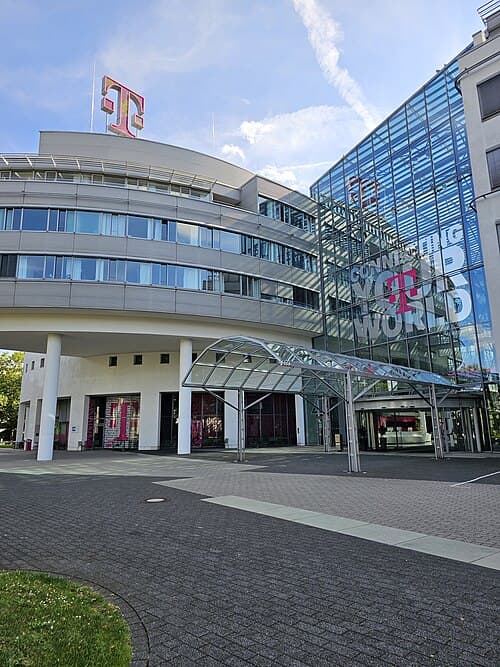
Deutsche Telekom
ORGANIZATION
Partially privatized German telecommunications company
DT/TMUS
ORGANIZATION
Organization referenced in documents
FirstNet
ORGANIZATION
Organization referenced in documents
HY Multi Sector
ORGANIZATION
High-yield multi-sector bond fund
Satellite Outlook
ORGANIZATION
Organization referenced in documents

Sprint
ORGANIZATION
American telecommunications company

T-Mobile
ORGANIZATION
American telecommunications company
T-Mobile USA
ORGANIZATION
T-Mobile USA, American wireless telecommunications company
Statistics
Pages:1
Entities:12
Sponsored