EFTA01385319
Document Information
Bates Range
EFTA01385319
Pages
1
Original Filename
EFTA01385319.pdf
Document Content
Page 1 - EFTA01385319_001
3 January 2018 HY Corporate Credit HY Multi Sector.Media. Cable & Satellite HY Energy Outlook Jared Weil, On market rebalancing on solid footing. but potential retracement in the cards En early 2018 After three consecutive years of oversupply, the global oil market will likely a see a deficit in 2017, although slight (-0.18 mmbbls/d). The OPEC decision last month to extend production quotas sets up for an ultimate rebalancing of the market - supply and demand is expected to be largely balanced in 2018 and 2019 though that would mean little progress in addressing the sizeable inventory surplus. That will come in 2020 when the market will see a meaningful supply deficit (- 0.75 mmbbls/d) as demand grows, US onshore supply slows down and non-OPEC production declines. While the current rally in oil prices is backed by an improving fundamental outlook, there is potential for a pullback. The key near-term swing factor is US onshore supply and the outlook for that sector is turning positive - drilling activity has bottomed while completions should pick up pace as significant new frac capacity (0.5-1.0 million hhp) is coming. Production from US onshore in Q1 18 should drive the market back to oversupply after two quarters of deficit. This could drive a modest pullback in oil prices during 1H 18. Longer term, falling breakeven levels of major prospective projects (non- OPEC. non-shale), especially deepwater, will likely keep a lid on oil prices. Between 04 16 and 03 17, breakeven Brent oil price (10% discounted) of major pre-FID projects have fallen from $53/bbl to $46/bbl. For new Canadian oil sands projects, 365 (Brent) could be a threshold for additional supply kicking in. US net gas normal winter key to absorb coming production surge For most of this year, the outlook for the 2018 gas market had been largely supportive of a $3 price - driven by two factors: first, the expectation that by the 2017-18 withdrawal season, the sizeable working gas inventory surplus would be whittled down, aided by flattish production and pop in exports, especially LNG. That has worked out with the inventory levels at a modest deficit (121 Bcf or 3% lower than 5-year average) by mid-November compared to a 265 Bcf surplus (15% higher) at the start of the injection season. The second was the expectation of a normal winter after two consecutive years of very mild winters - warmer-than usual weather during first half of December has highlighted the downside risks to this thesis. Normal winter demand is crucial for maintaining S/D balance next year considering the market is set for an Appalachian-driven production surge in 2018 given significant progress made on takeaway capacity expansion in the Northeast. About 4 Bcf/d of takeaway capacity has been added in the region between July and mid-November and another -4 Bcf/d of new capacity is scheduled to become Page 44 operational by 01 18. EIA currently estimates YoY production growth of 6.2 Bcf/d next year. EIA's forecast of a largely balanced market and >$3 gas price is predicated on A) higher export demand (+1.65 Bcf/d YoY) which is on track and B) a normal winter driving up heating demand by 1.42 Bcf/d YoY. If the latter fails to materialize, we could see price floundering below $3. This was highlighted in first half of December when 2018 gas strip went below $2.70 after trading in the $2.9043.10 range for most of 2017 - though it has since bounced back close to the lower end of the range given a strong revival in winter, especially in the Northeast and Midwest. H Y tied' approaching a 'Hormel' sector In the two years following the collapse in oil prices in 2H 14, E&P players were focused on structural changes to the business model which could fit into a reshaped oil market. This included efforts to repair balance sheet (equity issue, asset sales) and large scale overhaul of the asset portfolio (mainly a shift to Permian). By early 2017, the revamped corporate strategies were largely in place. The HY Energy index is currently trading only modestly wide of the broader HY index (50 bps wider), a far cry from the >1,000 bps gap in early 2016. Meanwhile, oil markets in 2017, while volatile, had established a $40 floor (for WTI). With the oil market settling at the "new normal" range, the exit of weak players from the market and major sector themes (like the Permian Premium) having played out, the HY E&P group has been transitioning into a "normal" HY sector with standard credit themes like operational performance, cash flow models, and balance sheets allowing for greater differentiation. We focus on the cash flow model - a good proxy for asset quality - as a key differentiator for E&P credits. For the better quality names, our analysis focuses on identifying names with a superior FCF-growth equation. For lower quality names, we tend to focus on the breakeven oil price needed to keep FCF neutral in a maintenance mode, along with downside asset valuations. Based on the above, in the Mid Quality space, we are positive on WPX Energy (BUY-rated) and Oasis Petroleum (HOLD-rated) as they otter significantly faster growth through FY 19E with lower cash burn when compared with their respective peers - QEP Resources (SELL-rated) and Whiting Petroleum (HOLD-rated). Among Lower Quality oily names, we note that most names (with the exception of EP Energy), are well positioned to deliver neutral FCF with flat production at WTI oil price close to $50. Many of these names have driven solid improvements to their opex/capex cost structure in recent years driving down FCF breakeven oil price substantially. Deutsche Bank Securities Inc. CONFIDENTIAL - PURSUANT TO FED. R. CRIM. P. 6(e) CONFIDENTIAL DB-SDNY-0086603 SDNY_GM_00232787 EFTA01385319
Entities Mentioned

Jared Kushner
PERSON
American businessman and real estate investor (born 1981)
JW
Jared Weil
PERSON
Name reference in documents
Brent
ORGANIZATION • 2 mentions
Entity referenced in documents
Deutsche Bank Securities Inc.
ORGANIZATION
Deutsche Bank Securities Inc., US broker-dealer subsidiary of Deutsche Bank AG
HY E&P group
ORGANIZATION
Organization referenced in documents
HY Energy
ORGANIZATION
Organization referenced in documents
HY Energy Outlook
ORGANIZATION
Organization referenced in documents
HY Multi Sector
ORGANIZATION
High-yield multi-sector bond fund
Mid Quality
ORGANIZATION
Organization referenced in documents
QEP Resources
ORGANIZATION
Organization referenced in documents
the Permian Premium
ORGANIZATION
Organization referenced in documents
Whiting Petroleum
ORGANIZATION
Organization referenced in documents
WPX Energy
ORGANIZATION
Organization referenced in documents
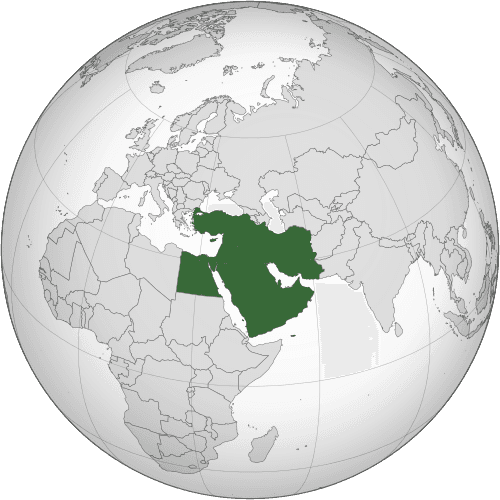
Middle East
LOCATION
Geopolitical region encompassing Egypt and most of Western Asia, including Iran

Northeast
LOCATION
Directional region of the United States
Statistics
Pages:1
Entities:15
Sponsored