EFTA00688376
Document Information
Bates Range
EFTA00688376
Pages
2
Original Filename
EFTA00688376.pdf
Document Content
Page 1 - EFTA00688376_001
From: To: Jeffrey Epstein <[email protected]> Subject: From Jason Nemirow Date: Wed, 27 Aug 2014 13:17:58 +0000 Forwarded message From: Jason Nemirow Date: Tue, Aug 26, 2014 at 7:54 PM Subject: Re: Nice Meeting You To: I expected Jeff wanted to speak about audio technology, so a request for examples of my thinking came as a surprise. I am just starting my PhD, advised by Steven Pinker and Max Krasnow, so I don't have much published work to share. However, I'm happy to describe one of my current interests. (Material from my undergraduate thesis was published in the Journal of Personality and Social Psychology in 2014, but isn't representative of the current direction of my research). Broadly speaking, I'm interested in the evolution and maintenance of cooperation. Recently, I've been examining the quirks of our charitable giving behavior as a means to understand altruism more generally. For over a decade, one central puzzle has sustained my interest: why do people typically ignore efficacy information when deciding where to donate? In other words, if donors are truly concerned with helping those in need, why don't they scrutinize charity brochures as they would business plans? Clearly, many people donate because they experience emotions like sympathy and empathy when they become aware of the suffering of others. But this is merely a proximate-level explanation of giving—it's tantamount to saying, people drink because they experience thirst. The ultimate-level question is: why do people experience emotions that compel them to give to needy individuals to whom they are unrelated and from whom they cannot expect repayment? I believe charitable donations, and other examples of "pure altruism", are actually functional behavior designed to signal the donors' underlying cooperative disposition to potential exchange partners (through these donations being directly observed by others or through building the donor's reputation). If, at an ultimate level, we donate to convince others of our underlying cooperativeness, this suggests donors should be very careful to manage how observers perceive their motivations for giving. While the evidence is still weak, this seems to be the case—most donors appear to have no conscious awareness that their altruistic behavior could be self serving. Further, it seems clear that many donors (perhaps unconsciously) are quite good at obscuring even hints of ulterior motives from observers, and more impressively, even from themselves. Indeed, we shouldn't rule out the possibility of deep self-deception given the incredibly sensitive nature of the signal being sent. Any whiff of self-interest could taint the entire donation—not only failing to broadcast a cooperative signal—but misfiring and instead broadcasting that the donor is potentially untrustworthy and manipulative. EFTA00688376
Page 2 - EFTA00688376_002
In a vacuum, I do not think this idea constitutes a major theoretical breakthrough. In fact, I think much of it is already clear to keen observers of human behavior outside academia. However, I'm confident a nuanced understanding of this phenomena could help make high-impact charitable donations more broadly appealing. Given that charities working on the same cause often differ by more than 1000X in their efficacy, even a marginal increase in the number of donors choosing to give effectively could mean far far more people avoid needless suffering. Before beginning graduate school, I spearheaded an interfaculty grant, a joint venture between Martin in OEB and Max Krasnow in Psychology, to begin testing specific predictions of this theory with members of the PED (including Moshe Hoffman and Oliver Hauser). The project was funded and initial empirical results are very promising. If interested, I'm happy to discuss this model in more detail. He might also enjoy my related, non-profit business idea involving repurposing diamond engagement rings to increase high-impact charitable donations (Martin is particularly fond of that one). We could also discuss hypotheses of the functional roles of cooperation, punishment, and deception/self-deception more broadly. I'm always up for a chat about audio (including system calibration with Dirac). Please thank him for housing us this past weekend in NYC, and pass along that it was unfortunate to have missed him. Cheers, Jason Nemirow EFTA00688377
Entities Mentioned
JN
Jason Nemirow
PERSON
Person referenced in documents
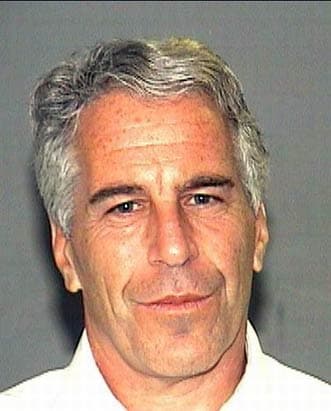
Jeffrey Epstein
PERSON • 3 mentions
American sex offender and financier (1953–2019)
MK
Max Krasnow
PERSON
Name reference in documents

Moshe Hoffman
PERSON
Hungarian-born Israeli painter, sculptor and poet (1938-1983)
OH
Oliver Hauser
PERSON
Name reference in documents

Steven Pinker
PERSON • 2 mentions
Canadian-American cognitive psychologist, linguist, and author, an advocate of evolutionary psychology and the computational theory of the mind
the Journal of Personality and Social Psychology
ORGANIZATION
Organization referenced in documents
Dirac
LOCATION
Location referenced in documents
Statistics
Pages:2
Entities:8
Sponsored