EFTA00633670
Document Information
Bates Range
EFTA00633670
Pages
2
Original Filename
EFTA00633670.pdf
Document Content
Page 1 - EFTA00633670_001
From: Boris Nikolic To: "Jeffrey Epstein ([email protected])" <[email protected]> Subject: Nature article on ResearchGate! Date: Sat, 16 Aug 2014 16:09:26 +0000 ResearchGate is getting there! This week, the Nature (one of the competitors) published this article — essentially demonstrating that ResearchGate is winning! The original paper is on the bottom Some paragraphs: The results confirm that ResearchGate is certainly well-known (see 'Remarkable reach', and full results online at ). More than 88% of scientists and engineers said that they were aware of it — slightly more than had heard of Google+ and Twitter — with little difference between countries. Just under half said that they visit regularly, putting the site second only to Google Scholar, and ahead of Facebook and Linkedln. Almost 29% of regular visitors had signed up for a profile on ResearchGate in the past year. This does not surprise Billie Swalla, an evolutionary biologist and director of the University of Washington's Friday Harbor Laboratories. Swalla says that she and most of her colleagues are on ResearchGate, where she finds the latest relevant papers much more easily than by following marine-biology journals. "They do send you a lot of spam," she says, "but in the past few months, I've found that every important paper I thought I should read has come through ResearchGate." Swalla admits to comparing herself to others using the site's 'RG Score' — its metric of social engagement. "I think it taps into some basic human instinct," she adds. "It was really a head-scratcher when we saw that," says Leslie Yuan, who heads a team working on networking and innovation software for scientists at the University of California, San Francisco. "We thought — who are these guys? How are they getting so much money?"Yuan is not the only one who has been taken aback. A few years ago, the idea that millions of scholars would rush to join one giant academic social network seemed dead in the water. The list of failed efforts to launch a 'Facebook for science' included Scientist Solutions, SciLinks, Epernicus, 2collab and Nature Network (run by the company that publishes Nature). Last paragraph in the article: EFTA00633670
Page 2 - EFTA00633670_002
"I think at some point there will be one winner in this race," says Madisch. Or — as Nature's survey suggests is already happening — different disciplines might favour different sites. EFTA00633671
Entities Mentioned
BS
Billie Swalla
PERSON
Name reference in documents
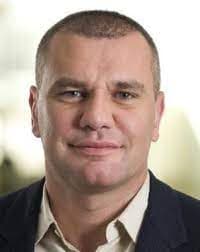
Boris Nikolic
PERSON • 3 mentions
American immunologist, biotech investor, and former chief science and technology advisor to Bill Gates

Jeffrey Epstein
PERSON • 3 mentions
American sex offender and financier (1953–2019)
LY
Leslie Yuan
PERSON
Name reference in documents
MA
Madisch
PERSON
Name reference in documents
MO
money?"Yuan
PERSON
Name reference in documents
SW
Swalla
PERSON
Name reference in documents
Epernicus
ORGANIZATION
Organization referenced in documents
Harbor Laboratories
ORGANIZATION
Organization referenced in documents
LinkedIn
ORGANIZATION
LinkedIn, professional networking platform owned by Microsoft
Nature Network
ORGANIZATION
Organization referenced in documents
ResearchGate
ORGANIZATION
Organization referenced in documents
Scientist Solutions
ORGANIZATION
Organization referenced in documents
SciLinks
ORGANIZATION
Organization referenced in documents
the University of California, San Francisco
ORGANIZATION
Organization referenced in documents
the University of Washington's
ORGANIZATION
Organization referenced in documents
Statistics
Pages:2
Entities:16
Sponsored