HOUSE_OVERSIGHT_033253 - HOUSE_OVERSIGHT_033254
Document HOUSE_OVERSIGHT_033253 is a government record from the House Oversight Committee featuring a BBC World News segment with Robert Lawrence Kuhn discussing China's foreign policy and interests.
This two-page document includes a transcript from BBC World News featuring Robert Lawrence Kuhn, an advisor to the Chinese government, discussing China's foreign policy under President Xi Jinping, particularly concerning the Rohingya Muslim exodus from Myanmar. The discussion touches on China's support for existing governments in cases of minority issues, its interests in ASEAN, and its position in the South China Sea. Mentions of President Donald Trump, Crimea, the Philippines, and Xinjiang suggest a broader context of international relations and geopolitical strategy.
Key Highlights
- •Robert Lawrence Kuhn discusses China's foreign policy under President Xi Jinping on BBC World News.
- •The document mentions China's interest in Myanmar and the Rohingya Muslim exodus.
- •China's position on non-interference and its interests in ASEAN and the South China Sea are discussed.
Frequently Asked Questions
Books for Further Reading



Document Information
Bates Range
HOUSE_OVERSIGHT_033253 - HOUSE_OVERSIGHT_033254
Pages
2
Source
House Oversight Committee
Date
September 15, 2017
Original Filename
BBC World News - Kuhn - Mynamar Rohingya Refugees - China-Mynamar - 09_14_17.pdf
File Size
452.73 KB
Document Content
Page 1 - HOUSE_OVERSIGHT_033253
B B|CI BBC World News - Robert Lawrence Kuhn - September 14, 2017 Host: Why is the mass exodus of Rohingya Muslims from Myanmar continuing. Today on Impact we bring you different perspectives, and one comes from Myanmar's state media which claims the military has China's backing for what it calls an "Anti-Terror Operation." It claims the Chinese ambassador told hig- level officials that the operation should be treated as an internal affair. Let's get insight from Beijing where we're joined by Dr. Robert Lawrence Kuhn, a long-term advisor to the Chinese government and the author of How China's Leaders Think. Kobert, thank you for joining us here on impact, and what do you think is the Chinese interest here? RLK: China's foreign policy is clear historically, but it has been changing under President Xi Jinping. President Xi has a grand vision to create an international community of common MPAC BBC WORLD NEWS MARKETS DOW 22158.18 39.32 NASDA destiny, as he calls it, via a new kind of global governance. So, in this situation, what is China's position? Historically, of LIVE Local Time 20:12 course, China's cardinal principle has been non-interference across international boundaries. But there's much more here to the story. First of all, China will always skew to supporting the existing government - especially in cases of minority issues because China of course has its own minorities and would not want some new general principle of "responsibility to protect" to be used in an exaggerated way, because it could be applied to China's situation in Xinjiang or elsewhere. RLK: But there's more complexity with Myanmar because Myanmar an ASEAN country and China has great political interest in ASEAN, particularly in the South China Sea where Vietnam, potentially Indonesia, Philippines (for a time), were all claimants against China, and China needs support in that IMPACT ROBERT LAWRENCE KUHN Author, 'How China's Leaders Think BIBIC WORLD NEWS IK PAGE facebook.com/bbcnews HEADLINES KUALA LUI HOUSE_OVERSIGHT_033253
Page 2 - HOUSE_OVERSIGHT_033254
area. In addition, Myanmar is in a critical geographic position for China's economic concerns. President Xi has the Belt and Road Initiative, this far reaching strategy to build infrastructure across Asia and into Africa and even Eastern Europe. And Myanmar plays a critical position potentially for an oil or energy pipeline that would allow China to get resources from the Middle East and avoid the bottleneck in the Straits of Malacca. For all of these reasons, China would support the Myanmar government. Host: Robert, is China's support strengthened by opposition from Washington where President Trump's administration is calling for Rohingya refugees to return to safe zones? RLK: I don't think that's a big motivation for China. Far more important are local geopolitics, the Belt and Road Initiative, the potential energy pipeline. I don't think China considers opposing Washington a major motivator for their strategy. U.S. comments seem normal for these situations, but are fairly ineffectual - look at Crimea or other places in the world where similar situations have occurred RLK: Refugee crises are great tragedies for the world and it seems like we have more of them. There's more of a desire for individual groups of people to assert their own independence. We see it in the Kurds, South Sudan, many places in the world. Perhaps it's our interconnected world of 24-hour-a-day internet, which allows similar people to congregate together and take up their own personal interests. So it's a very complex situation. China is dealing with it - for the reasons I said - for what it believes to be in its own interests. Host: Robert Lawrence Kuhn, thank you very much for joining us from Beijing. We appreciate your insights. LIVE Local Time 20:13 IMPACT ROHINGYA REFUGEE CRISIS UN: Rohingya Muslims facing humanitarian catastrophe B BIC WORLD NEWS IS ROHINGYA MUSLIMS RESPOND TO CLAIMS THEY ROHINGYA REFUGEE CRISIS Myanmar's army denies targeting civilians BIBIC WORLD NEWS ETS DOW 22158.18 A 39.32 NASDAQ 6460.19 HOUSE_OVERSIGHT_033254
Entities Mentioned
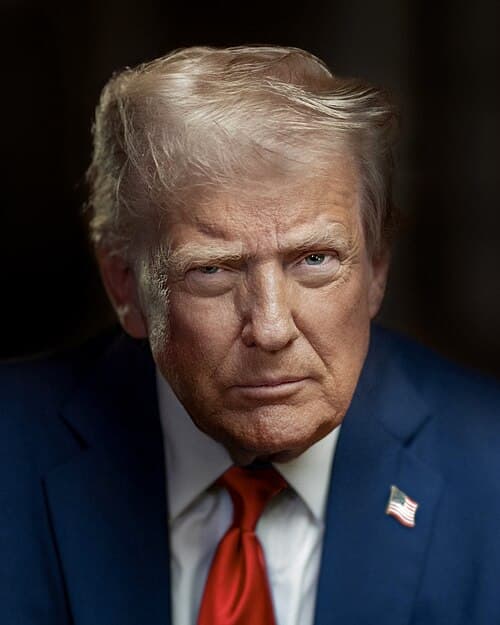
Donald Trump
PERSON • 2 mentions
President of the United States (2017–2021, 2025–present)

Kobert
PERSON
Name reference in documents

Robert Lawrence Kuhn
PERSON
American banker
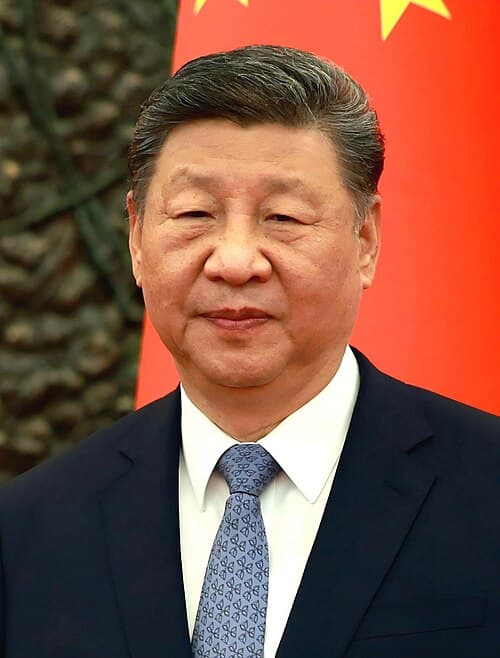
Xi Jinping
PERSON • 3 mentions
General Secretary of the Chinese Communist Party since 2012
BBC World News
ORGANIZATION
International news and current affairs television channel
the Belt and Road Initiative
ORGANIZATION
Organization referenced in documents
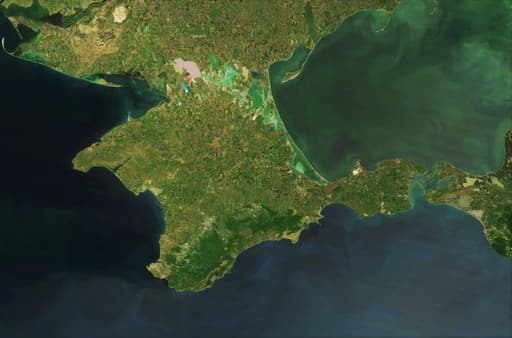
Crimea
LOCATION
Eastern European peninsula, in the Black Sea and Sea of Azov, disputed between Ukraine (de jure) and Russia (de facto)

Myanmar
LOCATION
Country in Southeast Asia

Philippines
LOCATION
Archipelagic country in Southeast Asia

South Sudan
LOCATION
Country in East Africa
the Straits of Malacca
LOCATION
Location referenced in documents
Vietnam
LOCATION
Country in Southeast Asia
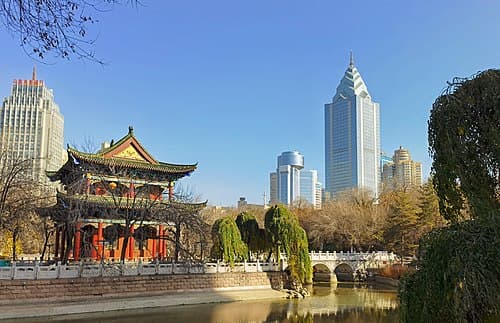
Xinjiang
LOCATION
Autonomous region in China
Statistics
Pages:2
Entities:13
Avg. OCR:96.9%
Sponsored