EFTA00864095
Document Information
Bates Range
EFTA00864095
Pages
2
Original Filename
EFTA00864095.pdf
Document Content
Page 1 - EFTA00864095_001
From: Barnaby Marsh < To: Joichi Ito <->, Jeffrey Epstein <[email protected]> Subject: Re: "Genius" finding Date: Thu, 19 Feb 2015 02:23:48 +0000 On the right track- like the bayesian method. I think that the environment matters a lot too- the people that we look for aggregate in places like Cambridge, where they can be with others who they can resonate with. My guess is that many times they might not have formal positions, but are visitors to labs, research groups, etc. Is there any way to get lists of such people??? From: Joichi Ito < > Date: Saturday, February 14, 2015 at 8:10 AM To: B Marsh < >, Jeffrey Epstein <[email protected]> Subject: Fwd: "Genius" finding Sent from my iPhone Begin forwarded message: From: Scott Page < > Date: February 14, 2015 at 07:16:47 EST To: Joichi Ito < Subject: "Genius" finding Joi, I've been thinking about your question of how to identify amazing people. Here are several thoughts that don't necessarily cohere. I think your approach has to depend partly on the goal. The algorithm I would construct to find the next great artist would differ from one to find a teacher, mathematician, cancer researcher, brain scientist, etc... If you're totally wide open as to subject area, then it seems to me you want to cast a wide net. I would be tempted to try the Bayesian Truth Serum and ask something like Pick a really smart friend, who would that person say should win a genius award. Rather than try to identify people, you might instead seek out papers/projects/programs/Ideas and then identify the person after the fact. You might want to consider asking people for the "coolest thing they know that's NOT on the web (yet) So much filtering and assessment already goes on that most programs free ride on that -- giving award to people who have already won awards. This suggests that one place to look is at the "losers" • contact MacArthur, NIH, NSF, DARPA, GOOGLE, and ask who do you regret not funding? Once you've got a long list of possibilities you have many options. Here are some you may not have considered You could also pay people on mechanical turk to write up little blurbs on each one and then seed them on Facebook, Twitter, etc.. and then only look at the ones that get retweeted. You could use Matt Salganik's pairwise comparison website. hope this helps. Happy to think more. scone EFTA00864095
Page 2 - EFTA00864095_002
Scott E Page University of Michigan•Ann Arbor Santa Fe Institute EFTA00864096
Entities Mentioned
BM
Barnaby Marsh
PERSON
American researcher affiliated with Harvard's Center for Evolutionary Dynamics and the Institute for Advanced Study
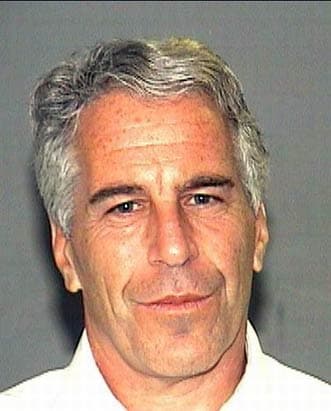
Jeffrey Epstein
PERSON • 3 mentions
American sex offender and financier (1953–2019)
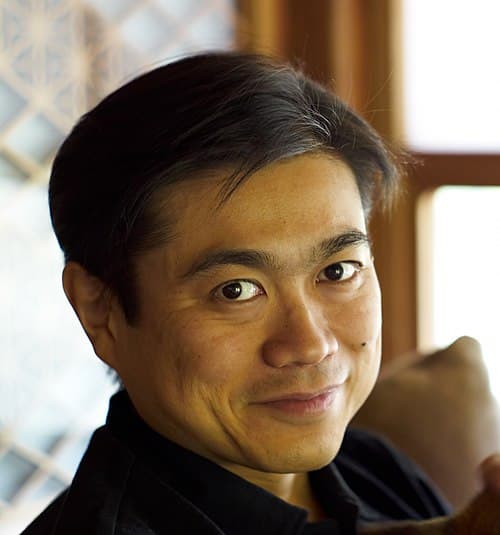
Joi Ito
PERSON • 2 mentions
Japanese-American activist, entrepreneur, and venture capitalist

MacArthur
PERSON
Ambiguous - references to MacArthur Foundation and General Douglas MacArthur in Epstein documents
MS
Matt Salganik
PERSON
Person referenced in documents
SP
Scott Page
PERSON
Person referenced in documents

DARPA
ORGANIZATION
Organization referenced in documents
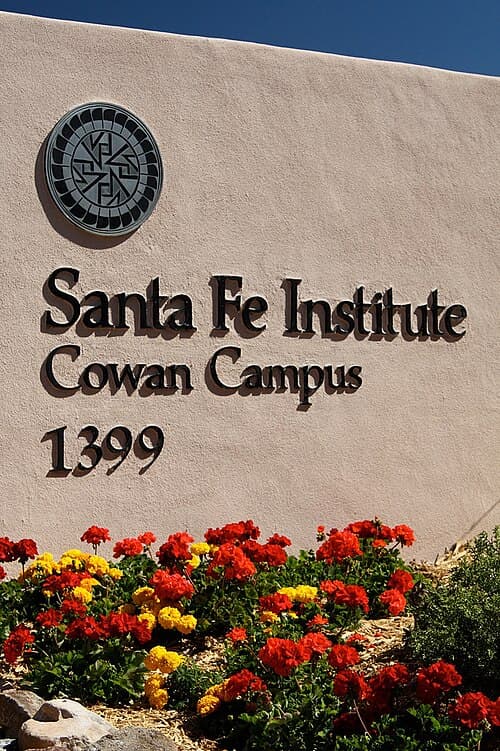
Santa Fe Institute
ORGANIZATION
Organization referenced in documents
Statistics
Pages:2
Entities:8
Sponsored