HOUSE_OVERSIGHT_019444 - HOUSE_OVERSIGHT_019445
Document HOUSE_OVERSIGHT_019444 is a collection of excerpts from various sources, including a science magazine discussing climate change research and a brief news item about an intercultural garden.
This document appears to be a compilation of unrelated articles and snippets. One excerpt discusses the Biotron Institute for Experimental Climate Change Research in Ontario, Canada, and its efforts to study the impact of climate change on ecosystems. Another excerpt highlights an intercultural garden in Germany run by women from various countries. The document also mentions various people and places, including George W. Bush, Adam Sandler, Bill Gates, New York City, and Somalia.
Key Highlights
- •Mentions the Biotron Institute for Experimental Climate Change Research and its work on ecosystem-scale experiments.
- •Discusses an intercultural garden in Germany involving women from Morocco, Afghanistan, Somalia, and Bosnia.
- •Lists various individuals and locations, including George W. Bush, Bill Gates, New York City, and Somalia.
Frequently Asked Questions
Related Links


Document Information
Bates Range
HOUSE_OVERSIGHT_019444 - HOUSE_OVERSIGHT_019445
Pages
2
Source
House Oversight Committee
Date
October 15, 2009
Original Filename
Biotron_OnEarth.pdf
File Size
864.43 KB
Document Content
Page 1 - HOUSE_OVERSIGHT_019444
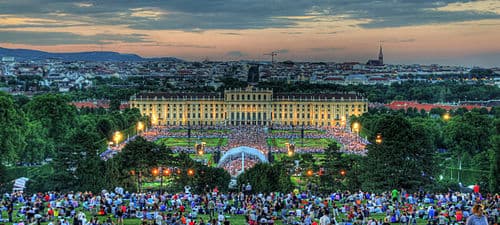
atlanta a a ol ESE DORLING KINNSRSLEY; SOURCE FOR WATER FACT WATER RESOURCES MANAGEMENT JOURNAL | Frontlines SCIENCEBUSINESSNATURETECHNOLOGYCULTUREPOLITICS | EARTH'S SECRETS How might soil bacteria be affected by global warming? BIOLOGISTS DIG DEEPER Canada’s new Biotron superlab contains miniature chunks of the natural world that will help us predict the impact of climate change on living organisms | BY LINDSAY BORTHWICK GROUP OF PLANT SCIENTISTS GATHERED IN VIENNA IN 2005 AT THE International Botanical Congress. The meeting was pretty much what you would expect until its conclusion, when the congress declared: “As a matter of urgency, facilities for controlled, ecosystem-scale experiments are required now.” With- out a better toolbox to study how the natural world responds to global climate change, “sustained human habitability of Earth” would be at risk. Fortunately, just such a toolbox was already being designed by Norman Hiiner, a Canadian biochemist and plant biologist. Htiner had begun work on his Biotron Institute for Experimental Climate Change Research in 1999. In early 2008 it will open its doors, the first facility in the SUO}IDS OZE ‘PST “DUIYD UT “SUO]IDE OEP‘N9G “SaqIDIG payiUugQ ay) ul uotjdunsu0s tajoM DIIdDI 4ad oNUUy Peace 1n The Garden LAST FALLIN THE GERMAN city of Kassel, a group of about 15 women harvested a bumper crop of pumpkins, squash, and wine grapes frarn a small community gar- den. Nothing unusual there, perhaps—except that the women were from Moracco, Afghanistan, Somalia, and the former Yugosiavia. The “intercultural garden” in Kassel is one of about 100 in Germany, but the only one run entirely by women. [And after the gardeners had long discussions about the haz- ards of pesticides, its produce will be totatly erganic.] The gardens began in 1995, after a group of Bosnian women in Gottingen, waiting out the Balkan conflict, told social workers how much they missed the farnous plum and apple orchards of Bosnia’s Drina Valley. There has been adversity along the way. A garden in Berlin had to be placed under police protection after it was targeted by neo-Nazi protest- ers. In Cologne the gates of another garden have been destroyed three times. And it isn't always easy to coax tra- ditional craps such as Afghan mint, coriander, and Iranian leeks from the mineral-rich German soil. Yet the gardens thrive. Says Behoumi, a 31-year-old from Morocco, “Without the beauty of the garden | could not survive.” —ANGELA BOSKOVICH WINTER 2008 onearth 13 HOUSE_OVERSIGHT_019444
Page 2 - HOUSE_OVERSIGHT_019445
FRONTLINES world that will allow researchers to re-create and study how a com- plete ecosystem, such as Arctic tundra or boreal forest, responds to climate change. The Biotron, Hiiner says, is “as close as you can get to nature [in a lab].” The Biotron will help integrate biology into the scientific study of global warming. Existing climate change models, says Hiiner, are tore about physics than biology; moreover, they describe changes that are happening to the planet. rather than to particular habitats, species, or individuals. Scientists haven't been able to create pre- dictive models, for example, of how changes in rainfall and researchers tested in two sepa- rate “missions” whether humans could live sustainably in a sealed, self-contained environment as a precursor to colonizing outer space. The Biotron, scientifically speaking, is in a different league. The superlaboratory is a joint project of the University of Western Ontario, the University of Guelph, Ontario, and Agricul ture and Agri-Food Canada, a federal agency. The nondescript five-story building, located in the agricultural heartland of south- western Ontario, is an engineer- ing marvel, yel a bargain al just U.S. $28 million. Inside are state-of-the-art fa- cilities that support research into microorganisms, insects, and plants, afl of which can be geneti- cally modified to suit research- ers’ needs. Temperature in the Researchers will vie for access to the Biotron much as physicists compete to use the world’s few particle : accelerators or astronomers the latest and biggest optical telescopes temperature will affect soybean yields in the U.S. grain belt or butterflies in the Amazon basin, because, with a few exceptions, they haven’t had the tools to measure the impact of climate change on living organisms. Now there’s a place where whole ecosystems can be scrupu- lously re-created and organisms scrutinized, from their DNA to their interaction with other organ- isms. With more complete data, scientists will be able to make better predictions—and their ex perimental findings could better inform policy makers, who might, for example, provide subsidies for crops thatrespond well to emerg- ing climate patterns. The Biotron may call to mind Biosphere 2, the large artificial habitat plopped down 20 years ago in the Arizona desert, where 14 onearth WINTER 2008 Biotron’s climate chambers can be varied from —40 degrees Fahr- enheit to 122 degrees, to simulate anything from the Arctic winter to a tropical rainforest. On the reof of the building are six “biomes”——air- locked, preenhouselike structures that have been custom designed to precisely control environmental factors such as ternperature, UV radiation, light intensity, wind, pre- cipitation, and CO;, Each biome is large enough to house trees more than 30 feet tall and to allow for the re-creation of complex biologi- cal communities that can extend from the highest tree canopies to underground soil layers. If the possibilities seem end- less, they nearly are. The plan is for the world’s leading scientists to rotate in and out of the lab space, and the biomes will be regularly reconfigured. One such setup will use cross sections of Arctic perma- frost, transported from northern Canada, so researchers can study how it reacts to rising tempera- tures: As the permafrost thaws, how much methane gas will be released? How will bacteria and overwintering insects be affected by changing freeze-thaw cycles? Scientists will design and study more temperate ecosystems, as well, to learn how changes in temperature and CQ» affect the growth of photosynthetic organisms, including crops and boreal forest, Biotron researchers will also be able to study the benefits and risks of biotechnology in agriculture, forestry, and medicine by examin- ing the basic biology of genetically modified organisms: What is the rate of gene transfer from trans- genic plants to wild ones? Can plants be engineered to manufac ture medicinal compounds that will benefit humans? The Biotron will be equipped with a sophisticated imaging and analysis system—a virtual control room—that will expand its reach globally, allowing researchers anywhere to manage and moni- tar experiments remotely over the Intemet in real time. A scien- tist in India studying the impact ot climate change on rice could instruct the Biotron to raise the temperature or CO, concentra- tion in a biome set up to simulate a South Asian rice paddy. Then he or she could monitor the impact of this change through images and other data automatically col- lected and stored in a supercom- puting network. Researchers will vie for access to the Biotron in much the same way that physicists compete te use the world’s few particle accel- erators or astronomers the latest and biggest optical telescopes. Like them, itis a place for frontier science, where old models will fall and new and unexpected ones will arise—excenpt that the goal is not to understand our cosmic origins but to influence our destiny. afps uanoid uaeg JOU anDY JOY] ApIDp spoIiiuaya ZZ 01 pasodxa $1 piIYa uNdIIdawYy asddany ay] ‘sjonpoud aipa poUuOssad YSENOLY J, HOUSE_OVERSIGHT_019445 Far From Nirvana NEW YORK CITY'S AMITABHA Buddhists are full of good intentions. Last summer members of the group baught hundreds of eels, frogs, and turtles from the city's China- town markets and released thern inta New Jersey's Pas- saic River to save them fram the dinner table. The problem: the state's Department of Environmental Protection has strict rules for the release of animals into its watersheds, and the group now faces fines for illegally introducing inva- sive species. To make matters worse, the animats may not survive, ADAM SPANGLER They Didn’t Mean That IN OUR FALL 2007 ISSUE, Howard Frumkin of the Centers warned that global warming was “perhaps the largest looming public health chal- lenge that we face.” On October 23, Frumkin’s boss, CDC director Julie Gerberding, testified about climate change ta the Sen- ate Environment and Public Works Cammittee. By the time Bush administration officials were done review- ing her 12-page draft, it had been slashed to six. Among the statements cut: “The COC considers climate change a serious public concern.” or Disease Control AGOWE ILLUSTRATION BY STEVE WACKSMAN RIGHT PHU LOGRAPH FOR OME4ATH BY LOU MICKOMS; SQURTE FOR VAEMICALS PACT ENVIANKMENTAL WORKING GROUP
Entities Mentioned

Adam Sandler
PERSON
American actor and comedian
AB
ANGELA BOSKOVICH
PERSON
Name reference in documents
BE
Behoumi
PERSON
Name reference in documents

Bill Gates
PERSON
American businessman, investor, and philanthropist (born 1955)
Condoleezza Rice
PERSON
American diplomat and political scientist (born 1954)
CW
Courtney Wild
PERSON
American victim/survivor of Jeffrey Epstein who led legal battle for victims' rights

Far From Nirvana
PERSON
Name reference in documents
FR
Frumkin
PERSON
Name reference in documents

George W. Bush
PERSON
President of the United States from 2001 to 2009
GE
Gerberding
PERSON
German actor (1921–1986)
HI
Hiiner
PERSON
Name reference in documents

Howard Frumkin
PERSON
Name reference in documents
HT
Htiner
PERSON
Name reference in documents
JU
Julie
PERSON
First name reference to multiple individuals in Epstein documents
LINDSAY BORTHWICK
PERSON
Name reference in documents
LM
LOU MICKOMS
PERSON
Name reference in documents
Marc Rich
PERSON
American commodities trader (1934–2013)
NO
Norman
PERSON
Ambiguous first name - refers to multiple Normans including Norman Romero
SW
STEVE WACKSMAN
PERSON
Name reference in documents
Agricul ture and Agri-Food Canada
ORGANIZATION
Organization referenced in documents
Biotron Institute for Experimental Climate Change Research
ORGANIZATION
Organization referenced in documents
Disease Control
ORGANIZATION
Organization referenced in documents
the University of Western
ORGANIZATION
Organization referenced in documents

the University of Zurich
ORGANIZATION
Organization referenced in documents
Antarctic
LOCATION
Polar continent
Atlanta
LOCATION
Capital city of Georgia, United States
Biotron
LOCATION
Research greenhouse at University of Wisconsin
Bosnia
LOCATION
City in Bosnia and Herzegovina
Cologne
LOCATION
Most populous city in North Rhine-Westphalia, Germany
Drina Valley
LOCATION
Location referenced in documents
Earth
LOCATION
Third planet from the Sun in the Solar System
Gottingen
LOCATION
Large city in Lower Saxony, Germany
Kassel
LOCATION
City in Hesse, Germany
Moracco
LOCATION
Location referenced in documents

Morocco
LOCATION
Sovereign state in North Africa

New Jersey
LOCATION
State of the United States of America
New York City
LOCATION
Most populous city in the United States
Norther
LOCATION
Finnish melodic death metal band

Ontario
LOCATION
Province of Canada

Somalia
LOCATION
Sovereign state in Africa
Vienna
LOCATION
Capital of and state in Austria
Yugosiavia
LOCATION
Location referenced in documents
Statistics
Pages:2
Entities:42
Avg. OCR:89.2%
Sponsored