EFTA00578312
Document Information
Bates Range
EFTA00578312
Pages
4
Original Filename
EFTA00578312.pdf
Document Content
Page 1 - EFTA00578312_001
Pet Travel Scheme The UK Pet Travel Scheme (PETS) USA and Canada DEFRA °.===` EFTA00578312
Page 2 - EFTA00578312_002
From I I December 2002 dogs and cats that meet the rules of the UK Pet Travel Scheme (PETS) can travel to the UK from mainland USA and Canada without having to undergo 6 months quarantine. Hawaii is already port of PETS. Parts 1-4 of this fact sheet cover the basic PETS rules and what you need to do to bring your dog or cat into the UK. Parts 5 and 6 provide general information and the annex is a checklist. This fact sheet has been issued for the inclusion of the USA and Canada in PETS. The fact sheets are regularly updated. Check our website for the latest information (part 6). PART 1: THE RULES PETS applies to dogs and cats which have been in this order: • microchipped (part 2, step I) • vaccinated against rabies (pad 2, step 2) • blood tested at a recognised laboratory (port 2, step 3) • issued with an official PETS certificate (pod 2, step 4) • treated against ticks and tapeworms and issued with an official certificate of treatment (part 2, step 5) Your animal can be fitted with a microchip in any country. As animals from the USA or Canada can only enter the UK direct, the rabies vaccination, blood sampling (which is needed for the blood test) tick and tapeworm treatment and issue of official certificates should normally be done in one qualifying country (i.e. USA or Canada). However, if any of these procedures were done in Europe before your animal went to the USA or Canada, special rules may apply. Ring the PETS Helpline for more advice (pod 6). Please note: As Hawaii has been part of PETS since 31 January 2002, that State issues its own official PETS and tick and tapeworm certificates. Dogs and cats are required to enter the UK on an approved air route and travel as cargo in a container bearing an official seal (parts 3o and b). You will also have to complete a declaration of residence confirming that your animal has not been outside certain countries in the 6 months before entering the UK (port 3c). The six month rule Your dog or cat may not enter the UK under PETS until 6 months have passed from the date that your vet took the blood sample which gave a successful test result. Once the vet has signed the PETS certificate and that 6 month period has passed, the PETS certificate is valid and your animal may enter the UK. This rule is necessary because an animal infected before vaccination would not be protected against rabies by the vaccine. Six months is the maximum time needed for most infected animals to display any clinical signs of rabies. You are responsible for obtaining the correc documentation for your dog or cat to enter the UK under PETS. We strongly recommend that you obtain all the necessary certification before you travel. Bring the supporting documents (e.g. vaccination card, blood test result) with you. PART 2: PREPARING YOUR DOG OR CAT Step 1: Microchipping Your dog or cat must first be microchipped. In Europe, ISO (International Standards Organisation) Standard microchips meeting specifications 117B4 or Annex A to ISO Standard 1 1785 are generally used. A different type of microchip is often used in the USA and Canada. If the microchip used does not correspond to one of these ISO Standards, you are advised to bring your own microchip reader, particularly if you intend to travel from the UK to Europe with your animal and then return to the UK under PETS. Get your vet to test that the microchip works before and after it has been fitted and each time your animal visits the vet. Step 2: Rabies vaccination Your dog or cat must be at least 3 months old before being vaccinated. The vaccination must be done after it has been microchipped. Make sure your vet checks the microchip number and enters it on the vaccination record. If your animal has been vaccinated before it was fitted with a microchip, it will have to be vaccinated again. Vaccination record card When your dog or cat is vaccinated, make sure your vet records the following on its vaccination record: • its date of birth/age (if known) • the vaccine product name • the microchip number • the batch number • the date of vaccination • the date by which the booster must be given Booster vaccinations After your dog or cat has been vaccinated and successfully blood tested, it will need regular booster vaccinations. These must be given by the "Valid until" date on the PETS certificate (step 4). If this date is missed, your animal will have to be vaccinated and blood tested again and the 6 month rule will apply from the date the new blood sample is taken. Step 3: Blood test After vaccination your dog or cat will need a blood test to make sure that the vaccine has given sufficient protection against rabies. Your vet will advise you on the best time to do this. They will arrange to take a blood sample and send it for testing to a laboratory recognised by the UK's Department for Environment, Food and Rural Affairs (Defra). Make sure that the vet gives you a record of the date the sample was taken with the microchip number clearly stated. A successful result will show that the rabies neutralising antibody titre was equal to or greater than 0.5 IU/ml. Ask your vet for a copy of the blood test result, with the microchip number clearly stated, and keep it safe. Be warned that if your animal fails its blood test it will probably need to be vaccinated and blood tested again and the 6 month rule will apply. Step 4: PETS certificate After your dog or cat has passed its blood test, you should get an official PETS certificate which will show that your animal has been microchipped, vaccinated against rabies and successfully blood tested. How to get a certificate Only vets authorised by the USA or Canadian government can issue the certificate. Take your animal, its vaccination record and blood test result when you go to get the certificate. If you do not have an official certificate when you travel, you will have to licence your dog or cat into quarantine in the UK before you travel with a view to obtaining its early release (pod So). Bring EFTA00578313
Page 3 - EFTA00578312_003
your animal's vaccination record and blood test result with you to support a request for early release. Validity of the certificate The certificate will show "Valid from" and "Valid until" dales. Your dog or cat can enter the UK only between these dates. The "Valid from" date will be 6 months from the date that the blood sample was taken which gave a successful test result. Ask your vet For a renewal certificate each time your animal is given its rabies booster. The booster must be given by the "Valid until" date (see step 2 if the dale is missed). Renewal certificates are valid as soon as they are issued. Step 5: Treatment against parasites Before your dog or cat can enter the UK, it must be treated against certain ticks and tapeworms. Any registered vet can do this. You cannot give the treatment yourself. Make sure the vet checks your animal's microchip number with a scanner before treatment. This treatment must be done between 24 and 48 hours before your animal is checked-in on an approved route to the UK. It must be done every lime your animal enters the UK. Dogs and cats must be treated for the tapeworm with a product containing praziquantel and For ticks with a product licensed For use against ticks which has a marketing authorisation in the country in which it is given. Tick collars are not acceptable. Dogs and cats entering quarantine with a view to early release can have the treatment done when in quarantine. The certificate of treatment After your dog or cat has been treated, the vet must give you an official certificate (not a private veterinary certificate or headed lever) to show that it hos been done. An official certificate is one issued for the purposes of PETS by a government authority of the USA or Canada. It will have the name of the government department at the bp. Make sure the certificate shows your animal's microchip number, the dote and time of treatment and the products used. The vet must also sign, stamp and date it. Keep the certificate safe. PART 3: TRAVELLING TO THE UK (a) How to travel Dogs and cats travelling from the USA or Canada are required to travel to the UK on an air route approved for PETS by the UK Government. These routes will take you only to an airport in England, not one in Scotland, Wales, the Channel Islands, the Isle of Man, Northern Ireland or the Republic of Ireland. Animals travelling from the USA or Canada may not enter the UK on a route departing from any other country. must also travel as cargo in a container bearing an official seal (part 3b). Check costs, requirements and procedures with your travel company well before you travel. Visit the PETS website or call the Helpline for the latest information on routes (pod 6). If your animal does not travel on an approved route, before you travel you will need to arrange for it to be licensed into quarantine on its arrival in England. It may be eligible for early release from quarantine (port 5o). Arrange with the transport company for the PETS certificate and the tick and tapeworm certificate to accompany your pet (keep copies For reference). (b) Seals on containers Dogs and cats coming to the UK under PETS, or those entering under early release arrangements, must travel in a container complying with International Air Transport Association (IATA) standards and bearing an official seal. The seal ensures that your animal is not exposed to the risk of infection from rabies on its journey. A government official (such as a customs or immigration officer) must apply the seal and record the seal number either on the official certificate of tick and tapeworm treatment or on the import licence (iF your animal is being licensed into quarantine — part 5a). Airlines can help you with these arrangements, so contact the airline as early as possible before you travel. IF the seal is broken during the journey, a government official of the country in which it was broken must replace it with a new seal. The official must certify in writing that your dog or cat did not come into contact with any other animal between the time the original seal was broken and the new one was applied. The new seal number must be recorded as indicated above. If it is necessary for your animal to be removed from its container, the airline will do so under official supervision. (c) The declaration of residence When you arrive in the UK with your dog or cat you must fill in a PETS 3 form. This is a declaration that your animal hos not been outside the PETS countries in the previous 6 months. The list of countries is shown on the PETS 3A Form accompanying PETS 3. You can either get these forms from the transport company when they check your pet or in advance by ringing the PETS Helpline (part 64. You may still sign this declaration as long as your dog or cat has not left its container (unless under official supervision) during transit or stopover on its journey to the UK. (d) Customs formalities You are required to complete Customs formalities for dogs and cats entering the UK from the USA or Canada. An agent, travel company or airline should be able to do this for you and may charge for this service. Alternatively, you might be able to make your own arrangements. This would involve contacting the Customs authorities at your arrival point in the UK to obtain details of the necessary procedures and the appropriate Customs form. We advise you to discuss these charges with your agent, etc before you travel as they might be included as part of a package. The UK Government does not set these charges. (e) Charges on arrival in the UK Airlines will usually cover flight and UK handling charges in the ticket price for your dog or cat. Check when you make your booking. No charges are made by Defra. PART 4: THE PETS CHECK Dogs and cats will be checked at the airport when they land in England. Your animal's microchip and both the official PETS certificates will be checked. You will also have to provide the top copy of the completed PETS 3. The seal on your animal's container should also be intact. If any of these checks foil, your dog or cat will either have to go into quarantine or be reexported. If your animal has failed only because it hos not met the rules on tick and tapeworm treatment, it may be possible to have it treated on arrival and then held for 24 hours after treatment. If the animal arrives at Heathrow, this con be done at the airport. In other cases it will have to be done at local quarantine premises. If it is treated in quarantine, you will have to seek approval for its early release (part 5a). We strongly recommend that you check that all is in order before you travel to the UK with your dog or cat. PART 5: DOGS AND CATS IN THE UK Dogs and cats that have first entered England under PETS can travel freely within the United Kingdom (England, Scotland, Wales, Northern Ireland, the Channel Islands and the Isle of Man) and between these countries and the Republic of Ireland without the need for any additional documentation. However, take your PETS documents with you in case you need to show them. (a) Early release from quarantine Dogs and cots entering the UK which do not meet all the requirements of PETS must be licensed into quarantine. An animal in quarantine can become eligible for early release from the date that it can be shown to comply with all the necessary EFTA00578314
Sponsored
Page 4 - EFTA00578312_004
requirements of PETS. To licence your dog or cat into quarantine, you must obtain an import licence from Defra before it travels. You will need to arrange with the transport company For the licence to accompany your animal (you should keep a copy for reference). You will have to meet the costs of quarantine. For more information and details of how to apply for an import licence, ring the Quarantine Section at Doha on +01 1 44 20 7904 6214 or write to them at Defra, Area 211 lA Page Street, London, SWIP 4PQ, or visit the PETS website (port 6). (b) Taking your dog or cat out of the UK If you take your dog or cat from the UK to a European PETS country and want to return later, you will need to get a UK PETS I certificate from a government-authorised va in the UK before you go. Make sure you bring your animal's vaccination record and a copy of its blood test result with you. For more information, including details of requirements for your animal to enter other European PETS countries, see the Pet Travel Scheme European Countries Fact sheet available on the PETS website (part 6). (c) Dangerous dogs It is illegal to possess certain types of dogs in the UK. For a list of prohibited breeds visit the Defra website at www.defra.gov.uk/animalh/welfare (click on 'policy on general animal welfare' and scroll down to 'The Control of Dogs') or phone Defra on +011 44 20 7904 6910. If you bring one of these dogs into the UK, you could be prosecuted and the dog seized and destroyed. IF in doubt, don't travel with it. (d) Health and welfare of your dog or cat We strongly recommend that you consult your vet if you have any doubts about the health and welfare of your dog or cat when travelling. If your animal is ill or injured, it may not be healthy enough to withstand the trip. It may also bring diseases to the UK. Get your vet to check that your animal is in good health before you make travel arrangements. If you are in doubt about its health, don't let it travel. A leaflet on how to protect the welfare of your animal is available from the PETS Helpline and website (part 6). PART 6: MORE INFORMATION • PETS Helpline: +011 44 870 241 1710 (Monday to Friday - 8.30am to 5pm UK time) • Website: www.dara.gov.uk/animalh/quarantine • E-mail: [email protected] (enclose your address and daytime telephone number) • Fax: +011 44 20 7904 6834 While this fact sheet provides information about the Scheme, it cannot cover every possible situation. Ring the PETS Helpline if your questions are not answered 6y this fact sheet. n o rra Ito PETS He aline +011 44 870 2411710 e-mail: [email protected] Annex A PETS checklist This list is to help you prepare your dog or cat for PETS. It is not exhaustive. See advice in Part 6 of the fact sheet. Tick the boxes os you follow the steps. Preparing your dog or cat Step 1 My dog or cat has first been lifted with a microchip I have a microchip reader if the microchip does not meet an ISO Standard The microchip can be read Step 2 My animal has been vaccinated against rabies, after it was fitted with a microchip The microchip number has been entered correctly 6y the vet on the vaccination record card Step 3 I have a record from the vet of the date the blood sample was taken, showing the microchip number. The blood sample was taken after the vaccination My animal has had a successful blood test at a Defra recognised laboratory I have a copy of the successful blood test result showing my animal's microchip number Step 4 I have (if available) a fully and correctly completed official PETS certificate K The certificate will be valid for entry to the UK on the date of arrival 0 Step 5 (not necessary if your pet is entering quarantine on anneal in the UK) A vet has given my animal the tick and tapeworm treatment within the required timescale K I have (if available) a fully and correctly completed official certificate of tick and tapeworm treatment from a vet 0 Travelling to the UK I have arranged for my animal to travel on an approved PETS route to an airport in England where it will be checked. I have arranged for my animal to travel in a sealed container If my animal is entering quarantine, I have obtained an import licence from Defra before travelling On the day of travel, I have completed a declaration of residence for my animal (PETS 3) DEFRA Department for Environment, Food & Rural Affairs Produced by the Department for Environment Food & Rural Affairs @ Crown copyright November 2002. PB7659 Printed on recycled paper containing 75% post consumer waste. EFTA00578315
Entities Mentioned

Joi Ito
PERSON
Japanese-American activist, entrepreneur, and venture capitalist
Defra
ORGANIZATION
Organization referenced in documents
Defra, Area 211
ORGANIZATION
Organization referenced in documents
Department for Environment
ORGANIZATION
Organization referenced in documents
Food and Rural Affairs
ORGANIZATION
Organization referenced in documents
International Air Transport Association
ORGANIZATION
Organization referenced in documents
ISO Standard
ORGANIZATION
Organization referenced in documents
the Pet Travel Scheme
ORGANIZATION
Organization referenced in documents
the PETS Helpline
ORGANIZATION
Organization referenced in documents
The UK Pet Travel Scheme
ORGANIZATION
Organization referenced in documents

Hawaii
LOCATION
State of the United States of America
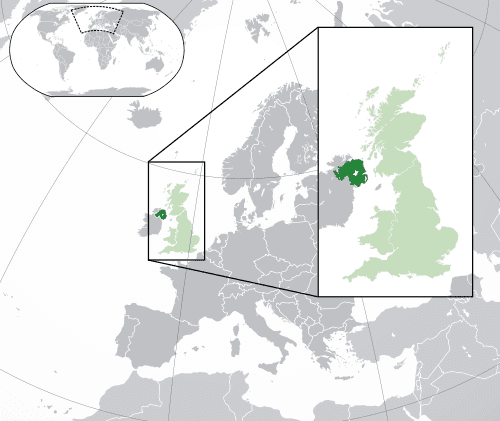
Northern Ireland
LOCATION
Part of the United Kingdom situated on the island of Ireland
the Channel Islands
LOCATION
Location referenced in documents
the Republic of Ireland
LOCATION
Location referenced in documents
the United Kingdom (England
LOCATION
Location referenced in documents

Wales
LOCATION
Country in north-west Europe, part of the United Kingdom
Statistics
Pages:4
Entities:16
Sponsored