HOUSE_OVERSIGHT_029305 - HOUSE_OVERSIGHT_029314
HOUSE_OVERSIGHT_029305 is a CCH Tax Briefing document providing a summary and analysis of the Supreme Court's decision in *United States v. Windsor* (2013), which struck down Section 3 of the Defense of Marriage Act (DOMA).
This document, published by Wolters Kluwer, discusses the implications of the Supreme Court's ruling against DOMA, focusing on the federal tax consequences for same-sex married couples. It covers various aspects, including income tax benefits, estate and gift taxation, employee benefits, and the Affordable Care Act. The document also highlights potential "marriage penalties" for same-sex couples and the need for employers to revise benefit plans.
Key Highlights
- •The Supreme Court ruled against DOMA in a 5-4 decision.
- •The ruling allows joint tax returns for same-sex married couples.
- •Barack Obama's administration was impacted by the decision.
Frequently Asked Questions
Related Links



Document Information
Bates Range
HOUSE_OVERSIGHT_029305 - HOUSE_OVERSIGHT_029314
Pages
10
Source
House Oversight Committee
Date
June 27, 2013
Original Filename
2013-Supreme Court DOMA Ruling_June-27-2013_locked.pdf
File Size
378.08 KB
Document Content
Page 1 - HOUSE_OVERSIGHT_029305
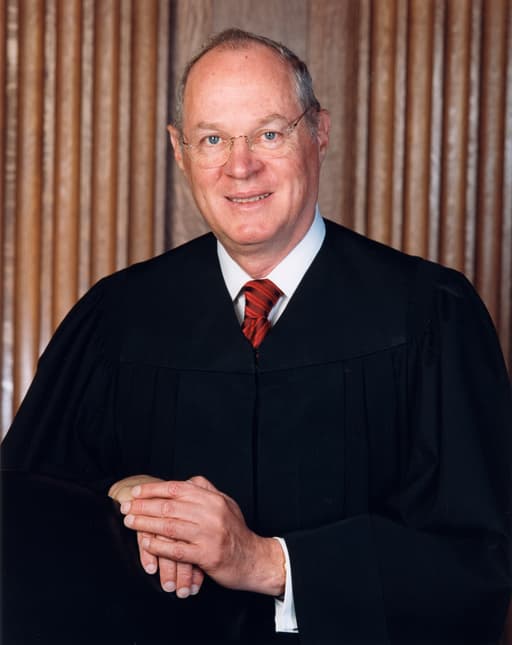
CCH Tax Briefing % Wolters Kluwer CCH SUPREME COURT STRIKES DOWN DOMA June 27, 2013 HIGHLIGHTS • Supreme Court Rules Against DOMA 5 To 4 • Joint Returns For Same-Sex Married Couples • Tax Refunds Possible • "Marriage Penalty" Shared By Same-Sex Couples • Estate Planning Strategies Change • Employers Expected To Revise Benefit Plans • No Nationwide Same-Sex Marriage Mandate INSIDE Issues At Stake.... Supreme Court's Holdings.... .2 2 Federal Tax Consequences ...... ....2 Income Tax Benefits And Disadvantages........3 Filing Status. 3 Filing Status, AGI Floors And Threshold Amounts... 4 Other Same-Sex Couple Income Tax Issues.....5 Estate And Gift Taxation.... 6 Employee Benefits... Affordable Care Act... ...8 Social Security Benefits Effective-Date Issues. 9 .9 Special Report Post-DOMA Tax Implications Loom Large n a 5 to 4 decision, the United States Supreme Court has found that Saction 3 of the federal Defense of Marriage Act (DOMA) violates the equal protection clause of the Fifth Amendment of the U.S. Constitution as applied to persons of the same sex who are legally married under the laws of their state (Windsor, S.Ct., June 26, 2013, 2013-2 USTC g50,400). The major- ity, written by Justice Anthony Kennedy, held that DOMA is unconstitutional as a deprivation of the liberty of the person protected by the Fifth Amendment of the Constitution. The decision opens the door for same-sex married couples to enjoy many federal tax- related benefits previously available only to opposite-sex married couples. These include income tax benefits, estate and gift tax ben- efits, taxpayer-friendly employee benefits, and more. Same-sex couples must now also deal with circumstances under the tax law that may create a so-called "marriage pen- alty." Employers must prepare for exten- sive changes in the treatment of same-sex couples. And individuals claiming tax cred- its and other provisions under the Patient Protection and Affordable Care Act are im- pacted by the decision. IMPACT. It is unclear how quickly the IRS and other federal agencies will re- act to the Supreme Court's decision ...or how quickly same-sex couples may need to act to protect certain rights. Presi- dent Obama has directed all federal agencies, including Treasury and the IRS, to revise their regulations to reflect the Supreme Court's decision as soon as possible. Many tax professionals had been advising same-sex couples to file protective refund claims in anticipation of a favorable ruling from the Supreme Court. This is one of several strategies that practitioners and taxpayers should follow up on, as well as filing amended returns before the applicable limitations periods expire on back tax years. The decision to strike down DOMA goes be- yond refunds. Same-sex couples need to consider many other tax implications. IMPACT. The Supreme Court did not ex- tend same-sex marriage nationwide; it de- clined to say whether same-sex couples had a Constitutional right to marriage that would override state law. But the Supreme Court's decision has opened up federal benefits -including those under the Inter- nal Revenue Code-- to same-sex couples considered married under state law. The Windsor decision leaves many additional issues unresolved or unclear. Among them are the status of "domestic partnerships" and "civil unions" under state law in con- nection with federal benefits, the status of a same-sex couple married in one state but now residing in a state in which same-sex marriage is not recognized, and the abil- ity of married same-sex couples to divorce without first moving back to a state that recognizes same-sex marriage. CAUTION. Immediately after the Wind- sor decision was released, questions arose regarding the impact of residency upon the recognition of marital status for federal tax purposes. Will same-sex couples duly mar- ried in one state who now reside in a state that does not recognize same-sex marriage be entitled to federal benefits, including being able to file jointly under the federal tax laws? ... Or will they be required to file as single under federal law as well as state law? While President Obama on June 27 expressed the view that same-sex mar- riages performed in one state should apply HOUSE_OVERSIGHT_029305
Page 2 - HOUSE_OVERSIGHT_029306
TAX 2013 Expert Analysis 2 to another, he added that "Im speaking as a president and not as a lawyer. ISSUES AT STAKE In December 2012, the Supreme Court an- nounced that it would take up two cases re- lated to same-sex couples: Windsor, which arose out of an estate tax dispute between a surviving partner/spouse and the IRS; and Hollingsworth v. Perry (CA-9, Feb. 7, 2012), which addressed whether the equal protec- tion clause of the Fourteenth Amendment to the Constitution prohibits California from defining marriage as the union of a man and woman. The Supreme Court heard oral ar- guments in both cases in March 2013. IRS Denies Estate Tax Marital Deduction. In Windsor, a long-time same-sex couple married in Canada in 2007. They had previ- ously registered as domestic partners in New York City, where they made their home. One spouse died in 2009. Because of DOMA, the survivor did not qualify for the unlimited marital deduction under the Internal Revenue Code and as a result, the executor of the estate paid $363,000 in federal estate tax that was not otherwise due. The survivor as executor and sole beneficiary filed a refund claim under Code Sec. 2056(a) (under which property of a surviving spouse generally passes free of fed- eral estate tax). The IRS determined that the survivor was not a spouse under Section 3 of DOMA and, therefore, not a surviving spouse under Code Sec. 2056(a). A federal district court found that Section 3 of DOMA violated the equal protection clause of the Fourteenth Amendment because there was no rational basis to support it. The Second Circuit Court of Appeals affirmed the lower's court decision, finding that homosexuals are a protected class and that Section 3 of DOMA was not sub- stantially related to an important government interest and violated Equal Protection. SUPREME COURT'S HOLDINGS Writing for the majority in Windsor, Justice Kennedy found that DOMA had departed CCH Tax Briefing from the long standing tradition and his- tory of reliance on state law to define mar- riage. The State of New York had recognized the validity of same-sex marriages, which resulted in a status that "is a far-reaching legal acknowledgment of the intimate rela- tionship between two people, a relationship deemed by the State worthy of dignity in the community equal with all other marriages," Kennedy wrote. He reasoned that DOMA sought to injure this class of persons whom New York sought to protect, and by doing so violated basic due process and equal protec- tion principles applicable to the federal gov- ernment and was therefore unconstitutional. "The decision opens the door for same-sex couples to enjoy many tax-related benefits previously available only to opposite- sex couples." DOMA's operation in practice, Kennedy continued, was to treat same-sex marriages as second-class marriages for purposes of federal law "by imposing a system-wide enactment with no identified connection to any particu- lar area of federal law." DOMA's principal purpose was to impose inequality, not for other reasons such as governmental efficien- cy, Kennedy held. Therefore, the majority found DOMA invalid for lack of a legitimate personhood and dignity New York had sought to protect through its marriage laws. COMMENT: The majority opinion listed numerous ways in which DOMA infringed upon the dignity of same-sex couples. Among these is financial harm caused by DOMA to children of same-sex couples by raising the cost of health care for families by taxing health benefits pro- vided by employers to their workers' same- sex spouses. Another example, Kennedy wrote, is that DOMA denies or reduces benefits allowed to families upon the loss of a spouse and parent, benefits that are an integral part of family security. COMMENT: Justice Kennedy qualified the majority's ruling at the end of the de- cision, stating that its applicability was "confined to those lawful marriages," meaning those recognized by the states that currently allow same-sex marriag- es. Kennedy observed that Section 2 of DOMA, which allows States to refuse to recognize same-sex marriages performed under the laws of other States, had not been challenged in Windsor and contin- ues to be the law. On June 26, House Democrats introduced legislation to re- peal Section 2 of DOMA. California's Proposition 8. On the same day the Supreme Court announced its decision in Windsor, the Justices ruled, 5-4 (but with a dif- ferent mix of Justices for and against), to send Hollingsworth back to the California courts rather than to directly decide on the constitu- tionality of Californias ban on same-sex mar- riage. There, the Supreme Court held that the petitioners did not have the standing to chal- lenge the lower cour's decision throwing out Proposition 8, which denied same-sex couples the right to marry in California. This decision paves the way for same-sex marriage to begin again in California sometime in late July. FEDERAL TAX CONSEQUENCES Under federal income tax rules, same-sex married couples can now presumably enjoy benefits that had been unavailable to them because of DOMA. On the other hand, cer- tain strategic advantages previously enjoyed by same-sex married couples who filed as single individuals under the federal tax laws, have now likewise ended. COMMENT. Aside from the fact that it was a federal tax refund claim in Wind- sor that triggered the litigation that found itself before the U.S. Supreme Court, the opinion focused on Constitutional rights and privileges, without any technical @2013 CCH Incorporated. All Rights Reserved. HOUSE_OVERSIGHT_029306
Page 3 - HOUSE_OVERSIGHT_029307
June 27, 2013 discussion of the tax law itself. The Court judged DOMA for its impact on "over 1,000 federal statutes and the whole realm of federal regulations." Very little was said specifically about federal tax law beyond that. Nevertheless, the federal tax law is clearly among those "federal stat- utes and regulations" impacted most di- rectly by the Supreme Court's holding. IMPACT. Same-sex couples who were mar- ried under state law for years prior to 2013 now need to decide whether to amend those prior-year returns still open under the Code's statute of limitations, to reflect a change from unmarried to married filing status. Same-sex married couples also should con- sider updating their estate plans, based upon the estate and gift tax impact of Windsor. INCOME TAX BENEFITS AND DISADVANTAGES Because of the Supreme Cour's decision, the same tax benefits and disadvantages faced by just-married, opposite-sex couples-in chang- ing from filing as separate, unmarried indi- viduals to filing as married filing jointly (or married filing separately)-are now shared by same-sex married couples. Likewise, however, those same-sex couples not married under state law continue to be subject to the same disadvantages and benefits, and face many of the same strategic decisions, as unmarried het- erosexual couples under the federal tax law. CAUTION. As mentioned, above, reso- lution is pending on the issue of whether recognition or non-recognition of a same- sex marriage in the State in which the same-sex couple currently reside controls whether the IRS will treat the couple as married for federal tax purposes. Most federal agencies have defined marriage in the past based on a couples residency and not where they were married. FILING STATUS A taxpayer's filing status depends in large part-if not exclusively in most cases-on the taxpayer's marital status. Taxpayers may be single, surviving spouse, head of house- hold, married filing joint returns, or married fling separately. Filing status, in turn, deter- mines the right to many tax benefits, both in terms of access and amount. Income tax rate bracket levels, the standard deduction, per- sonal exemptions, and the adjusted gross in- come (AGI) amounts at which many tax ben- efits "phaseout" all hinge upon filing status. Joint Return Status. Because of the Supreme Court's Windsor decision, same-sex couples who currently are married under state law are presum- ably now also barred for federal tax purposes from filing separate returns as unmarried (or as head of household, in most cases); they must file either jointly or married filing separately for 2013 (un- less they are divorced or have a final separation agreement in place by the end of 2013). The general rule that has always applied to filing sta- tus now presumably applies to same-sex married status as well: an individual's filing status is de- termined for the entire year based upon marital status on December 31s of that year. The IRS is expected to issue guidance in this area. IMPACT. Leading up to the Supreme Court's decision, many same-sex couples filed protective income tax refund claims using married filing jointly status. A pro- tective refund claim is a claim filed to protect the taxpayer's right to a potential refund based on a contingent event for a taxable period for which the period of limitations is about to expire. Now that the Supreme Court's decision is out, full refund claims, rather than protective claims, should be filed going forward. COMMENT. Under current rules, a tax- payer can sign a joint return if his or her spouse is serving in a combat zone. In other limited cases where one spouse cannot sign the joint return, such as because of injury or illness, the other spouse may sign the return and attach a statement explaining why the spouse was unable to sign. Same-sex couples who are married under state law are now presumably allowed these signing benefits. COMMENT. Because same-sex marriage is relatively new, the tax implications 3 of divorce of a same-sex couple are only starting to manifest themselves. The Marriage Penalty. Same-sex married couples who have been denied joint re- turn status under the federal tax laws prior to the Supreme Court's Windsor decision now need to investigate the effect of joint return status, both for returns that will be filed in the future and for prior year returns still open within the statute of limitations refund-claim period (generally, but not al- ways, three years from filing - see this Brief- ing, below, for a discussion of this deadline). The benefits of filing a joint return may not always be greater than filing separately as unmarried individuals. Both differences in tax rate bracket amounts and a variety of income floors and thresholds used to deter- mine the right to certain tax breaks come into play in determining whether some same-sex couples were better off, income tax-wise, before the Supreme Court's deci- sion; and what they should do now. IMPACT. Individuals in a relationship who are not married and who each re- alize approximately the same level of NO NATIONWIDE EXTENSION OF SAME- SEX MARRIAGE The Supreme Court struck down Section 3 of DOMA, which defined marriage as a legal union between one man and one woman as husband and wife and de- fined spouse as only a person of the op- posite sex who is a husband or wife. The Supreme Court did not strike down Sec- tion 2 of DOMA, which provides that no state, territory or possession of the United States shall be required to give effect to any marriage between persons of the same sex under the laws of any other such jurisdiction or to any right or claim arising from such relationship. Section 2 was not challenged and, there- fore, was not at issue in Windsor. CCH Tax Briefing HOUSE_OVERSIGHT_029307
Sponsored
Page 4 - HOUSE_OVERSIGHT_029308
TAX 2013 Expert Analysis 4 income and have similar tax deductions (at least in amount) have generally been better off from a tax standpoint filing as unmarried individuals. However, that assessment tilts in favor of marriage and filing a joint return if one partner earns or deducts the greater portion of any oth- erwise combined amounts. COMMENT. Although much press was given to "marriage penalty relief" when the Bush-era tax cuts were permanently extended by the American Taxpayer Relief Act of 2012 (ATRA), such relief in fact only related to equality within the stan- dard deduction amount and the top por- tion of the 15 percent income tax bracket. Other "marriage penalties" continue to exist within the tax law depending upon circumstances. For example, the 33 per- cent tax bracket for joint filers in 2013 starts at $223,050 taxable income, while the 33 percent bracket for single taxpayers starts at $183,250. If there were no mar- riage penalty imposed on higher-income individuals earning similar amounts, the 33 percent bracket for joint filers would not start until reaching the $366,500 level, or double that set under the Internal Revenue Code for single filers. Married Filing Separately. If same-sex married couples post-Windsor want to keep their finances (and liabilities) separate for the purpose of filing separate returns, they will generally— but not always— pay more federal income tax. The rate brackets for "married filing separately" are higher than "unmarried, not surviving spouse or head of household." Innocent Spouse Status. Married taxpayers who file joint returns are jointly and severally responsible for the tax and any interest or pen- alty due on the joint return. In some cases, a spouse will be relieved of this shared liability for tax owed on a joint tax return. Three types of relief are available: general innocent spouse re- lief, separate liability relief; and equitable relief. IMPACT. Because of the Supreme Court's decision, the three types of in- nocent spouse relief are now presumably available to same-sex married couples. CCH Tax Briefing Same-sex married partners cannot turn a blind eye to any item that is listed on a joint return. A decision to file joint returns retroactively for prior tax years as the result of the Supreme Court's de- cision, therefore, should include consid- eration of the joint and several liability that would be triggered. Separate return status would eliminate the issue of joint liability entirely. The IRS is expected to issue guidance in this area. Surviving Spouse Claims. A surviving spouse computes tax using the same rate brackets as married couples filing joint re- turns. Rules for surviving spouse status for same-sex married couples now presumably follow the same rules as for opposite-sex couples. If a taxpayer is a surviving spouse, the year the spouse died is the last year for which the taxpayer can file a joint return with that spouse. A taxpayer can also qual- ify as surviving spouse for two tax years fol- lowing the year in which his or her spouse dies if the taxpayer maintains a household for certain dependents (a child, adopted child, foster child, or stepchild), has not remarried, and filed or could have filed a joint return with the spouse for the year in which his or her spouse died. FILING STATUS, AGI FLOORS AND THRESHOLD AMOUNTS The amounts of income and deductions reported on a return are used by the IRS in determining whether certain thresh- old levels and floors are reached. Those amounts in turn determine access to a va- riety of tax benefits. Some of these floors or threshold amounts are applied to all filing statuses uniformly; others vary de- pending upon filing status. IMPACT. Depending upon adjusted gross income (AGI) and other levels reported on a return, combining the income and deductions of each same-sex partner un- der a single joint return may or may not work to the advantage of the couple as a unit, in contrast to filing as unmarried or married filing separately. Floors. Tax benefits dependent upon floor levels of adjusted gross income (AGI) or modified AGI (MAGI) set forth under the Internal Revenue Code include the following itemized deduction categories, among others: • Medical expense deduction floor (10 percent AGI (temporarily at 7.5 percent for taxpayers over age 65)); • Casualty loss deduction floor (10 per- cent AGI; and • Miscellaneous items deduction floor (2 percent AGI). COMMENT. In the case of married in- dividuals who file separate returns, if one spouse itemizes deductions on his or her return, the other spouse must also do so ir- respective of whether his or her standard deduction would be larger. This rule does not apply to unmarried couples who file separate returns. Ceilings. Use of excess capital losses to off- set ordinary income is generally limited to $3,000 per return, whether on a joint return or an unmarried single return. Taxpayers who are married filing separately, however, are allowed only a $1,500 maximum capital loss deduction; the balance in all cases may be carried forward into the next tax year. Thresholds. For some taxpayers, AGI above designated thresholds reduces certain tax benefits. A reduction in itemized deduc- tions and a reduction in personal exemp- tions are the most common among higher- income individuals. For example: • Itemized deductions otherwise allowed must be reduced by the lesser of (1) three percent of AGI that exceeded a threshold amount (see chart, below) adjusted annually for inflation, or (2) 80 percent of the total amount of oth- erwise allowable itemized deductions. No re- duction is required in the case of deductions for medical expenses, investment interest, and casualty, theft or wagering losses. • Personal exemptions, likewise, are required to be reduced where AGI exceeds a specified threshold amount: by two percent for each $2,500 (or fraction thereof) by which AGI @2013 CCH Incorporated. All Rights Reserved. HOUSE_OVERSIGHT_029308
Page 5 - HOUSE_OVERSIGHT_029309
June 27, 2013 5 exceeds the applicable threshold amount (see chart, below) for the year ($1,250 for married persons filing separately). Net Capital Gains/ Net Investment In- come. AGI thresholds are also used in taxing investment-type income: • Net Capital Gains are taxed at the 20 percent maximum rate at levels beyond which income would otherwise be pushed into the 39.6 percent bracket (for 2013, that applicable threshold amount is $450,000 AGI for married individuals filing joint returns and sur- viving spouses, $425,000 for heads of households, $400,000 for single indi- viduals, and $225,000 for married in- dividuals filing separate returns. (The "regular" 15 percent capital gains rate is likewise reduced to zero percent for taxpayers in the 10 percent bracket— a benefit that can be used by same-sex couples where one partner has very little income). • Net Investment Income, as defined un- der new Code Section 1411, is taxed starting in 2013 at 3.8 percent, keyed to a modified AGI threshold based on filing status ($250,000 for joint filers; $125,000 for married, filing separately; and $200,000 for all others). Deduction/ Credit Thresholds. Thresholds are also commonly used to restrict deductions, credits and other benefits based upon adjusted gross income and filing status: 2013 AGI (MAGI) PHASEOUT THRESHOLD START POINTS Joint Return Single Itemized Deductions: $300,000 $250,000 Personal Exemptions: $300,000 $250,000 Maximum Net Capital Gains: $450,000 $400,000 Net Investment Income Surtax: $250,000 $200,000 Additional Medicare Tax: $250,000 $200,000 Child Tax Credit: $110,000 $75,000 American Opportunity Credit: $160,000 $80,000 Lifetime Learning Credit: $107,000 $53,000 IRA Deduction (plan participants): $95,000 $59,000 Roth IRA Eligibility: $178,000 Married Filing Separately $150,000 $150,000 $225,000 $125,000 $125,000 $55,000 $0 $0 * ** $112,000 *Deduction determined under single status if not living with spouse at anytime during tax year; otherwise partial deduction if MAGI is less than $10,000 and no deduction if MAGI is $10,000 or more **$10,000 if lived with spouse at anytime during tax year; $112,000 if did not live with spouse at anytime during tax year IMPACT. In dealing with threshold amounts, a benefits/drawbacks analysis gen- erally depends upon the extent to which that portion of any tax benefit below a thresh- old amount would otherwise go unused by one of the partners if filing separately. With certain deductions, credits or contribution levels, however, electing "married filing sep- arately" status may relegate each spouse to $0 benefit depending upon circumstances. status-can also give rise to additional tax benefits and restrictions. The following sit- uations may be particularly relevant in the case of married same-sex couples after the Supreme Court's Windsor decision: "Same-sex couples may find that the benefits of filing a joint return may not always be greater than filing separately..." OTHER SAME-SEX COUPLE INCOME TAX ISSUES Being married for federal tax purposes— ex- clusive of the right to any particular filing Dependency Exemptions. In 2012, the IRS explained on its website that if a child is a qualifying child under Code Sec. 152(c) and both parents are same-sex partners, either parent, but not both, may claim a dependency deduction for the qualifying child if separate returns are filed. If both parents can otherwise claim a dependency deduction for the child on their income tax returns, the IRS will treat the child as the qualifying child of the parent with whom the child resides for the longer period of time. If the child resides with each parent for the same amount of time during the tax year, the IRS will treat the child as the quali- fying child of the parent with the higher ad- justed gross income. CCH Tax Briefing HOUSE_OVERSIGHT_029309
Page 6 - HOUSE_OVERSIGHT_029310
TAX 2013 Expert Analysis 6 COMMENT. The Supreme Court deci- sion will presumably trigger tie-breaker rules and divorce settlement agreements previously available only to opposite-sex married couples. Education Benefits. Access to a number of education tax credits by same-sex couples has been limited, both because of a student's status as a member or non-member of the taxpayer's family and because lower phase- out levels that apply to unmarried filers. • AOTC and Lifetime Learning Credit: A taxpayer can claim the American Op- portunity Tax Credit (AOTC) or the Lifetime Learning Credit for qualified expenses paid by the taxpayer for the education of the taxpayer, the taxpayer's spouse, or the taxpayer's claimed depen- dent for the tax year for which the credit is claimed. Because of DOMA, a taxpay- er could not claim the AOTC or Lifetime Learning Credit for qualified expenses paid by his or her same-sex spouse. • Coverdell Education Savings Ac- counts. A Coverdell Education Sav- ings Account (ESA) is a savings vehicle similar to an individual retirement account (IRA). If a Coverdell ESA is transferred to a surviving spouse as the result of the beneficiary's death, the Coverdell ESA retains its status and the spouse may treat the account as his or her own and need not with- draw the assets as a result of the trans- fer. Because of DOMA, this treatment had been unavailable to the surviving spouse of a same-sex married couple. • IRA Withdrawals For Education. Taxpayers who own IRAs (tradi- tional, Roth, SEP IRAs and SIMPLE IRAs) can make penalty-free with- drawals to pay higher education ex- penses to the extent the distribution does not exceed the qualified higher education expenses of the taxpayer, the taxpayer's spouse, or the child or grandchild of the taxpayer or the tax- payer's spouse. Once again, because of DOMA, this treatment had been unavailable to the surviving spouse of a same-sex married couple. CCH Tax Briefing Post-Death IRA Payments. When a surviv- ing spouse is the beneficiary of an individual retirement account (IRA) he or she has cer- tain options not granted to other beneficia- ries, including the ability to rollover the de- cedent's IRA, tax free, to another retirement plan. And, if the surviving spouse is the sole beneficiary, he or she can elect to treat the IRA as if it were his or her own. These op- tions may allow the survivor to delay the start of required minimum distributions (RMDs) from the account and to stretch out the payment of RMDs over a longer pe- riod of time. DOMA had foreclosed these more favorable spousal benefits for same-sex on in tones married spouses. The Supreme Court's deci- sion in Windsor presumably opens up these distribution benefits to same-sex spouses. "In the case of family attribution rules, it is unclear whether application of marital status for same- sex spouses relates back to transactions already completed." Family Stock Attribution Rules. Code Sec. 267 contains attribution rules designed to prevent related taxpayers (including "spous- es" under Sec. 267(c)(4)) from recognizing losses and other tax benefits otherwise al- lowed in a variety of transactions. For ex- ample, an individual is treated under Code Sec. 318(a)(1) as constructively owning stock owned directly or indirectly by his or her spouse (unless legally separated), children, grandchildren, or parents. Stock attribution rules under Code Sec. 318 apply when de- termining whether a redemption of stock is treated as a sale or exchange or as a dividend. Likewise, prohibited transactions involving pension plans under Code Sec. 4975 are defined, in part, upon dealing with certain persons, including spouses of those persons. IMPACT. The Supreme Court's grant of federal marital status to same-sex married persons is apparently not only prospective starting June 26, 2013, the date of the Windsor decision, but also presumably applies retroactively to all open years. Nevertheless, in the case of attribution rules, application of marital status for same-sex spouses may not necessarily re- late back to transactions already com- pleted. The need under the tax laws to have finality for transactions as they oc- cur appears to be the overriding argument in favor of not giving retroactive effect to family attribution. Eventual IRS guid- ance on this issue is anticipated. Resident And Non-Resident Aliens. Pre- sumably, the Supreme Court's decision ap- plies to same-sex resident or nonresident aliens to the extent they are considered mar- ried under the law of a foreign jurisdiction. Further clarification of the application of the Supreme Court's Windsor decision to these taxpayers may be needed. ESTATE AND GIFT TAXATION The Windsor case, as discussed above in this Briefing, involved the estate tax marital de- duction. The marital deduction is a key plan- ning tool to defer transfer taxes until the surviving spouse dies. Because of DOMA, same-sex married couples could not take advantage of the estate tax marital deduc- tion and other provisions, such as portabil- ity. DOMA also precluded same-sex married couples from the benefits of special rules for gifts between spouses and from spouses. Marital Deduction. Code Sec. 2056 provides an unlimited deduction from the gross estate for property passing from a decedent to a sur- viving spouse. Generally, the decedent must be survived by his or her spouse who is a U.S. citizen at the time of the decedent's death, the property interest must have passed from the decedent to the spouse, and the property inter- est must be a deductible interest. Additionally, the property's value must be ascertainable. IMPACT. The relatively high $5.25 mil- lion estate tax exclusion for 2013 for all estates makes addition of a marital @2013 CCH Incorporated. All Rights Reserved. HOUSE_OVERSIGHT_029310
Sponsored
Page 7 - HOUSE_OVERSIGHT_029311
June 27, 2013 deduction unnecessary in the majority of cases. However, as Windsor showed, it is a valuable tax benefit for larger estates. Many same-sex married couples may find it valuable to revisit their estate plans to make certain that interests passing to the other spouse qualify for the marital de- duction and other tax benefits. Portability. The American Taxpayer Relief Act of 2012 extended permanently the con- cept of portability, which generally allows the estate of a surviving spouse to utilize the unused portion of the estate tax applicable opposite-sex married couples could take ad- vantage of portability. IMPACT. The Supreme Court's decision presumably enables same-sex married couples to take advantage of portability as part of their estate planning. The IRS is expected to issue guidance. Gifts. Because of DOMA, only opposite- sex married couples were allowed to "split" gifts to take advantage of a doubled annual gift tax exclusion ($14,000 for 2013, for a total tax-free gift of $28,000). DOMA presented even more of a disadvantage for same-sex married couples in that only transfers between spouses, where both in- dividuals are U.S. citizens, are allowed an unlimited gift tax exclusion under Code Sec. 2523. IMPACT. Same-sex married couples can now presumably transfer assets between themselves with no concern of lifetime gift tax consequences. This creates consider- ably greater flexibility for estate planning. The IRS is expected to issue guidance. COMMENT. Gifts to cover medical and education expenses for an individual, if paid directly to the medical or education provider, are gift tax free without limit and are not counted against the annual $14,000 exclusion for any individual. COMMENT. Where one spouse is not a U.S. citizen, the annual exclusion from gift taxes for gifts made to the noncitizen spouse is $143,000 for 2013. EMPLOYEE BENEFITS Perhaps in no area outside of income taxes is the impact of the Supreme Court's decision more expansive than on employee benefits. Because of DOMA, employers that allow an employee to add his or her same-sex spouse to their health plan had to impute income to the employee for federal income tax pur- poses equal to the fair market value of health coverage provided to the same-sex spouse. If the same-sex spouse qualified as a depen- dent, this rule did not apply. DOMA also precluded same-sex married couples from sharing the same benefits of health flexible spending accounts, health savings accounts and health reimbursement arrangements available to opposite-sex married couples. IMPACT. Employers in states that allow same-sex marriage will presumably need to amend plans to cover same-sex married spouses. The IRS is expected to provide guid- ance on the timing of plan amendments, in- cluding the issue of whether benefits need to be made retroactive or only prospective from the date of the Windsor decision. Domestic Partners. Many employee ben- efit plans in the private and public sectors refer to domestic partners rather than same- sex spouses. The definition of domestic partner varies. In some cases, it may en- compass opposite-sex domestic partners as well as same-sex domestic partners. COMMENT. The federal government's Office of Personnel Management defines domestic partner for purposes of federal employee benefits as a committed relation- ship between two adults, of the same sex. Tax Treatment. Domestic partners who are not married under state law are not treated as spouses for federal income tax purposes. As a result, an employee must continue to pay taxes on the fair market value of the coverage for the employees domestic partner (whether the domestic partner is a 7 same-sex partner or an opposite-sex part- ner). However, domestic partner benefits are tax-free if the employee's partner quali- fies as a dependent under Code Sec. 152; that is, if benefits are paid for a person who meets the following requirements: • Receives more than half of his or her support from the taxpayer for the year. • Uses the taxpayer's home as the principal abode and is a member of the taxpayer's household during the entire tax year. • Is in a relationship with the taxpayer that is not a violation of local law. IMPACT. The Supreme Court's decision may open the window to refunds of taxes paid by employees on income imputed to employees for same-sex married spouse and refunds of payroll taxes paid by em- ployers on that income. FICA tax refund claims by employers and employees for prior, open years may also be possible. COMMENT. Some employers have at- tempted to equalize the treatment be- tween opposite-sex couples and same-sex couples by providing so-called gross-ups to cover the additional taxes that same- sex couples pay on health benefits. Many employers require an employee to certify that a domestic partner qualifies as a de- pendent under Code Sec. 152. Cafeteria Plans. Employer contributions to a cafeteria plan are usually made under a sal- ary reduction agreement between the employer and the employee in which the employee agrees to contribute a portion of his or her salary on a pre-tax basis to pay for the qualified benefits. Salary reduction contributions are not actually or constructively received by the participant. Therefore, those contributions are not consid- ered wages for federal income tax purposes. In addition, those sums generally are not subject to FICA and FUTA taxes. However, pre-tax dol- lars could not be used to pay for coverage of a same-sex spouse because of DOMA. This now should change as a result of the Cour's decision. Health Flexible Spending Accounts. health flexible spending arrangement (FSA) CCH Tax Briefing HOUSE_OVERSIGHT_029311
Page 8 - HOUSE_OVERSIGHT_029312
TAX 2013 Expert Analysis 8 is a form of cafeteria plan benefit, funded by a voluntary salary reduction arrange- ment with pretax dollars. The benefits are subject to an annual maximum and an an- nual "use-or-lose" rule. Qualified medical expenses are those incurred by, among other individuals, the employee and his or her opposite-sex spouse. Because of DOMA, only opposite-sex married couples could use health FSA dollars for a spouse's qualified medical expenses. IMPACT. The Supreme Court's decision to strike down DOMA presumably opens the door to same-sex married couples be- ing able to use FSA dollars for qualified medical expenses of both spouses. The IRS is expected to issue guidance. COMMENT. A cafeteria plan may not allow an employee to request salary ve- duction contributions for a health FSA in excess of $2,500 for plan years beginning after December 31, 2012. Health Savings Accounts. A health savings account (HSA) is a vehicle that eligible tax- payers can use to pay for or reimburse quali- fied medical expenses. Contributions to an HSA are tax-deductible (employer con- tributions are excluded from gross income) and distributions are tax-free if used to pay for qualified medical expenses. To be an eli- gible taxpayer, the individual, among other requirements, must be covered by a high-de- ductible health plan (HDHP), not enrolled in Medicare, not claimed as a dependent on another taxpayer's return. Qualified medi- cal expenses are those incurred by, among others, the taxpayer and his or her spouse. Because of DOMA, only opposite-sex mar- ried couples could HSA dollars for a spouse's qualified medical expenses. IMPACT. With DOMA being struck down by the Supreme Court, same-sex married couples will presumably be able to use HSA dollars for qualified medical expenses of both spouses. COBRA/MLA. Federal law requires that certain employers offer continuation of health care coverage to employees, their spouses, CCH Tax Briefing and families ("COBRA coverage). Current federal laws related to COBRA coverage do not apply to same-sex married couples. The DOMA definition of spouse precludes the extension of Family and Medical Leave Act (FMLA) leave benefits to opposite-sex part- ners. After the Supreme Cour's decision in Windsor, these rights presumably would now be available to same-sex spouses. for any penalty that may be imposed upon either spouse. The penalty does not apply in certain cases, such as in the case of individuals whose household incomes are below their filing thresholds. Now that DOMA has been struck down, same- sex married couples presumably will be treated in the same manner as opposite- sex married couples for purposes of the individual mandate and its penalty. COMMENT. The Affordable Care Act pro- hibits the IRS from using liens or levies to collect any unpaid penalty. The IRS cannot levy on the property of one spouse to satisfy an unpaid penalty of the other spouse. "The IRS is expected to provide guidance on the timing of employee benefit plan amendments, including the issue of whether benefits need to be made retroactive or only prospective." Retirement Plans. The Internal Rev- enue Code provides extensive protections for the spouse of an employee to share in the employee's retirement benefits payable through Code Sec. 401(k) plans and other qualified plans. These protections would presumably now apply to the same-sex spouse of an employee. AFFORDABLE CARE ACT The Patient Protection and Affordable Care Act, signed into law by President Obama in 2010, set in motion a host of changes to the delivery of health care and health insur- ance coverage. Some of the changes already in place affect health savings accounts (dis- cussed above in this Briefing). Other chang- es are scheduled to take effect after 2013. Individual Mandate And Penalty. Be- ginning in 2014, the Affordable Care Act imposes a penalty on individuals who do not carry minimum essential health cov- erage for one or more months, subject to certain exceptions. Married taxpayers who file a joint return are jointly liable Premium Assistance Tax Credit. Beginning in 2014, the Code Sec. 36B premium assis- tance tax credit is scheduled to be available to those qualified individuals and families who are not offered minimum essential cov- erage and as a result obtain coverage through a health benefit exchange. The Affordable Care Act provides for advance payment of the credit. Taxpayers who are married at the end of the tax year must file a joint return to claim the credit. Because DOMA has been struck down, same-sex married couples will presumably need to file a joint return to claim the credit. Code Sec. 45R Credit. For tax years 2010 through 2013, eligible employers may claim a credit of 35 percent of health insurance premiums paid (25 percent for small tax- exempt employers). In tax years beginning after 2013, an employer must participate in an insurance exchange in order to claim the credit. The credit is scheduled to increase to 50 percent for small business employers (35 percent for small tax-exempt employers) after 2013 (but will terminate after 2015). Certain family members are not treated as employees for purposes of the credit. Un- der DOMA, these restrictions did not apply to same-sex married couples because their marriages were not recognized for federal purposes. With DOMA's demise, a same- sex spouse who satisfies any of these criteria would presumably not be treated as an em- ployee for purposes of the credit. @2013 CCH Incorporated. All Rights Reserved. HOUSE_OVERSIGHT_029312
Page 9 - HOUSE_OVERSIGHT_029313
June 27, 2013 SOCIAL SECURITY BENEFITS Because of DOMA, same-sex married cou- ples did not have the same benefits under Social Security that opposite-sex married couples have enjoyed for many years. Unlike opposite-sex couples, for example, there are no survivor benefits for the surviving spouse of a same-sex married couple. Also, the di- vorced spouse of a formerly married same- sex couple cannot not claim benefits based on the earnings of his or her ex-spouse. IMPACT. The Social Security Adminis- tration (SSA) has based federal rights to benefits on whether marital rights exist in the couples current state of residence rather than the state in which they were married. The impact of Windsor on the manner in which federal agencies will treat Social Security benefits remains to be sorted out. Survivor Benefits. When an individual dies, his or her surviving spouse may be eligible for Social Security benefits if the surviving spouse is age 60 or older, age 50 or older and disabled, or any age if he or she is caring for the decedent's child who is younger than age 16 or disabled and enti- tled to Social Security benefits on the record of the deceased individual. With DOMA having been struck down, survivor benefits previously available only to opposite-sex married couples are now presumably avail- able to same-sex married couples. The SSA is expected to provide guidance. Divorced Spouses. If an individual is di- vorced, his or her ex-spouse may qualify for Social Security benefits based on that individual's earnings. Generally, a divorced spouse must have been married to the in- dividual for at least 10 years and have been divorced at least two years. Additionally, the divorced spouse must be at least age 62, unmarried and ineligible for an equal or greater benefit based on his or her own earnings or the earnings of someone else. These benefits are now presumably available to divorced individuals who were previously in a same-sex marriage. The SSA is expected to provide guidance. Death Benefits. The SSA pays a one- time death benefit of $255 to the dece- dent's surviving spouse in an opposite-sex marriage or minor child. The SSA will presumably now pay the one-time death benefit to the surviving spouse in a same- sex marriage. EFFECTIVE-DATE ISSUES Determination of the effective date for ap plying the Supreme Court's holding to fed- eral tax law is not straightforward in all cases and will necessitate further guidance from the IRS. Same-sex married couples who were not considered married under federal law prior to the Supreme Court decision are presumably not just considered married starting on the date of the Supreme Court's decision, June 26, 2013 but are considered married retroactively to the date of their marriage pursuant to state law. This retro- active effective date raises a number of im- mediate federal tax issues: • Should same-sex couples now amended returns claiming joint return • Are same-sex couples now required to amend past-year returns for joint status even if they did better tax-wise overall by filing separately as unmarried indi- viduals? • Will the IRS consider the Supreme Court's decision in determining marital status when auditing prior-year returns? Amended Joint Returns/Claims For Re- fund. Amended returns are filed to correct errors made on previous returns. Although he Internal Revenue Code does not specif ally permit amended returns, the IRS ust ally accepts them. But while the IRS's dis- cretion to accept or reject amended returns las been recognized, courts have require ne IRS to accept amended returns wher its rejection of them has been found to be arbitrary and unjust. Limitations Period. The statute of limita- tions for amending or auditing a return is 9 STATES THAT RECOGNIZE SAME-SEX MARRIAGE Connecticut Delaware(1) lowa Maine Maryland Massachusetts Minnesota (2) New Hampshire New York Rhode Island (2) Vermont Washington District of Columbia *As of June 27, 2013 (1) Effective July 1, 2013 (2) Effective August 1, 2013 Note: California granted marriage li- censes to same-sex couples from June 16, 2008 to November 5, 2008. Note: The Little Traverse Bay Bands of Odawa Indians in Michigan, the Coquille Native American Nation in Oregon and the Suquamish Native American Nation in Washington recognize same-sex marriage. Note: 37 States have laws expressly restricting marriage to opposite-sex couples. STATES THAT RECOGNIZE SAME-SEX UNIONS/DOMESTIC PARTNERSHIPS California Colorado Hawaii Illinois Nevada New Jersey Oregon Wisconsin generally three years from the filing date or two years from the date taxes are paid, which- ever is later. This rule may generally apply for same-sex married couples as follows: CCH Tax Briefing HOUSE_OVERSIGHT_029313
Sponsored
Page 10 - HOUSE_OVERSIGHT_029314
TAX 2013 Expert Analysis 10 • Joint returns may be filed, usually as an amended return with a refund claim, until the three-year limitations period (or the two-year payment period, if later) expires. For individuals who filed 2009 tax returns on or before April 15, 2010, the limitations period for that year is closed. For those who filed their 2009 returns on an automatic six- month extension on October 15, 2010, however, the limitations period for the 2009 tax year remains open until Oc- tober 15, 2013. To claim joint return status on an amended 2009 tax return under the three-year rule, both married partners original tax returns must have been filed within that extended period. • Taxpayers who filed protective refund claims prior to the Supreme Court's deci- sion should be on the alert to any forth- coming IRS guidelines that may facilitate the agency's processing of those claims. • Taxpayers who had a lower combined overall tax liability filing as unmarried sin- gle individuals during an open year appear to be under no obligation now to file an amended return to file jointly (or as mar- ried filing separately if at least one partner does not consent to a joint return). IRS Audit Policy. Technically, the IRS, on audit of an open year for which any previ- ously-filed return by a married, same-sex partner used unmarried, single-filer status, may be able to require that tax be recom- puted based on either a joint return, or mar- ried filing separately status return. However, 2013 Tax Year. For 2013 returns that will be filed in 2014, the Supreme Court's Windsor decision presumably relates back to the entire 2013 tax year in determining filing status. COMMENT. Married partners do not have the option to file short-year returns as un- married for the January 1 - June 26, 2013 period; they must file jointly or married fil- ing separately for the entire 2013 tax year. 2012 Tax Year. Taxpayers who are on exten- sion until October 15, 2013 for filing their 2012 tax year returns appear to be required to by-pass any filing-status issues unless the taxpayer requests a change. •. Wolters Kluwer CCH CCH Tax Briefing @2013 CCH Incorporated. All Rights Reserved. HOUSE_OVERSIGHT_029314
Entities Mentioned
Anthony Kennedy
PERSON
Associate Justice of the Supreme Court of the United States from 1988 to 2018

Barack Obama
PERSON • 2 mentions
President of the United States from 2009 to 2017

George W. Bush
PERSON
President of the United States from 2001 to 2009
HO
Hollingsworth
PERSON
Surname reference in documents

John F. Kennedy
PERSON
President of the United States from 1961 to 1963 (1917–1963)

John Kerry
PERSON
American politician and diplomat (born 1943)
CCH Incorporated
ORGANIZATION
Organization referenced in documents
CCH Tax Briefing
ORGANIZATION
Organization referenced in documents
Coverdell Education Savings
ORGANIZATION
Organization referenced in documents

Supreme Court
ORGANIZATION • 3 mentions
Highest court of jurisdiction in the US
the Second Circuit Court of Appeals
ORGANIZATION
Organization referenced in documents
the Social Security AdmInietration
ORGANIZATION
Organization referenced in documents
the U.S. Social Security Administration
ORGANIZATION
Organization referenced in documents
Wolters Kluwer
ORGANIZATION
Organization referenced in documents

Colorado
LOCATION
State of the United States of America
District of Columbia
LOCATION
Federal district, capital of the United States

Hawaii
LOCATION
State of the United States of America

Illinois
LOCATION
State of the United States of America

Maine
LOCATION
State of the United States of America

Maryland
LOCATION
State of the United States of America
Michigan
LOCATION
State of the United States of America

Minnesota
LOCATION
State of the United States of America

Nevada
LOCATION
State of the United States of America

New Hampshire
LOCATION
State of the United States of America

Oregon
LOCATION
State of the United States of America

Rhode Island
LOCATION
State of the United States of America
The Little Traverse Bay
LOCATION
Location referenced in documents
the Suquamish Native American
LOCATION
Location referenced in documents

United States
LOCATION • 2 mentions
Country located primarily in North America

Vermont
LOCATION
State of the United States of America

Windsor
LOCATION • 3 mentions
City in Essex County, Ontario, Canada
Wisconsin
LOCATION
State of the United States of America

York City
LOCATION
Reference to New York
Statistics
Pages:10
Entities:33
Avg. OCR:97.8%
Sponsored