HOUSE_OVERSIGHT_015462 - HOUSE_OVERSIGHT_015500
Microsoft Word - NautilusEducationTextSets-1.docx
Document HOUSE_OVERSIGHT_015462 is a beta product pamphlet from Nautilus Education, introducing text sets designed to enhance science literacy.
This document, sourced from the House Oversight Committee, outlines Nautilus Education's effort to integrate science and literacy through narrative storytelling and artwork. It includes articles from Nautilus magazine, accompanied by lesson plans and guides for teachers, covering key science concepts such as genetics and astronomy. The document also indicates Nautilus is seeking partners to further develop and utilize this educational content, aiming to align with U.S. common core and next-generation standards.
Key Highlights
- •Nautilus Education is introducing text sets to emphasize science literacy.
- •The text sets include articles from Nautilus magazine with lesson plans and teacher guides.
- •The content is designed to align with U.S. common core and next-generation standards and have global application.
Frequently Asked Questions
Books for Further Reading


Document Information
Bates Range
HOUSE_OVERSIGHT_015462 - HOUSE_OVERSIGHT_015500
Pages
39
Source
House Oversight Committee
Date
June 16, 2017
Original Filename
NautilusEducationTextSets.pdf
File Size
2.24 MB
Document Content
Page 1 - HOUSE_OVERSIGHT_015462
NAUTILUS education Text Sets BETA PRODUCT Science Connected NAUTIL. US HOUSE_OVERSIGHT_015462
Page 2 - HOUSE_OVERSIGHT_015463
NAUTIL.US | TEXT SETS Introducing Nautilus Education The modern world has placed an unprecedented emphasis on science literacy. But most existing science texts do not emphasize literacy, and most literary texts don’t have science. This Nautilus Education text set pamphlet 1s a beta product intended to fill this gap. It contains three groups of articles from the award-winning science magazine, Nautilus, each accompanied by lesson plans and guides for teachers. Key science concepts like genetics and astronomy are explored through narrative story telling and tailor-made artwork, letting science spill over rts usual borders, and waking the imagination and interest of the student. This kind of literary science classroom material was designed to helps teachers satisfy the new U.S. common core and next gen standards but have global application. The relevant standards are listed in each lesson plan. Nautilus is looking for partners interested in using and further developing this kind of content. For more information, please write to [email protected]. —Michael Segal Editor-in-Chief About Nautilus Magazine Nautilus is a new kind of science magazine. Each monthly issue tackles a single topic in contemporary science using multiple vantage points, from biology and physics to culture and philosophy. We are science, connected. HOUSE_OVERSIGHT_015463
Page 3 - HOUSE_OVERSIGHT_015464
SHOUT 12 16 22 NAUTIL.US | TEXT SETS Contents Physics Astronomy & Space Travel 28 Roadmap to Alpha Centauri 30 Pick your favorite travel mode— big, small, dark, ortwisted BY GEORGE MUSSER Chemistry & Fuels %6 Youare Made of Waste Searching for the ultimate example of recycling? Look in the mirror BY CURT STAGER ? Frack’er Up Natural gas is shaking up the search for green gasoline. BY DAVID BIELLO eS Cost! Sal a a AAMT Biology he Genetics & Human Health Their Giant Steps to a Cure Battling arare form of muscular dystrophy, afamily finds an activist leader, and hope BY JUDEISABELLA An Unlikely Cure Signals Hope for Cancer How “exceptional responders ” are revolutionizing treatment for the deadly disease BY KAT MCGOWAN HOUSE_OVERSIGHT_015464
Sponsored
Page 4 - HOUSE_OVERSIGHT_015465
NAUTILUS EDUCATION | BETA PRODUCT Astronomy & Space Travel How would we travel nearly five light years? This article explores different engineering solutions to the puzzle of taking a very, very, long trip, intertwiming science-fiction goals with real world solutions. Students will explore fanciful applications of Newton’s second law, and concepts of momentum, ions, and nuclear fusion. Lesson Plan Review vocabulary words in class. Have students read the article and answer the reading comprehension ques- tions for homework, as well as generate a discussion question of their own. In class, address any conceptual questions that the class might have. Have students write discussion questions on the board, along with the ones suggested in this document. Have students break up into small groups, each of which should address one of the discussion questions. 15 MIN Dedicate the remaining class time to completing one of the activities. 30-45 MIN Teacher’s Notes: Roadmap to Alpha Centauri VOCAB WORDS Magnetic field: produced by a magnetic material or a Nuclear fusion: when two or more clusters of neu- current, a magnetic field will push or pull a moving trons and protons collide, forming a new nucleus and charge or magnet that comes in contact with it. releasing energy. Ton: an atom in which the number of electrons and protons is unequal—thus, the atom is positive or READING COMPREHENSION negative. . What does AU stand for? Momentum: the product of the mass and velocity of meeo’s sane an object. 2. How fast is Voyager 1 moving in miles per hour? Recoil: the backward momentum from a fired gun. 3. “The engine first strips propellant atoms [typi- cally xenon] of their outermost electrons.” What Plasma: one of the four fundamental states of matter, . . is the charge of a stripped xenon atom? composed of ions and electrons. HOUSE_OVERSIGHT_015465
Page 5 - HOUSE_OVERSIGHT_015466
NAUTIL.US | TEXT SETS 4. What concept is at work in the ion drive? (Hint: what is conserved?) 5. What other travel options work on this principle? 6. How much momentum does an electron fired from a gun have? DISCUSSION QUESTIONS 1. Why not take a traditional rocket to Alpha Centauri? 2. Which of the propulsion meturds listed 1s most likely to succeed? Would any be used together? 3. Would it be worth going if it took generations? 4. How far away is the next-nearest star? ACTIVITIES 1. Research and create a brochure or ad enticing astronauts to make the trip. What would they eat? What psychological qualities would they need? If robots were sent, how would they be fixed? What kind of data could they expect to collect? 2. Propose another method of traveling to Alpha Centauri. ADDITIONAL MULTIMEDIA 1. Voyager I Leaves the Solar System (The Guardian) 1 MIN 45 SEC A quick explanation of where Voyager 1 is, and how scientists know its location: http://www. theguardian.com/science/video/2013/sep/13/ voyager- | -leaves-solar-system-video 2. New Mars Rover Powered by Plutonium (Space.com) 2 MIN 30 SEC An introduction to the nuclear battery on board the Mars Curiosity Rover, and the advantages of not using solar power (as with past missions): https://www.youtube.com/ watch?v=1JOPW8aAcgFt WHERE THIS FITS IN THE CURRICULUM Structure and Properties of Matter (HS-PS1-8) Develop models to illustrate the changes in the composition of the nucleus of the atom and the energy released during the processes of fission, fusion, and radioac- tivedecay. Forces and Interactions (HS-PS2-1) Analyze data to sup- port the claim that Newton’s second law of motion describes the mathematical relationship among the net force on a macroscopic object, its mass, and its acceleration. Forces and Interactions (HS-PS2-2) Use mathematical representations to support the claim that the total momentum of a system of objects 1s conserved when there is no net force on the system. Engineering Design (HS-ETS1-3) Evaluate a solution to a complex real-world problem based on priori- tized criteria and trade-offs that account for a range of constraints, including cost, safety, reliability, and aesthetics, as well as possible social, cultural, and environmental impacts. HOUSE_OVERSIGHT_015466
Page 6 - HOUSE_OVERSIGHT_015467
cy HOUSE_OVERSIGHT_015467
Sponsored
Page 7 - HOUSE_OVERSIGHT_015468
MATTER TECHNOLOGY Roadmap to Alpha Centauri Pick your favorite travel mode—big, small, light, dark, or twisted BY GEORGE MUSSER VER SINCE THE DAWN of the space age, a quixotic subculture of physicists, engineers, E for starships, propelled by the imperative for humans to crawl out of our Earthly cradle. For most of that time, they focused on the physics. Can we really fly to the stars? Many initially didn’t think so, but now we know it’s possible. Today, the question is: Will we? Truth is, we already are flying to the stars, with- out really meaning to. The twin Voyager space probes launched in 1977 have endured long past their original goal of touring the outer planets and have reached the boundaries of the sun’s realm. Voyager 1 1s 124 astronomical units (AU) away from the sun—that is, 124 times farther out than Earth—and clocking 3.6 AU per year. Whether it has already exited the solar system depends on your definition of “solar sys- and science-fiction writers have devoted their lunch hours and weekends to drawing up plans tem,” but it is certainly way beyond the planets. Its instruments have witnessed the energetic particles and magnetic fields of the sun give way to those of interstellar space—finding, among other things, what Ralph McNutt, a Voyager team member and planetary scientist, describes as “weird plasma structures” beg- ging to be explored. The mysteries encountered by the Voyagers compel scientists to embark on follow- up missions that venture even deeper into the cosmic woods—out to 200 AU and beyond. But what kind of spacecraft can get us there? Going Small: Ion Drives NASA’s Dawn probe to the asteroid belt has demon- strated one leading propulsion system: the ion drive. An ion drive is like a gun that fires atoms rather than bullets; the ship moves forward on the recoil. The sys- tem includes a tank of propellant, typically xenon, and a power source, such as solar panels or plutonium bat- teries. The engine first strips propellant atoms of their outermost electrons, giving them a positive electric charge. Then, on the principle that opposites attract, ILLUSTRATION BY CHAD HAGEN 7 HOUSE_OVERSIGHT_015468
Page 8 - HOUSE_OVERSIGHT_015469
NAUTILUS EDUCATION a negatively charged grid draws the atoms toward the back of the ship. They overshoot the grid and stream off into space at speeds 10 times faster than chemical rocket exhaust (and 100 times faster than a bullet). For a post-Voyager probe, ion engines would fire for 15 years or so and hurl the craft to several times the Voy- agers’ speed, so that it could reach a couple of hundred AU before the people who built it died. Star flight enthusiasts are also pondering ion drives for a truly interstellar mission, aiming for Alpha Cen- tauri, the nearest star system some 300,000 AU away. Icarus Interstellar, a nonprofit foundation with a mis- sion to achieve interstellar travel by the end of the cen- tury, has dreamed up Project Tin Tin—a tiny probe weighing less than 10 kilograms, equipped with a min- iaturized high-performance ton drive. The trip would still take tens of thousands of years, but the group sees Tin Tin less as a realistic science mission than as a technology demonstration. Going Light: Solar Sails A solar sail, such as the one used by the Japanese IKAROS probe to Venus, does away with propel- lant and engines altogether. It exploits the physics of light. Like anything else in motion, a light wave has BETA PRODUCT momentum and push- es on whatever surface it strikes. The force is feeble, noticeable if you have a large enough surface, a low mass, and a lot of time. Sunlight can accelerate a large sheet of lightweight material, such as Kapton, to an impressive speed. To reach the velocity need- ed to escape the solar system, the craft would first swoop toward the sun, as close as it dared—inside the orbit of Mercury—to fill its sails with lusty sunlight. Such sail craft could conceivably make the crossing to Alpha Centauri in a thousand years. Sails are limited in speed by how close they can get to the sun, which, in turn, is limited by the sail material’s durability. Gregory Matloff, a City University of New York professor and longtime interstellar travel propo- nent, says the most promising potential material is gra- phene—ultrathin layers of carbon graphite. A laser or microwave beam could provide an even more muscular push. In the mid-1980s, the doyen of interstellar travel, Robert Forward, suggested piggy- backing on an idea popular at the time: solar-power satellites, which would collect solar energy in orbit and beam it down to Earth by means of microwaves. Before commencing operation, an orbital power sta- tion could pivot and beam its power up rather than down. A 10-gigawatt station could accelerate an ultra- light sail—a mere 16 grams—to one-fifth the speed of light within a week. Two decades later, we’d start see- ing live video from Alpha Centauri. This “Starwisp” scheme has rts dubious features—it would require an enormous lens, and the sail is so frag- ile that the beam would be as likely to fry it as to push it—but it showed that we could reach the stars within but becomes a human lifetime. HOUSE_OVERSIGHT_015469
Page 9 - HOUSE_OVERSIGHT_015470
NAUTIL.US | TEXT SETS Going Big: Nuclear Rockets Sails may be able to whisk tiny probes to the stars, but they can’t handle a human mission; you’d need a microwave beam consuming thousands of times more power than the entire world currently generates. The best-developed scheme for human space travel 1s nuclear pulse propulsion, which the government-fund- ed Project Orion worked on during the 1950s and ’60s. When you first hear about it, the scheme sounds unhinged. Load your starship with 300,000 nucle- ar bombs, detonate one every three sec- onds, and ride the blast waves. Though extreme, it works on the same basic principle as any other rocket—namely, recoil. Instead of shoot- ing atoms out the back of the rocket, the nucle- ar-pulse system shoots blobs of plasma, such as fireballs of tungsten. You pack a plug of tungsten along with a nuclear weapon into a metal capsule, fire the capsule out the back of the ship, and set it off a short distance away. In the vacuum of space, the explosion does less damage than you might expect. Vaporized tung- sten hurtles toward the ship, rebounds off a thick metal plate at the ship’s rear, and shoots into space, while the ship recoils, thereby moving forward. Giant shock absorbers lessen the jolt on the crew quarters. Passengers playing 3-D chess, or doing whatever else interstellar passengers do, would feel rhythmic thuds like kids yumping rope in the apartment upstairs. The ship might reach a tenth the speed of light. If for some reason—solar explosion, alien invasion we really had to get off the planet fast and we didn’t care about nuking the launch pad, this would be the way to go. We already have everything we need for it. “Today the closest technology we have would be nuclear pulse,” Matloff says. If anything, most people would be happy to load up all our nukes on a ship and be rid of them. Ideally, the bomb blasts would be replaced with con- trolled nuclear fusion reactions. That was the approach suggested by Project Daedalus, a ’70s-era effort to design a fully equipped robotic interstellar vessel. The biggest problem was that for every ton of payload, the ship would have to carry 100 tons of fuel. Such a behemoth would be the size of a battleship, with a length of 200 meters and a mass of 50,000 tons. “Tt was just a huge, monstrous machine,” says Kelvin Long, an Eng- lish aerospace engineer and co-founder of Project Icarus, a modem effort to update the design. “But what’s happened since then, of course, 1s microelectronics, minia- turization of technology, nanotechnology. All these developments have led to a rethinking. Do you really need these mas- sive structures?” He says Project Icarus planned to unveil the new design in London in October 2013. Interstellar design- ers have come up with all sorts of ways to shrink the fuel tank. For instance, the ship could use electric or magnetic fields to scoop up hydrogen gas from inter- stellar space. The hydrogen would then be fed into a fusion reactor. The faster the ship were to go, the faster it would scoop—a virtuous cycle that, if maintained, would propel the ship to nearly the speed of light. Unfortunately, the scooping system would also pro- duce drag forces, slowing the ship, and the headwind of particles would cook the crew with radiation. Also, pure-hydrogen fusion 1s inefficient. A fusion-powered ship probably couldn’t avoid hauling some fuel from HOUSE_OVERSIGHT_015470
Sponsored
Page 10 - HOUSE_OVERSIGHT_015471
NAUTILUS EDUCATION | BETA PRODUCT Going Dark: Scavenging Exotic Matter Instead of scavenging hydrogen gas, Jia Liu, a physics graduate student at New York University, has pro- posed foraging for dark matter, the invisible exotic material that astronomers think makes up the bulk of the galaxy. Particle physicists hypothesize that dark matter consists of a type of particle called the neutralino, which has a useful property: When two neutralinos collide, they annihilate each other in a blaze of gamma rays. Such reactions could drive a ship forward. Like the hydrogen scooper, a dark-mat- ter ship could approach the speed of light. The prob- lem, though, is that dark matter is dark—meaning it doesn’t respond to electromagnetic forces. Physicists know of no way to collect it, let alone channel it to produce rocket thrust. If engineers somehow overcame these problems and built a near-light-speed ship, not just Alpha Cen- tauri but the entire galaxy would come within range. In the 1960s astronomer Carl Sagan calculated that, if you could attain a modest rate of acceleratton—about the same rate a sports car uses—and maintain it long enough, you’d get so close to the speed of light that you’d cross the galaxy in just a couple of decades of shipboard time. As a bonus, that rate would provide a comfortable level of artificial gravity. On the downside, hundreds of thousands of years would pass on Earth in the meantime. By the time you got back, your entire civilization might have gone ape. From one perspective, though, this is a good thing. The tricks relativity plays with time would solve the eter- nal problem of too-slow computers. If you want to do some eons-long calculation, go off and explore some distant star system and the result will be ready for you when you return. The starship crews of the future may not be voyaging for survival, glory, or conquest. They may be solving puzzles. Going Warp: Bending Time and Space With a ship moving at a tenth the speed of light, humans could migrate to the nearest stars within a lifetime, but crossing the galaxy would remain a jour- ney of a million years, and each star system would still be mostly isolated. To create a galactic version of the global village, bound together by planes and phones, you'd need to travel faster than light. 10 Contrary to popular belief, Emstein’s theory of rela- tivity does not rule that out completely. According to the theory, space and time are elastic; what we perceive as the force of gravity is in fact the warping of space and time. In principle, you could warp space so severely that you'd shorten the distance you want to cross, like fold- ing arug to bring the two sides closer together. If so, you could cross any distance instantaneously. You wouldn’t even notice the acceleration, because the field would zero out g-forces inside the ship. The view from the ship windows would be stunning. Stars would change in col- or and shift toward the axis of motion. It seems almost mean-spirited to point out how far beyond our current technology this idea is. Warp drive would require a type of material that exerts a gravita- tional push rather than a gravitational pull. Such mate- rial contains a negative amount of energy—literally less than nothing, as if you had a mass of —50 kilograms. Physicists, inventive types that they are, have imagined ways to create such energy, but even they throw up their hands at the amount of negative energy a starship would need: a few stars’ worth. What is more, the ship would be impossible to steer, since control signals, which are restricted to the speed of light, wouldn’t be fast enough to get from the ship’s bridge to the propulsion system located on the vessel’s perimeter. (Equipment within the ship, however, would function just fi When it comes to starships, it’s best not to get hung up on details. By the time humanity gets to the point it might actually build one, our very notions of travel may well have changed. “Do we need to send full humans?” asks Long. “Maybe we just need to send embryos, or maybe in the future, you could completely download yourself into a computer, and you can remanufacture yourself at the other end through something similar to 3-D printing.” Today, a starship seems like the height of futuristic think- ing. Future generations might fi itquamt. @ george musser is a writer on physics and cosmology and author of The Complete Idiot's Guide ToString Theory(Alpha, 2008). He was a senior editor at Scientific American for 14 years and has won honors such as the American Institute of Physics Science Writing Award. HOUSE_OVERSIGHT_015471
Page 11 - HOUSE_OVERSIGHT_015472
NAUTILUS EDUCATION | BETA PRODUCT Chemistry & Fuels The matter in our world is recycled. The pair of articles here explores how elements and atoms wend their way through space and time. Students will explore how chemical reactions usher ele- ments through their journeys. You Are Made of Waste illustrates, in five short vignettes, the lives of the elements that make up our teeth, fi breath, hair,and blood. Frack ‘er Upisanin-depth look at the botched promise of biofuel—energy from cars made from renewable plant growth. In the “curriculum” section of the teacher’s notes, you will find information on how these pieces can help fulfill requirements of the Next Generation Science Standards. Specifically, they make for entry pomts to—or a means of reinforcing—lessons on photosynthesis, chemical reactions, valence electrons, and energy. But more than that, these lessons will connect to the students’ daily lives, and spark discussion. Lesson Plan: Ask students to read one or both of the articles for homework. Briefly introduce or review the vocabulary words in class. Assign all or a selection of the reading comprehension questions for the students to complete along with the reading, and ask them to come up with one question for further discussion. (Note that a couple of the questions for each article are redundant.) Start class with students raising any technical questions they might have about the readings. Ask them to contribute their discussion questions, and write these on the board, along with the questions provided in the teacher’s notes. Ask the students to break into small groups; assign each group to address a question, and briefly present to the class for further discussion. 30-45 MIN In the following class time (or another class) have the students complete one or more of the activities in the teacher’s notes in small groups. 30 MIN Teacher’s Notes: You Are Made of Waste VOCAB WORDS Mass: a physical property that describes an object’s Radioactive decay: the process by which a nucleus resistance to force. The mass of an object canbe used ejects alpha particles, particles of ionizing radiation. to calculate its weight: (mass) x (gravitational force) A nucleus that does this is considered “unstable;” a = weight. substance that contains unstable nuclei is consid- ered “radioactive.” This process usually only occurs in Carbon: an element found in stars, planets, comets, : . atoms heavier than tron. as well as in all known living things. 12 HOUSE_OVERSIGHT_015472
Page 12 - HOUSE_OVERSIGHT_015473
NAUTIL.US | TEXT SETS Fusion: when two or more nuclei collide, fusing to make a new nucleus and releasing energy. This pro- cess usually only occurs in atoms lighter than iron. Chemical bond: an attraction between two or more atoms that allows them to form a substance of defi- nite chemical composition. Breaking these bonds requires energy. Petroleum: a “fossil fuel” that forms when organisms are crushed under rock and subjected to lots of pres- sure, and lots of time. Like the organisms it’s made of, petroleum consists largely of carbon. READING COMPREHENSION 1. “Each of those waste molecules is a carbon atom bome on two atomic wings of oxygen.” Write out the chemical equation for the molecule described here. 2. “Organic” is used in two different ways in this piece. What are the two different definitions? 3. What does it mean for a chemical to be “highly reactive?” Identify oxygen’s location on the peri- odic table, the group of atoms that it belongs to, and why they are considered “highly reactive.” 4. Which elements on the periodic table are the leastreactive? 5. “Fossil-based carbon dioxide molecules that are not soaked up by oceans or stranded in the upper atmosphere are eventually captured by plants, shorn of their oxygen wings, and woven into botanical sugars and starches.” What is the process described here? (Hint: it is mentioned by name later in the piece.) Write down the equa- tion for this reaction. DISCUSSION QUESTIONS 1. “Chemophobia” ts the fear of chemicals. What are some chemophobic practices or products that we engage with? Are there good reasons to be afraid of chemicals? 2. How does the story change the way you see your- self? Others? ACTIVITIES 1. Pick an element not discussed in this article. Where else is it found? Where did it come from? 2. Draw a map or annotated illustration of all the places carbon goes in this article. Use outside research to complete a full picture of the carbon cycle. ADDITIONAL MULTIMEDIA 1. Whose air do you share? (It’s OK To Be Smart, PBS) 3 MIN 30 SEC A video that explains how we breathe recycled ait—including molecules of air exhaled by Ein- stein himself: https://www.youtube.com/watch?v=BybkIysAKe 2. We Are Star Stuff segment (Carl Sagan’s Cosmos) 8 MIN Carl Sagan explains how the elements of life were born in stars, evolved into simple organ- isms, then into us: imtelligent creatures, capable of exploring the stars we came from: https://www.youtube.com/watch?v=iE9dEAx5 Sew 3. The Microbes We’re Made Of (Smithsonian.com) 2 MIN 30 SEC We’re not just made of waste. We’re made of trillions of other organisms. This video provides a quick exploration of the microbiome crucial to keeping our bodies working, and what we’re doing to kill them: http://www.smithsonianmag. com/videos/category/3play_1/ the-microbes-were-made-of/?no-ist WHERE THIS FITS IN THE CURRICULUM Chemical Reactions (HS-PS 1-2) Construct and revise an explanation for the outcome of a simple chemical reaction based on the outermost electron states of atoms, trends in the periodic table, and knowledge of chemical properties. 13 HOUSE_OVERSIGHT_015473
Sponsored
Page 13 - HOUSE_OVERSIGHT_015474
NAUTILUS EDUCATION | BETA PRODUCT Matter and its interactions (HS-PS1-1) Use the peri- odic table as a model to predict the relative properties of elements based on the patterns of electrons in the outermost energy level of atoms. From molecules to organisms: structure and pro- cesses (HS-LS1-6) Construct and revise an explana- tion based on evidence for how carbon, hydrogen, and oxygen from sugar molecules may combine with other elements to form amino acids and/or other large carbon-based molecules. Ecosystems: Interactions, energy and dynamics (HS- LS-3) Construct and revise an explanation based on evidence for the cycling of matter and flow of energy in aerobic and anaerobic conditions. Teacher’s Notes: Frack ’er Up VOCAB WORDS Ethanol: also found in beer and wine, it is a kind of biofuel that is sometimes added to gasoline for use in automobiles. Ethanol can be made from corn, potatoes, or green plants. Its chemical formula is CH;CH20H. Biofuel: a fuel made from plants or other organisms, in recent time. Biomass: material from recently living organisms. Organic compound: a molecule containing carbon. Hydrocarbon: Made of just hydrogen and carbon, these are the simplest kind of organic compound. Octane: a highly flammable hydrocarbon, and compo- nent of gasoline. Its chemical formula is CsHis. Catalyst: a component of a chemical reaction that helps facilitate the reaction, but is not used up. READING COMPREHENSION 1. “Plant biomass absorbs carbon dioxide as it grows.” What is the name of the process by which plants do this? Look up and write down the chemical reaction. A polymer is a chain of molecules. Identify a kind of polymer in the story, and the monomer that composes it. Plants need carbon dioxide for photosynthesis. What are some of the sources for this carbon dioxide? DISCUSSION QUESTIONS 1. Why is it advantageous for companies to be green? Would you pay more for gas—or any other prod- uct, say a shirt—from a “green” company? What if some of that company’s practices were just as questionable as those of “dark” companies? How would the world change if gasoline could be made cheaply from natural gas? Should we consider this technology to be progress given that natural gas has it’s own environmental consequences. ACTIVITIES 1. Have students construct a timeline of fuel. Ask them to include dates mentioned from the story, and to research and add other relevant informa- tion: like the moment in history when organisms die, the lite cycle of a tree that contributed the author’s container of Primus fuel. Draw a map or annotated illustration of all the plac- es carbon goes in this article. Use outside research to complete a full picture of the carbon cycle. Write a 30-second ad convincing car drivers to pay a premium for green gasoline like Primus’. Include “fine print”— side effects, or caveats—as you see necessary. ADDITIONAL MULTIMEDIA 1. 14 Algae (The Guardian) An interactive slide show that illustrates how biofuels are made out of algae: HOUSE_OVERSIGHT_015474
Page 14 - HOUSE_OVERSIGHT_015475
NAUTIL.US | TEXT SETS http://www.theguardian.com/environment/inter- active/2008/jun/26/algae https://www.youtube.com/watch?v=BybkIJysAKe 2. Bioprospecting (TED-Ed) 4 MIN An animated video mtroducing the concept of biofuels, and how they could help reduce reliance on our planet’s limited supply of fossil fuels: http://ed.ted.com/lessons/biofuels-and-bio- prospecting-for-beginners-craig-a-kohn 3. The Microbes We’re Made Of (Smithsonian.com) 2 MIN 30 SEC We’re not just made of waste. We’re made of trillions of other organisms. This video provides a quick exploration of the microbiome crucial to keeping our bodies working, and what we’re doing to kill them: http://www.smithsonianmag. com/videos/category/3play_1/ the-microbes-were-made-of/?no-ist WHERE THIS FITS IN THE CURRICULUM Matter and energy in organisms and ecosystems (HS-LS1-5) Use a model to illustrate how photosyn- thesis transforms light energy into stored chemical energy. History of the Earth (HS-ESS1-6) Apply scientific reasoning and evidence from ancient Earth materials, meteorites, and other planetary surfaces to construct an account of Earth’s formation and early history. Chemical reactions (HS-PS 1-2) Construct and revise an explanation for the outcomes of simple chemical reactions based on the outermost electron state of atoms, trends in the periodic table, and knowledge of the patterns of chemical properties. Ecosystems: Interactions, energy and dynamics (HS- LS-3) Construct and revise an explanation based on evidence for the cycling of matter and flow of energy in aerobic and anaerobic conditions. 15 HOUSE_OVERSIGHT_015475
Page 15 - HOUSE_OVERSIGHT_015476
MATTER ENVIRONMENT You Are Made of Waste Searching for the ultimate example of recycling? Look in the mirror BY CURT STAGER YOU MAY THINK OF YOURSELF asahighly refined and sophisticated creature—and you are. But you are also full of discarded, rejected, and recycled atomic elements. Don’t worry, though—so is almost everyone and everything else. Carbon: Your inky nails Look at one of your fingernails. Carbon makes up half of its mass, and roughly 1 in 8 of those carbon atoms recently emerged from a chimney or a tail- pipe. Coal-fired power plants, petroleum-guzzling cars, and kitchen gas stoves release carbon dioxide into the atmosphere. Each of those waste molecules is a carbon atom borne on two atomic wings of oxy- gen. Fossil-based carbon dioxide molecules that are not soaked up by the oceans or stranded in the upper atmosphere are eventually captured by plants, shorn of their oxygen wings, and woven into botanical sug- ars and starches. Eventually, some of them end up in bread, sweets, and vegetables, while others help form carbon-rich animal tissues, finding their way into meat and dairy products. Historically, atmospheric carbon dioxide was mainly replenished by volcanoes, forest fires, and biotic respiration. Today, one quarter of atmospheric CO: is the result of fossil fuel combustion, whether it rose from smokestacks or was displaced from the oceans. (When fossil-fuel CO dissolves into ocean water, it displaces already-dissolved carbon dioxide derived from natural sources.) And because all of the carbon in your body derives from ingested organic matter, which in turn obtains it from the atmo- sphere, your fingernails and the rest of the organic matter in your body are built, in part, from emissions. ILLUSTRATIONS BY YUKO SHIMIZU 16 HOUSE_OVERSIGHT_015476
Sponsored
Page 16 - HOUSE_OVERSIGHT_015477
NAUTIL.US | TEXT SETS SAP Pfs Sa ty’ ; ANNES Fe - S eg 17 HOUSE_OVERSIGHT_015477
Page 17 - HOUSE_OVERSIGHT_015478
NAUTILUS EDUCATION BETA PRODUCT Radioactive Carbon-14: Your pearly whites When you smile, the gleam of your teeth obscures a slight glow from radioactive waste. During the late 1950s and early 1960s, atmospheric testing of thermo- nuclear weapons scattered so much radioactive car- bon-14 into the atmosphere that 1t contaminated vir- tually every ecosystem and human. Several thousand unstable radiocarbon atoms explode within and among your cells every second as their unstable nuclei under- go spontaneous radioactive decay. Some are the natu- ral products of cosmic rays that can turn atmospheric nitrogen into carbon-14, while others result from the decay of unstable mineral elements that are found in soil. But many of them represent the echoes of ther- monuclear airbursts from the Cold War, finding their 18 way into our water supply and meals. If they happen to disintegrate within your DNA, they can damage your genes. And many of them are bound up in your teeth. Unlike most of the atoms in your body, those embed- ded in your strong, stable tooth enamel have been with you ever since you ingested them through your umbili- cal cord and your infant feeding. If you were born dur- ing the early 1960s, you have more nuclear waste in your teeth than if you were born later, when soils and oceans had had time to bury radioactive atoms. In fact, forensic scientists use the proportion of bomb carbon in tooth enamel to determine the age of unidentified human remains. HOUSE_OVERSIGHT_015478
Page 18 - HOUSE_OVERSIGHT_015479
NAUTIL.US Oxygen: Your leafy breath The oxygen in your lungs and bloodstream 1s a highly reactive waste product generated by vegetation and microbes. Trees, herbs, algae, and blue-green bacte- ria split oxygen atoms out of water molecules during photosynthesis. They use most of the resultant gas for their own purposes, but thankfully some leaks out to sustain you. In fact it makes up about a fifth of the air you breathe. Your cells harness oxygen to release energy from chemical bonds 1n the food you consume. TEXT SETS Oxygen absorbs electrons released by broken food molecules, which attract hydrogen ions, resulting in a molecular waste of your own making: metabolic water, which comprises one tenth of your body fluids. An average adult carries between 8 and 10 pounds of homemade wastewater within them, and 1 in 10 of your tears are the metabolic by-products of your breathing and eating. HOUSE_OVERSIGHT_015479
Sponsored
Page 19 - HOUSE_OVERSIGHT_015480
NAUTILUS EDUCATION Nitrogen: Your natural curls The next time you brush your hair, think of the nitrog- enous waste that helped create it. All of your proteins, including hair keratin, contain formerly airborne nitrogen atoms. But the nitrogen in air is biologically inert. For nitrogen to become a component of your hair, it has to be converted into a more accessible form. Nitrogen-fixing bacteria is one way that can happen. They live among the roots of beans, peas, and other legumes, consuming atmospheric nitrogen and releas- ing it as ammonia, a kind of microbial manure that fertilizes soil in which plants grow. When you eat a plant, you consume formerly atmospheric nitrogen. BETA PRODUCT Every flash of lightning and every automotive spark plug emits a puff of nitrogen oxide, which can dissolve into raindrops and fall to earth as a form of fertilizer, again finding its way into food webs through plants. But most of the nitrogen in modern foods comes from urea and ammonium nitrate fertilizers artificially fixed by industrial processes. In ages past, the nitrogen in human hair came mainly from bacterial waste and lightning. But today, unless you eat a strictly organ- ic diet, you run your hairbrush through nitrogenous frameworks that are mostly of human origin. HOUSE_OVERSIGHT_015480
Page 20 - HOUSE_OVERSIGHT_015481
NAUTIL.US TEXT SETS Iron: Your ancient blood When you cut yourself, the wreckage of stars spills out. Every atom of iron in your blood, which helps your heart shuttle oxygen from your lungs to your cells, once helped destroy a massive star. The fierce nuclear fusion reactions that set stars ablaze create the atomic elements of life. As the star ages, it fus- es progressively larger elements, such as silicon, sul- fur, and calcrum. Eventually, iron atoms are fused. The problem is that iron fusion consumes as much energy as it produces, so it weakens the star. If the star is big enough, it will collapse in on itself, its outer layers rebounding against the dense imner core, and a supernova explosion will result. The blast sprays out iron at supersonic speeds, fillmg great swathes of space with debris that can form new solar systems. The iron in your frying pan, house keys, and blood is essentially cosmic shrapnel from the tremendous explosions that ripped through our galaxy billions of years ago. The same blasts also released carbon, nitrogen, oxygen, and other elements of life, which later produced the sun, the Earth, and eventually—you. @ curt stager is an ecologist and climate scientist at Paul Smith’s College. He is the author of Deep Future: The Next 100,000 Years of Life On Earth, and also co-hosts a weekly science program on North Country Public Radio. 21 HOUSE_OVERSIGHT_015481
Page 21 - HOUSE_OVERSIGHT_015482
nN ee) st te) ro) ke L Oo ”) ow LL > O LL ep) _) O Lc
Sponsored
Page 22 - HOUSE_OVERSIGHT_015483
MATTER B IOFUEL Frack ’er Up Natural gas is shaking up the search for green gasoline BY DAVID BIELLO AM SPEEDING DOWN New Jersey’s highways, | propelled by gasoline with a dash of ethanol, an alcoholic biofuel brewed from stewed corn ker- ~~ nels. As I drive through the outskirts of the town- ship of Hillsborough, in the center of the state, I see that spring has brought with rt a bounty of similar “bio- mass,” as the fuel industry likes to call plants. Trees line the road and fresh-cut grass covers the sidewalks as I pull into the business park that is home to Pri- mus Green Energy—a company that has been touting a technology to transform such biomass into a green and renewable form of gasoline. But there’s a hitch. The boom in hydraulic fracturing, or “fracking,” a technique in which horizontal drilling and high-pressure jets of water are deployed to release gas trapped in sedimentary shale rock, has made natu- ral gas cheap and plentiful. That’s not bad for Primus, whose technology can make gasoline from natural gas, biomass, or even low-grade coal, such as lignite or peat. This versatility makes Primus a potential part of what has been called the “olive economy’—companies that are neither bright green nor darkest black, but com- bine environmentally-friendlier technologies with old- er and dirtier ones in order to compete. In fact, Primus may become a leader in advancing this kind of technol- ogy. “We can be as dark as you want or as green as you want,” says geologist, serial entrepreneur, and Primus salesman George Boyajian. In July, President Barack Obama gave a major speech on climate change that described natural gas as a “transition fuel” towards the “even cleaner energy economy of the future.” But Primus’s trajectory raises the question of whether natural gas is a boost on the road to a genuinely green fuel, or if it is prolonging our addiction to dirty modes of transport, and taking us on a detour from a low-carbon path. At the Primus headquarters, I first meet Primus’s chief chemist Howard Fang in front of a prototype of a Primus conversion machine. Fang, who joined the company for what he calls his “semi-retirement,” is ILLUSTRATION BY PETER & MARIA HOEY 23 HOUSE_OVERSIGHT_015483
Page 23 - HOUSE_OVERSIGHT_015484
NAUTILUS EDUCATION | BETA PRODUCT avuncular and black-haired. His interests are broad: He spends his spare time writing and reading history, and has authored books on conflict in the Middle East and the role of Christian missionaries in China. A lifetime in fuels chemistry left Fang with one burning question: “What is the real solution to the energy crisis?” His career at oil companies BP and ExxonMobil, and engine manufacturer Cummins, spanned not just one but two major energy upheav- als—the oil crisis of the 1970s and then its sequel in the first decade of the 21st century, which is arguably still ongoing. These experiences impressed on Fang the importance of securing the fuel supply in such a way as to avoid despoiling the environment. The solution, says the bespectacled chemist, is “nature- sourced biomass or natural gas converted effectively to gas or diesel.” Primus’s original idea was simple: take scrap wood or other biomass, turn tt into pellets, and apply pres- sure and heat (700 degrees Celsius or more) to break it down into hydrogen and carbon monoxide. Then build this composite “syngas,” shorthand for “synthet- ic gas,” back up into whatever hydrocarbon product is desired—the molecules of eight carbon and 18 hydro- gen atoms known as iso-octane that are a measure of the quality of conventional gasoline, or the longer chains of similar hydrocarbons that comprise diesel or jet fuel. Because plant biomass absorbs carbon dioxide as it grows, the emissions produced by burning the biofuel should balance out overall—every molecule of CO2 emitted when the fuel is burned was previously absorbed by the plant that made the fuel. The story of the search for such green fuel 1s lit- tered with disappointments, however. Major compa- nies brew ethanol in large quantities in the United States. It is routinely added to gasoline (at levels of around 10 percent, on its way to 15 percent) as a way to improve combustion, reduce pollution, and support industrial corn farmers. But most ethanol is still made from the edible kernels of com plants, instead of the inedible cellulose that was promised in the heady days of the mid-2000s, when Congress passed a spate of laws promoting biofuel production. Since 1978, the ethanol industry has enjoyed subsidies and tax credits to the order of 40 cents per gallon, and now produces an annual dead zone at the mouth of the Mississippi 24 River each summer as a result of fertilizer washing off the endless cornfields of the Midwest. But ethanol is unlikely to ever fully replace conventional fossil fuels, since it is more difficult to transport, produces a frac- tion of the energy of oil, and would require engines to be refitted or replaced on a massive scale. Hence the interest in “drop-in” biofuels as a sub- stitute for conventional fuels in existing cars, planes, and trucks. The problem is not one of infrastructure, but chemistry: Companies must find a way to eco- nomically imitate and fast-track a process for which time and geology have done most of the work in con- ventional fossil fuels. The energy in these fuels is the pent-up power of ancient sunlight, which billions of photosynthetic microorganisms soaked up before dying, fossilizing, and turning into the hydrocarbon- rich stew we know as petroleum, and from which we refine gas, diesel, and jet fuel, among other products. In theory, then, it should be possible to turn the car- bohydrates and other chemicals that store energy for today’s living things into the hydrocarbons we rely on for transportation. Potential routes to such “green crude” include algae, other photosynthetic organisms, and specialty microbes engineered to spit out hydrocarbons. Biofuel company Solazyme has a contract to supply United Airlines with 20 million gallons of algal jet fuel, and teamed up with a green fuel-station network to offer biodiesel in a test run in San Francisco’s Bay Area. But it takes a lot of water—and a lot of energy to move that water around—in order to grow algae in large quan- tities, and tailor-making microbes is expensive at its current scale. As a result, companies are diversifying. Algal fuel producer Sapphire Energy is now focusing on isolating the genetic traits in the ancestors of all plants that might be usefully incorporated into other crops. Solazyme is making oils and specialty fats to sell at high margins to cosmetics and food companies, as is would-be microbial fuel-maker Amyris. The industry for “advanced biofuels is literally mm its infancy,” con- cedes Jonathan Wolfson, Solazyme CEO. The allure of Primus’s technology 1s its promise to harness waste wood and other inedible biomass that would otherwise be thrown into landfills, and turn it ito a renewable source of gasoline. Its “syngas to gasoline plus” process consists, essentially, of four HOUSE_OVERSIGHT_015484
Page 24 - HOUSE_OVERSIGHT_015485
NAUTIL.US TEXT SETS ‘““Wecan be as dark as you want or.as green Boyayian. chemical reactors. One turns the syngas into methanol. The next makes methanol into a molecule known as dimethyl ether, or DME in chemist-speak. In the third reactor, catalysts known as zeolites knit DME into gas- oline, in the most expensive and energy-intensive part of the process. The fourth reactor eliminates some of the unwanted byproducts that cause the resulting fuel to congeal at low temperatures. The key is the zeolites, porous minerals made up of aluminum, silicon, and oxygen that allow the desired chemical reactions to take place. Both Primus and a conventional oil refinery employ zeolites to manipu- late hydrocarbons. At an oil refinery, these catalysts help crack and sort hydrocarbons broken down from crude oil. At Primus, heat and pressure allow zeolites to build gasoline hydrocarbons from the smaller mol- ecules of syngas. Such “catalysts are a bit of a dark art,” says Boyayian. He spars with Fang over whether or not the company will one day make their own. Fang does not accept Boyayian’s need for secrecy, and would be as you want,” says more than happy to reveal all those dark arts—a pros- pect that makes the affable Boyayian nervous and tight- lipped. For now, the fledgling company buys the neces- sary catalysts off the shelf and must sign agreements not to examine these zeolites too closely. Using different catalysts mm the reactors, Fang notes, the company could spit out diesel or jet fuel instead of gasoline. And for every 100 kilograms of syngas, he says, Primus can make 30 kilograms of gasoline or more, using a continuous looping system within the machine that eliminates the need for wasting energy to convert gases to liquids along the way. Little red containers of Fang-made gasoline record its charac- teristics, scrawled on masking tape affixed to the sides: low vapor pressure, a higher-than-average octane con- tent of around 93, and a favorable absence of sulfur or benzene. Oil prices have been rising over the last month, and are currently at more than $100 per barrel; the company estimates that its gasoline costs as Irttle as that derived from oil at $65 per barrel—and could 25 HOUSE_OVERSIGHT_015485
Sponsored
Page 25 - HOUSE_OVERSIGHT_015486
NAUTILUS EDUCATION cost as little as $2 per gallon, or about half the price gas currently goes for at local pumps, to produce at a full-sized facility, even though such an industrial plant would require a lot of capital to build. However, the machine Fang shows me is not run- ning on the biomass that Fang originally tested: wood chips, switchgrass, canary grass, miscanthus. Instead, it churns through natural gas, turning methane into syngas. Making long hydrocarbons from the single car- bon in methane molecules is “very easy,” he assures me. But “natural gas is not true green,” he concedes. “There is no benefit in [the reduction of] greenhouse gases. Biomass 1s still true green.” Natural gas from the fracking boom has revolution- ized the global energy landscape—particularly in the United States, the world’s biggest producer of shale gas. But it is also controversial. Gas burns cleaner, but it still produces around half the greenhouse emissions of its dirtier cousins like coal, not including the excess methane that leaks from fracking sites and the pipe- lines that transport the gas. Fracked gas can also con- taminate groundwater supplies. And while in 2012 it brought America’s carbon footprint down to its low- est level in 20 years, relying on it in the long-term will make it hard to eliminate greenhouse gas emissions, as is required to combat climate change. As the price of natural gas slid in response to the glut of shale gas, Primus changed gears in mid-2012 to move away from biomass and to focus on making syngas from natural gas. This is not a new idea: Exx- onMobil built a plant in New Zealand in 1986 to turn natural gas into methanol and then gasoline, but aban- doned its efforts when the price of petroleum dropped dramatically in the mid 1990s. Now, though, natural gas 1s cheap and attractive. Boyayian has a map of all the shale formations in North America tacked to the wall of his office. “The world is full of shale,” he notes. An earlier version of Primus’ machine, tuned to pro- cess biomass, sits swathed in silvery insulating tape in a locked and darkened lab. “Right now it is aban- doned,” Fang says. The company insists that the state- ment doesn’t apply to Primus’s biomass efforts more generally. “This is the way to get to biofuels,” says Pri- mus CEO Robert Johnsen, of the gas to gasoline pro- cess, through a tight smile. “Will we be the ones to get there? Maybe.” | BETA PRODUCT The energy in these fuels is the pent-up power of ancient sunlight, which billions of photosynthetic microorganisms soaked up before dying. 26 HOUSE_OVERSIGHT_015486
Page 26 - HOUSE_OVERSIGHT_015487
NAUTIL.US | TEXT SETS Will natural gas be a bridge for Primus to green fuel, or will it be too cheap and attractive to resist as a permanent substitute for biomass? For the moment, the company seems keen to squeeze what it can out of the shale gale. With the help of more than $50 million in Israeli money, Primus is building a demonstration plant the size of a house near its headquarters in New Jersey, due to open this year. The location is off the map—even Google won’t guide you there, as if it were some secretive skunk works facility, which is how the company likes to think of rt. The plant will take natural gas from the local utility, run it through its proprietary set of chemical reactions and, on the far end, out of a spigot, will come gasoline—12.7 gallons per hour at full capacity. The company’s first commercial plant, due to start construction next year, will likely be located near a source of natural gas. Scaling up the technology this way will reduce the overhead costs per unit of gasoline—that is, the cost of fabricating the reactors and buying the zeolites and feedstocks. Plus, Primus’ technology may prove eco- nomical enough at a scale small to allow its plants to be distributed close to remote natural gas wells or even sources of biomass. It is no coincidence that the com- pany based itself in verdant New Jersey, “the Garden State”; proximity to biomass is crucial for producers, because transporting heavy and unwieldy wood or corn stalks across large distances tends makes the end product too costly and undercuts the greenhouse-gas savings that are a large part of its appeal. As I prepare to drive off, Fang carts out one of his collection of red plastic gas cans and dumps a liter or so of Primus-made, natural gas-to-gasoline fuel into my tank. A test car tooled around on it last summer, with no problems. The hope is to be able to charge a premium for the higher-octane premium product. “People pay twice as much for organic food,” Boyayian says. “So why not pay more for green gasoline?” My fuel sensor can tell the difference: it registers an anom- alously high miles-per-gallon number. Fang gives me two thumbs up as I pull away, watch- ing me drive off on his preferred solution to the ener- gy crisis. It’s unclear whether Primus will ever find the occasion to turn back towards biogasoline—and whether that’s a long-term fix for the world’s ener- gy and environmental conundrum. Striving to make 27 cleaner fuel for standard, dirty combustion engines may reinforce drivers’ loyalty to today’s technology. Such lock-in makes a true revolution difficult until some alternative energy source—whether battery- driven electric cars or engines modified to burn car- bon-neutral, as-yet-unmade biofuels—offers the kind of convenience and low cost that justifies replacement. At present, Primus appears set to become part of a sprawling infrastructure that reinforces the incentives to use greenhouse gas-producing, gasoline-like fuels. And for all those concentrated octanes in my tank, I still have to pull into a Shell station to fill up on con- ventional gasoline, blended with corm ethanol, in order to drivehome. @ david biello is the Environment and Energy Editor for Scientific American. He is currently working on a book about the Anthropocene. HOUSE_OVERSIGHT_015487
Page 27 - HOUSE_OVERSIGHT_015488
NAUTILUS EDUCATION | BETA PRODUCT Genetics & Human Health Since DNA 1s often heralded as the “code of life,’ what clues can mutations—changes to the DNA sequence—tell us about human health and disease? The pair of articles in the Genetics and Human Health module will explore the consequences of mutations in the context of cancer treatment and rare diseases such as muscular dystrophy. 7heir Giant Steps to a Cure discusses the challenges associated with treating a rare form of muscular dystrophy. An Unlikely Cure Signals Hope for Cancer explores how specific mutations in a patient’s cancer can be used to a patient’s advantage. Lesson Plan Ask students to read both of the articles for homework. Briefly introduce or review the vocabulary words in class. Assign the questions listed under “Reading Comprehension” for them to complete along with the reading and ask them to come up with one question for further discussion. Start class by asking students if they have any questions about the readings. Ask them to contribute their discus- sion questions (in addition to the ones provided under Deep Thinking / Discussion questions). Have the class brainstorm and answer both discussion questions. 15 MIN . Next, break the class up into four groups for the Suggested Activity. Assign each group to one protein that 1s listed in the interactive. 15 MIN. Have each group present their thoughts to the class for further discussion. 15 MIN. Teacher’s Notes: Their Giant Steps to a Cure, and An Unlikely Cure Signals Hope for Cancer VOCAB WORDS Muscular dystrophy: a genetic disease marked by of proximal (limb-girdle) muscles. rogressive weakening of the muscles. Some forms of . . . . progr & Cancer: A term used to describe disease in which abnormal cells divide without control and are able to Orphan diseases: diseases that have yet to be “adopt- invade into other tissues. Cancers are often catego- ed” by the pharmaceutical industry because there are rized based on the organ or cell type they originate in. very few incentives to develop new medications to treat or prevent them. Orphan diseases can be rare or they are common diseases that have been ignored muscular dystrophy are seen in infancy or childhood. Oncologist: A doctor who specializes in treating patients with cancer. (e.g.: tuberculosis, cholera, typhoid, malaria). Outlier: An observation that deviates from a major- ity and can be seen to be a rare event. In the context Calpainopathy: a rare type of muscular dystrophy of this piece, the outliers are patients who respond characterized by symmetric and progressive weakness 28 HOUSE_OVERSIGHT_015488
Sponsored
Page 28 - HOUSE_OVERSIGHT_015489
NAUTIL.US to therapy when the same therapy has failed other patients. Remission: a decline or disappearance of signs and symptoms of cancer. READING COMPREHENSION 1. Why are orphan diseases underfunded? 2. How does the mutation in calpain 3 cause muscle to fail to grow? 3. What are some reasons pharmaceutical com- panies would want to develop drugs for orphan diseases? What are some possible reasons they would be against doing so? 4. Statistically speaking, outliers are often ignored. In this story, why 1s patient number 45 such an interesting case? Why is it generally important to study the outliers of response? 5. Which protein’s activity 1s blocked by evero- limus? What is the function of this particular protein? DISCUSSION QUESTIONS 1. In what contexts would it be desirable and unde- sirable to sequence your genome to see if you are at risk for a disease? What are the benefits and downsides of knowing if you are at risk for a particular disease? 2. In both pieces, mutations are responsible for causing disease. Compare and contrast the ways mutations can lead to muscular dystrophy and cancer. Are the mutations in one case hereditary? Are mutations leading to either disease caused by environmental factors? Are the mutations in either case preventable? If so, how could they be prevented? 3. How should doctors and scientists decide whether to work on a rare condition? TEXT SETS ACTIVITIES Some genes are not specific to humans, but rather, are common to myriad species. In a smaller group, you will be assigned to read about one of the pro- teins listed here: http://nautil.us/issue/5/fame/ genes-that-won-the-fame-game Please answer the following questions when itis your turn to presentto theclass: 1. What organisms is the gene present in? Were you surprised by the presence of the gene in any of the organisms listed? Ifso, why? 2. Ifthis protern was mutated, what could the con- sequences look like? Could it cause a disease? 3. Research and present one other case of an outlier being useful in science or medicine. WHERE THIS FITS IN THE CURRICULUM Structure and Function (HS-LS1-1) A cell contains genetic information in the form of DNA molecules. Genes are regions in the DNA that contain the instructions that code for the formation of proteins, which carry out most of the work of cells. Variation of Traits (HS-LS3-2) Although DNA repli- cation 1s tightly regulated and remarkably accurate, errors do occur and result in mutations, which are also a source of genetic variation. Mutations can, in turn, cause disease and/or affect human health. The pattern of mutations can also predict response to drugs. Inheritance and Variation of Traits - Environmental Factors (HS-LS3-3) Technological advances have influenced the progress of science and science has influenced advances in technology. Technologies have evolved to sequence human genes, which can better inform doctors of their patients’ health. Likewise, pharmaceutical companies have also created many drugs for the treatment of human disease. 29 HOUSE_OVERSIGHT_015489
Page 29 - HOUSE_OVERSIGHT_015490
HOUSE_OVERSIGHT_015490
Page 30 - HOUSE_OVERSIGHT_015491
BIOLOGY MEDICINE Their Giant Steps to a Cure Battling arareformofmuscular dystrophy, afamily finds anactivistleader, and hope BY JUDE ISABELLA N 2007, AT HER high school graduation in Ques- | nel, British Columbia, Ivana Topic stood at the top of the auditorium stairs, her long gown skimming ~~ the floor, her dark brown hair spilling over her shoulders. She had on ridiculously high heels. As she eased down the stairs, very slowly, she hung on to her date. She was afraid her knees would collapse, as her muscles were weak for her age. From the audience, Ivana’s mother, Marijana, watched her daughter’s every step, silently panicking and breaking into a sweat. She knew Ivana could eas- ily tumble down the stairs and break a limb. The year before, Ivana had been diagnosed with muscular dys- trophy, an mcurable genetic disease characterized by progressive weakening of the muscles. Antonia, Ivana’s younger sister by five years, was later diagnosed with the same disease. Around the time of Ivana’s graduation, the Top- ics, an unassuming family originally from Croatia, had begun adjusting their lives as best they could, inquiring about ramps everywhere they went, avoiding walking in snow and sleet. For years, Ivana and Antonia had been subjected to endless medical tests. In 2010, they learned they had a rare form of muscular dystrophy, calpainopathy, which affects about 1 in 200,000 peo- ple. The diagnosis meant both would likely be bound to wheelchairs while they were still young women. Today, Ivana is 24. In May, she graduated from col- lege with a bachelor’s degree in finance and general business. She still walks up stairs in her house; her bedroom 1s upstairs. “I’m definitely a fighter, and will try and walk for as long as I can,” she says. “When I notice I’m falling a lot, when I need help a lot, I will go ina chair.” Muscular dystrophy treatment 1s limited to only pal- liattve medications and therapies. Ivana herself prac- tices yoga. While researchers worldwide are working on lasting cures for muscular dystrophy (funded in part by the famous Jerry Lewis Telethons), rare forms like calpainopathy are “orphans,” with only a fraction of ILLUSTRATIONS BY ELLEN WEINSTEIN 31 HOUSE_OVERSIGHT_015491
Sponsored
Page 31 - HOUSE_OVERSIGHT_015492
NAUTILUS EDUCATION BETA PRODUCT “I mdefinitely a fighter, andwilltry and Bd walk for as long as Ican.’ researchers and funds devoted to them. With quiet stoicism, the Topics have accepted that modern medi- cine may not have a solution for their daughters’ dis- ease. Still, says Marijana, “Without hope, there’s no life.” Following a current grassroots trend in medicine, many individuals with orphan diseases do not wait for the medical industry to care about them. Facing long odds, they are forced to raise money to find a potential cure themselves. But the Topics live by modest means. Maryana runs a daycare center and her husband and the childrens’ father, Niko, works for a lumber com- pany. They are in no position to mount a quest. But then there’s Michele Wrubel, 49, a stay-at-home parent from Connecticut who has calpainopathy. For years, Wrubel has been a passionate crusader for a cure. Affluent and well connected, she doesn’t varnish the truth about what it has taken to make the medical industry pay attention to her. “To make a difference in this disease, you need money and meetings,” she says. “Researchers are not going to study a disease unless there’s money behind it to fund the research.” For the Topics, Wrubel may be their best hope. THE GLOBAL GENES PROJECT, an advocacy group, estimates 350 million people suffer from orphan dis- eases worldwide. Most rare diseases are genetic and tend to appear early in life. About 30 percent of chil- dren who have them die before reaching their fifth birthday. The rest battle their conditions throughout life, as most orphan diseases have no cure. Out of the 7,000 orphan diseases identified to date, with about 250 new ones added annually, less than 400 can be treated therapeutically. This year the European Commission gave 144 million euros to develop 200 new therapies and the 32 National Institute of Health allocated $3.5 billion to research orphan diseases. Yet some diseases are so rare that they remain stepchildren even among orphans. As a result, they receive little research attention and funding. Neither do they fit the list of billable msur- ance procedures. There’s no standard healthcare path to diagnosis, let alone treatment. Similar to the Topics, many patients go through an ordeal, which Maryana describes as “a blur,” only to find out that medicine can’t help them. Orphan disease organizations, such as the National Organization for Rare Disorders and the Rare Disease Foundation, encourage patients to take matters into their own hands. “Families have to advocate,” says Isa- bel Jordan, chair of the Rare Disease Foundation. She encourages patients to form organizations, find new methods of funding, and push for research. “Push for research” could be Michele Wrubel’s call- ing card. She was diagnosed with muscular dystrophy in her mid-20s. But even though calpainopathy was identified nearly 20 years ago—about the same time Wrubel got her initial diagnosis—it took almost the entire second half of her life to determine that she was afflicted with calpainopathy. There were no clinical procedures that would lead to a diagnosis. “Tt took a really long time and a very concerted effort,” says Wrubel, who walks with canes, submitting to a wheelchair for long trips or when in crowded places. “Tf you don’t know what you’re looking for, they don’t know whatto tell you or how to help you,” she says. In 2008, gene sequencing came of age, which aided physicians in diagnosing muscular dystrophy subtypes. That year, Wrubel’s husband, Lee, who holds a medical degree and a master’s in public health from Tufts, an MBA from Columbia University, and 1s a venture cap1- talist in the medical field, tracked down a neurologist HOUSE_OVERSIGHT_015492
Page 32 - HOUSE_OVERSIGHT_015493
NAUTIL.US I TEXT SETS “ice. dt _— ee ‘ada Bt 4/1 Se ota. de bn a Si Ct eo! eee id del’ COA fe Abe Se 42 nes OE es os be aveltive: Bo fla. ¥ ge HOUSE_OVERSIGHT_015493
Page 33 - HOUSE_OVERSIGHT_015494
NAUTILUS EDUCATION | BETA PRODUCT Inthe questfora cure, she says, “It’s amatter or patients | taking charge of their diagnosis. to sequence his wife’s genomes. He paid several thou- sand dollars from his own pocket to learn his wife had calpainopathy. The Topics had no such luxury. But they did have luck. Cornelius Boerkoel, a clinical geneticist at the University of British Columbia, enrolled the Topics in one of his studies, and so they didn’t have to pay to have each of the family member’s genomes sequenced. The genome tests gave Ivana and Antonia the bad news about calpainopathy. Their younger brother, Mario, is free of the disease. Scientists classify calpainopathy, or “calpain,” as a limb-girdle muscular dystrophy Type 2a, caused by a mutation in the gene calpain 3, predominantly expressed in skeletal muscle. Those who suffer from Type 2a, such as Wrubel, Ivana, and Antonia, gener- ally exhibit weak hip flexors—muscles that lift up the thigh. The weak flexors give them an awkward gait; they swing their legs forward, landing on their toes, and then sometimes on the sides or soles of their feet. Some walk only on the balls of their feet. The upper body muscle weakness creates abnormally prominent shoulder blades. Melissa Spencer from the University of California, Los Angeles, who has studied calpainopathy for 14 years, explains that the disease contains many sub- types. The problem with Type 2a, she says, “was a 34 HOUSE_OVERSIGHT_015494
Sponsored
Page 34 - HOUSE_OVERSIGHT_015495
NAUTIL.US | TEXT SETS really strange gene mutation that was completely inex- plicable.” She says it has been a hard disease to study, partially because the implicated protein is unstable and partially because it was a rarity among the orphan diseases. When it comes to funding, calpainopathy has been overshadowed by other forms of muscular dystrophy. “Muscle studies have been underfunded forever and certainly a rare disease like 2a especially underfunded,” Spencer says. In 2010, Wrubel formed the nonprofit Coalition to Cure Calpain 3. In the quest for a cure, she says, “It’s a matter of patients taking charge of their diagnosis.” She reached out to other sufferers via Facebook, and some donated money. She partnered up with two other nonprofits that had raised funds on their own, both started by those afflicted with Type 2a. So far Wrubel’s efforts have gathered close to half a million dollars. With that money, she has funded a project with Louis Kunkel, professor of genetics and pediatrics at Boston Children’s Hospital, one of the nation’s key muscular dystrophy researchers. Her coalition also organized a conference to bring calpamopathy researchers together, including Spen- cer. Years earlier, in 2005, Spencer made a significant breakthrough. She discovered that calpainopathy, unlike more common forms of muscular dystrophy, was not a weakening of the muscle but a growth prob- lem—muscle forms, but fails to grow because of a missing protein. It is different from other muscular dystrophies in which the lack of the protern complex, dystrophin, damages muscle membranes. “With cal- painopathy, the muscles lack the growth signal,” she says. “It’s not transmitted properly.” That difference makes a drug cure more possible. “I think this is going to be the easiest muscular dystrophy to cure,” she says. Encouraged by the promise, the Coalition to Cure Calpain 3 gave Spencer’s lab a $260,000 grant to investigate how to circumvent the signaling problem and come up with a drug to fix it. But because the United States Food and Drug Administration already has a library of approved compounds that stimulate cell growth in muscle, Spencer’s team may arrive at a solution sooner. With the help of the coalition’s money, her lab is now plowing through the thousands of existing compounds, choosing those fit for testing. “T think it will be five years betore we start thinking 35 about clinical trials,” Spencer says—and then another five years before the drugs can be commercially avail- able, she estimates. Wrubel’s coalition intends to get pharmaceutical companies interested, too. “Many pharmaceutical com- panies see treating orphan diseases as a way to increase profits,’ Wrubel says. Her husband, Lee, adds, “The whole model for big pharmaceutical companies going forward 1s different. There is too little in the big phar- maceutical pipeline, and they’re looking to feed that beast as much as possible.” A 2012 Thomson Reuters study found that drug companies stand to profit from orphan drugs because, compared to drugs for common afflictions, they often have shorter and less expensive clinical trials, with more success. Spencer says a drug for calpamnopathy, for instance, would also be useful for patients with Lou Gehrig’s Disease and bed rest patients, as it would help arrest the loss of bone and muscle mass. Wrubel hopes to bring Cydan Develop- ment, a venture-capital backed orphan drug developer, to their upcoming fall conference in the Netherlands. As for the Topics, they were excited to learn about Wrubel from Nautilus. Ivana recently connected with Wrubel through Facebook. “I only talked with her a Iit- tle bit, but she seems ambitious and driven,” Ivana says. “Definitely not someone who 1s going to sit around and wait for something to happen. Definitely inspiring. And the possibility that something might help in any way is a good thing to hear, for sure.” Ivana says she now wants to get involved and advocate for her own disease. “I def- initely want to do something,” she says, and Wrubel’s coalition “would be a good place to start.” @ jude isabella is a science writer based in Victoria, Brit- ish Columbia. Her new book, Salmon, A Scientific Memoir, will be teleased next year. HOUSE_OVERSIGHT_015495
Page 35 - HOUSE_OVERSIGHT_015496
BIOLOGY MEDICINE An Unlikely Cure Signals New Hope for Cancer How “exceptionalresponders’ ‘arerevolutionizing treatment for the deadly desease BY KAT MCGOWAN UST LIKE EVERY NEW drug the oncologists at Memorial Sloan-Kettering Cancer Center test- ed against bladder cancer in the last 20 years, this one didn’t seem to be doing any good. For- ty-four people in the study were given everolimus in a last-ditch attempt to slow down or stop their advanced cancer. When the researchers analyzed the data, they could see that the drug wasn’t slowing or stopping tumor growth. Everolimus seemed to be another bust. Then there was patient number 45. She joined the trial with advanced metastatic cancer. Tumors had invaded deep into her abdomen, clouding her CT scan with solid grey blotches. She was 73 years old. None of the standard bladder cancer drugs were working for her anymore; she had “failed treatment,” in the dismal lingo of oncologists. She enrolled in the study only because she happened to be a patient at Sloan-Ketter- ingin January 2010. In April 2010, her cancer was gone. This sort of happy surprise is not unheard of in drug studies. Bodies are fluky, each with its own idiosyncratic combination of genetic blueprints and J environmental inputs. So sometimes a patient will be cured by a drug that is useless for everyone else. In the past, these spectacular reactions were written off as outlier responses that defied explanation—medical mysteries. Doctors just shrugged their shoulders and thanked their lucky stars that even though the study tanked, they did manage to help one person. But this time was different. Clinical oncologist David Solit, director of developmental therapeutics at Sloan-Kettering, saw a new opportunity to explain what happened by sequencing the whole genome of the woman’s cancer. Just five years ago, decoding and analyzing all 3 billion bases of the DNA from a tumor would’ve been absurdly time-consuming and expen- sive. Now the sequencing takes as little as a few days. Poring over the outlier patient’s genetic code, Solit pinpointed two mutations that made her tumor sensi- tive to this drug. He found that one of her mutations shows up in about 8 to 10 percent of other bladder can- cer patients, meaning that they too might be helped by everolimus. His success has inspired a whole set of ILLUSTRATION BY ELLEN WEINSTEIN 36 HOUSE_OVERSIGHT_015496
Page 36 - HOUSE_OVERSIGHT_015497
NAUTIL.US | TEXT SETS programs to study “exceptional responders”: those rare cancer patients who do well while nobody else does. Cancer is a personal disease, Solit explains. Each tumor constitutes its own world of defective genes and proteins. By studying the genetic quirks of exception- al responders, physicians can systematically identify weaknesses in cancer subtypes and blast them with drugs that target their unique vulnerabilities. “It’s a testament to how much has been learned about the genome in the past 30 years,” Solit says. “We’ ve always wanted to find out why some individuals respond so well. Now we have the capacity. It’s going to really change the way we treat patients.” UNLIKELY CASES HAVE AN eminent history in medi- cine. The modern science of the mind owes a lot to the freakish accident suffered by Phineas Gage, a 19th century railroad construction foreman whose job involved packing down explosive powder with a three-and-a-half-foot-long iron tamping rod. On Sept. 13, 1848, the powder exploded in his face, blasting the rod up through his chin and out the back of his head. Against all odds, he survived. But his personality was transformed. The formerly shrewd and patient Gage became obnoxious and unreliable. An observant doctor named John Martyn Harlow who cared for Gage proposed that his personality change was due to the destruction of the frontal lobe of the left side of the brain. Gage’s unlikely transfor- mation revealed a universal truth about brains, that particular parts—the frontal lobes—are required for self-control. The strange case of Phineas Gage is still mentioned in neuroscience textbooks. Rare events can also lead to new cures. As the story goes, English physician Edward Jenner’s observations of an 18th century milkmaid who caught cowpox and thereby became immune to smallpox paved the way for the fi vaccines. New ideas for curing HIV are emerg- ing from the famously unlucky lucky case of the “Berlin patient.” Timothy Ray Brown, who was HIV positive, developed blood cancer leukemia in 2006. His chemo- therapy and radiation treatments wiped out the cells of his immune system, where the virus is believed to hide. He then got a bone marrow transplant from one of those rare people with a gene mutation that makes them resistant to HIV. Today, Brown still has no sign 37 of HIV in his body, and his case has inspired a study to genetically engineer HIV-positive patients’ cells to resist the virus. In the past, cancer researchers weren’t able to capitalize on their unexpected outlier successes. Not enough was known about the biology of cancer, and the right tools hadn’t been invented. “Even if someone had a complete remission, you had no way to figure out why,” says James Doroshow, director of the Division of Cancer Treatment and Diagnosis of the National Can- cer Institute (NCI). That changed in the 2000s, when it became possible to analyze the genetics of cancer tumors for clues. The first major success came with studies of the drug gefitinib in non-small-cell lung cancer (the most common kind). Gefitinib helped less than 20 percent of the people who took it, but a few outliers had dra- matic, rapid recoveries. In 2004, two Harvard groups found that the responders had mutations in the epi- dermal growth factor receptor (EGFR) gene. EGFR 1s one of many genes that regulates how cells grow and when they die, and the mutation basically forced it to pump out two or three times as much growth signal as it should, fueling the cancer. Gefitinib dialed down the signal. A clinical trial later proved that the drug keeps tumors at bay for more than nine months in people with certain EGFR mutations. More insights gleaned from extraordinary respond- ers soon followed. One melanoma patient in a study of 22 people taking sorafenib saw his tumor shrink quick- ly, a response due to a mutation in the gene KIT, which regulates cell growth, division and survival. People with certain kinds of melanoma, such as the type that grows on mucus membranes, now routinely get tested for this mutation. The drug helps about 40 percent of those with the mutation—an impressive advance in a cancer that once had no effective treatment. In these studies, investigators had to make educat- ed guesses about where in the genome to look for the culprit mutations. It was the keys-under-the-lamppost phenomenon: They could only examine genes they already suspected were involved in the cancer. But as the speed and efficiency of DNA sequencing skyrocket- ed, and its price plummeted, it started to look reason- able to sequence the whole tumor genome to cast the widest possible net. By 2010, when the bladder cancer HOUSE_OVERSIGHT_015497
Sponsored
Page 37 - HOUSE_OVERSIGHT_015498
NAUTILUS EDUCATION | BETA PRODUCT patient (who doesn’t want her name made public) had such a wonderful response to everolimus, the tech- nology was ripe to analyze her entire tumor. The outlier patient had already gone through sev- eral rounds of treatment, including surgery at Memo- nial Sloan-Kettering. That was another stroke of luck because tt allowed Solit’s group to acquire samples of her tissue to be sequenced. Cancers typically start with mutations that cause cells to divide too much, ignoring normal stop signals and evading quality controls that repair or prevent errors in DNA reproduction. “Cancer is a disease of mutations,” says Solit. The outlier patient’s cancer had accumulated 17,136 mutations, of which 140 seemed most suspect, because they appeared in “coding” regions of the genome, the segments that include instructions on how to build the proteins that do the work in a cell. Out of those 140, two looked particularly menacing to Solit. In a gene called TSC1, sust two of tts 8,600 DNA base-pairs were missing, but the error would cause the gene to make a defective version of the protein it was supposed to cre- ate. In the gene NF2, an error meant a protemn would be built only halfway, unable to do its job. Solit could now see how these mutations were affected by everolimus, a drug typically used to sup- press the immune system after organ transplants, and to combat advanced kidney cancer. Everolimus shuts down one crucial link in a chain of interacting proteins called the mTOR pathway that fuels cell growth, divi- sion, and survival. The drug mhibits the cells of the immune system from dividing, which they must do in order to attack foreign tissue, and protects transplant- ed organs. Likewise, it slows down the uncontrolled cell division that happens in cancer. The kicker was that both of the woman’s mutations, NF2 and TSC1, affect the mTOR system. “It’s not surprising, in ret- rospect, that our patient responded really well to this specific drug,” Solit says. “She had the mutation that activated the pathway the drug targets.” Solit’s team analyzed 13 more people from the tri- al and found different TSC1 mutations in three other people, mcluding two whose tumor shrank a Iittle in response to the drug. (Nobody else had NF2 mutations, which is probably why she alone responded dramati- cally.) Meanwhile, eight of nine people whose tumors grew during the study did not have the mutation. 38 DOROSHOW OF THE National Cancer Institute says Solit’s work “turned on the lightbulb.” It showed how the analysis of exceptional responders could be made systematic. Inspired by his example, the NCI is now trawling through its own archives, revisiting outlier responses among the roughly 10,000 patients who enrolled in NCI-sponsored clinical trials during the last decade. Picture the long rows of crates in the gov- ernment warehouse at the end of Raiders of the Lost Ark: There’s treasure in there somewhere, if only someone would look. “We ought to study these people more, since we have the means now,” says Barbara Conley, the associate director of the cancer diagnosis program at NCI, who leads the project. In the few months since the project began, Con- ley’s team have already found about 100 exception- al responders. The next steps are to find out if their tumors were biopsied, if that tissue sample 1s still sit- ting in a freezer somewhere, and whether it’s in good enough shape to be sequenced. Starting next year, the group will start inviting any scientist who is doing a clinical trial to submit new cases. The NCI project will include whole-genome sequencing (provided they have adequate tissue sam- ples) and repeated reads of the whole “exome’—the 1 percent of human DNA that is translated into exons, the sequences that are used as templates for protein construction. The reason to do both, explains Conley, is that cancer cells, even within a single tumor, often have a hodgepodge of mutations. Re-doing whole exome sequencing dozens of times captures most of the sig- nificant genetic variation in one tumor, and it’s more practical than trying to sequence the whole genome over and over. Finally, RNA expression will also be ana- lyzed. Evaluating RNA, an intermediary between DNA and proteins, provides a measure of which genes are switched on and how much protein they’re producing. Other elite cancer research centers and genome- sequencing centers have similar in-house projects. Much like the NCI project, the unusual responder pro- gram at the University of Texas, MD Anderson Cancer Center, is beginning by combing through the archives to hunt for outliers of the past. A patient at the clinic who has an unusual response—good or bad—will also be referred for genome sequencing and other kinds of geneticanalysis. HOUSE_OVERSIGHT_015498
Page 38 - HOUSE_OVERSIGHT_015499
NAUTIL.US | TEXT SETS Even if each outlier case only applies to 3 or 7 per- cent of one type of cancer, as more cases are solved, the benefits quickly add up. “We’re talking about small subsets of patients that together make a radi- cal change,” says Funda Meric-Bernstam, chair of the Department of Investigational Cancer Therapeutics at MD Anderson, who leads the unusual responders pro- gram. In some cases, existing cancer drugs can simply be repurposed, such as discover- ing that an immunosuppressant drug works for certain bladder cancers. Or 1t might mean find- ing new life for an experimental drug that had been abandoned. If Conley and Doroshow can pinpoint who might be helped by an abandoned drug, a phar- maceutical company might have to do just one or two fur- ther studies to get that drug approved for routine use. The future might look some- thing like what’s been gomg on for several years at the Genome Institute of Washington Univer- sity, where genome sequenc- ing 1s being used to help people with relapsed cancers and who have run out of options. The project puts insights from stud- ies like Solit’s into practice, analyzing a patient’s tumor to determine whether currently available drugs might target the troublemaker mutations. Combining whole genome sequencing, exome sequencing, and RNA expression analysis—what Washington University pro- fessor of genetics and Genome Institute co-director Elaine Mardis calls the “Maserati approach”—the team compares a comprehensive genetic profile against a database of drugs that target specific gene variants, looking for a match. If there is a match, the results can be impressive, as was the case with a young Washington University doctor with leukemia, Lukas Wartman, who had suf- fered two relapses. In his case, analysis revealed that a gene called FLT3 was expressing more RNA than normal. A drug that inhibits this gene, usually used in 39 kidney cancer, sent his cancer into remission. Wash- ington University now has a special genetic test for patients with his type of leukemia. Just recently, Solit’s group solved another excep- tional responder mystery—a case of ureteral cancer eliminated with a combination of old and new drugs. The old drug is a standard chemotherapy treatment that prevents DNA from unwinding, which it must do in order to duplicate itself dur- ing cell division. The new one sensitizes cells to the effects of radiation. This patient tumed out to have a mutation in RADSO, involved in repairing broken DNA strands (badly repaired DNA can lead to uncontrolled cancerous growth). Here, too, the outlier finding may lead to a new treatment, since about 4 percent of the other tumors Solit has looked at have muta- tions that affect part of the RAD50 complex. “To look at these individuals’ cancers can tell us a lot more than just a random case of cancer,” says Solit. “There’s a phenotype—a response—that gives you infor- mation about the genes.” Solit is now making a quick, reliable test for the TSC1 mutation to single out people with bladder cancer who might be helped by everoli- mus, and 1s planning a new study to test the drug in them. And the original outlier, the woman with blad- der cancer? Three years later, she’s still on everolimus and still having a “complete response,” Solit says. She’s doingfine. @ kat mcgowan is acontributing editor at Discover magazine and an independent journalist based in Berkeley, Calif., and New York City. HOUSE_OVERSIGHT_015499
Page 39 - HOUSE_OVERSIGHT_015500
EDUCATION@NAUTIL. US HOUSE_OVERSIGHT_015500
Entities Mentioned
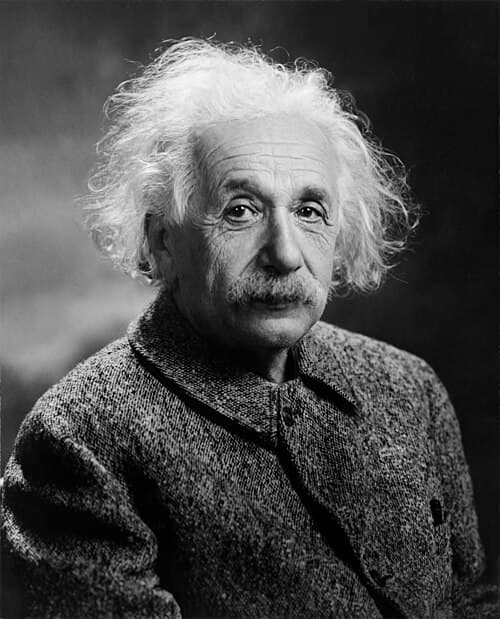
Albert Einstein
PERSON
German-born theoretical physicist (1879–1955)
Antonia
PERSON
Youngest daughter of Octavia Minor and Mark Antony

Barack Obama
PERSON • 2 mentions
President of the United States from 2009 to 2017

Barbara Conley
PERSON
French recording artist; singer-songwriter (1930–1997)

Bill Burns
PERSON
American diplomat, former Director of the CIA (2021-2025), former Deputy Secretary of State
BO
Boyayian
PERSON • 2 mentions
Name reference in documents
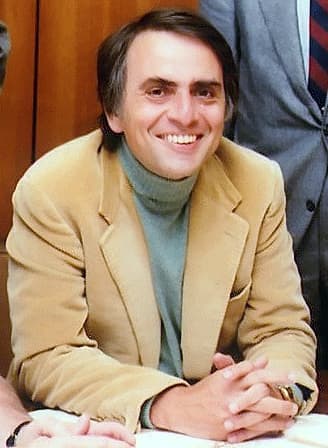
Carl Sagan
PERSON • 2 mentions
American astrophysicist, cosmologist and author (1934–1996)

CHAD HAGEN
PERSON
Researcher
CO
Conley
PERSON
Surname reference in Epstein-related documents

Cornelius Boerkoel
PERSON
Researcher
CU
Cummins
PERSON
Surname reference in documents

Curt Sawyer
PERSON
Name reference in documents
DB
DAVID BIELLO
PERSON
Science writer

David Solit
PERSON
King of Israel and Judah
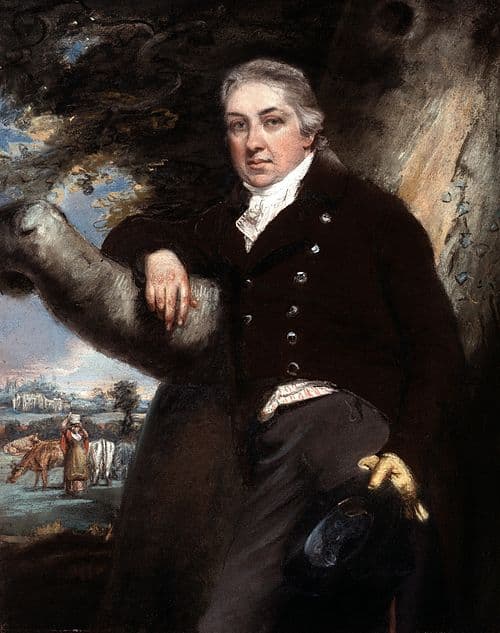
Edward Jenner
PERSON
Name reference in documents
EM
Elaine Mardis
PERSON
American geneticist

ELLEN WEINSTEIN
PERSON
American comedian, television host, actress, and writer (born 1958)
FM
Funda Meric-Bernstam
PERSON
Turkish researcher
GB
George Boyajian
PERSON
Name reference in documents
GM
Gregory Matloff
PERSON
Name reference in documents

Harvey Weinstein
PERSON • 2 mentions
American film producer and sex offender (born 1952)
HF
Howard Fang
PERSON
Name reference in documents
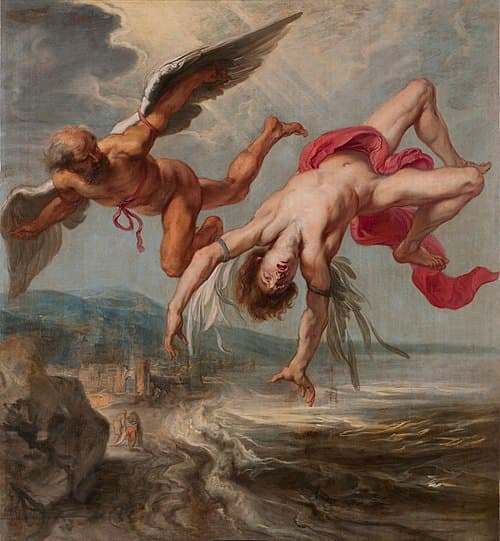
Icarus
PERSON
Mythological figure or literary reference (not a real person in documents)
IT
Ivana Topic
PERSON
Indian actress

Ivana Trump
PERSON
Czech-American businesswoman (1949–2022)
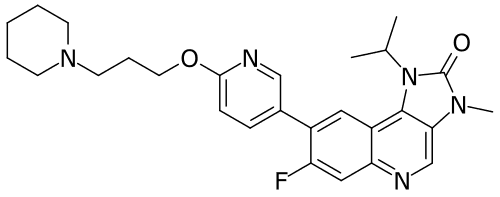
James Doroshow
PERSON
Researcher (ORCID 0000-0002-4463-1790)

Jeffrey Epstein
PERSON
American sex offender and financier (1953–2019)
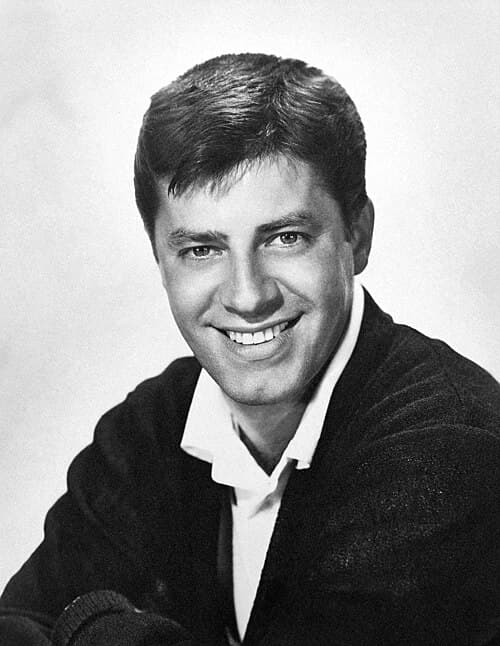
Jerry Lewis
PERSON
American comedian, actor and film director (1926–2017)

Jia Liu
PERSON
Name reference in documents
John Martyn Harlow
PERSON
Name reference in documents
Jonathan Wolfson
PERSON
American television producer
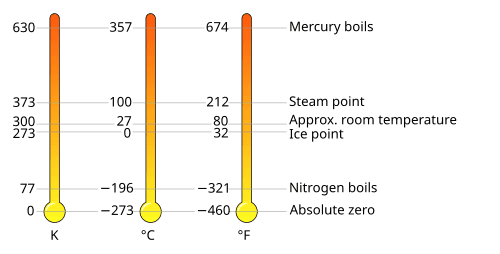
Kelvin Long
PERSON
Researcher
KU
Kunkel
PERSON
Surname or name fragment in documents
LO
Louis
PERSON
First name reference to multiple individuals in Epstein-related documents

Lukas Wartman
PERSON
Researcher
Marc Rich
PERSON
American commodities trader (1934–2013)
MF
Maria Farmer
PERSON
American visual artist

MARIA HOEY
PERSON
Name reference in documents
MA
Marijana
PERSON
Researcher
MA
Mario
PERSON
First name reference to multiple individuals in Epstein-related documents
Maryana
PERSON
Name reference in documents
MA
Matloff
PERSON
Name reference in documents
MS
Melissa Spencer
PERSON
Name reference in documents

Michael Jordan
PERSON
American basketball player and businessman (born 1963)
Michele Wrubel
PERSON
Name reference in documents
PG
Phineas Gage
PERSON
Name reference in documents
RF
Robert Forward
PERSON
Indian choreographer
RJ
Robert Johnsen
PERSON
Name reference in documents
SO
Solit
PERSON • 2 mentions
Animals and plants that live alone
Spencer
PERSON • 2 mentions
Town in Worcester County, Massachusetts, United States
Timothy Ray Brown
PERSON
First person cured of HIV/AIDS

Topics
PERSON • 2 mentions
German DJ and producer

Victoria Beckham
PERSON
English businesswoman, fashion designer and singer
WR
Wrubel
PERSON • 2 mentions
Surname or name fragment in documents

YUKO SHIMIZU
PERSON
Japanese designer who created Hello Kitty
Alpha
ORGANIZATION
Greek free-to-air channel

Amyris
ORGANIZATION
Sustainable synthetic ingredients for consumer products
Biofuel
ORGANIZATION
Organization referenced in documents
City University of New
ORGANIZATION
Organization referenced in documents

ExxonMobil
ORGANIZATION
American multinational oil and gas corporation
Genetics and Human
ORGANIZATION
Organization referenced in documents
Genome Institute
ORGANIZATION
Organization referenced in documents
Icarus Interstellar
ORGANIZATION
Organization referenced in documents
Jerry Lewis Telethons
ORGANIZATION
Organization referenced in documents
MD Anderson Cancer
ORGANIZATION
Organization referenced in documents

Memorial Sloan-Kettering Cancer Center
ORGANIZATION
Cancer treatment and research institution in New York City, United States

Mercury
ORGANIZATION
Organization referenced in documents
Nautilus Education
ORGANIZATION
Organization referenced in documents

Nautilus Magazine
ORGANIZATION
English post-punk band

New York University
ORGANIZATION
Private university in New York City
North Country Public Radio
ORGANIZATION
Organization referenced in documents
Outside
ORGANIZATION
Organization referenced in documents
Primus
ORGANIZATION
Organization referenced in documents
Primus Green Energy
ORGANIZATION
Organization referenced in documents
Project Daedalus
ORGANIZATION
Organization referenced in documents
Project Icarus
ORGANIZATION
Organization referenced in documents

Project Q
ORGANIZATION
Organization referenced in documents
Sapphire Energy
ORGANIZATION
Organization referenced in documents

Scientific American
ORGANIZATION
American popular science magazine

Shell
ORGANIZATION
British multinational oil and gas company
Sloan-Kettering
ORGANIZATION
Organization referenced in documents
Sloan-Ketteringin
ORGANIZATION
Organization referenced in documents
Solazyme
ORGANIZATION
Organization referenced in documents

the European Commission
ORGANIZATION
Organization referenced in documents
THE GLOBAL GENES PROJECT
ORGANIZATION
Organization referenced in documents
the National Cancer Institute
ORGANIZATION
Organization referenced in documents
the National Institutes of Health
ORGANIZATION
U.S. biomedical research agency

the University of California, Los Angeles
ORGANIZATION
Organization referenced in documents
the University of Texas
ORGANIZATION
University in Texas
the US Food and Drug Administration
ORGANIZATION
Organization referenced in documents

Tufts
ORGANIZATION
University
USA Education
ORGANIZATION
Organization referenced in documents
Washington University
ORGANIZATION
Private research university in St. Louis, Missouri, United States
Alpha Centauri
LOCATION
Triple star system in the constellation Centaurus, where one of the three stars, Proxima Centauri, being the closest star to the Earth
Bay Area
LOCATION
Region in the San Francisco Bay Area, California

Berkeley
LOCATION
City in Alameda County, California, United States

British Columbia
LOCATION
Region in British Columbia, Canada
Centauri
LOCATION
Stellar constellation in the southern celestial hemisphere

Croatia
LOCATION
Country in Central Europe
Discover
LOCATION
Credit card

Earth
LOCATION
Third planet from the Sun in the Solar System
Hillsborough
LOCATION
Incorporated town in California, United States
Inner
LOCATION
Inside part of a three-dimensional object

Jersey
LOCATION
State of the United States of America

Middle East
LOCATION
Geopolitical region encompassing Egypt and most of Western Asia, including Iran
Midwest
LOCATION
Location referenced in documents

Mississippi
LOCATION
State of the United States of America
New Jersey
LOCATION
State of the United States of America

New Zealand
LOCATION
Island country in the southwest Pacific Ocean

North America
LOCATION
Continent
San Franciscos
LOCATION
Street in Den Haag, the Netherlands
the Solar System
LOCATION
Location referenced in documents

United States
LOCATION • 3 mentions
Country located primarily in North America

Venus
LOCATION
Location referenced in documents
Statistics
Pages:39
Entities:114
Avg. OCR:89.4%
Sponsored