Back to Network






8
Shared Docs
5
Same-Page
8 / 8
Mentions
Document Mentions (8 shared documents)
2 mentions1 same-page
Page ?Same page
common themes: 1. Color revolutions are a U.S. strategy to break Russia's influence over its neighbors.' Nikolay Patrushev, secretary of Russia's Security Council and a longtime director of the Federal Security Service (FSB), has described color revolutions as an American scheme to bring down gov- ernments t
e zones in Syria and Iraq, and it has increasingly drawn on Afghan recruits in addition to Arabs. Iran's regional rivals, chiefly Saudi Arabia and the United Arab Emirates, have responded with more direct foreign interventions of their own, most notably in Yemen. The recent embrace of more overtly repressive policies
2 mentions1 same-page
Page ?Same page
and other regional partners to work toward sustained calm." NBC Nightly NewsVi (5/16, lead story, 2:50, Snow, 4.55M) reported, "The United Nations Security Council held a special session on this Sunday, and President Biden has been speaking with leaders on both sides this weekend, urging calm." Bloomberg (5/16,
s Peter Haas * Program will provide four weeks of skills training for 50 women tech founders from the Middle East and North Africa, with a focus on the United Arab Emirates, Egypt, and Bahrain Location: Virtual Event Copyright 2021 by Bulletin Intelligence LLC Reproduction or redistribution without permission prohibi
2 mentions1 same-page
Page ?Same page
rst administration of Prime Minister Benjamin Netanyahu. The United States at first resisted U.N. pressure to stop construction there, vetoing two Security Council resolutions condemning building there. In recent years, Washington's stance has toughened. When in 2010 the Israeli government announced plans to
East to North Africa and Central Asia. CENTCOM forces are deployed in combat roles in Afghanistan as well as at smaller bases in Kuwait, Bahrain, the United Arab Emirates and Oman. No doubt the presence of CENTCOM provides Qatar with some protection, but it also runs the risk of attracting hostility if, for example,
Sponsored
2 mentions1 same-page
Page ?Same page
first administration of Prime Minister Benjamin Netanyahu. The United States at first resisted •. pressure to stop construction there, vetoing two Security Council resolutions condemning building there. In recent years, Washington's stance has toughened. When in 2010 the Israeli government announced plans to b
e East to North Africa and Central Asia. CENTCOM forces are deployed in combat roles in Afghanistan as well as at smaller bases in Kuwait, Bahrain, the United Arab Emirates and Oman. No doubt the presence of CENTCOM provides Qatar with some protection, but it also runs the risk of attracting hostility if, for example,
2 mentions1 same-page
Page ?Same page
day is bootless; the will of most members for a change of government in Syria, for example, is too easily blocked by the veto of a single permanent Security Council member, such as Russia. Annan gives a devastating account of some of the United Nations' errors during his decades with the organization, especiall
bal issue that the prominent Saudi cleric Aidh al-Qarni has turned into a Sunni-Shia war by promoting Assad's death. The Saudis and their Qatar and United Arab Emirate allies have pledged $100 million to pay wages to the fighters. Many of the officers of the Free Syrian Army are from tribes connected to the Gulf.
HOUSE_OVERSIGHT_019233 - HOUSE_OVERSIGHT_019296
FH_Authoritarians_Report_2017.indd
2 mentions
Page HOUSE_OVERSIGHT_019258
al common themes: 1. Color revolutions are a U.S. strategy to break Russia's influence over its neighbors.' Nikolay Patrushev, secretary of Russia's Security Council and a longtime director of the Federal Security Service (FSB), has described color revolutions as an American scheme to bring down gov- ernments thro
Page: HOUSE_OVERSIGHT_019258 →Page HOUSE_OVERSIGHT_019289
ttle zones in Syria and Iraq, and it has increasingly drawn on Afghan recruits in addition to Arabs. lran’s regional rivals, chiefly Saudi Arabia and the United Arab Emirates, have responded with more direct foreign interventions of their own, most notably in Yemen. The recent embrace of more overtly repressive policies s
Page: HOUSE_OVERSIGHT_019289 →Sponsored
Page HOUSE_OVERSIGHT_026843
ercent. Even some Islamic countries that were initially reluctant to embrace modernization have begun to do so. For example, Qatar, Saudi Arabia, and the United Arab Emirates now feature satellite campuses of major Western universities. One reason for the shift is that the experience of other regions, such as Asia, has sho
Page: HOUSE_OVERSIGHT_026843 →Page HOUSE_OVERSIGHT_026846
wn strong enough or independent enough to make real trouble for their creators. UN secretary-generals have been creatures of the permanent members of the Security Council, the leaders of the World Bank and the International Monetary Fund have been drawn exclusively from the United States and Europe, and dominance in th
Page: HOUSE_OVERSIGHT_026846 →Page HOUSE_OVERSIGHT_029690
that King Abdullah is seeking to bolster ties with regional allies, perhaps for both political and economic reasons: the King made visits to Bahrain, the United Arab Emirates, and Kuwait from January 29th to February Syria: Israeli warplanes are generally believed to have struck a convoy en route to Lebanon on January 30 t
Page: HOUSE_OVERSIGHT_029690 →Page HOUSE_OVERSIGHT_029691
N Security Council delegation visited Yemen on January 27 in a show of support to President Hadi and Yemen's political transition. The visit reflects the Security Council's interest in seeing Yemen move forward with the National Dialogue Conference. During the visit there were large demonstrations, as thousands demanded
Page: HOUSE_OVERSIGHT_029691 →Sponsored
Mutual Connections (1,169)
Entities connected to both Security Council and United Arab Emirates
Jeffrey Epstein
PERSON32 w/ Security·121 w/ United
Barack Obama
PERSON33 w/ Security·80 w/ United
United States
LOCATION29 w/ Security·78 w/ United
Bill Clinton
PERSON31 w/ Security·60 w/ United
George W. Bush
PERSON24 w/ Security·67 w/ United
Donald Trump
PERSON13 w/ Security·67 w/ United
Joe Biden
PERSON12 w/ Security·63 w/ United
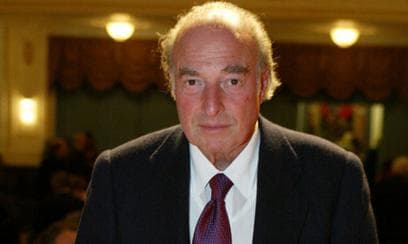
Marc Rich
PERSON17 w/ Security·54 w/ United
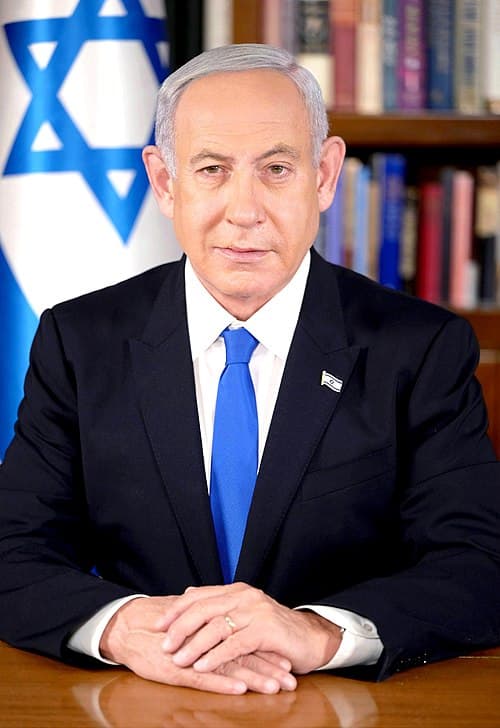
Benjamin Netanyahu
PERSON23 w/ Security·48 w/ United
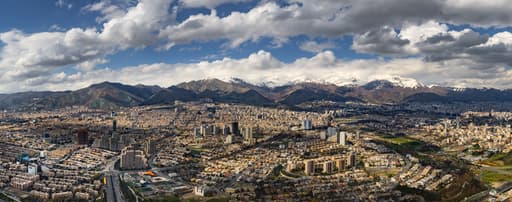
Tehran
LOCATION20 w/ Security·51 w/ United
LB
Leon Black
PERSON20 w/ Security·50 w/ United
Bahrain
LOCATION11 w/ Security·59 w/ United
Bloomberg L.P.
ORGANIZATION8 w/ Security·61 w/ United
Department of Justice
ORGANIZATION12 w/ Security·56 w/ United
Lebanon
LOCATION27 w/ Security·40 w/ United
Prince Andrew
PERSON9 w/ Security·57 w/ United
Yemen
LOCATION28 w/ Security·37 w/ United
Prince Charles
PERSON6 w/ Security·57 w/ United
Middle East
LOCATION13 w/ Security·48 w/ United
Virginia Giuffre
PERSON10 w/ Security·47 w/ United