Back to Network






9
Shared Docs
8
Same-Page
9 / 13
Mentions
Document Mentions (9 shared documents)
3 mentions1 same-page
Page ?Same page
ina at Chapel Hill. He completed a second doctorate in business administration at Duke University at the urging of Nobel economic sciences laureate Daniel Kahneman. After obtaining his Ph.D. degree, he taught at MIT between 1998 and 2008, before returning to Duke University as James B. Duke Professor of Psych
l. He subsequently taught at many other universities, including Columbia, NYU, Boston University, the University of California, both at Irvine and Berkeley, before finally becoming a professor at George Mason University, then moving in 1995 to Princeton University, where he has taught poetry workshops
Following his work in BattleBots, he has taken steps into the field of human-robot interactions. "We build these robots and we take them down to Berkeley and study the interactions that people have with the robots," says Wright. "We built this newer one that has a rapid-fire pingpong cannon. It will
3 mentions1 same-page
Page ?Same page
mits on computational resources. The efficacy of human algorithms springs from what AI researchers refer to as “bounded optimality.” As psychologist Daniel Kahneman has notably pointed out, human beings are rational only up to a point. If you were perfectly rational, you would risk dropping dead before making an
rol, planning, estimation, learning, and cognitive science. Barely into her thirties herself, she has co-authored a number of papers with her veteran Berkeley colleague and mentor Stuart Russell which address various aspects of machine learning and the knotty problems of value alignment. She shares Stuart’
ces at UC Berkeley. She co-founded and serves on the steering committee for the Berkeley AI Research (BAIR) Lab and is a co-principal investigator in Berkeley’s Center for Human-Compatible AI. George Dyson is a historian of science and technology and the author of Baidarka: the Kayak, Darwin Among the Mach
3 mentions1 same-page
Page ?Same page
mits on computational resources. The efficacy of human algorithms springs from what AI researchers refer to as “bounded optimality.” As psychologist Daniel Kahneman has notably pointed out, human beings are rational only up to a point. If you were perfectly rational, you would risk dropping dead before making an
rol, planning, estimation, learning, and cognitive science. Barely into her thirties herself, she has co-authored a number of papers with her veteran Berkeley colleague and mentor Stuart Russell which address various aspects of machine learning and the knotty problems of value alignment. She shares Stuart’
ces at UC Berkeley. She co-founded and serves on the steering committee for the Berkeley AI Research (BAIR) Lab and is a co-principal investigator in Berkeley’s Center for Human-Compatible AI. George Dyson is a historian of science and technology and the author of Baidarka: the Kayak, Darwin Among the Mach
Sponsored
2 mentions1 same-page
Page ?Same page
n, Gerald Edelman, Michael Gazzaniga, Murray Gell- Mann, Neil Gershenfeld, Daniel Gilbert, Daniel Goleman, Brian Greene, Alan Guth, W. Daniel Hillis, Daniel Kahneman, Eric ICandel,Kevin Kelly, Jaron Lanier, Joseph LeDoux, Andre Linde, Marvin Minsky, Benoit Mandelbrot (Estate), John Markoff, Martin Nowak, Elaine P
urg, VA David Buss, Psychologist, U. of Texas, Austin William Calvin, Neuroscientist, U. of Washington Fritjof Capra, Director, Elmwood Institute, Berkeley, CA Sean Carroll, Physicist, CalTech Daniel Charles, Technology Correspondent, NPR Michael Castleman, Health and Medical Writer, San Francisco Ni
2 mentions1 same-page
Page ?Same page
Hood, Psychologist, University of Bristol Marco lacoboni, Neuroscientist, Geffen School of Medicine, UCLA Joichi "Joi" Ito, Director, Media Lab, MIT Daniel Kahneman, Psychologist & Nobel Laureate, Princeton David Kaiser, Science Historian, Harvard Stuart Kauffman, Biologist, Santa Fe Brian Keating, Astrophysicis
cientist, Carnegie Mellon Evgeny Morozov, Social Commentator, FOREIGN POLICY Sendhil Mullainathan, Economist, Harvard Richard Muller, Physicist, UC, Berkeley Richard Nisbett, Social Psychologist, U. of Michigan Martin Nowak, Mathematical Biologist, Harvard Tim O'Reilly, Founder, O'Reilly Media Svante Paa
2 mentions1 same-page
Page ?Same page
ers (ESPartners) Kadokawa Group Holdings Japan The Jakarta Globe Indonesia World Economic Forum Annual Meeting EFTA_R1_02105185 EFTA02707417 Daniel Kahneman Fritz Kaiser Fred Kaiser Vimbayi Kajese Rashad R. Kaldany Ajay Kalsi Baba N. Kalyani Amit Kalyani Abdullah Saleh Kamel Tihomir D. Kamenov
ne Booz & Company PrimeSense Ltd Al Arabiya Majid Al Futtaim Group McKinsey & Company Schroders Plc FTI Consulting University of California, Berkeley PT Indika Energy Tbk Leopard Farlag Canadian Council of Chief Executives Coril Holdings Ltd Permanent Mission of Israel Singapore United King
Sponsored
2 mentions1 same-page
Page ?Same page
xperiments like John Searle’s Chinese Room and Isaac Asimov’s Three Laws of Robotics all appeal to the sorts of intuitions plaguing human brains that Daniel Kahneman, Amos Tversky, and others have demonstrated. The Chinese Room experiment posits that a mind composed of mechanical and Homo sapiens parts cannot be c
that she treats them coldly, as if they were mere laboratory animals. They appear to revel in her company, and in the blinking, thrumming toys in her Berkeley lab. For years after her own children had outgrown it, she kept a playpen in her office. Her investigations into just how we learn, and the parallel
2 mentions1 same-page
Page ?Same page
xperiments like John Searle’s Chinese Room and Isaac Asimov’s Three Laws of Robotics all appeal to the sorts of intuitions plaguing human brains that Daniel Kahneman, Amos Tversky, and others have demonstrated. The Chinese Room experiment posits that a mind composed of mechanical and Homo sapiens parts cannot be c
that she treats them coldly, as if they were mere laboratory animals. They appear to revel in her company, and in the blinking, thrumming toys in her Berkeley lab. For years after her own children had outgrown it, she kept a playpen in her office. Her investigations into just how we learn, and the parallel
Page HOUSE_OVERSIGHT_017529
olina at Chapel Hill. He completed a second doctorate in business administration at Duke University at the urging of Nobel economic sciences laureate Daniel Kahneman. After obtaining his Ph.D. degree, he taught at MIT between 1998 and 2008, before returning to Duke University as James B. Duke Professor of Psychol
Page: HOUSE_OVERSIGHT_017529 →Page HOUSE_OVERSIGHT_017562
hall. He subsequently taught at many other universities, including Columbia, NYU, Boston University, the University of California, both at Irvine and Berkeley, before finally becoming a professor at George Mason University, then moving in 1995 to Princeton University, where he has taught poetry workshops an
Page: HOUSE_OVERSIGHT_017562 →Page HOUSE_OVERSIGHT_017566
bits of machined metal left over from his BattleBots days strewn about the garage of his Oakland home. Wright was a former Robot Wars champion in the Berkeley-based robotics workshop, the Stupid Fun Club. One of Wright’s bots, designed with the help of Wright’s daughter Cassidy, “Kitty Puff Puff”, fought ag
Page: HOUSE_OVERSIGHT_017566 →Sponsored
Mutual Connections (1,778)
Entities connected to both Daniel Kahneman and Berkeley
Jeffrey Epstein
PERSON110 w/ Daniel·154 w/ Berkeley
John Brockman
PERSON89 w/ Daniel·7 w/ Berkeley
George W. Bush
PERSON27 w/ Daniel·65 w/ Berkeley
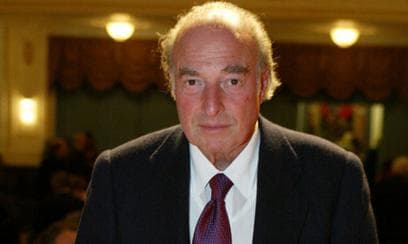
Marc Rich
PERSON21 w/ Daniel·53 w/ Berkeley
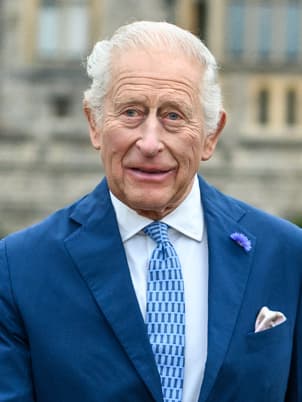
Prince Charles
PERSON20 w/ Daniel·48 w/ Berkeley
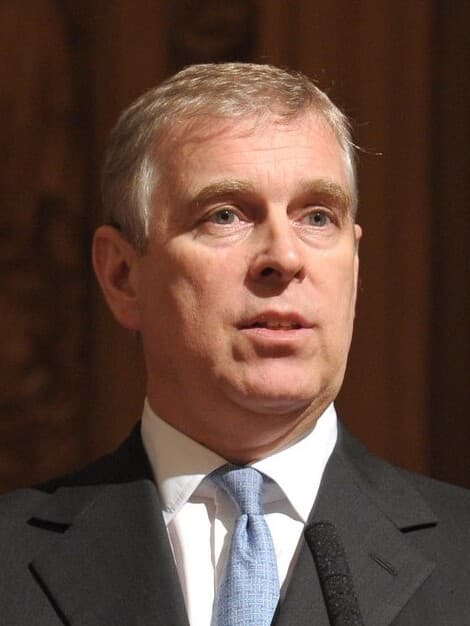
Prince Andrew
PERSON24 w/ Daniel·43 w/ Berkeley
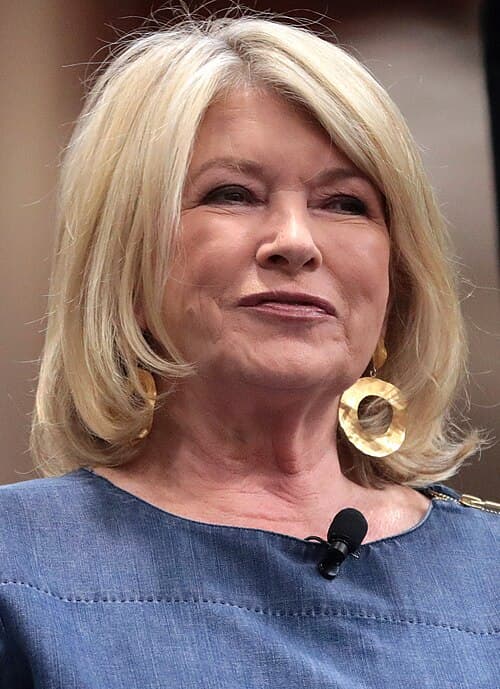
Martha Stewart
PERSON40 w/ Daniel·24 w/ Berkeley
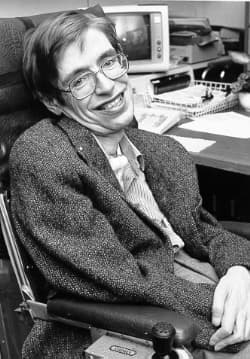
Stephen Hawking
PERSON22 w/ Daniel·39 w/ Berkeley
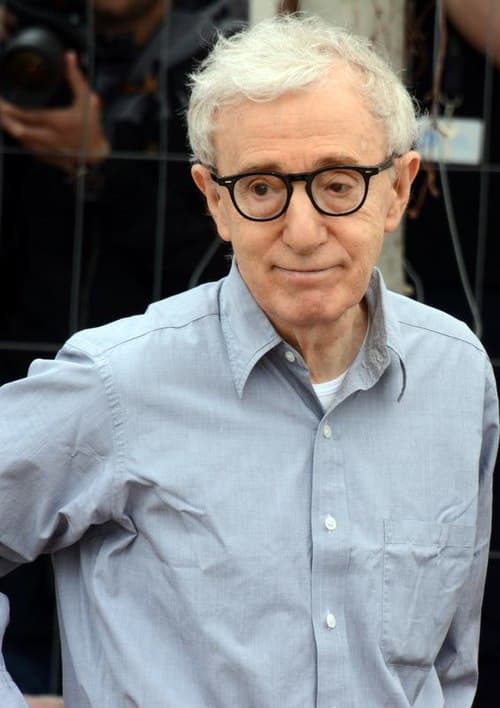
Woody Allen
PERSON31 w/ Daniel·29 w/ Berkeley
LB
Leon Black
PERSON16 w/ Daniel·41 w/ Berkeley
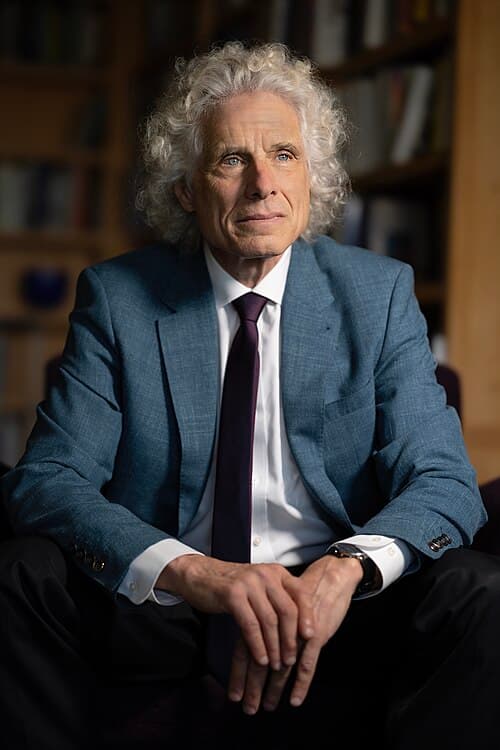
Steven Pinker
PERSON41 w/ Daniel·11 w/ Berkeley
Julie K. Brown
PERSON7 w/ Daniel·44 w/ Berkeley
Eric Trump
PERSON19 w/ Daniel·32 w/ Berkeley
Donald Trump
PERSON7 w/ Daniel·44 w/ Berkeley
United States
LOCATION6 w/ Daniel·44 w/ Berkeley
Barack Obama
PERSON12 w/ Daniel·37 w/ Berkeley
Virginia Giuffre
PERSON9 w/ Daniel·36 w/ Berkeley
John F. Kennedy
PERSON12 w/ Daniel·32 w/ Berkeley
Alan Dershowitz
PERSON17 w/ Daniel·26 w/ Berkeley
Lawrence Krauss
PERSON11 w/ Daniel·32 w/ Berkeley