Back to Network












3
Shared Docs
3
Same-Page
6 / 3
Mentions
Document Mentions (3 shared documents)
3 mentions1 same-page
Page ?Same page
at a superintelligence will necessarily share any of the final values stereotypically associated with wisdom and intellectual development in humans,” Bostrom wrote. “It is no less possible—and probably technically easier—to build a superintelligence that places final value on nothing but calculating.” And
it has punched the entire world into paperclips. You had to hope someone had remembered to place a “halt” command into is logic somewhere. And though Bostrom’s messianic wire twister is unlikely - of course, no one is going to forget to tell a machine to stop making paperclips - the power of his example is
heck for $5 million. Or there was the time that Hillis asked Nobel-prize winning physicist Richard Feynman to tip him off about any smart scientists Thinking Machines might hire. Feynman, pushing 60, volunteered himself and spent his summer vacations for the next ten years with Hillis and his team.1?! When it came
3 mentions1 same-page
Page ?Same page
calling nuclear engineers “anti-physics.” The purpose of understanding and preventing the risks of AI is to ensure that we can realize the benefits. Bostrom, for example, writes that success in controlling AI will result in “a civilizational trajectory that leads to a compassionate and jubilant use of hum
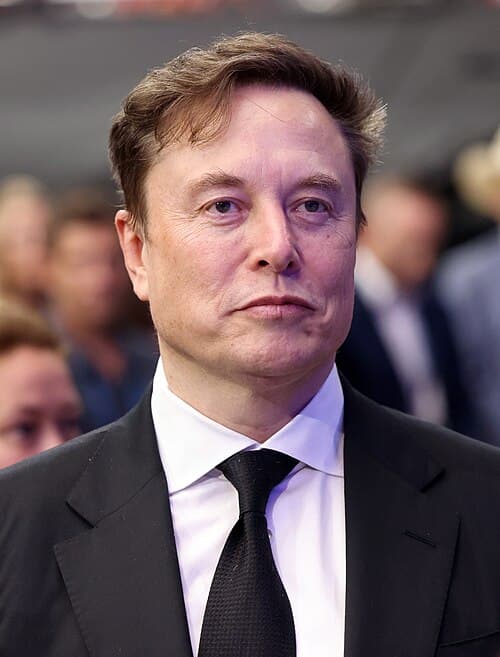
l of checkmate; the same chessboard and pieces can be used for suicide chess, or indeed many other games still to be invented. Put another way: Where Bostrom imagines humans driven extinct by a putative robot that turns the planet into a sea of paper clips, we humans see this outcome as tragic, 4 Elon Mus
cience. At MIT in the late seventies, Danny Hillis developed the algorithms that made possible the massively parallel computer. In 1983, his company, Thinking Machines, built the world's fastest supercomputer by utilizing parallel architecture. His "connection machine," closely reflected the workings of the human mi
Sponsored
Mutual Connections (422)
Entities connected to both Bostrom and Thinking Machines
Prince Andrew
PERSON4 w/ Bostrom·10 w/ Thinking
Stephen Hawking
PERSON3 w/ Bostrom·11 w/ Thinking
Marc Rich
PERSON3 w/ Bostrom·11 w/ Thinking
DB
Doug Band
PERSON3 w/ Bostrom·11 w/ Thinking
LB
Leon Black
PERSON3 w/ Bostrom·10 w/ Thinking
Donald Trump
PERSON4 w/ Bostrom·8 w/ Thinking
Samantha Power
PERSON3 w/ Bostrom·9 w/ Thinking
Danny Hillis
PERSON2 w/ Bostrom·9 w/ Thinking
Jeffrey Epstein
PERSON2 w/ Bostrom·8 w/ Thinking
Ghislaine Maxwell
PERSON2 w/ Bostrom·8 w/ Thinking
AG
Ace Greenberg
PERSON2 w/ Bostrom·8 w/ Thinking
George W. Bush
PERSON3 w/ Bostrom·6 w/ Thinking
Bradley Cooper
PERSON2 w/ Bostrom·7 w/ Thinking
Garry Kasparov
PERSON2 w/ Bostrom·7 w/ Thinking
Alan Dershowitz
PERSON3 w/ Bostrom·5 w/ Thinking
Elon Musk
PERSON5 w/ Bostrom·3 w/ Thinking
Earth
LOCATION3 w/ Bostrom·5 w/ Thinking
Athens
LOCATION3 w/ Bostrom·5 w/ Thinking
Robert Gates
PERSON3 w/ Bostrom·5 w/ Thinking
Jerusalem
LOCATION3 w/ Bostrom·5 w/ Thinking