Back to Network









3
Shared Docs
3
Same-Page
9 / 3
Mentions
Document Mentions (3 shared documents)
5 mentions1 same-page
Page ?Same page
toff Article 4. Washington Post Existential Crisis for Obama Too David Ignatius Article 5. The American Interest Strategy after Crimea Playing Putin's Game Walter Russell Mead Article 6. NYT Egypt's Enduring Passion for Soccer Alaa Al Aswany _ Article 7. WSJ Book Review: 'Temptations of Pow
pril 16, 2014 -- As President Obama looks at the Ukraine crisis, he sees an asymmetry of interests: Simply put, the future of Ukraine means more to Vladimir Putin's Russia than it does to the U.S. or Europe. For Putin, this is an existential crisis; for the West, so far, it isn't -- as the limited U.S. and Euro
the Kremlin aims to repeat the process, and from President Putin's desk it must look as if many of the pieces for
e point to the intelligence of Russian President Vladimir Putin in Game Theory and encourage others to beat
aine's policies. -- Annexation of eastern Ukraine, along the model of Crimea. The pro- Russian "demonstrators" who have seized buildings in Donetsk, Kharkiv and other eastern cities have already demanded a referendum on joining Russia, which was the prelude in Crimea. The State Department says the prot
4 mentions1 same-page
Page ?Same page
. To some, Ukraine has become the geopolitical faultline between the liberal democratic West and authoritarian, neo-imperial Russia under President Vladimir Putin. Foreign policy luminaries in Washington openly discuss the current state of affairs as a new Cold War. Beneath the political divisions of the pre
mpire, to find their fortune -- sometimes as hired muscle. The first major center of the "Rus" was at Kiev, established in the 9th century. In 988, Vladimir, a prince of the Kievan Rus, was baptized by a Byzantine priest in the old Greek colony of Khersonesos on the Crimean coast. His conversion marked t
an coast. His conversion marked the advent of Orthodox Christianity among the Rus and remains a moment of great nationalist symbolism for Russians. Putin invoked this older Vladimir in a speech last December when justifying his annexation of Crimea. Successive Mongol invasions beginning in the 13th c
ar, but the genie of Ukrainian nationalism was out of the bottle. Independence movements of various stripes sprung up in cities like Lviv, Kiev and Kharkiv, but were eventually all swept away amid the wider struggle for power in Russia. &dip Fu ',. LAT.4 1 A I, • > r' / I e 4 1 , QCR i ICE RAI
3 mentions1 same-page
Page ?Same page
Empire, to find their fortune -- sometimes as hired muscle. The first major center of the "Rus" was at Kiev, established in the 9th century. In 988, Vladimir, a prince of =he Kievan Rus, was baptized by a Byzantine priest in the old Greek colony of Khersonesos on the Crimean coast. His conversion 18 EFT
_02175163 EFTA02719142 marked the advent of Orthodox Christianity among the Rus and remains=a moment of great nationalist symbolism for Russians. Putin invoked this older Vladimir in a speech last December when justifying his annexation of Crimea= Successive Mongol invasions beginning in the 13th ce
ea=, but the genie of Ukrainian nationalism was out of the bottle. Independenc= movements of various stripes sprung up in cities like Lviv, Kiev and Kharkiv, but were eventually all sw=pt away amid the wider struggle for power in Russia. 1919 to 1922 4> At the end of World War I, a revived Poland rec
Sponsored
Mutual Connections (34)
Entities connected to both Vladimir Putin and Kharkiv
Barack Obama
PERSON306 w/ Vladimir·2 w/ Kharkiv
George W. Bush
PERSON290 w/ Vladimir·2 w/ Kharkiv
Bill Clinton
PERSON231 w/ Vladimir·2 w/ Kharkiv
United States
LOCATION211 w/ Vladimir·2 w/ Kharkiv
LB
Leon Black
PERSON207 w/ Vladimir·3 w/ Kharkiv
Kremlin
ORGANIZATION148 w/ Vladimir·2 w/ Kharkiv
Samantha Power
PERSON123 w/ Vladimir·2 w/ Kharkiv
Woody Allen
PERSON121 w/ Vladimir·2 w/ Kharkiv
Middle East
LOCATION100 w/ Vladimir·2 w/ Kharkiv
Jerusalem
LOCATION69 w/ Vladimir·3 w/ Kharkiv
European Parliament
ORGANIZATION62 w/ Vladimir·2 w/ Kharkiv
DB
Doug Band
PERSON54 w/ Vladimir·2 w/ Kharkiv
the Soviet Union
LOCATION51 w/ Vladimir·2 w/ Kharkiv
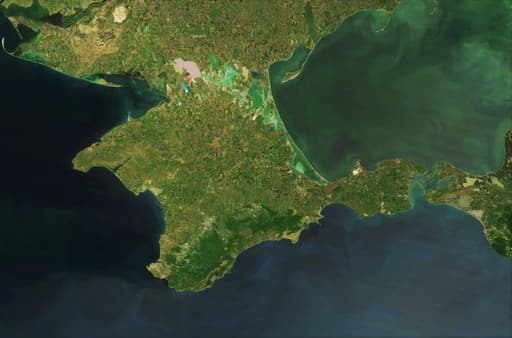
Crimea
LOCATION46 w/ Vladimir·3 w/ Kharkiv
West Bank
LOCATION42 w/ Vladimir·2 w/ Kharkiv
the West Bank
LOCATION41 w/ Vladimir·2 w/ Kharkiv
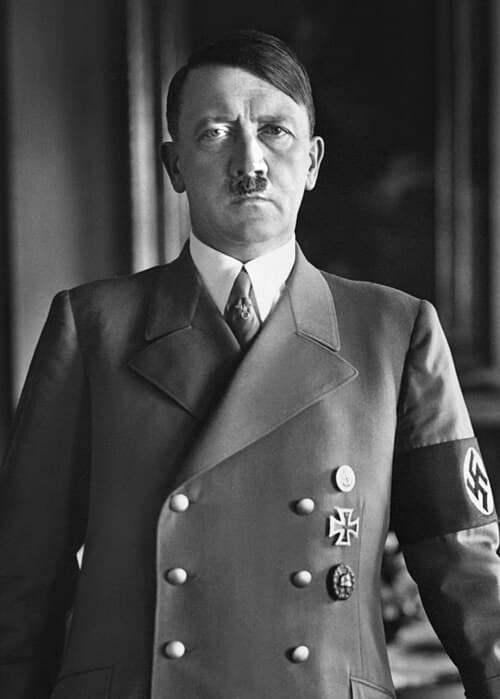
Adolf Hitler
PERSON35 w/ Vladimir·2 w/ Kharkiv
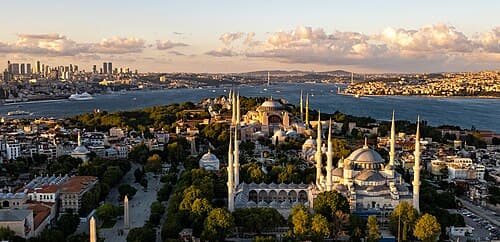
Istanbul
LOCATION29 w/ Vladimir·2 w/ Kharkiv
Eastern Europe
LOCATION25 w/ Vladimir·2 w/ Kharkiv
Black Sea
LOCATION19 w/ Vladimir·3 w/ Kharkiv